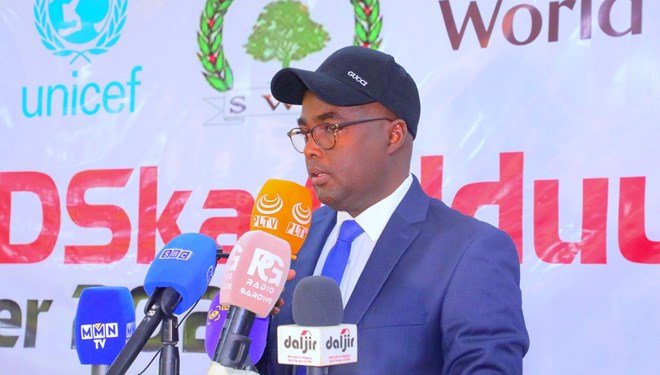
Somalia’s federal government has established the Independent National Electoral and Boundary Commission, paving the way for the country’s first direct elections in more than 50 years. The decision was finalized during an emergency Cabinet meeting led by Prime Minister Hamza Abdi Barre, marking a critical step in Somalia’s democratic evolution.
“This government is committed to restoring the right of every Somali to elect their leaders directly,” said Barre. “Today’s decision is a cornerstone of our democratic aspirations.”
The commission will oversee the implementation of a one-person, one-vote system, replacing the indirect, clan-based model that has governed Somali elections for decades. Local council elections are slated for June 2025, followed by federal parliamentary and presidential elections in September.
Navigating Regional Resistance
Despite the progress, Somalia’s transition to universal suffrage faces significant challenges, particularly from regional states like Jubaland and Puntland. Both administrations have voiced strong opposition, accusing the federal government of overreach.
Jubaland President Ahmed Mohamed Islam (Madobe), who secured reelection this week amidst controversy, boycotted consultations on the electoral framework and extended his term, intensifying tensions with Mogadishu. Puntland declared self-governance in March, stepping outside the federal framework entirely.
These disputes are reminiscent of past conflicts, such as the 2019 Jubaland elections, which led to violence and displaced tens of thousands. Analysts warn that unresolved tensions could jeopardize the upcoming polls and reignite conflict.
International Oversight and Regional Dynamics
The international community is closely monitoring Somalia’s electoral transition. President Hassan Sheikh Mohamud has called for global support to ensure an inclusive and peaceful process.
Meanwhile, forces from Ethiopia and Kenya, operating under the African Union Transition Mission in Somalia (ATMIS), remain in Jubaland to combat Al-Shabaab. However, allegations of political interference by neighboring countries have further complicated the fragile relationship between Mogadishu and regional administrations.
A Break from the Past
Since 1969, Somalia’s clan-based voting system has been criticized for entrenching divisions and weakening national cohesion. The move to universal suffrage represents a significant shift toward democratic governance, inclusivity, and national unity.
As the commission begins its work, it carries the weight of Somalia’s aspirations for a peaceful and representative political system. The coming months will test whether the country can overcome internal divisions and external pressures to achieve a historic democratic milestone.
Commission Members
The newly appointed commissioners include:
- Abdiqarin Ahmed Hassan
- Sadiq Abshir Garad
- Avv. Mohamed Abdirahman Aden
- Yusuf Abdiqadir Mohamed-Bafo
- Omar Abukar Omar
- Farhiyo Mohamed Yusuf
- Dr. Omar Jama Mohamed
- Farah Abdi Hassan
- Sahro Dirie Muse
- Abdullahi Salad Yarrow
- Mohamed Amin Hassan Abdullahi
- Abdi Adow Mohamed
- Abdishakur Abiib Haayir
- Khalid Ibrahim Ismail
- Amina Sheikh Osman Mohamed
- Nasir Mohamed Shire
- Abdirahim Abdullahi Shafici
- Mohamed Omar Ismail
This team is charged with laying the foundation for a democratic Somalia, balancing the expectations of a divided nation and the scrutiny of the international community.