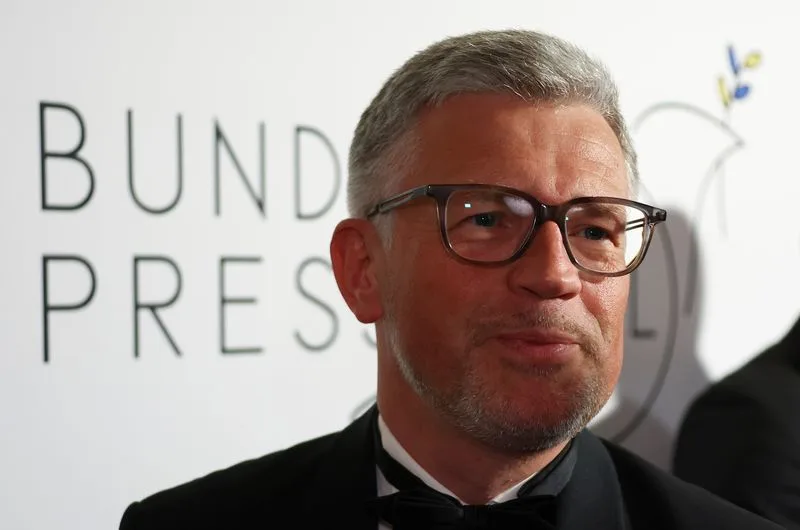
As his five-year term as the European Union’s High Representative for Foreign Affairs nears its end, Josep Borrell reflects on a tenure marked by historic crises and hard-won progress. From the ongoing war in Ukraine to the EU’s pandemic response and fraught Middle Eastern diplomacy, the 77-year-old Spaniard has navigated a role widely regarded as one of the bloc’s most challenging.
Borrell’s tenure began with the EU facing an increasingly fractious global order. However, it was Russia’s full-scale invasion of Ukraine in February 2022 that defined his time in office. The invasion shattered long-standing taboos within the EU, including direct funding for arms deliveries to a country at war.
“This was a breakthrough in the way we behaved,” Borrell noted during his recent farewell trip to Ukraine. Over the past two years, the EU has committed billions of euros to arming Ukraine and imposed repeated sanctions on Russia, often overcoming resistance from certain member states, such as Hungary.
Yet, the unity displayed over Ukraine contrasts sharply with the bloc’s divisions on other global crises, particularly the recent conflict in Gaza. Following Hamas’ attack on Israel in October 2023, the EU’s inability to present a cohesive response left Borrell visibly frustrated.
“My biggest frustration is not being able to make it understood that a violation of international law is a violation of international law, whoever does it,” he said, lamenting the damage to the EU’s credibility on the global stage.
Borrell’s assertive approach often clashed with the consensus-driven nature of EU diplomacy. His willingness to “break taboos” and speak candidly sometimes irked member states. “Agreed language most of the time says nothing. We agree on saying nothing,” he remarked.
His tenure was not without missteps. A 2021 visit to Moscow, during which Russian Foreign Minister Sergei Lavrov outmaneuvered him diplomatically, drew sharp criticism. However, Borrell proved adaptable, transforming from what some Baltic officials called “Russia-threat agnostic” to a staunch advocate for firm action against Moscow.
“We witnessed a transformation,” said Lithuanian Foreign Minister Gabrielius Landsbergis, describing Borrell as someone who evolved into a “Russia hawk.”
Borrell’s final days in the role have been bittersweet. During his last trip to Ukraine, he met with President Volodymyr Zelenskyy, visited a drone factory, and traveled to the country’s eastern defensive lines. “It generates a lot of adrenaline,” he said, reflecting on how he managed the relentless demands of his position.
Despite the challenges, Borrell highlighted moments of pride, such as facilitating the repatriation of Europeans during the COVID-19 pandemic and receiving appreciation from Ukrainians and Palestinians for his efforts.
Borrell’s successor, Kaja Kallas, the former Estonian Prime Minister, is expected to bring a more disciplined approach to the role. Borrell expressed confidence in her abilities, while candidly acknowledging the burdens of the job.
“She will perform very well, and she will be very happy, and she will suffer less than me,” he said.
As he steps down, Borrell leaves behind a legacy of bold decisions and a European Union that has grown more assertive in navigating a turbulent global landscape. Yet, the unresolved conflicts in Ukraine and the Middle East serve as stark reminders of the challenges awaiting his successor.