
EDITORIAL
How President Hassan’s Corruption Crushing Somalia’s Federal States


With allegations of blackmail and misuse of international funds, Somalia’s leader is accused of sacrificing national stability and democracy for personal political gain.
Imagine a country already grappling with poverty, instability, and conflict. Now, add to that a leader accused of playing political games that further entrench divisions and deprive citizens of desperately needed development resources. This is the reality facing Somalia, where President Hassan Sheikh Mohamoud is facing mounting accusations of using international development funds as leverage to blackmail federal states into supporting his political agenda.
In a country where survival often depends on international aid, these allegations feel like a betrayal on the grandest scale—one that jeopardizes not only Somalia’s fragile democracy but also the well-being of millions.
Blackmail and Political Machinations

President Mohamoud’s alleged strategy is both simple and insidious: withhold international development funds from regional member states that refuse to back his election plans. This tactic is not just about political survival—it’s about consolidating power by crushing dissent. But the real cost of this power play is borne by ordinary Somali citizens in regions where these funds are crucial for education, healthcare, infrastructure, and even basic survival.
The president’s move has drawn the ire of local leaders, who say that Mohamoud is deliberately stoking divisions, transforming what should be collaborative governance into a high-stakes chess game. The message from the presidency is clear: get in line or get cut off.
One regional leader, who requested anonymity for fear of retribution, described the situation in stark terms: “It’s not about governance anymore—it’s about obedience. If you don’t bow down to Mogadishu, you’re out.”
The idea that a nation’s leader would gamble with development aid—funds that are meant to lift Somalia out of its cycle of poverty and instability—is not only shocking, it is infuriating. While the federal government continues to point to security and governance improvements in the capital, Mogadishu, the rest of the country is left to fight over scraps.
Regional States Held Hostage

Somalia’s federal states, each with their own pressing needs, rely heavily on international development assistance to address basic public services—everything from road construction to healthcare programs. Yet, under Mohamoud’s leadership, these funds have reportedly become a tool for blackmail. Any regional government that dares to question his policies or refuses to fall in line with his reelection strategy risks losing critical funding.
And it’s not just a matter of political preference. Withholding these funds exacerbates the already entrenched inequalities between Mogadishu and the regions, fanning the flames of resentment and further destabilizing the country’s fragile political landscape.
Consider a region like Jubaland, which has long been at odds with Mogadishu over autonomy and governance. Under Mohamoud’s alleged strategy, withholding funds could cripple the local government’s ability to provide basic services, deepening the divide and pushing citizens further into poverty and instability. These power dynamics leave regional leaders with an impossible choice: betray their constituents or risk losing the resources they need to govern.
International Donors in the Crosshairs

International development aid is supposed to be a lifeline, especially in a nation like Somalia, where decades of civil war and extremism have devastated infrastructure and public services. But if the allegations against President Mohamoud are true, then that lifeline is being weaponized for political gain.
For international donors—who often operate under the assumption that their aid will be distributed equitably—the accusations against Mohamoud are deeply troubling. Aid agencies and governments have long preached the importance of transparency and good governance. If development funds are being manipulated for political leverage, it could prompt international donors to rethink their support for Somalia altogether.
This scenario is a nightmare not only for the federal states but for the entire country. Somalia’s economy is fragile, and its reliance on international assistance is well-documented. A collapse in donor trust could result in aid cuts, driving Somalia into deeper economic despair and possibly igniting new waves of conflict.
As one Western diplomat put it, “We need assurances that our funds are being used to help people, not to serve one man’s political ambitions.”
The Death of Democratic Process?

Perhaps the most dangerous consequence of these alleged actions is the erosion of Somalia’s fragile democratic system. By holding development funds hostage, Mohamoud is not just undermining the autonomy of regional governments—he’s undermining the democratic processes that are essential to Somalia’s future.
Elections in Somalia are already precarious affairs, often marred by violence, corruption, and accusations of fraud. If regional governments are forced to support Mohamoud out of fear of losing essential funding, then democracy in Somalia becomes nothing more than a puppet show, with the strings pulled by Mogadishu.
This tactic reeks of authoritarianism, and it raises the question: How long before Somalia’s federal states fight back?
The seeds of discontent are already growing. Regional leaders are increasingly vocal in their opposition to the president’s tactics, and some are even considering pushing back more aggressively against Mogadishu. This internal conflict risks tearing the country apart at a time when unity is desperately needed to combat both economic challenges and the persistent threat of extremist groups like al-Shabaab.
The Human Cost

Amid these political power plays, it is easy to forget the real victims: the people of Somalia. For many, international aid is the only lifeline in a country where poverty, conflict, and instability are daily realities. With regional governments stripped of funding, the services that citizens rely on—healthcare, education, clean water—are at risk of vanishing.
Imagine being a mother in Puntland, watching your children suffer from malnutrition because the local government can’t secure the funds needed for food programs. Or imagine being a father in Galmudug, unable to access basic medical care because your regional hospital is shut down due to lack of resources.
These are not abstract concepts. These are the real, tangible consequences of President Mohamoud’s alleged blackmail of federal states. And as long as this political game continues, it is the Somali people who will pay the price.
A Ticking Time Bomb
The situation in Somalia is a ticking time bomb. President Mohamoud’s alleged use of international funds to blackmail regional states is not just a breach of trust—it’s a dangerous move that risks unraveling the entire fabric of the country.
Somalia needs a leader who can unite its people, not divide them for personal gain. As long as Mohamoud continues to play this high-stakes political game, the future of Somalia remains uncertain, and its people continue to suffer the consequences.
International donors and regional leaders must come together to demand transparency, accountability, and fairness in the distribution of development funds. The alternative is too grim to consider—a Somalia where corruption reigns, democracy is a farce, and its people are left to fend for themselves.










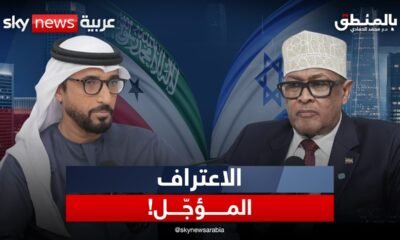

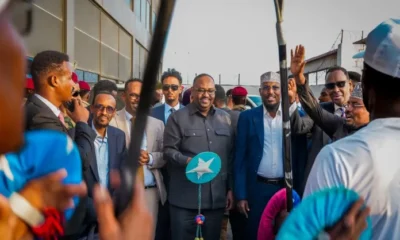





The historic recognition of Somaliland by Israel in December 2025 was initially hailed as a masterstroke of diplomacy. However, as 2026 unfolds, the “Jerusalem-Hargeisa Axis” is revealing itself to be a double-edged sword.
President Abdirahman Mohamed Abdullahi (Irro) finds himself navigating a strategic “pincer movement”: external military threats from the Yemeni Houthis and an internal surge of tribal friction and civil suppression.
The fundamental failure of the recognition strategy lies in the asymmetry of risk. While Israel gains a strategic “foothold” to counter Houthi dominance and Iranian maritime influence, Somaliland has inherited a regional bullseye.
The warning from Abdel-Malik al-Houthi is not mere rhetoric. By entertaining the possibility of an Israeli base west of Berbera, Somaliland has transitioned from a stable “beacon of peace” to a frontline actor in the Middle East’s most volatile conflict.
Unlike the UAE or Israel, Somaliland lacks a sophisticated missile defense shield. Critics argue that President Irro has traded long-term security for symbolic status, leaving Hargeisa and Berbera vulnerable to Houthi long-range projectiles and “suicide” drones.
Internal Erosion: The Crackdown on Dissent
Perhaps more damaging than the external threat is the perceived erosion of Somaliland’s democratic exceptionalism. Reports of a “mounting crackdown” on social media critics and journalists suggest that the administration is using the “security crisis” as a pretext to tighten control.
The arrest of individuals for Facebook posts has created a chilling effect that contradicts Somaliland’s 34-year reputation as a free society.
Most concerning are the allegations of tribalism being weaponized against specific clans (Habar Awal and Arap). In the delicate “Clan Consensus” model of Somaliland, using security forces to target rival groups is a recipe for internal collapse.
Analysts point to reports that Hargeisa may be hedging its bets by maintaining secret contacts with countries opposing the recognition. This “double-game” suggests a lack of confidence in the very alliance the government publicly champions.
Business vs. Elites
The perception of political interference in commerce—specifically in the oil and shipping sectors—has added a layer of public frustration. When political elites tied to the presidency attempt to monopolize the “Blue Economy” of the Berbera corridor, it alienates the very business community that funded Somaliland’s self-reliance.
A Policy Shift or a Strategic Error?
While Somaliland looks to the Trump administration for the “ultimate prize” of U.S. recognition, the internal instability may disqualify it. Washington and Brussels are unlikely to reward a state that appears to be descending into clan-based authoritarianism.
Every arrest in Hargeisa and every Houthi threat serves the narrative of Turkey and the Federal Government of Somalia (FGS). They are successfully framing Somaliland as a “destabilizing force” rather than a sovereign success.
President Irro stands at a crossroads. The pursuit of Israeli recognition was intended to be the final step toward global integration. Instead, it has triggered a “Digital Civil War” and placed the nation in the crosshairs of regional proxies.
The Verdict: If the Irro administration does not immediately pivot toward internal reconciliation, release political detainees, and distance itself from being a “military platform” for foreign powers, the recognition of 2025 may be remembered as the moment Somaliland’s hard-won stability began to unravel.
Somaliland Puts Minerals and Bases on the Table for Washington
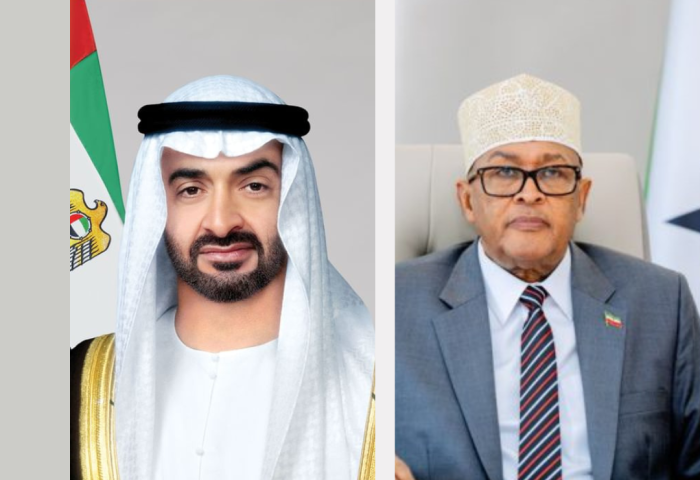
Mogadishu Walks Away, Hargeisa Steps Forward: How Somalia’s UAE Rift Speeds Somaliland Recognition.
Somalia’s decision to formally annul its security and defense agreements with the United Arab Emirates marks more than a routine diplomatic dispute. It signals a structural shift in the Horn of Africa — one that increasingly favors Somaliland’s long campaign for international recognition.
Mogadishu has presented the move as an assertion of sovereignty. In reality, it exposes the limits of that sovereignty. By cutting ties with Abu Dhabi, the Federal Government of Somalia has effectively abandoned the “Mogadishu First” framework that once allowed it to act as the primary gatekeeper for regional partnerships. The result is a widening opening for Somaliland to consolidate its position as a reliable, self-governing state actor.
The contrast between the two administrations is stark. While Somalia’s cabinet framed its decision in defensive terms, Somaliland’s response — led by Minister of the Presidency Khadar Hussein Abdi — projected confidence and continuity. His message was simple but decisive: partnerships are built on trust, delivery, and long-term consistency. Somaliland, not Mogadishu, has provided that consistency.
Nowhere is this clearer than in Berbera. When international actors hesitated, the UAE invested. That investment reshaped Berbera from a marginal port into a strategic maritime hub linking the Gulf, the Red Sea, and East Africa. For Abu Dhabi, Somaliland has evolved from a local partner into a cornerstone of its regional logistics and security strategy.
Israel’s formal recognition of Somaliland has accelerated this trajectory. It has transformed quiet cooperation into open geopolitical momentum. A new strategic triangle — Hargeisa, Abu Dhabi, and Jerusalem — is beginning to take shape, with direct implications for Red Sea security and global shipping lanes.
Several dynamics make UAE recognition of Somaliland increasingly plausible. First is economic reality. With defense ties severed in Mogadishu, the UAE’s multi-billion-dollar interests in Berbera rest entirely on Somaliland’s legal and security framework. Formal recognition would lock in those investments and remove lingering diplomatic ambiguity.
Second is regional alignment. Somaliland’s growing relationship with Israel fits naturally within the broader logic of the Abraham Accords. A Somaliland recognized by both Israel and the UAE would form a stability corridor along the Bab el-Mandeb — a critical chokepoint for global trade.
Third is power redistribution. As Somalia deepens its dependence on Turkey and Saudi Arabia, the UAE is recalibrating. Securing its maritime interests requires partners that control territory, guarantee security, and honor agreements. Somaliland meets all three criteria.
Mogadishu’s claims of authority over Berbera, Bosaso, and Kismayo increasingly ring hollow. In modern diplomacy, legitimacy is measured less by inherited charters and more by effective governance. Somaliland has maintained internal security, held multiple democratic transitions, and governed its territory continuously since 1991.
Somalia’s exit from the UAE defense pact is therefore not a setback for Abu Dhabi — it is a release. It frees the UAE from Somalia’s internal contradictions and redirects its focus toward its most successful Horn of Africa partnership.
As Mogadishu narrows its options, Somaliland expands its horizon. Recognition is no longer a distant aspiration. It is becoming the logical endpoint of a long-running geopolitical realignment. The remaining question is not whether Somaliland will gain further recognition — but how soon the next domino falls.
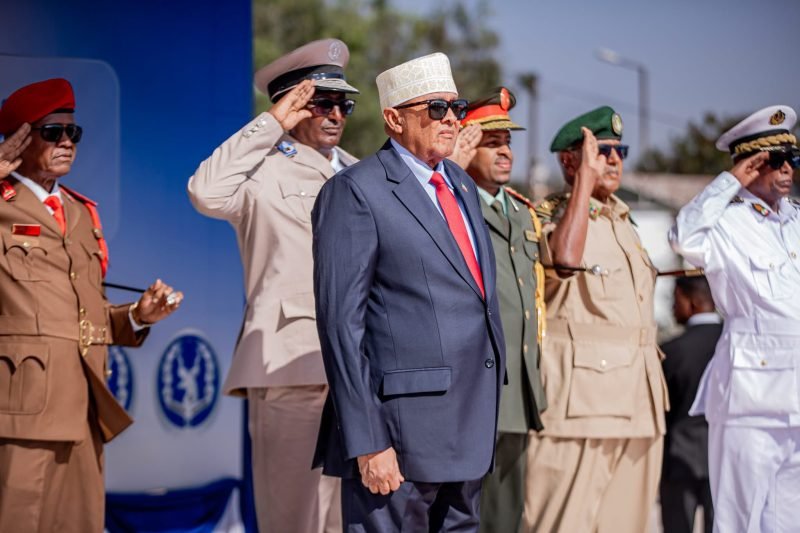
The Sovereignty of Certainty: Why 2025 Marks Somaliland’s Irreversible Global Integration.
As the sun rises over Naasa Hablood on the first morning of 2025, Somaliland wakes up in a different geopolitical reality. This is no longer the uneasy calm of an “unrecognized” state surviving on patience and principle. This is the confidence of a nation that has crossed the diplomatic sound barrier — and will not be pushed back.
For more than three decades, Somaliland lived a paradox: a functioning state treated as a fiction. Elections without recognition. Borders without acknowledgment. Security without applause. That era is over. What changed in late 2024 was not just diplomacy — it was the collapse of an outdated regional order that had relied on pretending Somaliland did not exist.
The Ethiopia memorandum, the Red Sea realignment, and Israel’s recognition did not create Somaliland’s sovereignty. They confirmed it. While Mogadishu remains trapped in rival Gulf agendas and internal paralysis, Hargeisa has emerged as the Horn of Africa’s most reliable strategic anchor — stable, democratic, and operational.
This is why 2025 will not be remembered primarily as a year of flags and ceremonies. It will be remembered as the year Somaliland moved decisively from aid to trade.
The Berbera Corridor is no longer a promise; it is an artery. Infrastructure, logistics, energy, and digital investment are accelerating not because of sympathy, but because global markets recognize value. The private sector has already voted — and it voted for Somaliland. Governments are now playing catch-up.
But history does not reward complacency. Global visibility brings global scrutiny. If Somaliland is to be a pillar of Red Sea security and commerce, its institutions must match its strategic weight. Transparency, governance, and internal cohesion are no longer domestic issues — they are national security imperatives.
To the diaspora and the youth: the narrative has shifted. You are no longer explaining Somaliland’s existence. You are shaping its trajectory. The waiting phase is finished.
2025 will be defined by three tests:
Strategic autonomy — refusing to become a proxy in the Egypt-Ethiopia rivalry.
Economic diversification — ensuring Berbera’s success reaches rural and pastoral communities.
Democratic consolidation — protecting the system that made this moment possible.
Somaliland was not gifted recognition. It earned inevitability.
The era of asking is over.
The era of building has begun.
Happy New Year to the Republic of Somaliland.
WARYATV Editorial Board
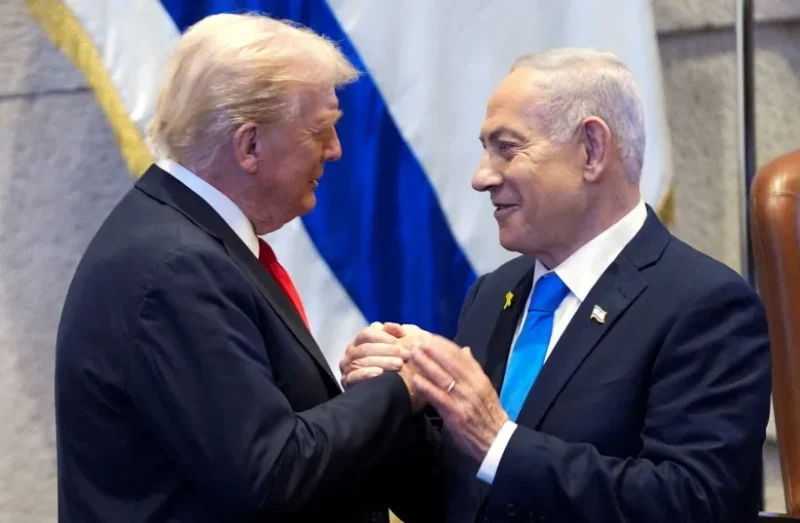
Prime Minister Benjamin Netanyahu’s meeting with President Donald Trump is not another routine diplomatic checkpoint. It is a moment of closure. On Somaliland, there is no room left for ambiguity, sequencing, or “later.” The recognition has been announced. The strategic logic is clear. What remains is enforcement.
Netanyahu must fight ruthlessly to ensure that Somaliland’s recognition is completed in full, operationalized, and locked into a durable US–Israel–Somaliland alignment—especially against the Houthi threat in the Red Sea. Anything less is not prudence. It is delay dressed up as caution.
Israel broke a 30-year diplomatic freeze by recognizing Somaliland because it serves Israeli security interests. Somaliland sits astride the Bab el-Mandeb, the same chokepoint the Houthis are attempting to weaponize against global trade. Recognition was never about symbolism; it was about positioning. Slowing it down, or allowing it to drift into bureaucratic limbo would signal weakness—to enemies and allies alike.
Trump respects results, not half-measures. Netanyahu understands this better than most. If the United States hesitates now, it hands Tehran and its proxies a victory without a shot fired. The Houthis have already issued threats against “any Israeli presence” in Somaliland. That alone proves the strategic value of the move. Enemies do not threaten assets that don’t matter.
The task in Florida is therefore simple and non-negotiable:
First, finish the recognition process. No provisional language. No ambiguity. What Israel recognized must be treated as a fact, not a proposal awaiting international comfort.
Second, enforce the terms already signed. Security coordination, intelligence cooperation, and maritime alignment must move from paper to practice. Somaliland cannot be left exposed after taking a historic step that openly defies hostile regional actors.
Third, bind Washington into the triangle. The US does not need to announce recognition tomorrow, but it must align operationally—on Red Sea security, on Houthis, and on Berbera as a strategic node. Quiet alignment now locks in public recognition later. Delay risks losing momentum entirely.
The danger is not opposition. The danger is drift.
Somaliland has waited three decades for this moment. Israel acted because the window opened. If Netanyahu leaves Mar-a-Lago without firm US buy-in, the signal to adversaries will be clear: pressure works. That is precisely the lesson Hamas, Hezbollah, and the Houthis must not be allowed to learn.
This is not the time for diplomatic finesse. It is the time for closure.
Netanyahu should leave Trump’s table with one outcome secured: Somaliland recognition irreversible, enforced, and integrated into a shared US-Israel security framework. Anything else would not preserve peace. It would merely postpone the next conflict.
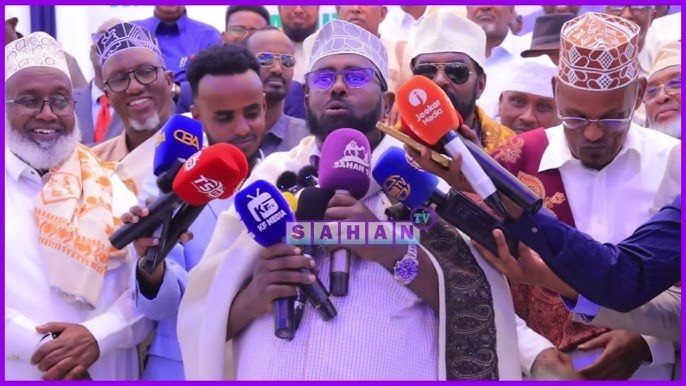
A Plastic Hat. A Microphone. A Few Dollars. How Somaliland’s State Is Being Undermined From Within.
The Republic’s structural integrity is facing a silent but lethal assault—not from external enemies alone, but from an internal ecosystem security circles increasingly describe as the Media Mafia. This is not journalism. It is not free speech. It is a transactional machinery that converts tribal grievance into public disorder and sells national stability for pocket change.
At its core, the Media Mafia functions as a logistical bridge between corrupt traditional leaders and chaos. Investigative assessments show that large segments of the media have abandoned their role as public watchdogs and recast themselves as mercenaries. Airtime is no longer earned through credibility or public interest, but bought—often for less than one hundred dollars. With that payment, national security protocols are bypassed and inflammatory rhetoric is injected directly into the public bloodstream.
This is the most dangerous evolution of the “Plastic Hat” crisis: the microphone-for-hire economy.
Whenever a traditional leader seeks to issue threats against the government, provoke a rival clan, or elevate himself above the law, a willing media partner is ready. These so-called journalists provide more than equipment. They provide legitimacy. They transform individuals with no constitutional standing—often illiterate, often disconnected from modern governance—into national actors. In doing so, they are not reporting power; they are manufacturing it.
The result is a feedback loop of destruction. The louder the provocation, the more airtime it receives. The more division it creates, the more profitable it becomes. Conflict is rewarded. Restraint is ignored. Peace does not trend; outrage does. The microphone becomes a weapon, and the newsroom becomes a command post for a shadow government.
The tactical danger is profound. For a few dollars, the cultural fabric of the nation is shredded. Minor figures are inflated into kingmakers. Manufactured disputes are framed as existential crises. Tribal ego is elevated above constitutional order. In this parallel reality, the word of a self-appointed leader carries more weight than the law of the land. The state is not defeated—it is bypassed.
This is not accidental. It is systematic.
By monetizing rage and broadcasting incitement, the Media Mafia has become the primary engine of social fragmentation. It has normalized hostility toward institutions and trained communities to see disorder as representation. In effect, it has replaced citizenship with spectacle and governance with noise.
The response must be equally clear-eyed. This is not a press issue. It is a national security issue.
The state must move decisively to regulate the media space and criminalize paid incitement. Financial links between traditional coronations and media coverage must be traced. Journalists who accept payment to broadcast threats, calls for unrest, or tribal hatred must be treated not as commentators, but as accomplices. Freedom of expression does not extend to the sale of national destabilization.
Somaliland cannot survive a dual power system. And it cannot survive a media class that functions as the public relations wing of a tribal insurgency.
If the microphones remain for hire, the shadow government will keep growing—until it consumes the state itself.
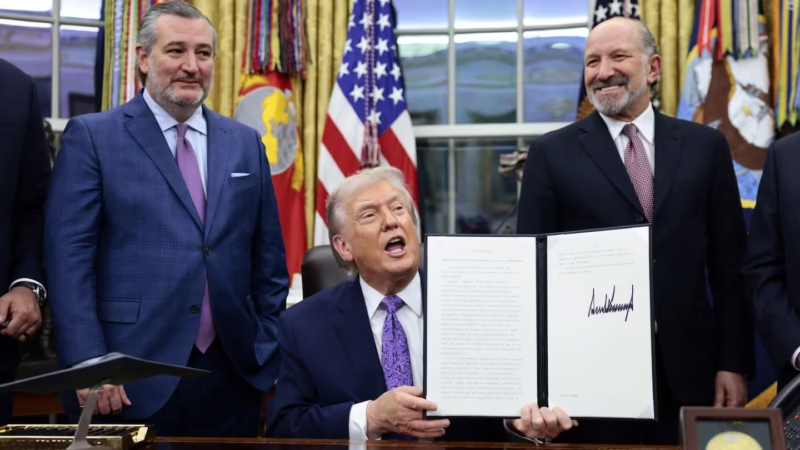
Why Senator Ted Cruz’s Somaliland Advocacy Signals a Strategic Shift in U.S. Horn of Africa Policy.
Senator Ted Cruz’s backing of Somaliland marks a turning point in U.S. strategy toward the Horn of Africa, linking Red Sea security, China containment, and the Trump Doctrine.
In the quiet corridors of the Russell Senate Office Building, a subtle but consequential shift in Washington’s approach to the Horn of Africa is taking shape. While official State Department language remains deliberately cautious, Senator Ted Cruz has emerged as the most forceful and consistent voice reframing Somaliland not as a diplomatic anomaly, but as a strategic necessity.
His recent remarks reflect more than sympathy for an unrecognized democracy; they signal a recalibration of U.S. interests anchored in maritime security, great-power competition, and hard geopolitical math.
Cruz’s intervention departs sharply from the traditional humanitarian framing that has long defined Somaliland discussions in Washington. Rather than leaning on democracy promotion alone, he has grounded his case in operational realities.
Somaliland’s control of an 850-kilometer coastline along the Gulf of Aden, its record of counter-piracy enforcement, and its stability amid regional collapse place it squarely within U.S. security priorities. At a moment when the Red Sea is under strain from Houthi attacks, Iranian logistics networks, and transnational militant cooperation, Cruz is arguing that ignoring Somaliland is no longer a neutral policy choice—it is a strategic risk.
For U.S. Africa Command and naval planners, this argument resonates. The Red Sea corridor is no longer a peripheral theater; it is a global chokepoint where commercial shipping, energy flows, and military access converge.
Cruz’s pointed questioning of the State Department about expanding cooperation with Somaliland sends a clear message to the bureaucracy: the long-standing posture of non-recognition is increasingly misaligned with U.S. security needs.
Equally significant is how Cruz has placed Somaliland within the broader framework of great-power rivalry. By highlighting Hargeisa’s alignment with democratic partners such as Taiwan and Israel, he has woven Somaliland into the emerging architecture of alliances countering authoritarian expansion.
Cruz’s reminder that Beijing reacted angrily to his earlier call for President Trump to recognize Somaliland underscores just how sensitive the issue has become.
Behind the scenes, Somaliland’s own diplomacy has strengthened Cruz’s hand. Intelligence and defense sources indicate that Hargeisa has quietly offered concrete forms of cooperation that appeal directly to Washington’s strategic instincts.
At the same time, Somaliland’s untapped mineral resources fit neatly into America’s drive to secure critical supply chains independent of Beijing.
Cruz’s advocacy is therefore not symbolic. By pressing for institutional engagement—through defense legislation, security cooperation, or executive action—he is laying the groundwork for a policy shift that acknowledges a long-standing reality: Somaliland already functions as a sovereign state and a reliable partner, even if it lacks formal recognition.
As instability deepens elsewhere in the Horn, Washington’s calculus is changing. The question now is not whether Somaliland matters to U.S. strategy, but whether the United States will move quickly enough to formalize a partnership before rivals exploit the vacuum.

IRRO’S SILENT STRATEGY + AWDAL’S POWER HOUSE ELDERS = FOREIGN PLOT COLLAPSES.
The rapid stabilization of Borama after a brief security disruption offers more than a local success story—it is a powerful demonstration of Somaliland’s evolving national resilience, rooted in a hybrid system where traditional authority and state strategy operate in tandem.
For a nation consistently targeted by external actors seeking to fracture its unity, the Borama episode has become a case study in how indigenous conflict-resolution mechanisms, paired with a calibrated presidential strategy, can neutralize destabilization attempts before they metastasize.
The Awdal Model: When Traditional Authority Becomes a Security Instrument
The Awdal Model: Traditional Leaders as Architects of Security
The intervention by Awdal’s traditional leaders was neither symbolic nor ceremonial. It was a strategic act of governance.
Two features stood out:
Diagnostic Clarity:
Local elders immediately reframed the unrest as an externally engineered trap—an interpretive shift that stripped agitators of their narrative and prevented the escalation that foreign actors rely on. This diagnostic accuracy is the cornerstone of Somaliland’s traditional peacekeeping culture: the ability to distinguish genuine grievances from manufactured crises.
Proactive Ownership:
Their coordination with police and security forces, followed by a sweeping public call for calm, reasserted social order from within the community itself. Borama’s residents responded swiftly, demonstrating the depth of civic trust and the region’s historical role as Somaliland’s intellectual and peace-anchoring center.
This “Awdal Model” reinforces a long-standing truth: Somaliland’s elders are not mere custodians of tradition—they are frontline stabilizers whose authority is indispensable to the republic’s internal security architecture.
President Irro’s Strategic Perimeter: Steering Without Overreach
President Abdirahman Mohamed Abdullahi Irro’s handling of the incident was equally decisive. Rather than rushing in with force, the President set a deliberate strategic frame, allowing traditional leaders to lead while ensuring that state institutions stood ready to reinforce the peace.
Three principles defined his approach:
Trust in Indigenous Mechanisms:
By empowering traditional leaders instead of overshadowing them, the President avoided fueling grievances or offering foreign actors the optics of state heavy-handedness.
Historical Intelligence:
Awdal is the birthplace of Somaliland’s modern statecraft. Irro’s respect for this legacy strengthened local ownership and restored normalcy without coercion.
Executive Foresight:
Irro recognized that the Borama disturbance fit the pattern of external destabilization used previously in Lasanod. His ability to read the wider geopolitical implications ensured that security forces responded with restraint, precision, and clarity of purpose.
The Lasanod Lesson: A Permanent Reminder of the External Playbook
The comparison with Lasanod is not merely historical—it is strategic. The same actors who injected money, propaganda, and armed agitation into Sool attempted to replicate their methods in Awdal. This time, it failed.
Borama’s rejection of the destabilization script is a significant setback for Somaliland’s adversaries. It confirms something new: the national public has developed a sharper awareness of foreign manipulation, and the state’s conflict-response mechanisms are maturing.
Toward a Formal Architecture of Resilience
The Borama incident exposed foreign intent—but it also validated Somaliland’s internal strengths. To protect the nation against more sophisticated destabilization campaigns, the government’s next phase must formalize this resilience:
Institutionalize the traditional-state partnership through early-warning systems anchored in community leadership.
Build an information-defense doctrine capable of countering coordinated disinformation campaigns.
Invest in economic and social anchors in Awdal and other strategic regions to eliminate the vulnerabilities adversaries exploit.
Borama’s peaceful outcome is not an accident. It is the result of a political culture that knows how to defuse crises before they become national emergencies. And it underscores a deeper truth: Somaliland’s greatest defensive weapon is not its military strength, but its social architecture—one where modern governance and traditional authority reinforce each other in a deliberately crafted system of peace.
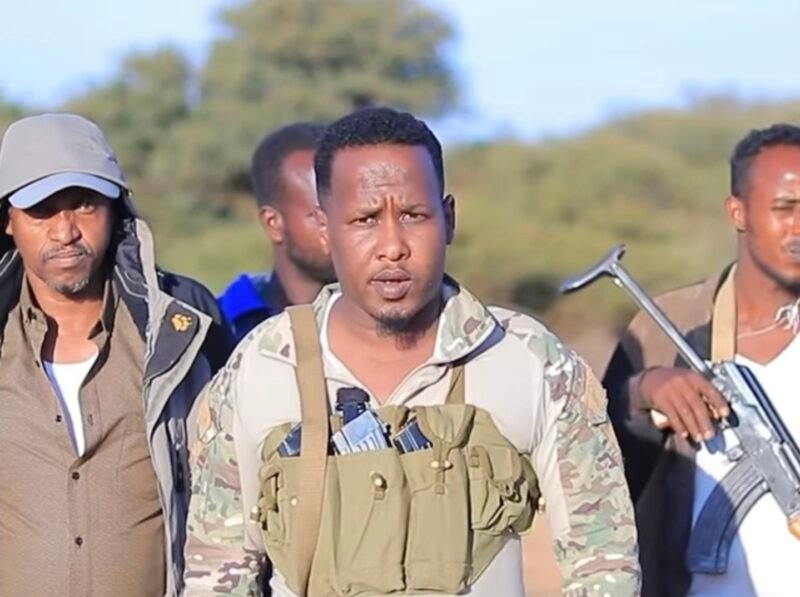
Clan Tensions and Cabinet Chaos: Inside President Irro’s Most Dangerous Political Test.
HARGEISA — Not even a year into his presidency, Abdirahman Mohamed Abdullahi Irro finds himself boxed in by a convergence of political crises that threaten to overwhelm his administration.
What was meant to be a period of consolidation after a peaceful transfer of power has instead devolved into a landscape marked by factionalism, clan pressures and mounting diplomatic vulnerabilities. The stability that Somaliland has long projected to the world is now showing visible cracks.
The confrontation involving former president Muse Bihi Abdi at Cigaal International Airport has become the catalyst for a broader political unraveling.
What began as a dispute over vehicle access quickly escalated into gunshots, public outrage and, most dangerously, the mobilization of armed groups aligned with Bihi’s political base.
Their demand for an official government apology—accompanied by threats of retaliation—amounts to political coercion rooted in clan-based muscle. For a state that defines itself by its break from the militia politics of early 1990s Somaliland, this moment is deeply destabilizing.
Instead of containing the fallout, the government’s response intensified it. A statement by Minister of the Presidency Khadar Hussein Abdi—offering an apology while asserting that “Muse Bihi was wrong”—landed with equal parts confusion and frustration.
It signaled not conciliation but disarray, feeding into a growing perception that the executive is reactive, divided and unable to project coherent authority. For an administration already struggling to demonstrate internal discipline, the episode has become a symbol of weakness.
The airport standoff is only the most visible manifestation of a larger internal drift. Within Irro’s cabinet, conflicting public messages have become common, reflecting either poor coordination or deep ideological fissures. Both interpretations point to a governing structure that lacks cohesion at a time when unity is essential.
More alarming is the resurgence of clan politics, an old fault line that Somaliland worked for decades to contain. The recent dispute over the publication of the “Xeer Iise” customary law book revealed the administration’s inability to manage competing clan pressures.
The government’s abrupt reversal—from accepting the book to banning it amid rising tensions—underscored an executive caught between asserting national authority and placating powerful local constituencies. Meanwhile, clan elders increasingly dominate media debates in place of elected officials, signaling a drift away from institutional governance toward tribal arbitration.
This internal fragmentation comes at the worst possible moment. President Irro campaigned on the promise of achieving international recognition by late 2025—a deadline that now appears politically and diplomatically unrealistic.
Recognition requires stability, unity, and a government capable of demonstrating institutional maturity. Instead, Somaliland today presents an image of fracturing political order just as Somalia is exploiting diplomatic tools—such as new e-visa restrictions—to reinforce its own sovereignty narrative.
The cumulative effect is stark: President Irro is not navigating a temporary turbulence but confronting a structural crisis that threatens the foundations of Somaliland’s political model.
If unchecked, these overlapping fractures risk eroding three decades of hard-won statehood and weakening the very case for recognition that once defined his presidency.

Germany Backtracks After Merz’s Remarks on Syrian Refugee

2,000 Ships Held Hostage—Iran Turns Global Oil Route Into a Controlled Gate

UK Leads 35-Nation Push to Reopen Strait of Hormuz


-
 US-Israel war on Iran1 month ago
UK Refuses Iran Strike Access, Trump Fires Back
-
 Russia-Ukraine War1 month ago
Europe’s Spies Challenge Trump’s Ukraine Peace Optimism
-
 Top stories1 month ago
War Expands Across Region as Iranian Militias Join Fight
-
 Top stories1 month ago
India Turns to Brazil in Strategic Minerals Push Against China
-
 US-Israel war on Iran1 month ago
Iran Pledges ‘Never, Ever’ to Hold Bomb-Grade Material
-
 US-Israel war on Iran1 month ago
Syria Under Fire on Two Fronts
-
 Russia-Ukraine War1 month ago
Estonia Warns NATO Would Strike Deep Inside Russia if Baltics Are Invaded
-
 Top stories3 weeks ago
Meloni Breaks Ranks: Italy Warns on Iran War