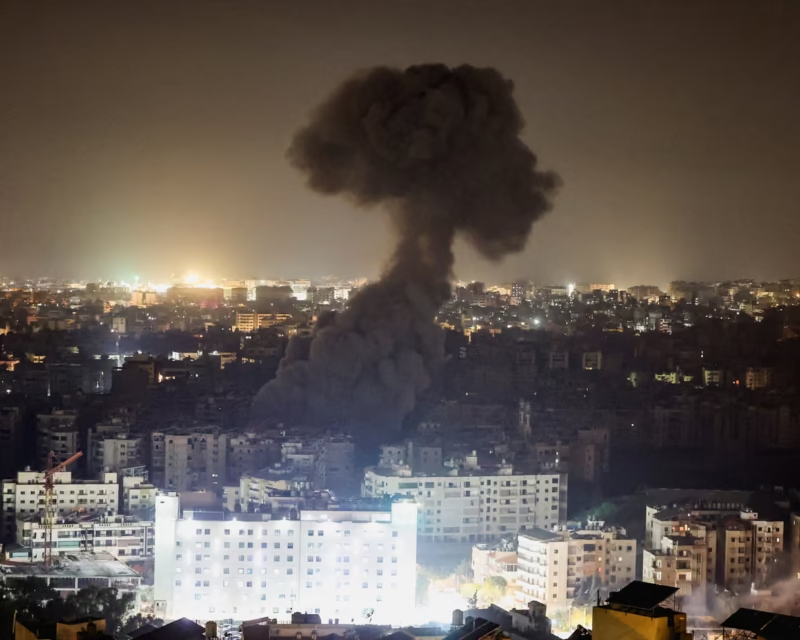
Israel’s recent airstrikes on the Iranian-backed Houthi movement in Yemen, particularly the second round of strikes on September 29, highlight a critical moment in the broader regional conflict. The air raids targeted military installations, oil facilities, and other key Houthi infrastructure. These long-range operations, involving dozens of Israeli aircraft and mid-air refueling, mark a significant escalation in Israel’s efforts to neutralize the Houthi threat, which has launched several ballistic missile attacks on central Israel in recent weeks.
This analysis examines whether Israel’s efforts will effectively deter the Houthis and what the implications are for Israeli strategy and the wider regional balance.
Israel’s strikes on the Houthis serve two immediate objectives: sending a clear message to Iran and its proxies, and signaling Israel’s ability to project military power beyond its immediate borders. The Houthis, who have grown increasingly bold and technologically advanced, have been stockpiling long-range missiles and drones with Iranian assistance. This buildup has enabled them to target not only local adversaries like Saudi Arabia but also Israel, which they now view as a key player in the region’s power struggles.
The significance of these airstrikes extends beyond the immediate damage inflicted on Houthi infrastructure. Israel is demonstrating that it can conduct long-range precision strikes, utilizing intelligence, air superiority, and real-time operational training. This is not just about degrading the Houthis’ military capabilities; it’s about reinforcing Israel’s position as a major regional actor capable of reaching any adversary, regardless of distance.
However, while Israel’s strikes may achieve immediate tactical successes, the broader question remains: will these operations deter the Houthis from continuing their attacks on Israel?
One of the key challenges Israel faces in deterring the Houthis is the group’s resilience, combat experience, and substantial backing from Iran. Over the past decade, the Houthis have amassed an arsenal of ballistic missiles, cruise missiles, and drones, making them a formidable non-state actor. Their recent missile strikes on Israel demonstrate both their boldness and their long-range capabilities.
Despite Israel’s airstrikes, the Houthis remain largely intact, with much of their military infrastructure untouched. The group has a long history of enduring external military interventions. During the Yemen Civil War, they successfully fought off Saudi-backed government forces and have shown they can withstand attacks from technologically superior adversaries.
Additionally, the Houthis benefit from Iran’s continued support. Tehran provides them with advanced weaponry, logistical aid, and financial backing. This support ensures that the Houthis will likely continue to pose a threat, even after suffering military setbacks from Israeli airstrikes. The relationship between Iran and the Houthis is symbiotic, with both parties benefiting from the instability their partnership creates in the region.
Israel’s long-range airstrikes against the Houthis highlight a broader strategic challenge that it has faced in other theaters, such as Gaza, Lebanon, and Syria. While Israel’s air power is unmatched in the region, its ability to completely neutralize asymmetric threats from groups like Hamas, Hezbollah, and now the Houthis, has been limited.
Air power alone, particularly in distant theaters like Yemen, may not be sufficient to deter or degrade the Houthis’ capabilities. Unlike Gaza or southern Lebanon, where Israel has a significant advantage due to proximity, long-range operations in Yemen face logistical and strategic difficulties. The strikes are impressive in terms of precision and coordination, but the Houthis’ deep entrenchment and external support make them difficult to defeat solely through air campaigns.
The strikes on the Houthis also fit into Israel’s broader conflict with Iran. Tehran’s strategy of arming and supporting proxies across the Middle East—Hezbollah in Lebanon, militias in Iraq, and the Houthis in Yemen—is designed to keep Israel and its allies on the defensive. Iran’s objective is to stretch Israel’s military and intelligence resources across multiple fronts, from Lebanon to Gaza to Yemen.
By targeting the Houthis, Israel aims to send a message not only to the group itself but also to Iran. Israel is making clear that it will not tolerate Iranian-backed attacks on its territory, even if those attacks originate from distant Yemen. However, the long-term success of this strategy depends on Israel’s ability to consistently disrupt Iran’s supply lines and influence in the region.
Israel’s airstrikes against the Houthis serve as both a military operation and a strategic message to its adversaries in the region. However, deterring the Houthis will require more than just airpower. The group’s deep-rooted resilience, Iranian support, and experience in enduring external military interventions make them a difficult adversary to neutralize completely.
While the strikes may temporarily degrade the Houthis’ capabilities, their long-range missile stockpiles and operational boldness suggest that they will remain a significant threat. Israel’s broader challenge will be how to sustain long-range operations and counter Iran’s regional strategy without becoming bogged down in multiple fronts. The effectiveness of these airstrikes as a deterrent will ultimately depend on whether Israel can consistently disrupt Houthi operations and prevent further attacks on its territory.
In the short term, the Houthis are unlikely to be fully deterred by these airstrikes, and Israel will need to continue adapting its strategy to address the evolving nature of asymmetric warfare in the Middle East.