In this analysis of Michael Brenner’s article, we explore his critique of Western leaders’ responses to crises in Ukraine and Palestine. Brenner argues that their actions reflect a lack of accountability and rationality, leading to potential dire consequences.
For WARYATV readers, Michael Brenner’s article “The West’s Reckoning?” offers a critical examination of Western leaders’ actions in response to two significant events: the conflict in Ukraine and the ongoing crisis in Palestine. Brenner argues that Western leaders are displaying a lack of accountability and rationality in their responses, leading to what he describes as a path of collective suicide for the West, both morally and economically.
Brenner suggests that Western leaders’ inability to acknowledge feelings of humiliation or shame reflects a deeper problem of entrenched dogma, arrogance, and insecurity. He identifies panic behavior among Western leaders, characterized by fear, agitation, and a failure to confront reality. This panic behavior, according to Brenner, leads to feckless, grotesque, and dangerous actions.
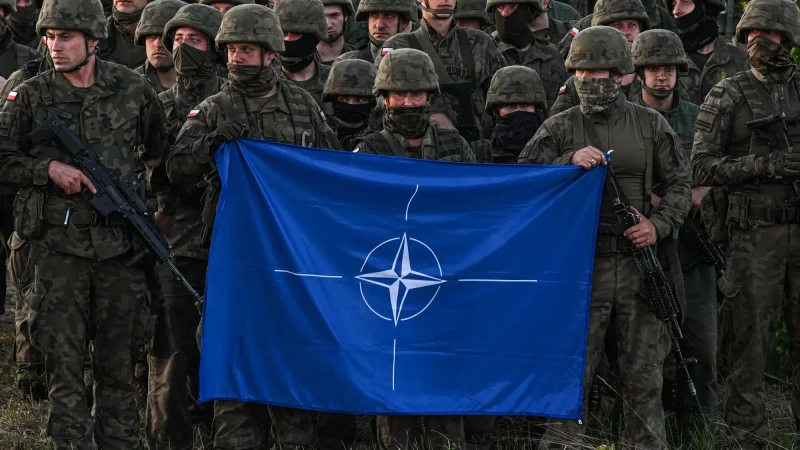
The feckless actions of Western leaders, as outlined by Brenner, include proposals such as stationing NATO military personnel in Ukraine as a deterrent to Russian forces, despite past failures to deter Russian aggression. Additionally, Brenner criticizes the American airdrop of humanitarian aid in Gaza as a hollow gesture that ignores the broader complicity of the United States in the suffering of Palestinians.
Furthermore, Brenner highlights the rhetoric of leaders like Rishi Sunak, interim Prime Minister of the U.K., who he accuses of exacerbating tensions in the Israel-Palestine conflict with inflammatory statements and unsubstantiated accusations.
Brenner describes the Western governments’ complicity in the violence against Palestinians as grotesque, emphasizing that their actions are seen as inhumane and hypocritical by much of the world. He warns of the potential for further escalation, particularly in Europe, due to the reckless behavior of Western leaders.
In conclusion, Brenner suggests that the irrationality and lack of accountability demonstrated by Western leaders stem from deeper societal trends, including nihilism and susceptibility to collective hysteria. He urges readers to consider the broader implications of these actions and their potential consequences for global stability.