
Top stories
Privacy Policy

WARYATV Privacy Policy
This Privacy Policy describes how WARYATV (“WARYATV,” “we,” “us,” or “our”) collects, uses, and protects the personal information of users (“you”) who visit our website, www.waryatv.com, and engage with our content, news articles, and services. We are committed to protecting your privacy and ensuring you have a positive experience on our site.
1. Information We Collect
We collect two main types of information: Personal Data and Non-Personal Data (Usage Data).
A. Personal Data
This information is provided directly by you when you interact with us. It may include:
- Contact Information: Name and email address when you subscribe to our newsletter, submit a contact form, or register an account.
- Comments and Engagement: Any information you post in the comments sections of our articles.
- Communication Data: Records of correspondence if you contact us directly.
B. Non-Personal Data (Usage Data)
This information is collected automatically as you navigate and interact with the website. It helps us understand how our site is used and includes:
- Device and Browser Information: Your device type, operating system, browser type, and language settings.
- IP Address: Your Internet Protocol (IP) address, which may be used to infer your general geographical location (e.g., country or city).
- Activity Data: Pages viewed, the time and date of your visit, the time spent on those pages, referring websites, and clickstream data.
2. How We Collect Your Information
We use several methods to collect data:
- Direct Interaction: When you fill out forms (e.g., subscriptions, contact forms, account registration).
- Cookies and Tracking Technologies: We use cookies, web beacons, and similar technologies to collect Usage Data, personalize your experience, and remember your preferences. (See Section 5).
- Third-Party Analytics: Tools like Google Analytics and Site Kit are used to monitor and analyze web traffic and user behavior on the site.
3. How We Use Your Information
We use the collected information for the following purposes:
- To Operate the Website: To present content effectively and ensure the functionality of the website.
- Communication: To send you newsletters, updates, and marketing materials (if you have opted in) and to respond to your inquiries.
- Analytics and Improvement: To analyze website traffic, measure the performance of our content, understand audience demographics, and improve the user experience and service offerings.
- Security: To detect, prevent, and address technical issues, fraud, or violations of our Terms of Service.
- Personalization: To customize the content and advertising you see based on your browsing history and interests.
4. Disclosure of Your Information
We do not sell your Personal Data. We may share your information only in the following circumstances:
- Service Providers: We share data with trusted third-party vendors who perform services on our behalf, such as website hosting, data analysis, email delivery, and marketing assistance. These parties are obligated to keep the information confidential and use it only for the purposes for which we disclose it to them.
- Legal Requirements: If required to do so by law or in the good faith belief that such action is necessary to comply with a legal obligation, protect the rights or property of WARYATV, or protect the safety of our users or the public.
- Business Transfers: In the event of a merger, sale of assets, or acquisition, your Personal Data may be transferred to the acquiring entity.
5. Cookies and Tracking Technologies
A cookie is a small file placed on your device. We use cookies to:
- Maintain your user session and settings.
- Track and target the interests of our users to enhance the experience on our site.
- Remember information so you don’t have to re-enter it during your visit.
You have the option to accept or refuse cookies. Most web browsers automatically accept cookies, but you can usually modify your browser setting to decline cookies if you prefer. However, if you choose to decline cookies, you may not be able to fully experience the interactive features of WARYATV.
6. Third-Party Links
Our website may contain links to other websites that are not operated by us (e.g., sources cited in articles or advertisements). If you click on a third-party link, you will be directed to that third party’s site. We strongly advise you to review the Privacy Policy of every site you visit. We have no control over and assume no responsibility for the content, privacy policies, or practices of any third-party sites or services.
7. Children’s Privacy
WARYATV is not directed to individuals under the age of 13. We do not knowingly collect personally identifiable information from anyone under the age of 13. If you are a parent or guardian and you are aware that your child has provided us with Personal Data, please contact us. If we become aware that we have collected Personal Data from children without verification of parental consent, we take steps to remove that information from our servers.
8. Changes to This Privacy Policy
We may update our Privacy Policy from time to time. We will notify you of any changes by posting the new Privacy Policy on this page and updating the “Effective Date” at the top of this Policy. You are advised to review this Privacy Policy periodically for any changes.
9. Contact Us
If you have any questions about this Privacy Policy, please contact us:
- By email: waryatv@waryatv.com


They’re not working royals—but not fully private either. The monarchy now faces a quiet identity crisis.
LONDON — The British monarchy is once again confronting the long shadow of Prince Andrew, as questions mount over how to handle his daughters, Princess Beatrice and Princess Eugenie, in the wake of renewed scrutiny tied to the Jeffrey Epstein scandal.
The issue presents a delicate institutional test for King Charles III, whose effort to modernize and streamline the monarchy now collides with unresolved reputational risks inside his own family.
Andrew, stripped of his royal titles and public duties, remains a destabilizing figure. Though he has denied wrongdoing and faces no criminal charges, newly surfaced communications and continued investigative attention have revived public focus on his past associations. That scrutiny is now extending—indirectly but persistently—to his daughters.
Beatrice and Eugenie occupy an ambiguous space. They are not working royals and receive no official public funding, yet they retain their titles and remain part of the royal orbit. Both have built independent careers—Beatrice in business and advisory roles, Eugenie in the art world—while maintaining a visible, if limited, presence at family events.
That dual status is now under strain.
In recent months, their selective appearances—and notable absences—at key royal gatherings have signaled a quiet recalibration. Palace officials appear to be navigating a narrow path: preserving family unity while minimizing reputational exposure.
The challenge lies less in legal liability than in perception. There is no evidence implicating either princess in wrongdoing. But in an institution where symbolism matters as much as substance, proximity to controversy carries its own weight.
Analysts say the monarchy’s problem is structural. A “half-in, half-out” model risks blurring the line between public duty and private life at a time when expectations of accountability are rising. For a monarchy seeking to project discipline and clarity, ambiguity can be costly.
For Charles, the stakes extend beyond two individuals. The broader project—reshaping the monarchy into a leaner, more credible institution—depends on drawing clearer boundaries around who represents the Crown and who does not.
So far, the palace has opted for discretion over decisive action. But that strategy may prove difficult to sustain.
As scrutiny of Andrew persists, the monarchy faces a quiet but consequential question: in a modern royal system, is there still room for figures who are neither fully inside nor entirely outside?
Week six—and the war is widening, not ending. Cities targeted, infrastructure threatened. Where does this stop?
TEL AVIV / TEHRAN — The war between Iran, the United States and Israel has entered its sixth week with no sign of de-escalation, as airstrikes deepen inside Iranian territory and missile fire continues to reach Israeli towns, underscoring a conflict expanding in both scope and risk.
Iranian state media reported that U.S. and Israeli strikes targeted Qassem Soleimani International Airport in Ahvaz, a key facility in the southwestern province of Khuzestan. Local officials described the strike as part of a sustained campaign against strategic infrastructure. Additional attacks were reported near Isfahan, where Iranian sources said at least five people were killed, while explosions in Karaj—near Tehran—highlighted the growing proximity of strikes to the capital.
The U.S. military, through United States Central Command, released footage showing the interception and destruction of Iranian drones it said were targeting American personnel across the region.
Iran responded with missile launches toward Israel. Air defense systems intercepted projectiles over Haifa, according to Israeli authorities, though debris fell in multiple locations. Sirens sounded across northern and southern Israel, reflecting the continued reach of Iran’s retaliatory capabilities despite weeks of sustained bombardment.
Israeli Defense Minister Yisrael Katz signaled a further escalation, warning that Israel would intensify strikes on Iranian leadership, military assets and critical infrastructure if attacks persist. His remarks point to a strategy that increasingly blends battlefield pressure with targeted decapitation of command structures.
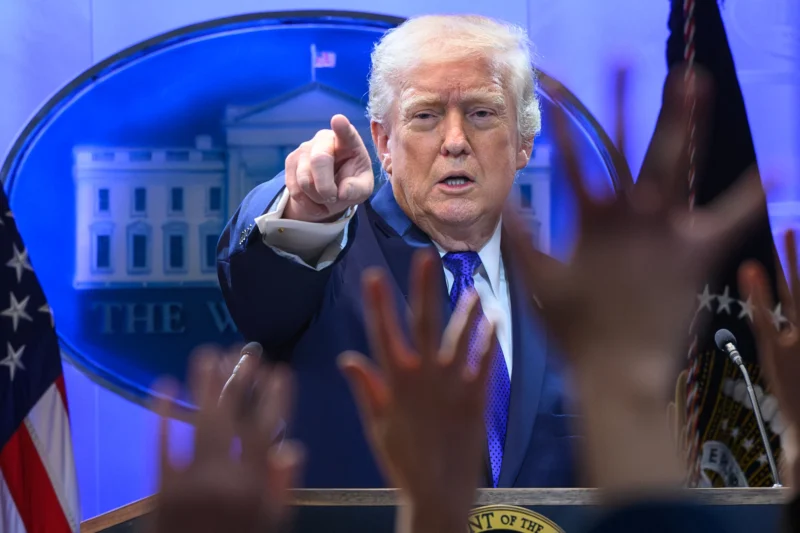
At the same time, Donald Trump renewed threats to expand the conflict’s scope, warning that U.S. forces could strike Iranian power plants and bridges if Tehran does not reopen the Strait of Hormuz. The warning marks a potential shift toward targeting infrastructure with civilian impact—raising the stakes of an already volatile conflict.
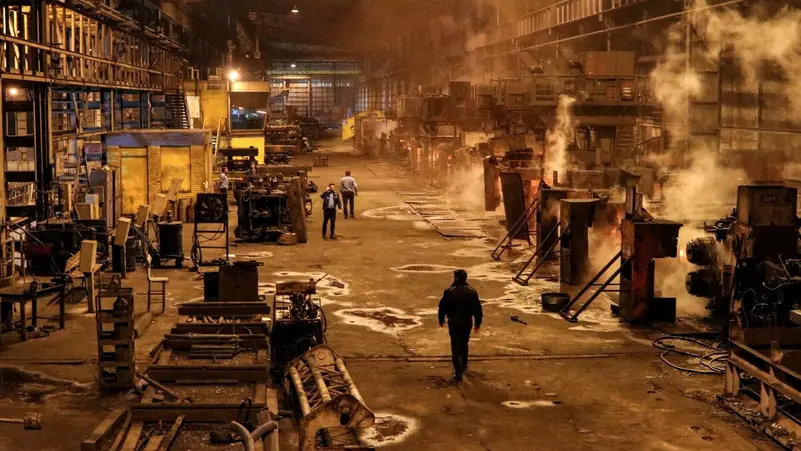
Since the war began on February 28, both sides have broadened their targeting frameworks. U.S. and Israeli operations have focused on degrading Iran’s missile systems, industrial base and command networks. Iran, in turn, has pursued a strategy of distributed retaliation, using missiles and drones to strike Israel and regional actors while maintaining pressure on global energy routes.
The result is a war without a clear off-ramp.
The continued closure of the Strait of Hormuz remains a central flashpoint, amplifying economic risks and increasing the likelihood of wider international involvement. Meanwhile, the geographic spread of strikes—from Ahvaz to Haifa—signals a shift toward deeper, more sustained confrontation.
Six weeks in, the trajectory is clear: diplomacy is absent, escalation is accelerating, and the conflict is moving toward a broader and more dangerous phase.
Gulf Energy Hit Indirectly as UAE Halts Borouge After Air Defense Interceptions.
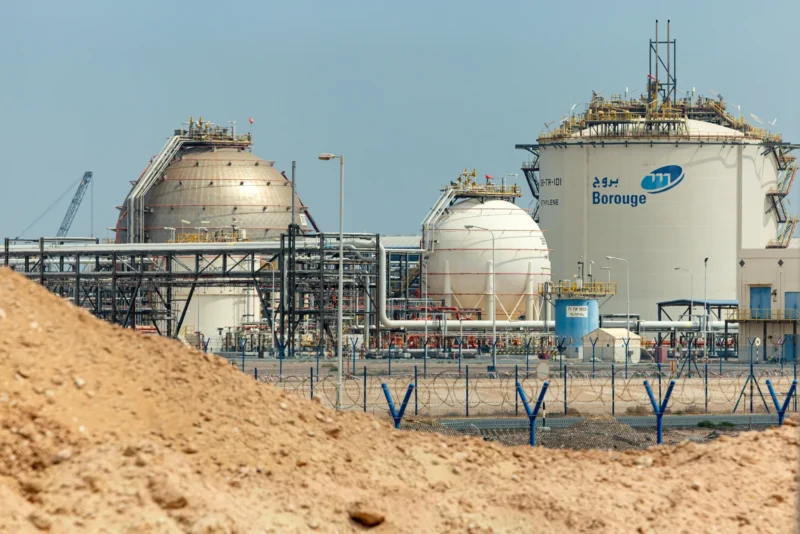
Operations at a major petrochemical facility in the United Arab Emirates were suspended Sunday after falling debris from intercepted missiles and drones sparked fires at the site, authorities said.
Officials in Abu Dhabi confirmed that multiple fires broke out at the Borouge petrochemicals plant following what they described as “successful interceptions” by air defense systems responding to incoming threats.
Emergency teams were deployed to contain the fires, and no injuries were reported.
The UAE’s defense ministry said its air defenses were actively engaging missile and drone attacks launched from Iran, as the regional conflict enters its sixth week and continues to expand beyond direct military targets.
Authorities said operations at the Borouge facility have been halted while damage assessments are carried out. The plant is a key part of the UAE’s petrochemical sector, producing materials used across global manufacturing supply chains.
The incident highlights a growing pattern across the Gulf, where infrastructure has been affected not only by direct strikes but also by debris from intercepted projectiles.
Across the region, governments have reported similar incidents involving damage to energy facilities and industrial sites as air defense systems respond to incoming attacks.
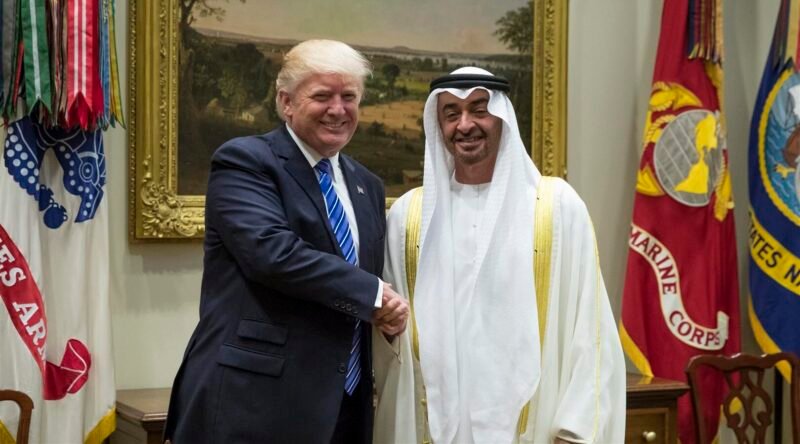
The latest developments come amid heightened tensions tied to the ongoing U.S.-Israel war with Iran, which has disrupted shipping routes, increased pressure on energy markets and drawn Gulf states further into the conflict.
Officials have not indicated how long operations at the Borouge plant will remain suspended.
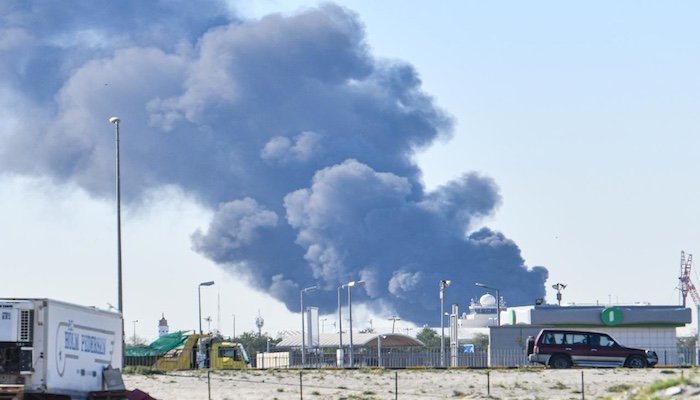
Kuwait Under Fire—Iranian Drones Strike Oil and Power Heart.
The first signs were smoke rising over Shuwaikh, where one of Kuwait’s most critical energy hubs sits at the edge of the capital.
By dawn, officials confirmed what many feared: Iranian drones had struck the Shuwaikh oil sector complex, triggering a fire inside facilities that house both the oil ministry and the state-run Kuwait Petroleum Corporation. Within hours, additional strikes hit government buildings and key power infrastructure, widening the scope of the attack.
No casualties were reported. But the damage ran deeper than the absence of injuries might suggest.
According to Kuwaiti authorities, two power generation units were forced out of service after drones targeted electricity and desalination plants—facilities essential not only for energy supply but also for water security in a country where freshwater is largely produced through desalination.
By the third layer of impact, the significance becomes clear: this was not a symbolic strike. It was a calculated hit on the systems that sustain daily life.
The attacks come as the war between the United States, Israel, and Iran enters its sixth week, steadily expanding beyond traditional military targets. Increasingly, economic and civilian infrastructure across the Gulf is being drawn into the conflict.
For Kuwait, a state that has publicly maintained it is not a party to the war, the strikes raise urgent questions about vulnerability.
Officials described “significant material damage” to government office complexes, underscoring how administrative and energy systems are now exposed. While air defenses have intercepted many incoming threats across the region, the ability of drones to penetrate and disrupt critical facilities highlights a shifting battlefield—one defined less by frontlines and more by reach.
The pattern is becoming familiar.
Across the Gulf, similar incidents have targeted oil storage sites, petrochemical plants, and power networks. The strategy appears aimed at applying pressure without triggering mass civilian casualties, while still delivering economic and psychological shock.
There has been no immediate response from Tehran.
But the broader message is already resonating: the war is no longer contained to military bases or distant installations. It is moving into the infrastructure that underpins state stability.
For Kuwait and its neighbors, the challenge is no longer just defense—it is continuity.
Keeping the lights on, water flowing, and markets stable has become part of the war effort itself.
And as long as the conflict endures, those systems remain in the crosshairs.
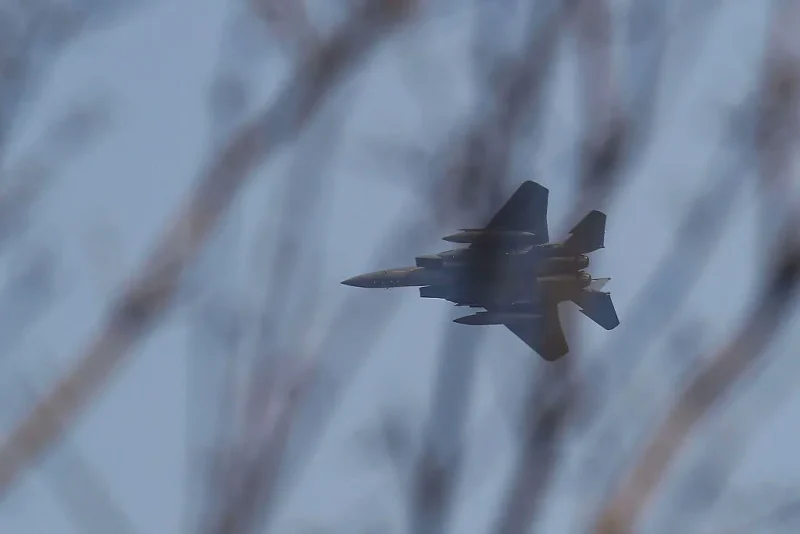
U.S. Rescues Downed Pilot in Iran as War Escalates and Gulf Infrastructure Comes Under Fire.
The rescue unfolded in silence, high above the mountains of Iran, where a lone American pilot had spent hours evading capture.
By the time U.S. aircraft closed in, the aviator—downed when an F-15E fighter jet was shot out of the sky—was already injured and being tracked by hostile forces. Within a narrow window, a coordinated operation involving dozens of aircraft extracted him from behind enemy lines, according to President Donald Trump.
The mission, he said, succeeded just as Iranian forces were closing in.
By the third day after the crash, the broader meaning of the rescue had become clear: this war is no longer defined by distant strikes alone. American personnel are now directly exposed inside Iranian territory, raising the stakes of every engagement.
The downing of the jet marked a turning point.
It was the first confirmed U.S. aircraft loss over Iran since the conflict began six weeks ago. A second crew member had been rescued earlier, but another aircraft—an A-10 attack jet—was also reported downed, with the status of its crew unclear.
Despite repeated claims from Washington that Iran’s military capabilities have been significantly degraded, the incident underscores Tehran’s ability to inflict damage and sustain pressure.
That pressure is spreading across the region.
In Kuwait, drone strikes damaged power plants and disrupted a desalination facility, threatening water supplies in a country heavily dependent on energy infrastructure. In Bahrain, a strike ignited a fire at an oil storage site. And in the United Arab Emirates, debris from intercepted drones sparked fires at a major petrochemical complex in Ruwais, halting production.
These are not isolated incidents.
They reflect a widening strategy in which economic infrastructure—energy, water, logistics—has become a central battlefield. For civilians, the impact is immediate: disrupted utilities, rising costs, and growing uncertainty about daily life.
At sea, the stakes are even higher.
The Strait of Hormuz, a critical artery for global oil shipments, remains effectively closed. Trump has renewed his warning that Iran must reopen the waterway or face severe consequences, setting a new deadline that signals potential escalation.
Iranian officials have responded in kind.
Military leaders warned that any further attacks on Iranian infrastructure could trigger retaliation against U.S. assets across the region, while political figures hinted at expanding the conflict to another chokepoint—the Bab el-Mandeb Strait.
Diplomatic efforts continue, but progress is fragile.
Mediators from Pakistan, Turkey and Egypt are working to bring both sides to the table, with proposals centered on a temporary ceasefire to allow negotiations. Iranian Foreign Minister Abbas Araghchi has indicated openness to talks, even as conditions remain contested.
For now, the war shows no sign of slowing.
More than 1,900 people have been killed in Iran, alongside casualties across Israel, Lebanon and the Gulf. Global markets remain volatile, and energy routes—once taken for granted—have become bargaining chips in a high-risk confrontation.
The rescue of one pilot offers a moment of relief.
But it also reveals the deeper reality: this is no longer a conflict contained by borders or battle lines. It is a war where the distance between frontline and homeland is collapsing—and where each escalation brings the region closer to a broader, more unpredictable phase.
Behind Enemy Lines—The High-Risk Race to Save a Downed Pilot
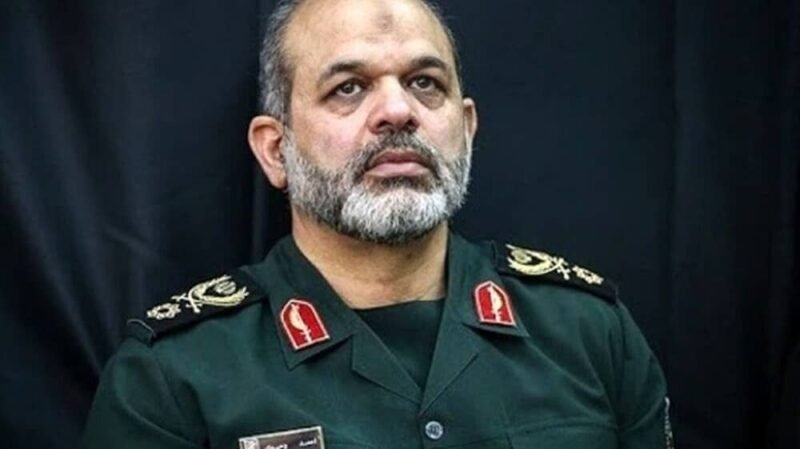
From Regime to Guard State—IRGC Tightens Grip on Iran as War Accelerates Shift Toward Hardline Rule.
In Tehran, the changes are not announced—they are absorbed.
As the war stretches into its second month, the most consequential shift inside Iran is not visible on the battlefield, but within the architecture of power. The Islamic Revolutionary Guard Corps is steadily consolidating control across political, military, and economic institutions, accelerating a transformation years in the making.
What is emerging is not regime collapse, but reconfiguration.
By the third layer of this evolution, the direction becomes clearer: authority is moving away from hybrid governance—where clerical, political, and military actors shared influence—toward a more centralized, security-driven system dominated by the Guard.
The process has been shaped by war.
A series of assassinations and strikes targeting senior figures has disrupted leadership structures. Yet rather than creating instability, these losses have opened pathways for a new generation of commanders—often described as more hardline and less constrained—to move into key positions.
Analysts say this pattern reflects the Guard’s institutional resilience.
“The leadership is being replaced, but not weakened,” said Vali Nasr, noting that figures seen as more pragmatic have been sidelined in favor of those aligned with a more confrontational posture. The replacement of officials such as Ali Larijani with figures like Mohammad Zolghadr illustrates that shift.
There are no clear signs of fragmentation.
Despite sustained external pressure, the IRGC has maintained cohesion through a decentralized network of overlapping command structures. This design—built over decades—allows continuity even as individual leaders are removed.
The Guard’s influence extends far beyond the military.
Veterans of the organization occupy key roles across Iran’s political system and control significant sectors of the economy, including energy, infrastructure, and communications. This integration provides both financial resources and institutional leverage, reinforcing its central position.
The relationship with the clerical establishment is also evolving.
Rather than displacing religious authority, the Guard appears to be aligning more closely with it. Leadership figures, including Mojtaba Khamenei, are widely seen as maintaining strong ties with the IRGC, suggesting a convergence of military and ideological power.
There are competing dynamics within the system.
More pragmatic voices, including President Masoud Pezeshkian, have signaled interest in de-escalation, citing economic strain and internal pressure. But those efforts have faced resistance from Guard-aligned factions, which prioritize strategic resilience over immediate relief.
That tension remains unresolved.
Externally, the implications are significant.
The IRGC controls Iran’s most critical military capabilities, including missile systems and regional proxy networks. As its influence grows, analysts expect a more assertive foreign policy—particularly toward Israel and the United States—paired with efforts to rebuild capabilities weakened by the war.
There are also concerns about longer-term trajectories.
A more consolidated, security-driven leadership may be more inclined to pursue deterrence through unconventional means, including the potential acceleration of a military nuclear capability.
Yet uncertainty remains.
Iran’s internal balance of power is still shifting, and the outcome will depend on how the war evolves—whether it ends in negotiation, prolonged conflict, or partial de-escalation.
What is clear is that the structure of the state is changing.
The IRGC is no longer just a pillar of the system.
It is becoming the system itself.
And if that transition solidifies, the Iran that emerges from this war may be less fragmented—but also more rigid, more insulated, and potentially more confrontational than the one that entered it.

Top Iranian Spy Chief Eliminated as War Targets Inner Circle

Tariffs Reversed, Uncertainty Remains: Billions at Stake in U.S. Refund Push

Lebanon War Expands a Conflict Already Spinning Out of Control


-
 TECH3 weeks ago
China Bets on an AI-Powered Military Future
-
 US-Israel war on Iran2 weeks ago
Waves of Mystery Drones Breach U.S. Nuclear Base Airspace
-
 Terrorism1 week ago
Egypt Uncovers Alleged Plan to Down Presidential Plane
-
 US-Israel war on Iran3 weeks ago
Saudi Arabia Warns of Military Action After Iranian Missile Strike
-
 US-Israel war on Iran2 weeks ago
Former CIA Chief Blames White House for Escalating Iran War Crisis
-
 Top stories1 week ago
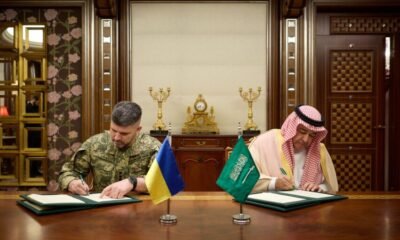
Saudi Arabia Deepens Defense Ties with Ukraine
-
 US-Israel war on Iran2 weeks ago
Iran’s Guard Leadership Hit Hard in Escalating Strikes
-
 Analysis2 weeks ago
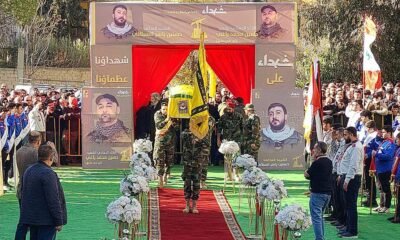
Inside the IRGC’s Quiet Rebuild of Hezbollah