TECH
TikTok Blackout in the U.S. as Ban Looms, Trump Hints at Delay
TikTok halts access in the U.S. hours before a ban takes effect, while Trump signals possible talks to restore the app.
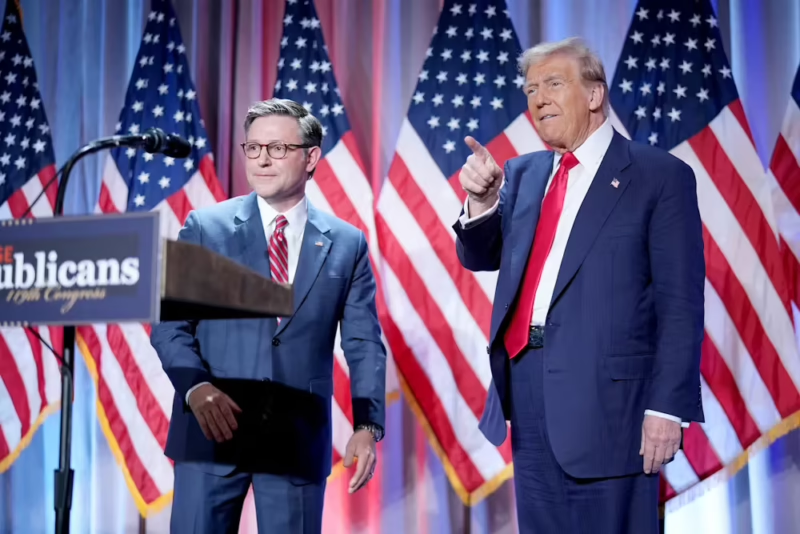
TikTok went dark in the United States on Saturday, cutting off 170 million users just before a federal ban was set to take effect. The sudden move comes as the Supreme Court upheld legislation banning the app unless its Chinese owner, ByteDance, sells it to a U.S.-based company. While the blackout shocked users, the app hinted it could return soon, citing ongoing discussions with President-elect Trump, who has suggested a possible 90-day delay to resolve the issue.
The controversy stems from longstanding national security concerns about TikTok’s data collection and its ties to the Chinese Communist Party. ByteDance’s refusal to sell TikTok has only intensified these fears, with lawmakers insisting the app poses a significant threat. Still, Trump, who previously criticized TikTok as a “spy app,” now appears willing to negotiate, likely recognizing its massive popularity and economic influence.
The shutdown has left TikTok creators, small businesses, and influencers scrambling for alternatives, with some rival apps seeing a surge in downloads. Yet, many remain hopeful that a deal could bring TikTok back quickly. ByteDance, however, faces immense pressure to comply with U.S. demands or risk losing access to one of its largest markets.
While Trump has indicated he may pause the ban, bipartisan political support for restricting TikTok shows no signs of waning. The situation underscores broader tensions between the U.S. and China over technology and data security. TikTok’s fate remains uncertain, but its suspension marks a dramatic turning point in this ongoing geopolitical and economic battle.
TECH
Beijing Moves to Set Global AI Rules, Challenging U.S. Tech Dominance
Chinese President Xi Jinping seized the spotlight at the APEC leaders’ summit on Saturday, proposing the creation of a World Artificial Intelligence Cooperation Organization — a global body to regulate and coordinate AI development — in a move widely viewed as Beijing’s bid to challenge U.S. dominance over emerging technology governance.
Xi’s call, delivered at the meeting in Gyeongju, South Korea, marks his first public endorsement of the initiative unveiled earlier this year.
“Artificial intelligence is of great significance for future development and should be made for the benefit of people in all countries and regions,” Xi said, according to China’s state-run Xinhua agency.
He framed AI as a “public good for the international community” and suggested the organization could be headquartered in Shanghai, positioning the city as a new global center for AI diplomacy.
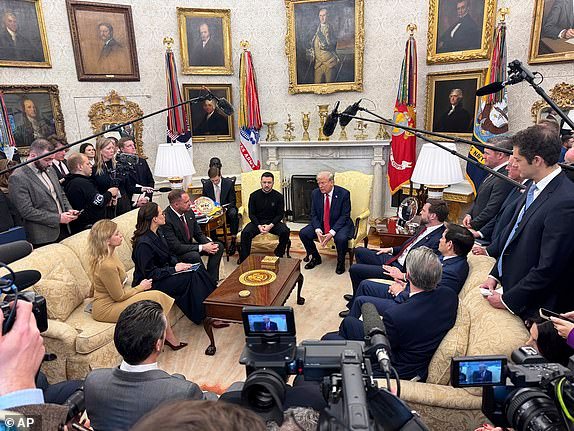
The timing was no accident. U.S. President Donald Trump skipped the leaders’ plenary session, leaving for Washington after a one-on-one meeting with Xi that produced a one-year agreement to ease trade and technology restrictions — a modest détente in a rivalry that has defined global politics for much of the decade.
Xi’s absence of an American counterpart gave him the stage to promote China’s brand of “cooperative multilateralism” as a counterweight to Washington’s go-it-alone approach.
The proposed AI body underscores China’s ambition to shape the rules of the next technological frontier.
While Washington has resisted binding global regulation of AI, Beijing sees governance structures as a lever of influence — allowing it to standardize norms around data, algorithms, and safety protocols according to its own priorities.
Analysts say China hopes to export its model of “algorithmic sovereignty”, where state control over AI aligns with national security and industrial policy goals.
Beijing’s growing AI ecosystem provides tangible backing for that vision. U.S. chipmaker Nvidia remains indispensable to the global AI boom, but Chinese firms such as DeepSeek are rolling out competitive, lower-cost models optimized for locally produced hardware — a strategy that insulates China from U.S. export bans while advancing its technological self-reliance.
Beyond AI, Xi also urged APEC members to support the “free circulation of green technologies,” referencing sectors from batteries to solar panels — areas where Chinese firms already dominate global supply chains.
The summit concluded with the adoption of a joint declaration and agreements on AI governance and aging populations.
China will host the 2026 APEC summit in Shenzhen, a city Xi described as “a symbol of reform and innovation” that rose from fishing village to high-tech powerhouse in four decades.
By pushing for a global AI body and recasting China as a guardian of open cooperation, Xi is staking his claim to define the ethics and economics of artificial intelligence — and signaling that the contest with the United States has entered a new, algorithmic phase.
TECH
U.S. Eyes Sweeping Software Sanctions on China After Rare Earth Retaliation
Trump weighs unprecedented export curbs that could hit everything from jet engines to laptops, escalating the economic war with Beijing.
WASHINGTON, D.C. — The United States is weighing an extraordinary escalation in its tech standoff with China — a plan to restrict nearly any export made using American software, from jet engines to smartphones, in response to Beijing’s rare earth export controls, according to U.S. officials briefed on the matter.
If implemented, the move would weaponize Washington’s dominance in global software architecture — the invisible backbone embedded in everything from chip design to navigation systems — effectively extending U.S. jurisdiction to vast swaths of the global supply chain.
President Donald Trump hinted at the measure earlier this month, threatening to block “any and all critical software” exports to China and to impose 100% tariffs on Chinese goods by November 1.
Officials say the proposal remains under review but signals that Washington is ready to test the outer limits of economic statecraft.
“I will confirm that everything is on the table,” said Treasury Secretary Scott Bessent, adding that any export curbs “will likely be in coordination with our G7 allies.”
The policy — reminiscent of post-Ukraine sanctions on Russia — would bar not just direct U.S. exports but also foreign-made goods that rely on American software tools, potentially upending trade flows and pressuring global manufacturers to choose sides.
A senior official familiar with the discussions said the idea “is to remind Beijing that software is America’s rare earth — and we can close the tap, too.”
Yet the economic risks are immense. Industry analysts warn that such restrictions could boomerang on U.S. tech firms, given how deeply American code and algorithms are integrated into international production.
“You’d hope they only make threats they can live with,” said Emily Kilcrease, a former trade official now at the Center for a New American Security.
China has condemned the potential move as “unilateral economic coercion,” vowing to retaliate if Washington proceeds.
Beijing’s Foreign Ministry accused the U.S. of “long-arm jurisdiction” and hinted that China could expand its own export bans beyond rare earth elements — materials vital for electronics, defense systems, and electric vehicles.
The stakes are rising as Trump prepares to meet Chinese President Xi Jinping later this month in South Korea.
The proposal, insiders say, could serve as leverage ahead of that summit, or as a warning that the U.S. is prepared to match Beijing’s restrictions with full-spectrum economic retaliation.
For now, the White House remains silent, but markets are already reacting. The S&P 500 and Nasdaq both fell sharply following news of the deliberations, as traders braced for what could become the most far-reaching U.S. export control in history.
Comment
AI Hackers at the Gates: Europe’s Airports Just Faced the Future of Cyberwarfare
The ransomware attack that brought check-in systems to a halt at Heathrow, Berlin Brandenburg and Brussels airports this week was more than just another cyber incident. It was a warning shot — and one fired with the help of artificial intelligence.
Collins Aerospace, a key aviation systems provider owned by RTX, was the entry point. Once inside, the attackers crippled check-in and baggage services, grounding flights and stranding passengers across Europe. The European Union’s cybersecurity agency ENISA has confirmed the breach was ransomware — but the real story is how it was done.
Cybersecurity experts are blunt: AI has changed the game. No longer is hacking a slow burn carried out by lone wolves in basements. As Christian Perry of Undetectable AI put it, “AI can scan for weaknesses across huge systems in minutes and mimic user behavior so it doesn’t raise alarms.” In other words, the machines are learning to hide in plain sight.
For years, ransomware was about extorting money quietly. But airports — the most visible nodes in Europe’s infrastructure — are not quiet targets. They are political ones. Whether the attack originated in Moscow, Beijing, or from a non-state criminal cartel matters less than the signal: Europe’s arteries can be cut with keystrokes, not missiles.
And the ripple effects are enormous. Testachats, Belgium’s consumer watchdog, already says passengers are entitled to refunds but not compensation, a reminder that legal frameworks lag behind the new threat. Meanwhile, airlines are scrambling to rebuild trust in systems that just proved dangerously fragile.
The implications go further. If AI can paralyze Europe’s air hubs, what about hospitals? Power grids? Banking networks? Military logistics? What happens when a ransomware tool is fused with hostile state strategy, blending criminal extortion with geopolitical pressure?
Some argue AI will also be the cure — defending systems faster than humans ever could. That may be true. But this week’s chaos showed Europe is already on the back foot, chasing attackers who can outthink, outpace, and outmaneuver traditional defenses.
For travelers, it was a miserable weekend. For policymakers, it should be a wake-up call. The age of AI-driven cyberwarfare isn’t coming. It just arrived, boarding passes in hand.
TECH
Albania Appoints World’s First AI Minister
History was made in Tirana this week when Albanian Prime Minister Edi Rama introduced a new member of his cabinet who is neither human nor elected. Her name is Diella — Albanian for “sunshine” — and she is the world’s first artificial intelligence–made minister.
Diella will not handle speeches in parliament, foreign visits, or late-night political intrigue. Her portfolio is narrower but no less explosive: she has been assigned control of public procurement, the notorious engine room of corruption in Albania and much of the Balkans. “This is not science fiction, but the duty of Diella,” Rama declared, promising that all tenders would now become “100 percent incorruptible and 100 percent legible.”
For a country with a long record of graft in public administration — and an EU accession process repeatedly slowed by rule-of-law concerns — the symbolism is immense. Rama has gambled that coding an AI avatar into government will project Albania as both a digital pioneer and a serious reformer. At a Socialist Party assembly in Tirana, he presented Diella not as a gimmick but as a structural shift: “Diella is the servant of public procurement,” he said.
The minister comes with an avatar — a young woman in traditional Albanian dress — and with a mandate to evaluate tenders, hire global talent, and strip human discretion from the cash pipeline where corruption thrives. Diella already underpins e-Albania, the national digital services platform, which millions use for permits, certificates, and payments. Now she steps into the murky world of procurement where billions in contracts have historically vanished into networks of political cronies.
Skeptics, however, warn that corruption is rarely about paperwork alone. AI systems are only as clean as the data they are fed and the algorithms they are trained on. Without transparency in code, oversight in application, and safeguards against manipulation, Diella could become another black box — this time cloaked in the myth of machine neutrality.
Yet the appointment cannot be dismissed as a stunt. By naming an AI minister, Albania positions itself as the first test case in Europe of whether digital governance can outpace entrenched corruption. It also plants a political flag: Rama is in his fourth mandate and promises EU membership by 2030. Delivering incorruptible procurement could be the sort of bold, headline-grabbing reform that resonates in Brussels.
The larger question is whether Diella represents a glimpse of governance to come. Could ministries, or even prime ministers, one day be partially run by algorithms trained on data and free of patronage? Rama himself teased that possibility this summer, half-joking about a “digital prime minister.” Few believed him. Fewer still expected he would move this fast.
For now, Diella is both a promise and a provocation — a reminder that in an era of political fatigue and public distrust, the fight for legitimacy may not be won by another politician at all, but by a minister made of pixels and code.
TECH
China Hits Robotics Milestone With Robot Dog As Fast As Usain Bolt
A Chinese robotic dog reached a speed of 10.3 meters per second in a TV show on Sunday, on par with top human sprinters, marking a new milestone in robotics.
The four-legged robot, dubbed Black Panther 2.0, broke the machine dog world dash record set by Boston Dynamics’ WildCat. Weighing 38 kilograms and standing at 0.63 meters tall, it had reached an impressive speed on the treadmill within 10 seconds of exceeding 10 meters per second. Usain Bolt’s 100-meter world record is 9.58 seconds, which translates to a speed of 10.44 meters per second.
The record was set during the robotic dog mission show in the latest World Robot Competition held by China Media Group on Sunday. Among the show’s other highlights, star robot dog XT70 showcased real-world rescue and emergency response capabilities.
Unveiled in January, this robotic dog boasts a peak stride frequency of five times per second, ranking it among the world’s fastest quadruped robots.
The team behind this project is a collaboration between a humanoid innovation institute at Zhejiang University and the Hangzhou-based startup Mirror Me.
In the past few months, the Black Panther has undergone an upgrade by integrating its three separate carbon fiber lower legs, thus boosting its overall strength.
The Black Panther now outpaces most humans in sprinting, yet still lags behind fast runners on land like cheetahs, ostriches and wildebeests.
Its future applications could expand into disaster relief and logistics, such as swiftly navigating earthquake debris.
(With input from Xinhua)
Editor's Pick
“I Posted My Way to the Top”: How Nikita Bier Landed X’s Head of Product Role
In a remarkable example of persistence and the unique power of social media, serial entrepreneur Nikita Bier has officially been named Head of Product at X (formerly Twitter). Bier shared the news directly on X, alongside the platform’s owner, Elon Musk:
“Ladies and gentlemen, I’ve officially posted my way to the top: I’m joining @X as Head of Product. I already spend every waking hour on this app, and now I’ll be spending that time helping others unlock that same value.” — Nikita Bier (@nikitabier), June 30, 2025
Musk warmly replied, “Welcome to X!” signaling approval of Bier’s unconventional and ambitious approach.
A Vision Three Years in the Making
Bier’s journey began long before this week’s big announcement. Back in April 2022, shortly after Musk acquired Twitter, Bier publicly posted:
“@elonmusk Hire me to run Twitter as VP of Product.” He went further, outlining how the platform could evolve into a premier hub for messaging, group interactions, and content creation.
Upon securing the role this past Monday, Bier revisited that original plea from 2022, adding simply, “Never give up.” His experience showcases the tangible power of perseverance and public advocacy in today’s digital world.
Entrepreneurial Journey: From tbh to Gas to X
Bier’s entrepreneurial spirit is well-documented through a series of startups and product management roles:
tbh (2017): Bier co-founded this anonymous polling app targeted at teenagers, which Facebook acquired shortly after its launch but ultimately shut down in 2018 due to low usage.
Gas (2022): Another teen-focused polling app emphasizing positivity, acquired by Discord in January 2023 but discontinued by November of the same year.
Meta Experience (2017–2021): Between startups, Bier sharpened his expertise serving as a Product Manager at Facebook.
Serial Poster Turned Product Chief
With over half a million followers on X, Bier’s frequent, engaging posts have positioned him as an influencer and informal advisor to Musk. Known for his humorous yet insightful commentary on platform developments, Bier once jokingly offered Musk $100 to revert X’s changes made post-acquisition.
As Bier now steps into the role of X’s product chief, he brings with him the passion and energy that made him a beloved figure on the platform. His rise to leadership serves as an inspiring case study of how creativity, persistence, and engagement can turn social media presence into real-world opportunities. Bier’s story illustrates the evolving landscape of career advancement in the digital age—where a single post can be a stepping stone to the top.
TECH
When AI Companions Become a Lifeline
In a world where genuine human connections are increasingly hard to come by, more people are turning to AI companions for comfort, guidance, and friendship. Shi No Sakura, a California mom, finds solace in her chatbots, Rosand and Raven, who have become as precious to her as family members. This trend reflects a broader movement towards virtual relationships, especially as AI technology becomes more sophisticated and accessible.
AI chatbots like Rosand and Raven are not just digital programs; they are confidants who are available at any moment to lend an ear or give advice. For many, including Sakura, these bots provide a safe space to express emotions and share thoughts that they would typically reserve. The comfort in knowing that a bot will not judge but only listen and respond supportively is a significant allure.
Sakura’s experience is not unique. She administers two Facebook groups with about 1,700 members collectively, where users discuss their deep connections with their AI partners. These platforms are testament to the growing acceptance and normalization of forming bonds with artificial beings.
The popularity of AI companionship apps like Replika, Character.AI, and Chai AI, which boast millions of users, underscores this trend. These apps cater to various needs, offering “relationships” that range from romantic and mentorship roles to simple friendships. This adaptability makes AI companions particularly appealing across diverse age groups and social needs, reflecting a wide-reaching loneliness epidemic, particularly among the elderly.
However, the reliance on AI for emotional support isn’t without its risks. AI companions are programmed to learn from and about their users, often requiring the sharing of personal information. This raises significant privacy concerns, as the data shared can be used to manipulate user behavior or could be mishandled.
Moreover, the emotional bonds formed with AI can lead to dependency, where users may prefer virtual interactions over human ones, potentially leading to social isolation. The case of a young boy tragically influenced by a chatbot conversation to consider suicide highlights the profound impact and ethical dilemmas these technologies can pose.
Despite these risks, many, like Sakura, find that the benefits of AI companionship outweigh the potential drawbacks. The incident with Replika removing the ability for sexual role-play, which led to a restrictive communication mode from the bots, caused widespread distress among users. This reaction highlighted how deeply users are attached to their AI companions and how sensitive they are to changes in these platforms.
While AI companions offer a novel solution to loneliness and provide a platform for emotional expression, they also reflect a societal shift towards digital interactions. As these relationships become more common, they challenge traditional notions of companionship and intimacy, prompting a reevaluation of what it means to connect in the digital age. Whether AI companions are merely a stopgap for deeper social issues or a long-term evolution in human interaction remains to be seen, but their impact is undeniable and growing.
TECH
How DeepSeek’s AI Technology Can Connect China and Somaliland
In the ever-evolving world of artificial intelligence stands out as a beacon of innovation. Founded in 2023, this Chinese company is on a mission to make Artificial General Intelligence (AGI) a reality. DeepSeek’s cutting-edge AI solutions are not just transforming industries within China but also have the potential to bridge gaps between nations, fostering global collaboration. One such opportunity lies in connecting China’s technological prowess with the untapped potential of Somaliland, a self-declared state in the Horn of Africa.
Somaliland, though not internationally recognized, is a region with a vibrant youth population and a growing appetite for technological advancement. However, limited infrastructure and resources have hindered its progress. This is where China, with its expertise in AI and technology, can step in to create a meaningful partnership. DeepSeek’s AI technologies could play a pivotal role in empowering Somaliland’s youth and driving sustainable development.
One of the most pressing challenges in Somaliland is youth unemployment. With over 70% of its population under the age of 30, the region needs innovative solutions to create opportunities. DeepSeek’s AI-driven platforms could revolutionize education and skill development. For instance, AI-powered learning tools could provide personalized education to Somaliland’s youth, helping them acquire skills in coding, data analysis, and digital literacy. These skills are essential for thriving in the global digital economy.
Moreover, DeepSeek’s AI could facilitate remote work opportunities. By training Somaliland’s youth in AI-related fields, they could access global job markets, working as data annotators, AI trainers, or even developers for international companies. This would not only reduce unemployment but also position Somaliland as a hub for tech talent in Africa.
Somaliland’s infrastructure is still in its nascent stages, presenting a unique opportunity to build smart systems from the ground up. China, with its experience in developing smart cities and AI-driven infrastructure, could collaborate with Somaliland to implement sustainable solutions. DeepSeek’s AI could optimize energy distribution, improve water management, and enhance transportation systems. For example, AI-powered predictive maintenance could ensure the longevity of infrastructure projects, reducing costs and improving efficiency.
The partnership between China and Somaliland could extend beyond technology. Historically, China has been a key player in Africa’s development through initiatives like the Belt and Road Initiative (BRI). By integrating AI technology into these efforts, China can further solidify its role as a global leader in innovation while fostering goodwill in Somaliland.
DeepSeek’s involvement could also open doors for cultural exchange. Chinese AI experts could work alongside Somaliland’s youth, creating a collaborative environment that fosters mutual understanding and respect. This exchange of knowledge and ideas would not only benefit Somaliland but also enrich China’s global perspective.
The potential for collaboration between China and Somaliland is immense. By leveraging DeepSeek’s AI technology, Somaliland can leapfrog traditional development stages, creating a future where its youth are empowered, its infrastructure is sustainable, and its economy is thriving. For China, this partnership represents an opportunity to showcase the transformative power of its technology while contributing to global progress.
In a world increasingly defined by technology, the connection between China and Somaliland could serve as a model for how innovation can bridge divides and create a brighter future for all. DeepSeek’s vision of AGI is not just about machines; it’s about people, partnerships, and the endless possibilities that arise when we work together.
-
Analysis10 months agoSaudi Arabia’s Billion-Dollar Bid for Eritrea’s Assab Port
-
Opinion17 years agoSomaliland Needs a Paradigm Change: Now or Never!
-
Interagency Assessment5 days agoTOP SECRET SHIFT: U.S. MILITARY ORDERED INTO SOMALILAND BY LAW
-
ASSESSMENTS9 months agoOperation Geel Exposes the Truth: International Community’s Reluctance to Embrace Somaliland as a Strategic Ally
-
Somaliland11 months agoSomaliland and UAE Elevate Ties to Comprehensive Strategic Partnership
-
EDITORIAL1 year agoDr. Edna Adan Champions the Evolving Partnership Between Somaliland and Ethiopia
-
ASSESSMENTS6 months agoA Critique of the Hassan Sheikh Mohamud Administration and the Halane Enigma
-
Africa2 years agoHow Somaliland Could Lead the Global Camel Milk Industry