A Two-Day Pause Signals Diplomacy, Not Peace, in the US-Iran War
ANALYSIS
For the second consecutive day, the United States and Iran have refrained from launching new attacks against one another, marking the longest operational pause since the conflict escalated into open military confrontation.
The silence should not be mistaken for peace.
Rather, it reflects a strategic pause in which both Washington and Tehran are reassessing their military options while giving diplomacy an opportunity to prevent another cycle of escalation.
According to US Ambassador to the United Nations Mike Waltz, President Donald Trump is deliberately “giving talks some space” as mediators from Oman and other regional actors continue efforts to revive an interim ceasefire framework. Iran has likewise confirmed that it halted offensive operations after the United States paused its strikes.
The battlefield has become quieter.
The negotiations have become more important.
Why Both Sides Paused
Neither Washington nor Tehran appears to believe it has achieved a decisive strategic victory.
The United States has demonstrated overwhelming air and naval superiority, degrading Iranian military infrastructure and maintaining pressure on Iranian maritime operations.
Iran, meanwhile, has shown that it can continue imposing costs through missile attacks on US regional bases, pressure on commercial shipping and its network of regional partners.
Neither side has exhausted the other.
Both recognize that continued escalation carries increasing risks.
For Washington, every additional strike raises the possibility of wider regional involvement and greater demands on military resources.
For Tehran, prolonged confrontation increases economic damage while exposing critical military infrastructure to sustained American attack.
The pause therefore reflects strategic calculation rather than reconciliation.
Hormuz Remains the Central Bargaining Chip
Although missile exchanges have temporarily stopped, the central dispute remains unresolved.
The Strait of Hormuz continues to dominate negotiations.
Iran insists that the current interim arrangement allows it to regulate shipping through the waterway, while Washington rejects any arrangement that gives Tehran effective control over one of the world’s most important maritime trade routes.
Reports indicate that mediators are exploring compromises involving fewer restrictions on commercial shipping while preserving safe passage through the Strait.
Whether such a formula proves politically acceptable remains uncertain.
For the United States, freedom of navigation is a principle that extends far beyond the Gulf.
For Iran, influence over Hormuz remains one of its strongest negotiating assets.
Neither side appears willing to surrender that leverage easily.
The Second Front Has Not Disappeared
Even as direct US-Iran exchanges have paused, another strategic danger remains active.
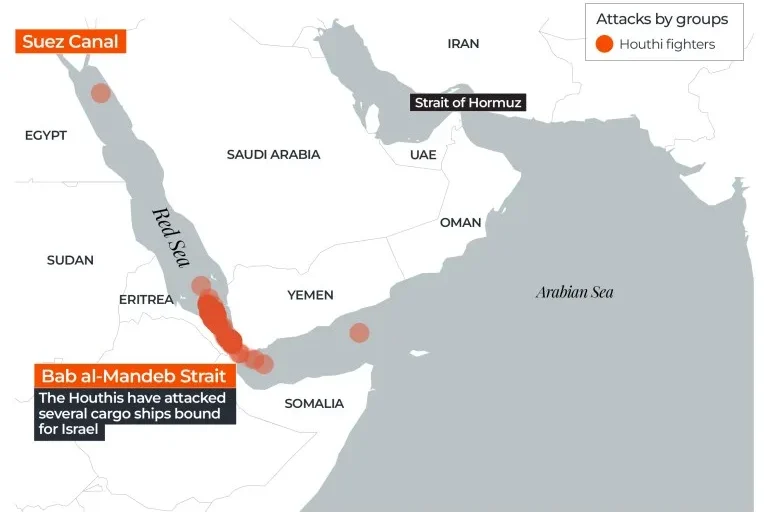
Iran-backed Houthi forces continue threatening shipping near the Bab el-Mandeb Strait, the southern gateway to the Red Sea.
This demonstrates that Tehran retains the ability to pressure global trade indirectly even while reducing direct confrontation with American forces.
Should negotiations over Hormuz fail, Iran could still increase pressure through its regional partners without immediately resuming direct missile exchanges.
That option gives Tehran flexibility.
It also complicates American military planning.
Netanyahu’s Calculated Support
Israeli Prime Minister Benjamin Netanyahu’s planned meeting with President Trump comes at a critical moment.
Rather than publicly urging immediate military escalation, Netanyahu has indicated support for diplomatic efforts aimed at preventing Iran from advancing its nuclear program—provided those efforts achieve meaningful security outcomes.
His position reflects Israel’s long-standing strategic doctrine.
Diplomacy is acceptable if it produces lasting constraints.
If it fails, military options remain available.
The coming discussions in Washington will likely focus on whether negotiations can deliver security guarantees without requiring another major military campaign.
Strategic Endurance Matters
Military pauses often reveal more than active combat.
They expose the political objectives behind the battlefield.
The United States appears to be testing whether sustained military pressure has created sufficient leverage for negotiations.
Iran appears to be testing whether limited restraint can preserve its remaining bargaining position while reducing the immediate risk of further American strikes.
Neither side has abandoned its strategic goals.
Both are attempting to achieve them through different instruments.
This is no longer simply a military contest.
It has become a competition over endurance, diplomacy and economic pressure.
WARYATV Strategic Assessment
The two-day pause represents an operational ceasefire, not a strategic settlement.
The core disputes remain unresolved:
- Iran’s nuclear program.
- Control and security of the Strait of Hormuz.
- Regional proxy activity.
- Maritime security in the Gulf and Red Sea.
- The future balance of power between Iran, the United States and Israel.
As long as these issues remain unsettled, the conflict has merely entered a quieter phase rather than a final one.
History suggests that pauses in wars often create opportunities for diplomacy.
They also provide time for militaries to regroup, replenish and prepare for the next phase if negotiations collapse.
Both Washington and Tehran understand this reality.
Neither is likely to mistake restraint for surrender.
WARYATV ASSESSMENT
The current silence over the Gulf is strategically significant, but it is fragile.
The United States has paused because it believes diplomacy may now deliver gains that additional airstrikes cannot.
Iran has paused because preserving leverage may be more valuable than provoking another round of American attacks.
The decisive question is no longer who can fire the next missile.
It is whether diplomacy can resolve the strategic disputes before either side concludes that military force once again offers the better path.
Until that question is answered, the Middle East remains in an armed pause—not in peace.