Connect with us

Middle East

America’s $1 Trillion War Machine Takes Center Stage in Iran

Published

on

Eleven nuclear aircraft carriers. A $1 trillion defense budget. And a war watched in real time. Is America’s floating power projection unstoppable—or increasingly exposed?

From the $18 Billion USS Gerald R. Ford to the Battle-Tested USS Abraham Lincoln, U.S. Aircraft Carriers Dominate the Iran Conflict.

With a defense budget projected at $1.01 trillion for 2026—nearly 40 percent of global military spending—the United States has once again placed its most iconic weapon at the heart of war: the nuclear aircraft carrier.

From the sleek deck of the $18 billion USS Gerald R. Ford to the battle-hardened USS Abraham Lincoln, America’s carrier fleet has become the unmistakable face of its campaign against Iran. No other country operates anything comparable. The U.S. Navy fields 11 nuclear-powered carriers—more than the combined fleets of China, Britain, France, India, Italy and Spain.

The Ford, the largest warship ever built, stretches 337 meters and carries up to 90 aircraft. It can launch 160 sorties a day—and surge to 270. Onboard is a floating city: 4,500 personnel, a full hospital, nuclear reactors capable of powering the ship for decades, and the ability to remain at sea for months.

Commissioned in 2017, then-President Donald Trump hailed it as “the future of naval aviation.” Since then, it has rotated through the Mediterranean, the Caribbean and now the Middle East, serving as both deterrent and launch platform.

Yet in the current Iran conflict, it is the older Abraham Lincoln—commissioned in 1989—that has carried much of the operational load. Upgraded to host F-35 stealth fighters, it operates in the Arabian Sea, launching sorties as part of the U.S.-Israeli campaign.

Iranian officials have claimed missile strikes against it—claims swiftly denied by U.S. Central Command.

Aircraft carriers have long been as much psychological instrument as military asset. In 2003, President George W. Bush delivered his “Mission Accomplished” speech aboard the Lincoln—an image that later became synonymous with premature victory.

Today, they project dominance. But they also raise questions.

China’s development of anti-ship ballistic missiles and long-range precision weapons has sparked debate within military circles about whether carriers remain invulnerable in a modern battlefield. No U.S. carrier has been sunk since World War II. But analysts warn that complacency could prove dangerous.

For now, however, these floating airbases remain central to Washington’s strategy: flexible, mobile, operating without reliance on foreign airfields. They symbolize American reach—and American resolve.

In a war defined by missiles, drones and economic disruption, the most visible star remains a 100,000-ton reminder of U.S. power: steel, nuclear energy and jet engines, cutting across open sea.


Middle East

Meloni Breaks Ranks: Italy Warns on Iran War

Published

on

A close Trump ally. A NATO partner. Now a public warning. Has Europe’s unity on Iran begun to crack?

Italian Prime Minister Says U.S.-Israeli Strikes Reflect “Dangerous” Trend Outside International Law.

ROME — Italian Prime Minister Giorgia Meloni delivered her sharpest rebuke yet of the U.S.-Israeli war against Iran on Wednesday, describing the conflict as part of a troubling pattern of unilateral military actions “outside the scope of international law.”

Speaking before the Senate, Meloni framed the Middle East war as another symptom of what she called a broader structural crisis in the international system — one already destabilized by Russia’s 2022 invasion of Ukraine.

“It is in this context,” she said, “that we must also place the American and Israeli intervention against the Iranian regime.”

The remarks mark a notable shift in tone from Rome. Meloni, a conservative leader with close ties to U.S. President Donald Trump, has largely aligned Italy with its transatlantic allies. Her government had faced criticism from opposition lawmakers for appearing reluctant to directly question Washington’s role in the conflict.

Italy now joins Spain as one of the few European countries to publicly voice explicit concern over the legality of the campaign. Most European governments have stopped short of direct criticism, instead urging de-escalation and restraint.

Yet Meloni’s speech balanced caution with firmness toward Tehran. She reiterated that Iran must not be allowed to develop nuclear weapons, warning that such an outcome would undermine the global non-proliferation framework and expose Europe to “dramatic repercussions for global security.”

The war, now in its 12th day, has expanded beyond Israel and Iran, disrupting roughly one-fifth of global oil and gas flows and drawing in Gulf states hosting Western forces. Meloni confirmed that Italy is providing air-defense assets to Gulf partners targeted by Iranian strikes.

“This is not only because they are friendly nations and strategic partners,” she said, “but because tens of thousands of Italian citizens are in the region — and around 2,000 Italian soldiers are stationed in the Gulf.”

Her intervention highlights the increasingly delicate position of European leaders: balancing alliance commitments with growing unease over the war’s legal and geopolitical consequences. By linking the Iran conflict to the broader erosion of international norms, Meloni signaled that Rome views the crisis not as an isolated flare-up — but as part of a more dangerous global pattern.

Whether her words foreshadow a broader European reassessment remains to be seen. For now, Italy has made clear it supports deterrence against Iran’s nuclear ambitions — but not without questioning the path chosen to achieve it.

Continue Reading

Middle East

Trump Hints at Iran War Endgame — and Sanctions Relief

Published

on

President Floats Waiving Oil Sanctions, Naval Escorts in Hormuz as Markets Whipsaw and Pressure Mounts.

End the war “very soon”? Lift oil sanctions? Escort tankers through Hormuz? Trump signals a pivot — but vows harsher strikes if Iran escalates.

President Donald Trump signaled Monday that the U.S.-Iran war could wind down “very soon,” while floating the possibility of waiving certain oil-related sanctions and deploying the U.S. Navy to escort tankers through the Strait of Hormuz.

The remarks, delivered at his Doral resort in Florida, come amid volatile energy markets, rising gasoline prices and mounting political pressure at home.

Trump said the operation was ahead of schedule but not likely to conclude this week. He claimed U.S. forces had struck thousands of targets and sharply reduced Iran’s missile and drone capabilities, calling military objectives “pretty well complete.”

At the same time, he warned of bombing “at a much, much harder level” if Tehran disrupts oil flows through the strait — the artery for a fifth of global crude and LNG shipments.

“We’re looking to keep oil prices down,” Trump said, adding he could waive “certain oil-related sanctions” to reduce prices. He offered no specifics but acknowledged discussing the topic with Russian President Vladimir Putin.

Washington has imposed wide-ranging restrictions on Russia’s energy sector over Ukraine, including a price cap and sanctions on major producers. Treasury Secretary Scott Bessent has previously suggested targeted waivers; last week, Indian refiners were temporarily allowed to purchase Russian oil already at sea.

Markets reacted swiftly. U.S. stocks rebounded after Trump first hinted to CBS that the conflict might be nearing its end. Oil futures, which had spiked above $119 a barrel earlier in the day, retreated below $90 post-settlement.

Group of Seven finance ministers said they stand ready to support global energy supplies, including potential stockpile releases, though France cautioned there is no agreement yet to tap emergency reserves.

Still, risks remain acute. The Strait of Hormuz is effectively constrained, and major Gulf producers have trimmed output. Trump said the Navy and partners could escort tankers “if needed,” and he warned that if Iran blocks the strait, it would face retaliation “TWENTY TIMES HARDER.”

On the ground, the conflict shows no sign of immediate ceasefire. Casualties have mounted across Iran, Israel and parts of the Gulf. Iran’s new supreme leader, Mojtaba Khamenei, has pledged continuity.

U.S. officials maintain they can sustain operations indefinitely, even as domestic concerns over inflation and fuel costs intensify ahead of November’s midterms.

Trump now faces a delicate balance: deliver “ultimate victory” while stabilizing energy markets and containing the war’s regional spillover. Whether sanctions relief and naval escorts mark a genuine pivot — or tactical messaging amid market turbulence — may determine how soon this conflict truly ends.

Continue Reading

Middle East

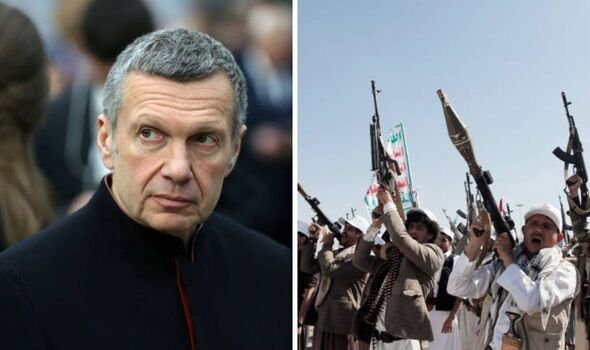
Houthis Hold Fire as War Simmer

Published

on

Missiles fly. Militias strike. But one force is waiting. Why haven’t the Houthis entered the war — yet?

Hezbollah and Iraqi Militias Escalate Strikes, but Houthis Stay on Sidelines as US Carrier Nears Red Sea.

As the U.S.-Israeli campaign against Tehran enters its second week, Iran’s network of regional militias has stepped up attacks — but stopped short of unleashing a coordinated, all-out confrontation.

Analysts say that restraint may be deliberate.

Across Lebanon, Iraq and Syria, Iranian-backed groups have fired missiles and drones at Israeli targets and U.S. facilities. Hezbollah moved early, launching attacks after the killing of Iran’s Supreme Leader Ali Khamenei. Iraqi Shia militias have struck U.S. diplomatic and military sites, including in Baghdad and Jordan.

Yet the Yemen-based Houthis — among the most heavily armed and battle-hardened of Iran’s allies — have not reopened hostilities against American or Israeli targets since the current phase of the war began.

Continue Reading

Middle East

The Island That Could Break Tehran

Published

on

Kharg

Why Kharg Island Could Become Donald Trump’s Decisive Lever Against Iran.

One small island. Ninety-four percent of Iran’s oil exports. No U.S. boots on Tehran’s streets. Is this Trump’s ultimate pressure point?

In 1988, long before he entered politics, Donald Trump mused in an interview that if Iran fired “one bullet” at American forces, he would “do a number on Kharg Island” and “go in and take it.” At the time, it sounded like bravado.

Nearly four decades later, that obscure reference is drawing renewed scrutiny.

Kharg Island is a limestone outcrop about 15 miles off Iran’s Persian Gulf coast. Small and sparsely populated, it is nonetheless the nerve center of Iran’s oil exports. Roughly 90 percent of the country’s crude shipments pass through its terminal, bound largely for China.

In the current U.S.-Israeli campaign against Iran, military bases and fuel depots have been struck. Kharg, notably, has not. That omission has fueled speculation among analysts that the island is more valuable intact than destroyed.

Seizing Kharg would not require an invasion of the Iranian mainland. Instead, it would strike at Tehran’s economic lifeline. Oil revenue accounts for a significant share of Iran’s state budget, financing not only public services but also security institutions, including the Islamic Revolutionary Guard Corps. Control of the island would give Washington leverage over export flows without occupying Tehran or attempting regime change by force.

Some conservative policy voices in Washington, including analysts at the American Enterprise Institute, have argued that holding Kharg could deprive the regime of funds while preserving infrastructure for a potential post-conflict government. Others caution that any such operation would trigger immediate retaliation and send energy markets into turmoil.

The island’s vulnerability is not new. During the 1980–88 Iran-Iraq War, it was heavily bombed and later rebuilt. Its defenses are believed to include surface-to-air missile systems and anti-ship batteries, but U.S. naval and air power could likely establish a protective perimeter offshore, according to several military analysts.

The broader implications would stretch far beyond Iran. China currently purchases the majority of Iranian oil exports. American control over Kharg would dramatically increase U.S. leverage over energy flows through the Persian Gulf — a region already destabilized by conflict and the periodic closure of the Strait of Hormuz.

Still, such a move would carry enormous risk. Tehran could attempt to sabotage the terminal or escalate missile attacks across the Gulf. Oil prices, already volatile, could spike sharply. And any seizure would test international law and America’s appetite for another open-ended Middle Eastern entanglement.

For now, Kharg remains untouched — a small island with outsized strategic weight. Whether it becomes the decisive lever in this conflict may determine not only Iran’s economic future, but the shape of power in the Gulf for years to come.

Continue Reading

Middle East

EU Rift Erupts Over Iran War

Published

on

Antonio Costa Rebukes Ursula von der Leyen as European Leaders Split on US-Israeli Strikes.

“Freedom cannot be achieved through bombs.” Europe’s top officials are no longer speaking with one voice.

A sharp public divide has emerged at the top of the European Union over the U.S.-Israeli war against Iran, exposing tensions over diplomacy, international law and Europe’s global role.

Antonio Costa, president of the European Council, rebuked European Commission chief Ursula von der Leyen on Tuesday, declaring that “freedom and human rights cannot be achieved through bombs.”

His remarks followed von der Leyen’s speech a day earlier at the EU Ambassadors Conference in Brussels, where she suggested that the killing of Iran’s Supreme Leader Ali Khamenei could “open a path towards a free Iran.” She also questioned whether Europe could continue to anchor itself to what she described as a fading “rules-based international order.”

Costa took a different tone, insisting the EU must defend international law and remain committed to diplomacy. His intervention underscored the institutional divide: while the Commission often pushes strategic positions, the European Council — representing member states — operates by consensus, particularly on foreign policy.

Von der Leyen argued that Europe’s “well-intentioned attempts at consensus” could hinder the bloc’s credibility. Yet consensus is embedded in EU treaties, and member states have struggled for months to align on issues ranging from Ukraine funding to defense spending and sanctions on Russia.

Hungarian Prime Minister Viktor Orban has frequently blocked joint initiatives, including a €90 billion loan package for Ukraine. Spanish Prime Minister Pedro Sanchez has positioned himself against what he calls Europe’s “rearmament,” and has emerged as one of the strongest critics of the U.S.-led strikes on Iran.

Sanchez’s stance has drawn criticism from U.S. President Donald Trump, who recently threatened trade measures against Spain.

The split highlights a broader strategic dilemma: whether Europe aligns firmly with Washington’s military posture or doubles down on diplomatic engagement. As the Middle East conflict widens, the EU’s internal divisions risk weakening its ability to shape outcomes — and to speak with a unified voice on the global stage.

Continue Reading

Middle East

Israel: No “Endless War” With Iran

Published

on

Foreign Minister Gideon Saar Says Fighting Will Continue Until “Appropriate” to Stop, as Germany Pushes for Diplomatic Path.

Not endless — but not over. Israel says the war will stop when its goals are met.

Israel is not seeking an open-ended war with Iran and will coordinate closely with the United States on when to end the conflict, Israeli Foreign Minister Gideon Saar said Tuesday, as the war entered its 11th day.

Speaking in Jerusalem alongside German Foreign Minister Johann Wadephul, Saar declined to provide a timeline for when hostilities might cease.

“We will continue until the minute that we and our partners think that is appropriate to stop,” he said. “We are not looking for an endless war.”

The U.S.-Israeli campaign against Iran has widened into a regional confrontation, with Iranian missile and drone strikes reaching neighboring Gulf states and Israel continuing operations against Hezbollah in Lebanon.

Saar said Israel’s objective is to eliminate what he called “existential threats” posed by Iran, including its nuclear and ballistic missile programs. He described Iran’s newly appointed Supreme Leader, Mojtaba Khamenei — son of slain leader Ali Khamenei — as an extremist.

“We want to remove, for the long-term, existential threats from Iran to Israel,” Saar said when asked what victory would look like.

Israeli officials have indicated that beyond degrading military capabilities, they hope to create conditions that could enable internal political change in Iran. Saar acknowledged that such change might not occur during the war itself.

In Berlin earlier Tuesday, German Chancellor Friedrich Merz voiced concern about the trajectory of the conflict and the apparent absence of a clear endgame.

Wadephul said he believed Israel and Washington remain open to diplomacy, but any settlement would require Iranian commitments on nuclear enrichment, missile development and support for regional militias — concessions Tehran has so far rejected.

As fighting intensifies across multiple fronts, Israel’s message is calibrated: the war will not be endless — but it will not end until strategic objectives are met.

Continue Reading

Middle East

Trump and Putin Talk War, Oil and Peace

Published

on

One phone call. Three wars. And oil at the center of it all.

U.S. Weighs Easing Russian Oil Sanctions as Leaders Discuss Iran Conflict and Ukraine Ceasefire.

U.S. President Donald Trump and Russian President Vladimir Putin spoke by phone Monday about the war in Iran, prospects for peace in Ukraine and the growing strain on global energy markets, as Washington considers easing sanctions on Russian oil to stabilize prices.

The call — their first publicly confirmed conversation this year — came amid sharp volatility in oil markets triggered by the U.S.-Israeli assault on Iran and Tehran’s threats to disrupt shipping through the Strait of Hormuz, a chokepoint that carries roughly 20 percent of global crude supplies.

Speaking at his golf club in Florida, Trump described the conversation as “very good,” saying Putin expressed interest in helping reduce tensions in the Middle East. “I said you could be more helpful by getting the Ukraine-Russia war over with,” Trump told reporters, signaling that ending the Ukraine conflict remains a U.S. priority.

Earlier Monday, Putin warned that the Iran conflict risked triggering a full-scale global energy crisis. He cautioned that oil production dependent on transit through the Strait of Hormuz could grind to a halt if fighting escalates further. Russia, the world’s second-largest oil exporter, is positioned to benefit from any prolonged disruption.

Against that backdrop, the Trump administration is weighing options to ease certain oil-related sanctions on Russia, according to sources familiar with internal discussions. The aim would be to increase global supply and cool prices that have surged since the outbreak of the Iran war. Any move could include targeted exemptions for countries such as India, which rely heavily on discounted Russian crude.

Trump confirmed that his administration was reviewing “certain oil-related sanctions” to help bring prices down but did not specify which countries would benefit.

The potential shift presents a delicate balancing act. Loosening restrictions could help stabilize markets and lower fuel costs, but it risks undermining efforts to restrict Moscow’s revenue stream as the war in Ukraine drags on.

Putin, meanwhile, reiterated that Russia remains open to long-term energy cooperation with Europe if political conditions allow — a signal that Moscow sees opportunity in the current turmoil.

The call underscores a widening geopolitical realignment driven by energy. As conflict in the Middle East collides with unresolved fighting in Ukraine, oil flows — and the leverage they create — are once again shaping diplomacy at the highest level.

Continue Reading

Middle East

Trump Says Iran War Could End Very Soon

Published

on

President Claims Tehran’s Military Is “Gone” While Threatening Massive Retaliation Over Strait of Hormuz.

“Very soon,” Trump says. The Pentagon says, “We’ve only just begun.” So which is it?

U.S. President Donald Trump said Monday that the war with Iran could end “very soon,” projecting confidence that Tehran’s military capacity has been largely destroyed. Yet within hours, his administration delivered mixed signals, hinting at deeper strikes and warning of overwhelming retaliation if Iran disrupts global oil flows.

“I think soon. Very soon,” Trump told reporters at his Doral National golf club in Florida when asked whether the conflict could end in days or weeks. In a separate interview with CBS News, he said the U.S.-Israeli assault was “very complete,” adding that Iran had “nothing left in a military sense.”

Markets briefly rallied on the remarks, with oil prices easing amid speculation that the confrontation might be winding down.

But Trump also spoke of “ultimate victory” over Iran’s clerical establishment and confirmed that the United States was holding back some “most important” targets — including parts of Iran’s electrical grid — for potential future strikes.

“If Iran does anything to stop oil through the Strait of Hormuz, they’ll get hit at a much, much harder level,” he warned, later writing that Tehran would be struck “TWENTY TIMES HARDER” if it disrupted shipping.

Iran’s Islamic Revolutionary Guard Corps (IRGC) responded defiantly, saying it would “determine the end of the war” and threatening to halt regional oil exports if U.S. and Israeli attacks continued. The Strait of Hormuz carries roughly a fifth of the world’s oil supply, making it one of the most sensitive chokepoints in global trade.

The rhetoric reflects a widening gap between declarations of victory and preparations for escalation. Just days ago, Trump demanded Iran’s “unconditional surrender.” Meanwhile, the Pentagon posted that the United States had “only just begun to fight.”

Complicating matters further, Tehran’s leadership has shifted following the killing of Supreme Leader Ali Khamenei, with his son Mojtaba Khamenei now installed at the helm. Trump called the appointment “not good,” but stopped short of indicating whether the new leader was a direct target.

For now, the message from Washington remains fluid: the war is nearly over — unless it isn’t. Whether this is strategic ambiguity or policy uncertainty may determine how quickly the conflict truly ends.

Continue Reading

Most Viewed

error: Content is protected !!