Connect with us

Top stories

Somali American Known for ‘Bananas and Rice’ Arrested in Minneapolis

Published

on

A phrase meant to explain identity has now collided with a national immigration crackdown.

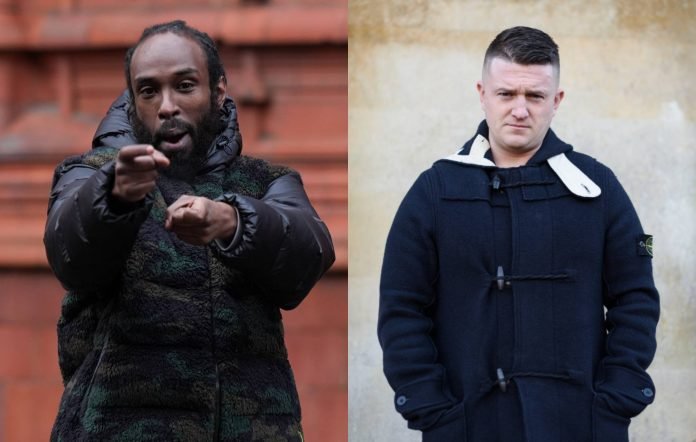
A Somali American woman who gained sudden national recognition for a vivid metaphor about identity has been arrested in Minneapolis as part of a widening federal crackdown following protests linked to U.S. immigration enforcement, U.S. officials said Wednesday.

Nasra Ahmed, 23, was among 16 people taken into custody in Minnesota on federal charges of assaulting, resisting, or impeding law enforcement officers, according to Attorney General Pam Bondi. The arrests come amid heightened tensions in Minneapolis following a fatal encounter between federal agents and a U.S. citizen during an immigration operation last week.

Ahmed became a viral figure after speaking at a Jan. 21 press conference, where she used food imagery to describe the experience of growing up Somali American.

“It’s kind of like bananas and rice,” she said. “People don’t think you can eat bananas with rice, but that’s what it’s like to be Somali and American.”

The remark spread rapidly across social media, resonating with many immigrants and children of immigrants navigating dual cultural identities.

Federal officials say Ahmed’s arrest is unrelated to her viral remarks and instead stems from alleged actions during recent protests in Minneapolis, which erupted after the Jan. 24 shooting death of Alex Pretti, a 37-year-old U.S. citizen killed by U.S. Border Patrol agents during an immigration enforcement operation.

In a statement posted on X, Bondi said those arrested are accused of obstructing federal officers amid unrest in the city. “Federal agents have arrested 16 Minnesota rioters for allegedly assaulting federal law enforcement people who have been resisting and impeding our federal law enforcement rights,” she wrote, adding that additional arrests are expected.

The U.S. Department of Justice released the names and photographs of all 16 defendants charged under a federal statute that criminalizes interference with officers performing official duties. Alongside Ahmed, those charged include Abdikadir Noor, Christina Rank, Madeline Tschida, Nitzana Flores, Helicity Borowska, Quentin Williams, William Vermie, Paul Johnson, Gillian Etherington, Joshua Doyle, Kirubele Adbebe, Margaret Sager, Ilan Wilson-Soler, Alice Valentine, and Matrim Charlebois.

Authorities have not publicly detailed Ahmed’s specific alleged conduct during the demonstrations, nor have they said whether she is accused of assault or other forms of obstruction. Court proceedings are expected to clarify the charges in the coming days.

The arrests unfold as the Trump administration intensifies immigration enforcement nationwide and faces mounting criticism over the use of force by federal agents. The shooting of Pretti — the second fatal encounter involving federal immigration officers in Minneapolis in recent weeks — has become a flashpoint in a broader national debate over accountability, protest rights, and the scope of federal power.

For Ahmed, the trajectory has been swift and stark: from a symbolic voice articulating immigrant identity to a defendant in a high-profile federal case. As legal proceedings move forward, her arrest has already become part of a larger story about protest, policing, and the increasingly fraught intersection of immigration policy and civil unrest in the United States.


Top stories

Clarence Thomas Declares Ideological War on Progressivism

Published

on

A Supreme Court justice just called an entire ideology a threat to America—this will spark debate.

Clarence Thomas delivered a forceful critique of progressivism on Wednesday, framing it as a direct challenge to the philosophical foundations of the United States during a televised address marking the nation’s approaching 250th anniversary.

Speaking at the University of Texas at Austin law school, Thomas argued that modern progressive thought seeks to replace the core principles of the Declaration of Independence—particularly the idea that rights are inherent and not granted by government.

“Progressivism seeks to replace the basic premises of the Declaration of Independence and hence our form of government,” Thomas said, warning that a growing number of Americans no longer accept the founding belief that individuals possess “unalienable rights.”

The 77-year-old justice, appointed by George H. W. Bush in 1991, did not reference specific political figures or policies. Instead, he cast his remarks in broader terms, describing what he sees as a cultural and intellectual shift—one driven in part by academic institutions and public discourse.

Thomas said a climate of “cynicism” and “hostility” toward the country has taken hold, arguing that this trend reflects a deeper rejection of traditional views on limited government, individual liberty, and the origin of rights.

In his view, progressivism redefines those rights as products of the state rather than inherent to individuals—a shift he described as incompatible with the constitutional framework. He also criticized what he called a lack of conviction among political leaders, accusing them of retreating from foundational principles under the guise of pragmatism.

The speech comes at a moment of heightened political polarization in the United States, where debates over the role of government, constitutional interpretation, and national identity remain deeply contested.

Thomas concluded by urging Americans to reaffirm the values he associates with the country’s founding, calling for a renewed sense of civic responsibility and, if necessary, personal sacrifice.

His remarks are likely to intensify ongoing debates about the direction of American political thought—particularly as the nation approaches a symbolic milestone that invites reflection on its founding ideals and their modern interpretation.

Continue Reading

Middle East

Did Satellites Give Iran a Target?

Published

on

Satellite Images May Have Exposed U.S. Base Before Iran Strike, Lawmaker Warns.

In modern war, the battlefield isn’t just physical—it’s visible from space.

Sensitive U.S. military positions in the Middle East may have been inadvertently exposed through commercial satellite imagery before an Iranian strike that injured American personnel, according to a senior U.S. lawmaker, raising fresh concerns about the risks of open-source intelligence in wartime.

Representative John Moolenaar, chairman of the House Select Committee on China, warned that high-resolution images of Prince Sultan Air Base circulated publicly shortly before Iran launched a March 27 missile and drone attack on the installation. The strike wounded at least 12 U.S. service members and damaged key aircraft, including refueling tankers and airborne surveillance systems.

In a letter to Defense Secretary Pete Hegseth, Moolenaar pointed to evidence suggesting the images may have originated from satellites operated by Airbus before being republished by a China-based firm, MizarVision. The imagery reportedly showed detailed layouts of aircraft on the ground—information that, in the wrong hands, could serve as targeting data.

The lawmaker did not present direct proof linking the images to Iran’s attack, but said the timing and level of detail raised “serious national security concerns.” A technical review cited in the letter found Airbus satellites were the “most plausible” source, while noting that commercial imagery often moves through complex global distribution networks before reaching end users.

Airbus denied the allegations, stating it complies with all international regulations and export controls.

The episode highlights a growing dilemma for governments: how to manage the expanding availability of near real-time satellite imagery without undermining transparency. Commercial providers such as Planet Labs have at times restricted access to sensitive images at government request, but no universal framework exists.

For military planners, the concern is increasingly urgent. High-resolution satellite images—once the exclusive domain of intelligence agencies—are now widely accessible, allowing analysts, journalists and potentially adversaries to monitor troop movements and infrastructure with unprecedented clarity.

The implications extend beyond a single incident. As conflicts become more technologically interconnected, the boundary between public information and operational intelligence is blurring. What was once considered benign transparency can, under certain conditions, become a vulnerability.

The question now confronting policymakers is whether tighter controls are needed—and if so, how to impose them without eroding the very openness that has made satellite imagery a cornerstone of modern reporting and accountability.

In an era where war can be tracked from orbit in near real time, visibility itself may be emerging as a new strategic risk.

Continue Reading

Middle East

Clinton Sounds Alarm as Iran Crisis Deepens

Published

on

Hillary Clinton Warns U.S. Has ‘Lost Leverage’ With Iran as Blockade Escalates.

When even insiders say the U.S. lost leverage, the real question isn’t what happens next—it’s who is actually in control.

Former Secretary of State Hillary Clinton has issued one of the bluntest assessments yet of Washington’s position in the Iran crisis: the United States, she argues, is no longer negotiating from strength.

Her warning comes at a pivotal moment—just days after talks in Islamabad collapsed and as the U.S. intensifies pressure through a naval blockade targeting Iranian ports around the Strait of Hormuz.

“We are in a very weak position,” Clinton said, arguing that Washington has “lost the leverage and initiative” that once defined its approach to Tehran.

That critique cuts directly against the Trump administration’s strategy, which rests on the belief that maximum pressure—military, economic, and psychological—can force Iran into concessions.

Clinton’s argument is the opposite: pressure without a clear diplomatic framework erodes leverage rather than strengthens it.

Her position reflects a deeper strategic divide in U.S. foreign policy. While she supported earlier, limited strikes on Iranian nuclear facilities, she criticized what she described as a broader, “incoherent” escalation lacking a defined end state. In her view, leverage comes not just from القوة—but from clarity, credibility, and coalition-building.

That credibility, she suggests, has been damaged.

The collapse of talks led by JD Vance—combined with unilateral actions like the blockade—has reinforced Iranian perceptions that Washington is negotiating on shifting terms. At the same time, U.S. allies have refused to join the blockade, further weakening the appearance of a united front.

This matters because leverage in diplomacy is not just about capability—it is about alignment.

If Iran believes the United States is isolated, divided from allies, or uncertain in its objectives, it has less incentive to compromise. Instead, it can wait, escalate selectively, or seek alternative backing from powers like China or Russia.

Clinton also pointed to another structural problem: the absence of experienced negotiators deeply versed in nuclear diplomacy. Her call to “bring in people who actually know something about nuclear weapons” signals concern that technical complexity is being overshadowed by political messaging.

Meanwhile, the battlefield reality is moving in the opposite direction of de-escalation. The blockade is tightening. Shipping is disrupted. Iran is threatening retaliation. And Israel’s continued operations in Lebanon complicate any ceasefire framework.

In that environment, leverage becomes fluid.

Washington may hold military dominance, but Iran retains asymmetric tools—control over chokepoints, proxy networks, and the ability to destabilize global energy markets. Each side believes it can outlast the other.

Clinton’s warning ultimately points to a larger risk: that the United States is drifting into a position where it must negotiate not from strength, but from necessity.

And in high-stakes conflicts, that shift can define the outcome.

Continue Reading

Top stories

Xi to Europe: Choose Stability Over Chaos

Published

on

Xi Urges Stronger China-Spain Ties Amid Global ‘Chaos’ and Strained US Alliances.

As Washington fights wars, Beijing builds alliances. Europe is being forced to choose.

Chinese President Xi Jinping called for closer economic and strategic ties with Spain on Tuesday, warning that global instability risks pushing international relations toward a “law of the jungle.”

Speaking during talks in Beijing with Spanish Prime Minister Pedro Sánchez, Xi framed the current geopolitical moment as a test of competing worldviews—one based on cooperation and international law, the other on raw power.

“China and Spain should strengthen communication, consolidate mutual trust, and cooperate closely,” Xi said, according to state media, urging both countries to resist what he described as a regression toward disorder in global affairs.

The meeting, held at Beijing’s Great Hall of the People, comes as Spain seeks to position itself as a bridge between China and the European Union at a time of growing tension with the United States. Washington’s recent foreign policy moves—including tariffs and its handling of the Iran conflict—have unsettled traditional allies and opened space for Beijing to deepen engagement.

Sánchez welcomed China’s role in supporting diplomatic efforts to resolve the Middle East crisis, saying Beijing could play a “significant” role in advancing peace and stability. He also pointed to the need for reforms in global institutions to better reflect what he described as a “multipolar reality.”

The visit marks Sánchez’s fourth trip to China in as many years and reflects a broader trend of European leaders seeking to diversify economic partnerships. Spanish officials say a key goal is to expand market access for agricultural and industrial exports while exploring joint ventures in energy and technology.

At the same time, Madrid has acknowledged tensions in its economic relationship with Beijing. Sánchez described the trade imbalance between China and the EU as “unsustainable,” signaling that deeper ties will likely come with calls for fairer market conditions.

The diplomatic push comes against the backdrop of strained transatlantic relations. U.S. President Donald Trump has threatened trade measures against Spain after Madrid refused to allow U.S. military operations from its bases during the Iran conflict—an issue that has further complicated Western unity.

For Beijing, the moment presents an opportunity. By positioning itself as a partner for stability and economic cooperation, China is attempting to strengthen its influence in Europe while avoiding direct confrontation with Washington.

For Spain—and much of Europe—the challenge is more delicate: balancing economic opportunity with China against long-standing political and security ties to the United States.

As global power centers shift, the meeting in Beijing underscores a growing reality: alliances are no longer fixed, and strategic flexibility is becoming a necessity rather than a choice.

Continue Reading

Top stories

Russia and UAE Call for Permanent Ceasefire

Published

on

While others escalate, Russia and the UAE are calling for calm. Will anyone listen?

Sergei Lavrov and Abdullah bin Zayed Al Nahyan held talks on Tuesday as concerns mount over escalating tensions in the Gulf, urging an immediate and lasting ceasefire alongside renewed diplomatic engagement.

According to Russia’s Foreign Ministry, the discussion focused on the volatile situation following recent U.S.-Iran negotiations in Islamabad, which failed to produce a breakthrough despite raising hopes for de-escalation.

Both sides emphasized the urgency of preventing further deterioration, calling for a permanent ceasefire to stabilize the region and protect global economic interests. The ministers also stressed the importance of continued dialogue, signaling a shared preference for diplomacy over confrontation as military risks intensify.

The exchange reflects growing international concern that the fragile pause in hostilities between Washington and Tehran could collapse, particularly as tensions rise in the Strait of Hormuz—a critical artery for global energy supplies.

For the United Arab Emirates, the stakes are immediate. As a key Gulf state with major ports and energy infrastructure, any escalation threatens both national security and economic stability. Russia, meanwhile, has positioned itself as a diplomatic actor seeking to balance its regional relationships while advocating for de-escalation.

The call highlights a broader trend: as major powers and regional players weigh their options, diplomatic channels remain active—even as the risk of renewed conflict continues to loom.

For now, Moscow and Abu Dhabi are sending a clear message—dialogue must continue. Whether that message translates into tangible progress on the ground remains uncertain.

Continue Reading

Top stories

Iran Confronts US Navy in Hormuz Showdown

Published

on

Iran Issues ‘Final Warning’ to US Warships During Strait of Hormuz Mine-Clearing Mission.

One radio message. Two navies. And a ceasefire that may not hold.

Tensions in the Strait of Hormuz escalated sharply after Iranian forces reportedly issued a direct warning to U.S. naval vessels during ongoing mine-clearing operations, underscoring the fragile state of the ceasefire between Washington and Tehran.

According to reports, Iran’s Islamic Revolutionary Guard Corps (IRGC) Navy radioed a U.S. destroyer with a stark message: “This is the last warning.” The exchange occurred as American warships moved through the strategic waterway as part of efforts to clear sea mines and reopen shipping lanes disrupted by weeks of conflict.

The U.S. vessel responded cautiously, emphasizing that its transit complied with international law and the terms of the temporary ceasefire. “No challenge is intended,” the ship reportedly replied, signaling an attempt to avoid escalation while continuing operations.

Despite the encounter, Iran publicly denied that any U.S. warships had entered the strait. In a statement, the IRGC insisted it maintains full control over the passage and asserted that only non-military vessels are permitted under its current regulations. The message was clear: any military presence would be met with force.

Meanwhile, US Central Command confirmed that two guided-missile destroyers—USS Frank E. Petersen Jr. and USS Michael Murphy—had transited the strait as part of a broader mission to establish safe maritime routes. The operation aims to remove mines laid during the conflict and restore the free flow of global trade.

Admiral Brad Cooper said the U.S. has begun creating a secure corridor for commercial vessels, a critical step in stabilizing global energy markets. The strait, which carries a significant share of the world’s oil supply, has seen traffic plummet amid fears of attack.

The exchange highlights a dangerous reality: while open war has paused, confrontation continues at sea. Both sides are testing boundaries—Washington through military operations, and Tehran through warnings and assertions of control.

For now, neither side appears ready to escalate further. But the incident reveals just how thin the line is between deterrence and conflict in one of the world’s most volatile chokepoints.

The ceasefire may still hold—but in the waters of Hormuz, the war is far from over.

Continue Reading

Top stories

Erdogan vs Netanyahu — A New Front Opens in the Middle East

Published

on

Turkey-Israel Tensions Surge as Iran War Reshapes Regional Rivalries.

This isn’t just rhetoric anymore. Turkey and Israel are drifting toward a dangerous collision.

The sharp escalation in tensions between Recep Tayyip Erdogan and Benjamin Netanyahu marks one of the most volatile geopolitical shifts emerging from the aftermath of the Iran war. What began as a war of words is now revealing deeper strategic fractures that could reshape power dynamics across the Middle East.

At the center of the confrontation is a widening clash of regional visions. Ankara has positioned itself as a defender of Palestinian interests and a vocal critic of Israeli military operations in Gaza and Lebanon. Erdogan’s recent statements—warning that Turkey could act militarily if necessary—reflect not just outrage, but ambition. Turkey is signaling that it intends to play a decisive role in the post-war regional order.

Israel, however, sees something more threatening. Officials in Tel Aviv increasingly view Turkey not as a difficult partner, but as a potential strategic rival. Accusations from Israeli leaders that Ankara is aligning with Iran’s broader regional network—even if overstated—underscore a growing perception shift. In this framing, Turkey is no longer peripheral to Israel’s security calculus; it is becoming central.

Nowhere is this rivalry more visible than in Syria. Turkey supports the emerging post-Assad political order and maintains a military footprint on the ground. Israel, by contrast, has intensified strikes aimed at preventing hostile entrenchment near its borders.

The risk is not direct confrontation—at least not yet—but overlapping spheres of influence that could trigger escalation through miscalculation.

Lebanon and Gaza add further friction. Turkey’s condemnation of Israeli operations contrasts sharply with Israel’s determination to continue its campaign against Hezbollah and other groups. Each side views the other’s position not as political disagreement, but as strategic obstruction.

Yet for all the heated rhetoric, constraints remain. Trade links and economic interdependence still tie the two countries together. Neither side appears eager for open conflict, particularly amid the broader instability created by the U.S.-Iran confrontation. What is unfolding is a calibrated escalation—strong language designed to project power without crossing into direct military engagement.

But that balance is fragile.

History offers a warning. Relations between Turkey and Israel have swung dramatically over the past decades, from close military cooperation to repeated diplomatic crises. The current moment feels different—not because of immediate war risk, but because of the structural shift it represents. Both countries are recalibrating their roles in a region where old alliances are weakening and new rivalries are emerging.

The danger lies not in what is being said, but in what it signals. In a Middle East already destabilized by war, even rhetorical escalation can create its own momentum.

For now, this is a conflict of narratives and influence. But in today’s environment, that may be how real conflicts begin.

After Iran, Is Turkey Next?

Continue Reading

Top stories

Orbán Falls — Trump’s Model Cracks

Published

on

Orbán’s Defeat Sends Shockwaves Through Trump’s Political Orbit and Global Conservative Movement.

A political titan falls in Europe—and Washington feels the tremor.

The electoral defeat of Viktor Orbán after 16 years in power is reverberating far beyond Hungary, shaking the political imagination of conservatives in the United States and raising new questions about the durability of populist strongman models in democratic systems.

For Donald Trump and his allies, Orbán had long stood as both partner and prototype—a leader who fused nationalism, anti-immigration policies, and institutional control into a durable political system. His loss to opposition leader Péter Magyar now complicates that narrative.

The timing is particularly striking. Trump had openly backed Orbán’s reelection and dispatched Vice President JD Vance to campaign in Budapest just days before the vote, even as the United States remained deeply engaged in the Iran conflict. The intervention, intended to reinforce ideological alignment, instead underscored the limits of political influence across borders.

Analysts say the outcome reflects a broader global pattern: rising voter fatigue with entrenched incumbents, regardless of ideology. Economic strain, inflation, and geopolitical instability—exacerbated by the Middle East war—appear to have outweighed Orbán’s long-standing grip on Hungary’s political machinery.

“Oppositions can win despite a tilted playing field,” said political scientist Steven Levitsky, noting that even systems designed to entrench power remain vulnerable when public dissatisfaction reaches a tipping point.

Orbán’s political legacy remains significant. Over more than a decade, he reshaped Hungary’s institutions—tightening control over the judiciary, media, and electoral system while promoting what he called an “illiberal democracy.” His model inspired a generation of right-wing movements globally, particularly within segments of the American conservative base.

Yet his defeat exposes a critical vulnerability: structural control cannot fully insulate leaders from economic pressures and shifting public sentiment.

The implications for Washington are immediate. Trump’s alignment with Orbán now risks becoming a political liability, particularly as critics draw parallels between the Hungarian model and concerns about democratic institutions in the United States. Some Republicans have already distanced themselves, warning against overt interference in foreign elections.

At the same time, Orbán’s loss weakens a key European ally who had often blocked European Union initiatives, including support for Ukraine. His departure could reshape EU dynamics and reduce friction between Brussels and Budapest.

Still, the broader lesson is more complex than a simple rejection of populism. Orbán conceded defeat quickly, reinforcing the resilience of electoral systems even under strain. For both supporters and critics, the message is clear: political dominance, no matter how entrenched, remains contingent.

For Trump and his movement, the Hungarian result offers both a warning and a test. If Orbán’s system could be undone at the ballot box, the question now echoes across the Atlantic—how durable is the model when voters decide it’s time for change?

Continue Reading

Most Viewed

error: Content is protected !!