Middle East
Arab States Pressured Trump to Halt Planned Strikes on Iran
A rare and coordinated intervention by America’s closest Middle Eastern allies helped pull President Donald Trump back from the brink of military strikes against Iran, exposing deep regional fears of a war that could spiral beyond control.
Saudi Arabia, Qatar, Turkey and Oman mounted an intense last-minute lobbying campaign, warning Washington that an attack on Iran would ignite a region-wide conflict with unpredictable consequences. Their message was blunt: escalation would not remain contained, and US bases, shipping lanes and regional stability would all be at risk.
Saudi Arabia’s stance carried particular weight. Riyadh quietly refused to allow US aircraft to use its airspace for any strike, signaling a firm red line despite its historically tense relationship with Tehran. Saudi Foreign Minister Prince Faisal bin Farhan followed up with calls to counterparts in Iran, Oman and Turkey, underscoring a regional push to contain the crisis diplomatically.
The lobbying reflects a broader shift. While Gulf states deeply distrust Iran’s proxy network and regional ambitions, they are equally alarmed by the prospect of chaos triggered by US military action. Disruption to Gulf shipping routes, missile retaliation against US bases, and internal instability across the region remain overriding fears.
Iran, for its part, has worked to soften its isolation. Foreign Minister Abbas Araghchi has intensified outreach to Arab capitals, framing Tehran as a lesser threat to regional stability than Israel and portraying diplomacy as the only viable off-ramp. That message has found cautious listeners, especially after past Israeli strikes risked dragging Gulf states into conflicts not of their choosing.
The episode also exposed US vulnerabilities. As tensions peaked, Washington withdrew key personnel from its Al Udeid airbase in Qatar, highlighting how America’s vast military footprint can become a liability if deterrence fails.
For now, diplomacy has bought time. But the underlying fault lines remain. The Gulf states’ intervention did not signal trust in Iran—it signaled fear of uncontrolled war. And it sent a clear message to Washington: any move against Tehran will no longer be a unilateral decision, but one that reshapes the entire Middle East.
Middle East
$35,000 Drone Enters War: Pentagon Fast-Tracks New Suicide System
Cheap, fast, expendable — has the Pentagon finally embraced attrition warfare?
The United States has deployed its new Low-Cost Uncrewed Combat Attack System, or LUCAS, in combat operations against Iran — just eight months after the system was unveiled at the Pentagon.
The drone, manufactured by Arizona-based SpektreWorks, was first showcased in July 2025 during a Pentagon demonstration led by Defense Secretary Pete Hegseth. Its battlefield debut marks a dramatic break from traditional defense acquisition cycles, which often stretch across years or even decades.
At roughly $35,000 per unit, LUCAS represents a sharp pivot toward attritable systems designed for high-volume deployment. By comparison, an MQ-9 Reaper costs between $20 million and $40 million and is intended to be reused. LUCAS, by contrast, is designed to be expendable.
U.S. Central Command said the drone’s design is modeled in part on Iran’s Shahed-136 loitering munition — a system widely used by Russia in Ukraine. The emergence of Shahed-style drones has reshaped modern conflict by enabling massed, low-cost strikes capable of overwhelming expensive air defense systems.
LUCAS uses an open architecture, allowing operators to swap payloads and communications systems depending on mission needs. It can be launched from ground platforms or vehicles and configured for strike or target-drone roles. The U.S. government owns the intellectual property, enabling potential production by multiple manufacturers, though SpektreWorks currently holds contracts.
Its rapid deployment reflects lessons drawn from Ukraine, where thousands of inexpensive drones have altered the cost equation of warfare. Pentagon officials say the system aligns with the $1 billion Drone Dominance Program authorized under the “One Big Beautiful Bill Act of 2025,” aimed at scaling U.S. production of low-cost autonomous weapons.
During development, LUCAS reportedly integrated satellite connectivity systems including Starlink, Starshield and Viasat’s MUSIC, though current operational configurations have not been disclosed. Control software enabling operators to manage multiple autonomous drones simultaneously was developed by startup Noda.
Defense analysts note that LUCAS resembles a lineage of loitering munitions that stretches back decades, including Israel’s Harpy anti-radar drone and earlier U.S. concepts from the Cold War era.
The system’s combat debut underscores a broader shift in U.S. military doctrine: speed over perfection, scale over exclusivity, and affordability over singular technological dominance.
In an era where adversaries can field swarms of inexpensive drones, the Pentagon appears to be embracing a simple reality — attrition has returned to center stage.
Middle East
US Embassy in Riyadh Targeted by Drones
Saudi Defense Ministry Reports Minor Damage After Two Hostile UAVs Target Diplomatic Compound.
The war’s ripple effect reaches Riyadh. How far will the escalation spread?
Saudi Arabia confirmed Tuesday that the US Embassy in Riyadh was targeted by two hostile drones, underscoring the widening fallout from the escalating U.S.-Israeli conflict with Iran.
Major General Turki Al-Maliki, spokesperson for the Saudi Ministry of Defense, said initial assessments indicate the drones caused a limited fire and minor material damage to part of the embassy compound. No casualties were immediately reported.
The incident was carried by the Saudi Press Agency, which described the damage as contained. Saudi authorities did not immediately attribute responsibility.
The attack comes amid heightened tensions across the Gulf following joint U.S.-Israeli strikes on Iran that killed senior Iranian officials, including Supreme Leader Ali Khamenei. In response, Iran and allied groups have launched missile and drone attacks across multiple countries hosting U.S. assets.
In a security alert, the U.S. mission urged American citizens in Riyadh, as well as in Jeddah and Dhahran, to shelter in place. The advisory reflects growing concern that diplomatic and military sites across the region may face further threats.
Several Gulf cities have already experienced collateral damage from intercepted projectiles and falling debris as air defense systems respond to incoming threats. The targeting of a major diplomatic compound in the Saudi capital marks another escalation in a conflict that is increasingly spilling beyond its original battlefield.
Saudi Arabia has previously condemned attacks on its territory and signaled that it reserves the right to respond to threats against its security. For now, authorities appear focused on containment.
The broader concern is strategic: as drones and missiles widen the geography of risk, even cities long considered insulated from frontline conflict are being drawn into the confrontation.
Middle East
Netanyahu: Iran Conflict Won’t Be “Endless War”
Israeli Prime Minister Defends Joint Strikes, Says Action Was Needed Before Iran’s Nuclear Sites Became Untouchable.
“Quick and decisive,” Netanyahu says. But how short is short in the Middle East?
Israeli Prime Minister Benjamin Netanyahu insists the expanding confrontation with Iran will not become an open-ended war, even as regional tensions intensify following joint U.S.-Israeli strikes.
In an interview with Fox News broadcast Monday, Netanyahu described the campaign as necessary and time-sensitive, arguing that Israel and the United States had acted before Iran’s nuclear infrastructure became effectively immune to attack.
“You’re not going to have an endless war,” Netanyahu said. “This is going to be a quick and decisive action.” He later acknowledged the operation “may take some time,” but added that it would not stretch into years.
Netanyahu’s central claim rests on intelligence assessments that Iran had begun constructing new underground nuclear and missile facilities following the brief but intense 12-day conflict in June, when coordinated U.S. and Israeli strikes targeted Iranian assets.
According to Netanyahu, those new sites — including hardened bunkers — would soon have placed Tehran’s ballistic missile and nuclear programs beyond reach. “If no action was taken now, no action could be taken in the future,” he said.
Iran has consistently denied pursuing nuclear weapons, maintaining that its program is for civilian energy purposes. However, Israeli leaders have long argued that enrichment capabilities and missile development together create a credible weapons pathway.
The remarks come as U.S. President Donald Trump has offered shifting timelines for the duration of hostilities. Trump recently suggested the war could continue for more than four weeks, reflecting uncertainty about how Iran and its regional allies may respond.
Military exchanges have already widened beyond Iranian territory, with retaliatory missile and drone attacks affecting Gulf states and disrupting airspace and shipping lanes.
Netanyahu’s insistence on a finite campaign appears aimed at reassuring both Israeli citizens and international partners wary of another protracted regional war. Yet conflicts in the Middle East have repeatedly defied early predictions.
Whether this operation remains contained — or evolves into a broader confrontation — will depend largely on Tehran’s next moves and Washington’s appetite for escalation.
For now, Israeli leadership is framing the campaign not as a long war of attrition, but as a preemptive strike designed to close what it sees as a narrowing strategic window.
Middle East
Oil Surges, Gas Soars as Gulf War Threatens Global Energy Arteries
Strait of Hormuz Tensions and LNG Shutdown in Qatar Send Shockwaves Through Markets.
Missiles in the Gulf. Tankers at anchor. Is the world on the brink of an energy shock?
Energy markets jolted sharply higher as the widening conflict between Iran, the United States and Israel began to threaten critical oil and gas infrastructure across the Gulf.
Global benchmark Brent crude briefly climbed to $82 a barrel on Monday after reports that at least three vessels were attacked near the Strait of Hormuz — the narrow waterway through which roughly 20 percent of the world’s oil and gas flows. Iran warned ships against transiting the strait, deepening fears of a supply choke point.
Natural gas markets reacted even more dramatically. Europe’s benchmark gas price surged as much as 50 percent before closing 39 percent higher after QatarEnergy halted liquefied natural gas production following drone strikes on facilities in Ras Laffan Industrial City. Qatar’s defense ministry said the damage was contained, but the suspension rattled traders.
In neighboring Saudi Arabia, Saudi Aramco temporarily shut its Ras Tanura refinery after a drone strike, further tightening concerns about regional output.
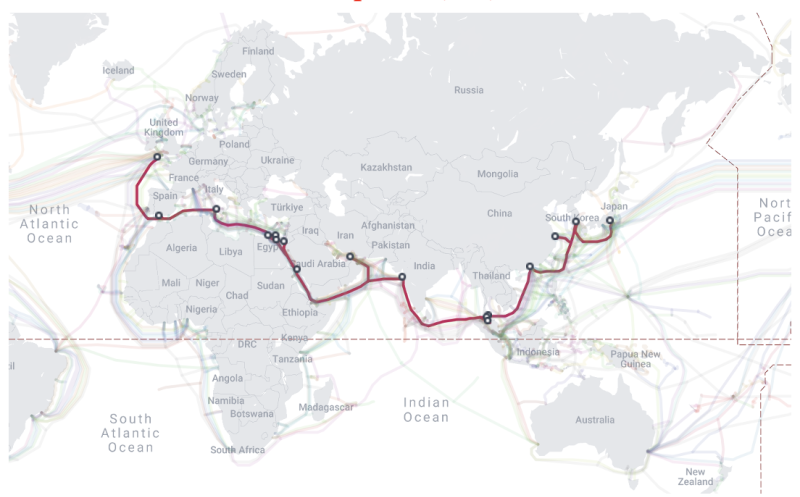
Shipping disruptions compounded the volatility. The UK Maritime Trade Operations reported multiple security incidents in the Arabian Gulf and Gulf of Oman. At least 150 tankers dropped anchor outside the Strait of Hormuz, while major operators rerouted vessels to avoid exposure. Danish shipping giant Maersk paused sailings through the Bab el-Mandeb Strait and Suez Canal, diverting around Africa’s Cape of Good Hope.
Equity markets reflected the uncertainty. London’s FTSE 100 fell 1.2 percent, led lower by airlines and banks exposed to energy-sensitive sectors. France’s CAC-40 and Germany’s DAX posted steeper declines. In the United States, the S&P 500 and Nasdaq initially fell but later recovered to close modestly higher.
Analysts cautioned that markets are not yet in crisis mode. “The market isn’t panicking,” said Saul Kavonic of MST Marquee, noting that major oil infrastructure has not been comprehensively disabled. Others warned, however, that a prolonged conflict could push crude above $100 a barrel, feeding global inflation.
Economists say sustained energy price spikes would quickly filter into food, industrial commodities and transport costs. Central banks, including the Bank of England, could be forced to delay planned interest-rate cuts if inflation pressures intensify.
For now, the Strait of Hormuz remains the focal point. As long as tankers hesitate and production remains uncertain, volatility is likely to persist — a reminder that even limited regional conflict can ripple across the global economy within hours.
Middle East
Middle East War Expands Across Borders
Missiles Over Capitals: Strikes Hit Tehran, Beirut and Gulf Cities as US and Israel Face Wider Retaliation.
Four days in — and the war is no longer confined to one battlefield.
The conflict triggered by joint U.S.-Israeli strikes on Iran has entered its fourth day with no sign of containment, as new attacks ripple across the region from Tehran to Beirut and the Gulf.
Explosions in Iran
Loud blasts were reported overnight in northern Tehran, with additional explosions in Karaj and Isfahan. Iranian media did not immediately specify targets. Israel’s military said it was conducting simultaneous strikes in Tehran and Beirut, underscoring the widening operational scope.
An Israeli statement also claimed it had struck and “dismantled” facilities linked to Islamic Republic of Iran Broadcasting (IRIB), though Iranian outlets reported continued operations despite nearby explosions.
The U.S.-based Human Rights Activists News Agency (HRANA) reported more than 100 casualties inside Iran on the third day of fighting, including civilians and military personnel. Independent verification remains difficult.
Lebanon and Hezbollah
Israel confirmed new deployments in southern Lebanon, describing the move as “forward defence” along the border. Strikes targeted positions associated with Hezbollah in Beirut, including alleged command centers and weapons storage facilities.
Hezbollah responded by firing rockets and drones at Israeli military bases, calling the action defensive. Israel’s defense minister said the military would take control of additional positions if necessary.
Gulf States Under Pressure
The war’s spillover has intensified in the Gulf.
Two drones struck the US Embassy in Riyadh, causing limited damage, according to Saudi officials. The embassy closed temporarily and urged Americans to avoid the area.
In Kuwait, the US Embassy in Kuwait announced an indefinite closure after Iranian attacks. Qatar reported intercepting ballistic missiles over Doha, while Oman confirmed a drone strike on a port facility that hit a fuel tank without causing casualties.
Strait of Hormuz Warning
China urged all parties to ensure safe navigation in the Strait of Hormuz, a chokepoint through which roughly a fifth of global oil shipments pass. An Iranian Revolutionary Guards general threatened to target shipping and oil infrastructure, warning that prices could surge sharply.
Such threats heighten fears of global economic disruption.
Washington and Jerusalem Signal Resolve
U.S. President Donald Trump said retaliation for attacks on American facilities would come “soon,” while also signaling the campaign could extend beyond earlier projections.
Secretary of State Marco Rubio said Washington acted preemptively after learning Israel planned strikes, arguing that failure to act would have resulted in greater U.S. casualties.
Israeli Prime Minister Benjamin Netanyahu insisted the operation would not become an “endless war,” though he acknowledged it may take time.
Meanwhile, the U.S. State Department urged Americans to depart numerous Middle Eastern countries, citing serious safety risks.
As missiles cross borders and diplomatic compounds close, the conflict’s geography continues to expand. The question now is whether diplomatic channels can re-emerge — or whether the region is bracing for a longer, more volatile phase of confrontation.
Middle East
Trump Rebukes Britain as Iran War Strains ‘Special Relationship’
US President Says Historic Alliance Has Changed After UK Hesitation Over Iran Strikes.
From “special relationship” to public frustration — is the Atlantic alliance cracking?
U.S. President Donald Trump said the once “most solid relationship” between Washington and London is “not like it used to be,” signaling a rare public strain in the transatlantic alliance as the Middle East conflict widens.
In an interview with The Sun, Trump criticized British Prime Minister Keir Starmer for initially refusing to allow the United States to use British military bases in operations connected to strikes on Iran.
“This was the most solid relationship of all,” Trump said. “Now we have very strong relationships with other countries in Europe,” singling out France and Germany.
He described Starmer as “not helpful” and said he never expected such hesitation from the United Kingdom. Though he later acknowledged Britain’s decision to permit limited use of bases for what London described as a specific defensive purpose, Trump argued that the approval “took far too much time.”
The disagreement touches on politically sensitive terrain in Britain. Memories of former Prime Minister Tony Blair’s support for the 2003 Iraq invasion continue to shape public and parliamentary caution over Middle East interventions.
Addressing Parliament, Starmer defended his position, saying his duty was to act in Britain’s national interest. “We all remember the mistakes of Iraq,” he said, stressing that any UK involvement must have a lawful basis and a clear strategic plan.
Downing Street confirmed that British bases, including RAF Akrotiri in Cyprus, were not being used by U.S. bombers for offensive operations. The Cypriot base was itself struck by an unmanned drone, which Starmer said had been launched prior to Britain’s policy decision.
The exchange marks one of the sharpest rhetorical breaks in U.S.-UK relations in years. While the alliance remains operationally intact — particularly within NATO — the public tone reflects deeper unease over strategy, escalation and political risk.
For Washington, speed and alignment are strategic necessities in a fast-moving conflict. For London, caution carries domestic and legal weight. The friction underscores a broader reality: even long-standing alliances can bend under the pressure of war.
Middle East
Iran Strikes Shake Gulf’s Tax-Free Safe Haven
Missile Attacks, Port Shutdowns and Airspace Closures Threaten UAE’s Role as Global Finance and Travel Hub.
The world’s safest luxury playground just heard air-raid sirens. What happens to global markets if Dubai no longer feels secure?
Iran’s widening retaliation against U.S.-Israeli strikes has struck at the heart of the Gulf’s economic model, targeting cities long marketed as insulated from regional turmoil. Explosions over Dubai and Abu Dhabi have rattled investors, expatriates and global corporations that helped transform the United Arab Emirates into a tax-free magnet for wealth.
Missile and drone interceptions lit the skies above landmarks including the Burj Khalifa and the Palm Jumeirah, where debris sparked fires near luxury hotels such as the Fairmont The Palm. In Abu Dhabi, falling fragments were reported near Etihad Towers. Kuwait City’s airport also came under drone attack, underscoring how widely the confrontation is spreading.
The economic stakes are significant. DP World suspended operations at Jebel Ali, the Middle East’s largest container port, after debris ignited a fire at one berth. The port and surrounding free zone account for more than a third of Dubai’s gross domestic product. At the same time, hundreds of vessels have anchored near the Strait of Hormuz amid fears Iran could disrupt shipping through the vital energy corridor.
Regional airspace closures have compounded the disruption. Dubai and Doha function as crossroads between Europe and Asia, handling thousands of connecting flights daily. Any sustained interruption reverberates across global aviation, cargo flows and tourism.
Analysts say Tehran’s strategy appears aimed at pressuring Washington’s regional allies by raising the economic cost of continued military operations. Marko Kolanovic, former chief global strategist at JPMorgan, warned that the UAE’s exposure — with roughly 88 percent of its population composed of expatriates and heavy reliance on finance, tourism and trade — makes it especially vulnerable. A prolonged crisis, he cautioned, could send shockwaves through global markets.
Dubai weathered a severe real estate crisis in 2009, but investors largely viewed it as contained. This time, the perception of security itself is under strain. Residents have reported panic buying and a rush to secure outbound flights.
For decades, Dubai sold stability in a volatile neighborhood. The current escalation tests whether that promise can endure — and whether the Gulf’s economic miracle can withstand a war at its doorstep.
Comment
Khamenei Is Dead — Will Iran Fracture or Harden?
Leadership Council Forms as Tehran Moves Swiftly to Prevent a Power Vacuum After US-Israeli Strike.
Was this a decapitation meant to collapse Iran — or the moment that forces it to consolidate and strike back?
The killing of Iran’s Supreme Leader, Ali Khamenei, in a joint U.S.-Israeli strike has triggered the most consequential leadership transition in the Islamic Republic since 1989. But instead of chaos, Tehran has responded with speed.
Within hours, Iranian authorities confirmed the formation of an interim leadership structure under constitutional provisions designed for precisely this moment. According to international reporting, Alireza Arafi has been appointed as the jurist member of a temporary leadership council tasked with exercising the supreme leader’s authority until the Assembly of Experts selects a successor.
That move matters. It signals continuity — not collapse.
For decades, Iran has operated under sanctions, covert pressure and military threats. Its political architecture was built with redundancy. Succession planning is embedded in its system because siege conditions were never theoretical. The rapid appointment to the interim council suggests the state intends to close any vacuum quickly and limit elite fragmentation.
The broader question now is succession.
Among names frequently discussed is Mojtaba Khamenei, the late leader’s son. His perceived advantage would be network continuity and reassurance to hardline constituencies. But hereditary optics carry risks in a republic born from anti-monarchical revolution.
Another possibility is Hassan Khomeini, grandson of the revolution’s founder. His symbolic legitimacy could unify factions, though symbolism alone may not satisfy security-driven elites in wartime.
Clerical heavyweights such as Sadeq Amoli Larijani or Ahmad Khatami represent institutional continuity. Meanwhile, political operators like Ali Larijani could emerge as power brokers shaping consensus behind the scenes.
Above all stands the Islamic Revolutionary Guard Corps (IRGC). In moments of existential threat, security institutions tend to gain influence. External attempts at “decapitation” often produce the opposite of fragmentation — accelerated consolidation and a harder posture.
Strategically, the strike was widely interpreted as an effort to paralyze decision-making and disrupt succession. Yet early signs suggest Iran’s system remains operational. The leadership council framework indicates the state is prioritizing legibility to itself — keeping chains of command intact even under bombardment.
Regionally, the emotional impact is profound. For Shiite communities beyond Iran’s borders, Khamenei’s death may deepen anti-Israeli sentiment and intensify confrontation with Western allies. Political violence in the Middle East rarely stays contained; it travels through networks of memory, grievance and identity.
The larger geopolitical shift is equally significant. Targeted elimination of a sitting head of state redraws perceived boundaries of sovereignty. Whether this becomes a new precedent — or an isolated rupture — will shape regional calculations for years.
Iran now enters a succession phase under fire. The decisive variable is not whether the system feels shock. It does. The question is whether pressure fractures it — or forces it into a more disciplined, more centralized survival mode.
History suggests states built for siege rarely disintegrate on command.
-
Somaliland1 month agoF-35s Over Hargeisa: The Night Somaliland’s Sovereignty Went Supersonic
-
Somalia1 month agoAid Destroyed, Trust Shattered: Somalia Loses U.S. Support for Good
-
Terrorism1 month agoForeign ISIS Pipeline Exposed: Puntland Captures Dozens of Non-Somali Fighters
-
Somaliland1 month agoSomaliland at Davos: The Moment Somaliland Entered the World’s Inner Circle
-
Terrorism1 month agoAmerica Pulls Back From Somalia but Doubles Down Next Door
-
Top stories2 months agoSomali Pirates Hijack Chinese Fishing Vessel off Puntland Coast
-
Middle East2 months agoUS War Plans Against Iran Enter Advanced Stage
-
Analysis2 months agoWhy Putin Is Silent on Maduro’s Abduction—and the Limits of Putin’s Power