Addis Ababa signs historic security pact with Iran, revealing a pragmatic pivot in a region torn by rivalries and rebellion.
Ethiopia’s new security agreement with Iran signals a bold shift in Horn of Africa diplomacy. As Iran and the UAE clash for influence, Ethiopia plays both sides to survive internal chaos and external pressure.
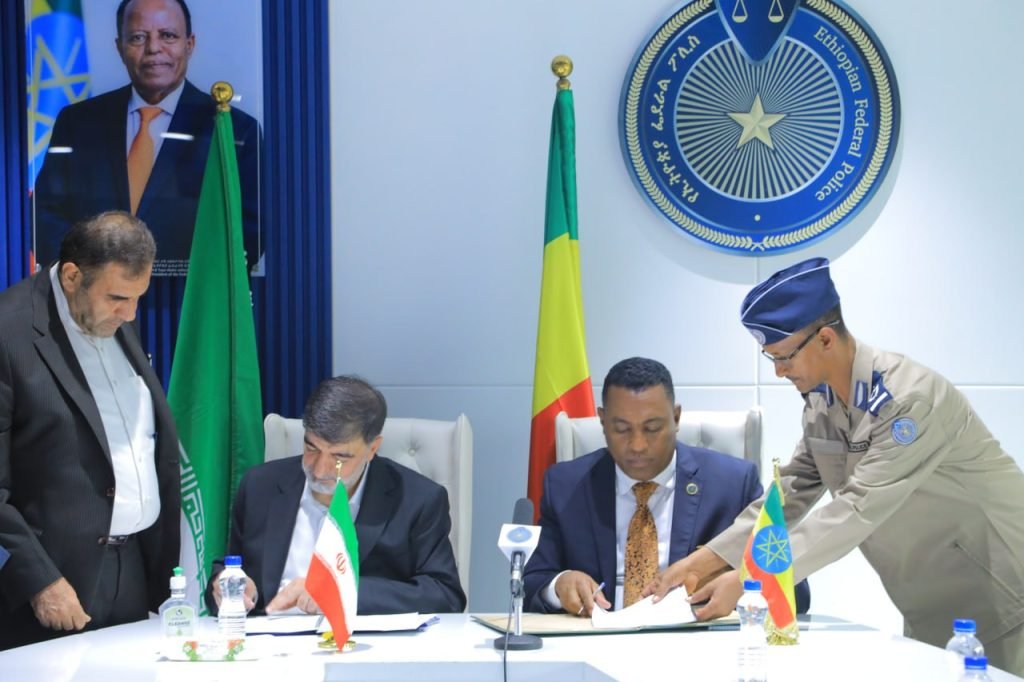
In a region where alliances are fluid and survival depends on adaptability, Ethiopia’s decision to ink a security cooperation deal with Iran on May 6, 2025, is a geopolitical masterstroke—and a gamble.
This is no ordinary memorandum of understanding. This deal opens the gates for intelligence-sharing, joint training, and police cooperation between Tehran and Addis Ababa—two capitals that, on paper, couldn’t be more different in ideology but are bound by shared necessity. It is a clear signal that Ethiopia is doubling down on strategic pragmatism in a Horn of Africa turned battleground between global and regional powers.
Why Ethiopia Needs Iran
Prime Minister Abiy Ahmed’s government is struggling to contain internal collapse. The state remains deeply fractured after the brutal Tigray war (2020–2022), and Addis Ababa now faces insurrections from the Amhara Fano, factions of the Tigray People’s Liberation Front (TPLF), and Oromo Liberation Army (OLA). The federal system is buckling under pressure from armed ethnic factions.
Gateway for Iran
Already battle-tested through its drone diplomacy in the Tigray conflict, Iran is now being invited back—not just for weapons, but for intelligence coordination and counter-insurgency support. This deal is less about ideology and more about utility.
At the same time, Ethiopia is preparing for a possible border conflict with Eritrea over the Red Sea port ambitions in Somaliland—a strategic move that could redraw maritime power lines in the region. Eritrea is fuming over Ethiopia’s deal with Hargeisa and may not sit idly. Having Iran as a strategic partner, especially with its history of operating in Red Sea proxy wars, could become crucial leverage.
What Iran Gains
Iran sees Ethiopia as a gateway to the Horn—a region dominated by UAE ports, American military presence, and Turkish drone factories. By embedding itself in Addis Ababa’s security architecture, Iran reclaims lost ground after being pushed out of Sudan, Djibouti, and Somalia under Saudi-Emirati pressure.
It also gives Tehran a launchpad for regional influence, especially against the UAE, which has entrenched itself in Somaliland, Puntland, and Ethiopia. The timing is critical: the Red Sea is heating up with Houthi threats, global shipping chaos, and Western military build-ups.
UAE in the Crosshairs
This deal is also a diplomatic slap to the UAE. Just weeks before the Iran pact, Addis Ababa hosted Emirati security officials to discuss cross-border crimes and extraditions. Now, it’s turned around and signed a nearly identical deal with Iran. This dual strategy exposes Ethiopia’s determination to remain non-aligned but deeply engaged, playing rivals off each other for survival and state restoration.
The UAE has invested heavily in Ethiopia and across the Horn, with drone support during the Tigray war and infrastructure projects. But Ethiopia’s willingness to welcome Iran into its security fold shows that Abu Dhabi no longer holds exclusive influence in Addis.
Horn of Africa: A New Cold War Theatre
This Ethiopia-Iran deal deepens the proxy entanglements in the Horn of Africa, already one of the most militarized and diplomatically congested regions on the continent. Iran backs Sudan’s army; the UAE backs its rival RSF. Iran supports the Houthis; the UAE fights them. Both now have active security footprints in Ethiopia.
In the middle of this, Somaliland and the Red Sea corridor have become the new fault line. With Ethiopia’s port dreams in Somaliland drawing fury from Mogadishu and Eritrea, Iran may now back Addis diplomatically and militarily—especially if the Red Sea corridor is further militarized through joint bases, trade zones, or oil pipelines.
Conclusion:
Ethiopia’s new security pact with Iran isn’t just a counter-terrorism deal—it’s a high-stakes pivot in a regional proxy war. By inviting Tehran deeper into the Horn of Africa, Addis Ababa signals it will partner with whoever helps preserve the state, even if that means playing regional rivals off each other. For Iran, it’s a comeback; for the UAE, it’s a challenge; for the Horn, it’s another layer of conflict. As alliances shift and old rivalries reignite, Ethiopia may have just reignited a new front in the Red Sea cold war.