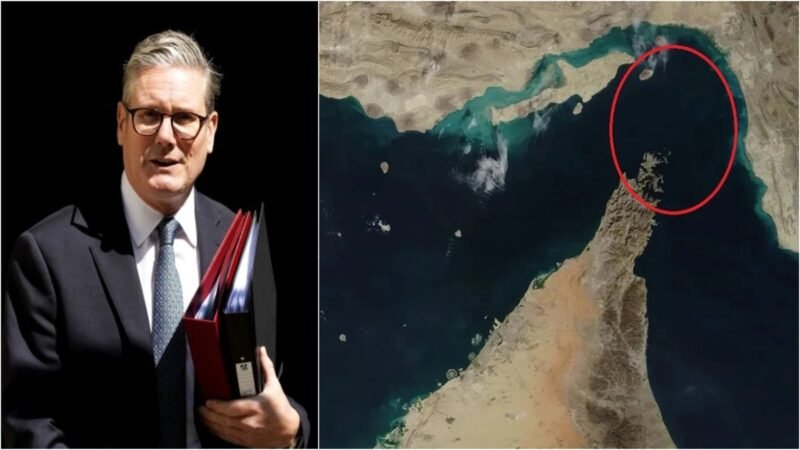
Four missiles. One Iranian tanker. Six nautical miles from the terminal that historically handled about 90% of Iran’s crude exports. Kharg is moving back to the center of the war.
An Iranian oil tanker was struck near Kharg Island on Saturday in what Iranian media described as a U.S. missile attack, bringing the conflict dangerously close to the infrastructure at the heart of Tehran’s battered oil economy.
Iran’s semi-official Tasnim news agency said the small tanker was hit by four U.S. missiles roughly six nautical miles from Kharg Island. Local sources reported no casualties, and the crew was evacuating the vessel. The United States had not immediately confirmed responsibility.
That distinction matters. For now, Iranian media are reporting an attack on a tanker near Kharg, not confirmed destruction of Kharg Island’s main oil-loading infrastructure.
But strategically, the location is difficult to ignore.
Kharg is Iran’s principal crude-export hub and historically handled roughly 90% of the country’s crude exports. Its deep-water facilities make the small Gulf island one of the most concentrated vulnerabilities in Iran’s energy system.
The reported tanker strike therefore sends a message extending far beyond the vessel itself: Washington can bring military pressure directly to the maritime approaches surrounding Iran’s economic lifeline.
President Donald Trump has repeatedly focused attention on Kharg. On August 31, he posted an AI-generated video depicting the island being destroyed, although a U.S. official said at the time that American forces had not attacked the island in that episode.
The tanker incident now raises the stakes.
Iran’s crude trade is already under severe pressure from the U.S. naval blockade. Reuters reported this week that exports had fallen from around 2 million barrels a day to roughly 240,000 barrels a day amid the blockade and broader conflict.
An actual sustained attack on Kharg’s loading terminals, storage tanks or pipeline network would represent a much more consequential escalation than striking a tanker offshore. It could further constrict Iranian export revenue while simultaneously injecting another major risk premium into global oil markets.
That creates Washington’s dilemma. Kharg is simultaneously an Iranian vulnerability and a global energy vulnerability.
Destroying Iran’s ability to export oil could deepen economic pressure on Tehran. But major damage to the terminal could also intensify the energy shock generated by the confrontation over the Strait of Hormuz, through which about one-fifth of global oil supply moved before the war.
Saturday’s reported attack does not yet establish that Washington has decided to destroy Kharg’s oil infrastructure.
But the geography is unmistakable.
The battlefield has moved to within miles of Iran’s economic jugular.