War abroad. Chaos at home. Trump is now fighting battles on both fronts.
As the United States navigates a fragile ceasefire with Iran, a different kind of conflict is unfolding in Washington—one that cuts through the core of MAGA itself.
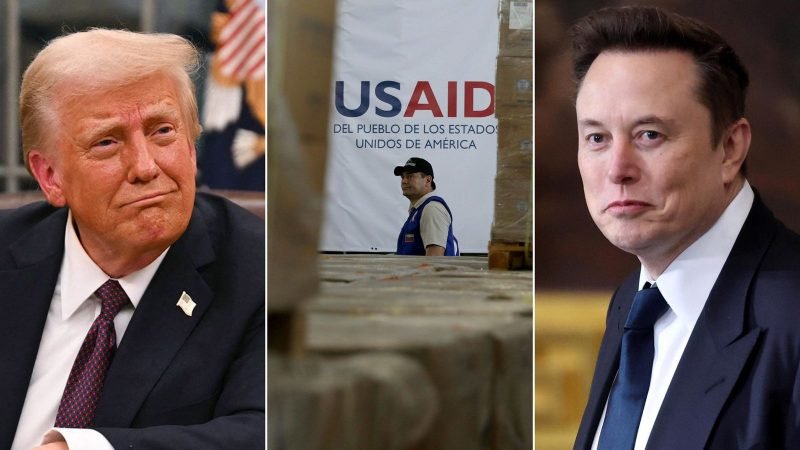
Donald Trump has launched a sweeping public attack on prominent conservative voices who once formed the backbone of his political ecosystem. Figures such as Tucker Carlson, Megyn Kelly, Candace Owens, and Alex Jones—all previously aligned with Trump—have openly criticized his handling of the Iran war. His response has been unusually direct, labeling them “losers” and questioning their credibility.
The timing is not incidental.
This rupture comes at a moment when Trump is attempting to recalibrate his foreign policy narrative—from escalation to negotiation—after weeks of military confrontation. His earlier rhetoric, including threats of catastrophic retaliation against Iran, had already unsettled parts of his political base. Now, as those criticisms grow louder, the backlash has turned inward.
What emerges is a deeper strategic tension within Trump’s coalition.
For years, the MAGA movement balanced two competing instincts: assertive nationalism and skepticism toward foreign intervention. The Iran war has forced that contradiction into the open. Critics like Carlson and Owens represent a strain of conservative thought that views overseas conflicts as costly distractions. Trump’s more aggressive posture toward Tehran, particularly at the height of the crisis, placed him at odds with that camp.
The result is fragmentation.
The public nature of Trump’s response—lengthy, personal, and highly charged—suggests that these critiques are not being dismissed as marginal. Instead, they are being treated as a challenge to his authority within the movement. His insistence that he “does not care” contrasts sharply with the intensity of his engagement, underscoring the political sensitivity of dissent from within his own ranks.
This internal divide carries broader implications.
At a time when the administration is pursuing delicate negotiations with Iran, unity at home would typically strengthen its hand. Instead, visible fractures risk complicating the political environment in which those negotiations are taking place. Allies and adversaries alike are likely to interpret these divisions as signals of constraint—limitations on how far the White House can push either escalation or compromise.
The stakes extend beyond the immediate crisis.
Trump’s political identity has long been tied to personal loyalty and message discipline. A sustained break with influential media figures and former allies could reshape the contours of his support base, particularly if foreign policy remains a point of contention. For potential successors and rivals within the Republican Party, the moment also opens space to redefine what “America First” means in practice.
For now, the president is fighting on two fronts: managing a volatile international standoff while confronting dissent at home.
In both arenas, the outcome remains uncertain.
But one conclusion is already clear: the Iran war has not only redrawn geopolitical lines—it has begun to redraw political ones inside the United States as well.