
US-Israel war on Iran
Trump Floats Seizing Iran’s Oil as War Strategy

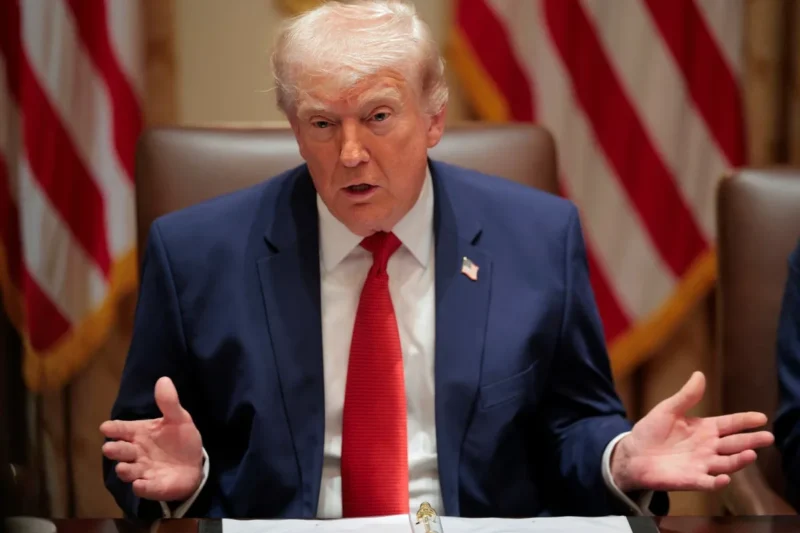
Is this about security—or resources? Trump’s latest statement is reshaping the entire war narrative.
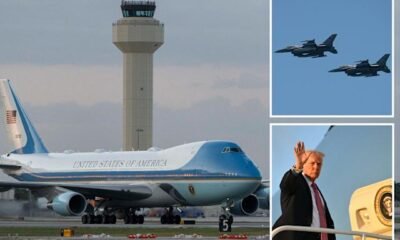
U.S. President Donald Trump has openly suggested that controlling Iran’s oil could be a central objective of the ongoing war—remarks that are reverberating far beyond the battlefield.
Speaking to the Financial Times, Trump said his “favorite thing” would be to “take the oil in Iran,” while raising the possibility of seizing Kharg Island—the strategic terminal that handles the vast majority of Iran’s crude exports.
“Maybe we take Kharg Island, maybe we don’t. We have a lot of options,” he said, acknowledging that any such move would likely require a sustained U.S. military presence.
The implications are profound.
Kharg Island is not just another target—it is the backbone of Iran’s economy, responsible for up to 90% of its oil exports. Any attempt to seize or control it would effectively choke Tehran’s primary revenue stream, dramatically escalating both the military and economic dimensions of the war.
But the strategy carries significant risks.
Military analysts warn that capturing the island would expose U.S. forces to sustained missile, drone, and naval threats, while potentially triggering wider regional retaliation. It would also mark a shift from pressure tactics to outright economic warfare—blurring the line between strategic containment and resource seizure.
Markets have already reacted.

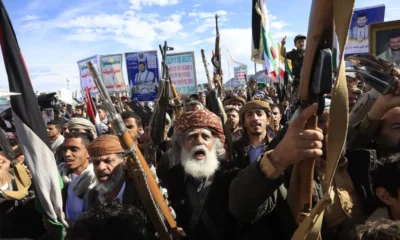












Yemen’s government says the war is no longer just external—it’s being imposed from within.
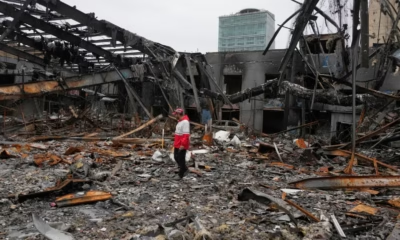
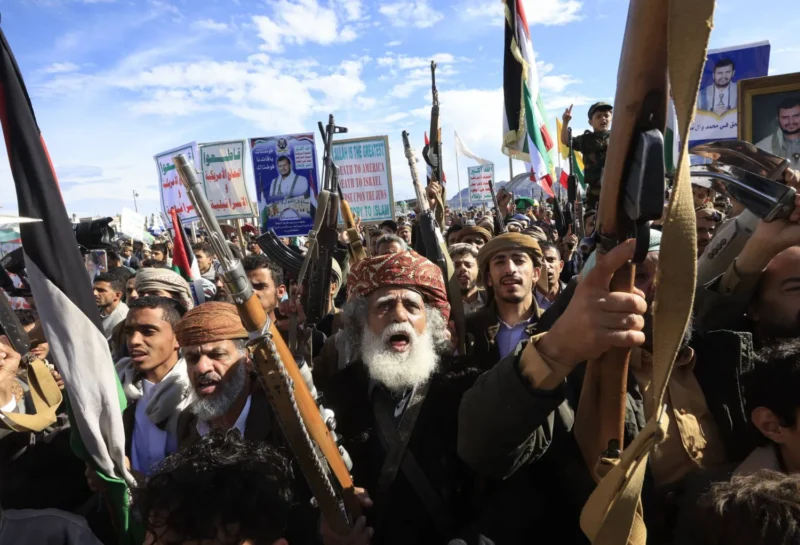
Yemen’s internationally recognized government has sharply condemned Iran following the entry of the Houthi movement into the widening Middle East war, warning that the escalation threatens the country’s sovereignty and risks dragging it deeper into a regional conflict it did not choose.
In a statement issued Sunday, officials accused Tehran of pursuing “destabilizing policies” by backing armed groups that operate outside state authority, describing the Houthis’ missile and drone attacks as illegitimate actions that undermine Yemen’s institutions and national unity.
“The decisions of war and peace must remain solely in the hands of the state,” the government said, stressing that militia-led military operations amount to hostile acts with far-reaching consequences.
The warning comes after the Houthis launched attacks toward Israel over the weekend, officially entering the conflict aligned with Iran. Israel’s military later confirmed intercepting two drones fired from Yemen, underscoring the rapid expansion of the war into new geographic fronts.
Yemen’s government framed the development as part of a broader regional pattern, accusing Iran of fueling conflicts across the Middle East by empowering proxy groups. Such interventions, it said, have repeatedly turned fragile states into prolonged battlegrounds, often at the expense of civilian populations and economic stability.
The stakes for Yemen are particularly high.
Already facing one of the world’s most severe humanitarian crises, the country risks further economic collapse if the conflict intensifies. Officials warned that continued escalation could disrupt supply chains, drive up food and energy prices, and deepen insecurity across already vulnerable regions.
The timing is also critical. With tensions rising in both the Gulf and the Red Sea, Yemen’s geographic position places it at the center of global trade routes. Any sustained Houthi involvement—especially if it expands to targeting shipping lanes—could have global repercussions far beyond the region.
The government called on the international community to take a firm stance against what it described as repeated violations of Yemen’s sovereignty, urging coordinated pressure to halt foreign interference and prevent further escalation.
The message reflects a growing concern: this is no longer just a war between states.
It is a conflict increasingly shaped by proxy actors, contested authority, and overlapping fronts—where local crises are pulled into global confrontation, and where the line between domestic instability and international war is rapidly disappearing.
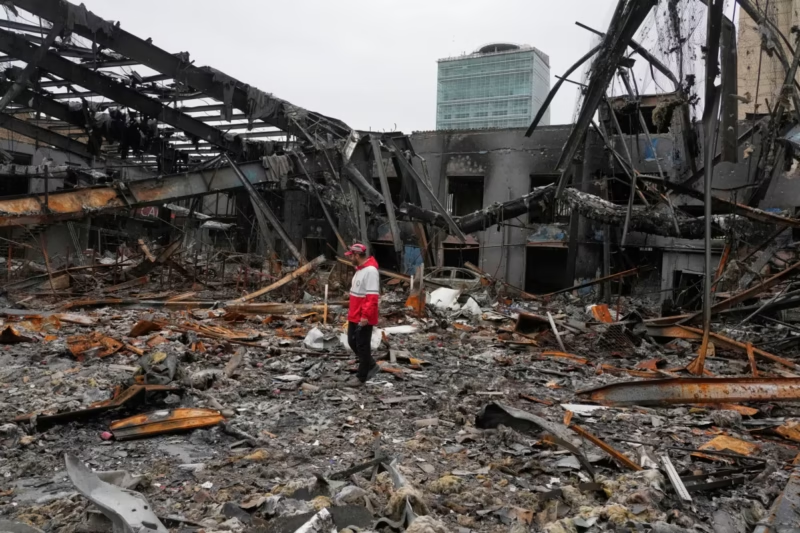
Is Yemen now a frontline extension of Iran’s war strategy? New claims suggest the answer is yes.
Yemen Says Iranian Revolutionary Guard Experts Arrive in Sanaa as Houthis Enter Iran War.
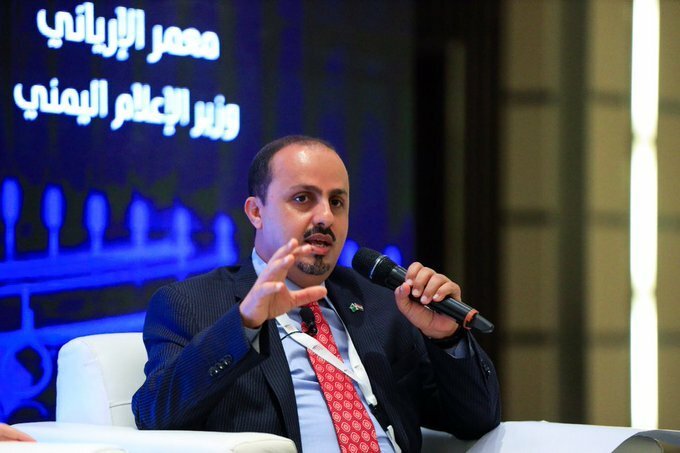
Yemen’s government has accused Iran of deepening its direct military involvement in the conflict, saying senior operatives from the Islamic Revolutionary Guard Corps have recently arrived in Sanaa, the Houthi-controlled capital.
Information Minister Muammar al-Iryani said the deployment of additional Iranian “leaders and experts” coincided with the latest escalation in the regional war, describing it as part of a deliberate and longstanding pattern rather than a coincidence.
According to al-Iryani, the move underscores what he called a centralized command structure directed by Tehran, in which the Houthis operate not as independent actors but as instruments within a broader cross-border military system.
“The idea that the Houthis are partners or autonomous allies is misleading,” he said, arguing that operational decisions are shaped and coordinated by Iran’s military leadership.
The claims come just hours after Yemen’s Houthi movement formally entered the war, launching a ballistic missile toward Israel—its first direct strike since the U.S.-Israeli campaign against Iran began. Israeli forces said they detected and intercepted the missile.
The development marks a significant expansion of the conflict’s geographic scope, opening a potential Red Sea front at a moment when global shipping routes are already under strain.
Iranian officials have previously warned that escalation could extend beyond the Gulf, with threats to disrupt traffic through the Bab al-Mandab Strait—a critical maritime chokepoint linking the Red Sea to global trade routes.
If sustained, such a shift would carry far-reaching consequences. The Bab al-Mandab corridor handles a substantial portion of global shipping, including energy supplies rerouted from the Strait of Hormuz, which has already been heavily disrupted by the war.
Al-Iryani warned that underestimating Iran’s role in Yemen risks misreading the conflict entirely. Allowing Tehran greater operational space, he argued, could accelerate the expansion of hostilities and deepen regional instability.
The situation now points to a broader transformation of the war—from a primarily Gulf-centered confrontation into a multi-theater conflict stretching from the Persian Gulf to the Red Sea.
Whether this escalation remains contained or triggers a wider maritime crisis may depend less on battlefield outcomes and more on how far regional actors—and their proxies—are willing to push the front lines.

Why Iran’s War Resilience Is Rooted in Ideology, Not Just Military Power.
The war against Iran is often framed in familiar terms—missiles, deterrence, escalation, and nuclear risk. But those metrics, while critical, miss a deeper force shaping the conflict: ideology.
To understand Iran’s resilience, one must look beyond military capability and into the political theology that underpins the Islamic Republic. This is not simply a state fighting for survival. It is a system that draws meaning—and strength—from suffering itself.
At the heart of that worldview lies a centuries-old narrative rooted in Shia history, particularly the Battle of Karbala in 680. The killing of Hussein, the grandson of the Prophet Muhammad, has long symbolized righteous resistance against overwhelming injustice. In modern Iran, that story is not just remembered—it is operationalized.
Martyrdom is not incidental. It is foundational.
Since the early days of the Islamic Republic, leaders have framed their rule as part of a sacred struggle against external domination. That narrative becomes especially powerful in wartime. Loss is recast as sacrifice. Death becomes testimony. Endurance becomes victory.
In the current conflict with Israel and the United States, this framework is being actively reactivated. State-backed mourning ceremonies, mobilization of paramilitary groups like the Basij, and the language of resistance all reinforce a singular message: survival itself is a form of triumph.
This creates a strategic paradox.
From a conventional perspective, sustained military pressure should weaken Iran—degrading infrastructure, leadership, and capabilities. But within Iran’s ideological system, external attack can strengthen internal cohesion. It validates the regime’s core claim: that it is under siege by hostile powers.
That validation matters.
It blurs internal dissent. Citizens who oppose the government may still rally against foreign attacks, driven by nationalism, fear, or anger. In this environment, the state can reposition itself—not as an oppressive authority—but as a defender of the nation.
History reinforces this dynamic. The Iran-Iraq war of the 1980s entrenched a culture of endurance that still shapes political identity today. The lesson was simple: survival, even at immense cost, is victory.
Current strategy reflects that logic. Rather than seeking decisive battlefield success, Tehran appears to be pursuing attrition—absorbing blows, disrupting global systems such as energy flows, and waiting for political fatigue to set in among its adversaries.
Meanwhile, rhetoric from Washington risks amplifying the very narrative Iran depends on. Calls for “unconditional surrender” by Donald Trump shift the conflict from limited objectives to existential confrontation—precisely the framing Tehran has long cultivated.
None of this suggests the Islamic Republic is unbreakable. Its legitimacy is contested, its economy strained, and its population divided. But ideological systems do not require universal belief to function. They require enough conviction, enough institutions, and enough pressure to transform suffering into unity.
That is the danger.
Wars against ideological states are not decided solely by destroying capacity. They are also shaped by meaning. And in Iran’s case, the more intense the external pressure, the easier it becomes for the regime to reclaim the narrative that has sustained it for decades.
The battlefield, in other words, is not only physical.
It is symbolic.
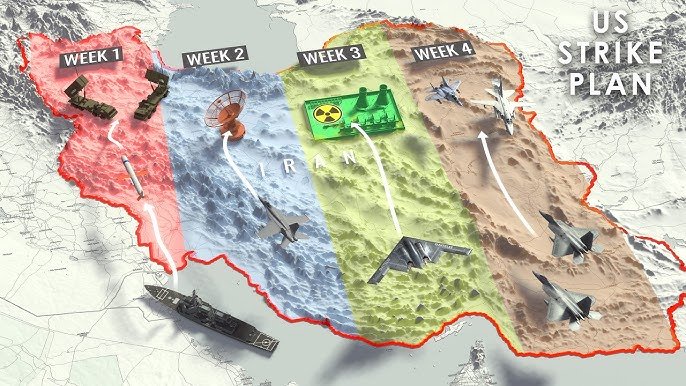
Assassinations, troop landings—even nuclear threats. Is this a real plan—or strategic messaging in a war of narratives?
Iranian state-linked media has accused the United States and Israel of preparing a sweeping, multi-phase plan to escalate the war—claims that come as Washington openly weighs limited ground operations but stops short of committing to an invasion.
According to the Tehran Times, the alleged plan outlines an eight-stage escalation, including targeted assassinations of senior Iranian leaders, strikes on major urban infrastructure, and coordinated ground incursions from multiple directions.
It also claims U.S. forces could deploy thousands of troops through Iran’s southeastern borders and via a regional ally, while opposition fighters enter from the northwest.
More controversially, the report alleges preparations for airborne raids on missile bases and nuclear facilities—and even the possibility of a limited nuclear strike.
None of these claims have been independently verified.
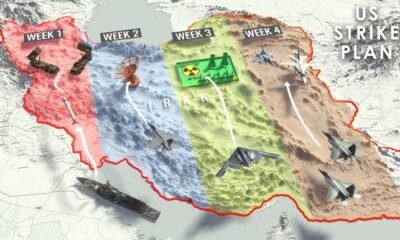
What is confirmed, however, is a growing shift in U.S. military posture. Officials cited by The Washington Post say the Pentagon is preparing options for weeks of targeted ground operations inside Iran.
These plans reportedly include special operations raids, potential strikes on coastal weapons systems, and even scenarios involving control of strategic hubs like Kharg Island.
The White House has emphasized that such preparations are standard contingency planning—not a final decision by Donald Trump.
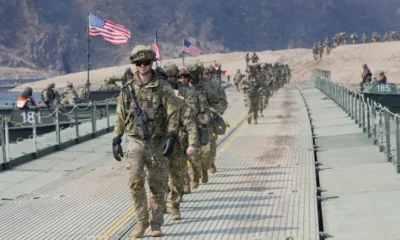
Still, troop movements tell their own story. U.S. Marines have already been deployed to the region, with additional forces from the 82nd Airborne Division expected to follow, signaling readiness for rapid escalation if diplomacy collapses.
The gap between rhetoric and reality is where this story becomes more complex.
Tehran’s claims may reflect genuine intelligence—or they may serve a strategic purpose. By portraying the conflict as an existential threat involving invasion and nuclear risk, Iranian authorities reinforce domestic unity, justify continued resistance, and shape international opinion against further escalation.
At the same time, Washington’s calibrated messaging—highlighting capability without commitment—keeps pressure on Iran while preserving room for negotiation.
This is no longer just a military confrontation. It is a war of perception.
Iran seeks to frame the conflict as a defensive struggle against regime change. The U.S. and Israel, by contrast, are signaling controlled escalation aimed at forcing concessions without triggering a full-scale regional war.
But the line between limited operations and uncontrollable escalation is thin.
With the conflict now entering its second month, and with troop deployments, proxy threats, and maritime chokepoints all in play, the risk is no longer hypothetical. It is structural.
The real question is not whether such plans exist on paper—they almost certainly do.
The question is whether the political moment arrives when someone decides to use them.
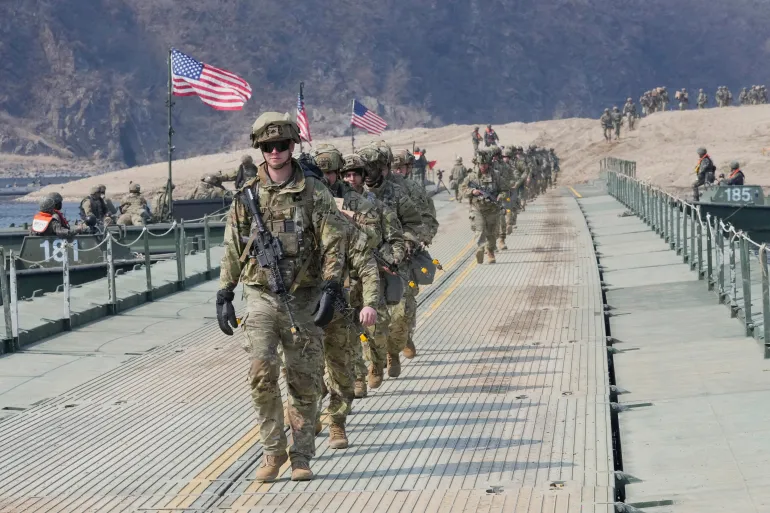
US Eyes Strikes Inside Iran as Hormuz Crisis Deepens. Air war wasn’t enough—now boots on the ground are back on the table.
The war with Iran may be entering its most dangerous phase yet, as the Pentagon prepares contingency plans for limited ground operations—marking a potential shift from airpower dominance to direct battlefield engagement.
According to U.S. officials cited by The Washington Post, the plans under consideration stop short of a full-scale invasion. Instead, they focus on targeted raids—likely involving special operations forces and conventional infantry—against strategic coastal sites and energy infrastructure.
At the center of those discussions is Kharg Island, Iran’s critical oil export hub, as well as weapons systems along the Strait of Hormuz that threaten global shipping. The objective is clear: degrade Iran’s ability to disrupt maritime trade without triggering a broader occupation.
But even limited ground action carries high risks.
U.S. troops would face a battlefield shaped by asymmetric warfare—drones, missile strikes, improvised explosives, and entrenched coastal defenses. Iranian officials have already issued stark warnings.
Parliamentary speaker Mohammad Bagher Ghalibaf suggested any U.S. ground move would be met with direct retaliation, while naval commanders threatened to target American carriers operating within range.
Despite the military planning, the final decision rests with Donald Trump, who has not yet authorized ground operations. The White House has emphasized that preparing options does not mean a decision has been made—a familiar pattern in a conflict defined by shifting signals between escalation and negotiation.
Still, the buildup is tangible. Thousands of U.S. Marines and additional troops from the 82nd Airborne Division are being deployed to the region, alongside amphibious assault groups and strike aircraft. The arrival of forces aboard the USS Tripoli underscores the readiness for rapid action.
Timing is critical. Officials suggest any ground campaign could last “weeks, not months,” reflecting a strategy of swift, targeted intervention rather than prolonged occupation.
Yet the broader implications stretch far beyond Iran’s coastline.
Tehran has signaled it could expand the conflict if attacked on land—potentially opening new fronts in the Red Sea through allied groups such as Yemen’s Houthis. That raises the prospect of simultaneous disruptions at both the Strait of Hormuz and the Bab al-Mandab, two of the world’s most vital maritime arteries.
In parallel, diplomatic efforts continue. Pakistan is hosting regional talks involving Gulf and Middle Eastern powers, attempting to broker de-escalation even as military options intensify behind the scenes.
This dual track—negotiation and escalation—defines the current moment.
The United States is preparing for a war it may not want to fight on the ground, while Iran is signaling it is ready for exactly that scenario. Between them lies a narrowing window where diplomacy might still prevent a wider regional confrontation.
If that window closes, the conflict will no longer be defined by airstrikes alone.
It will be defined by territory—and by who is willing to fight for it.
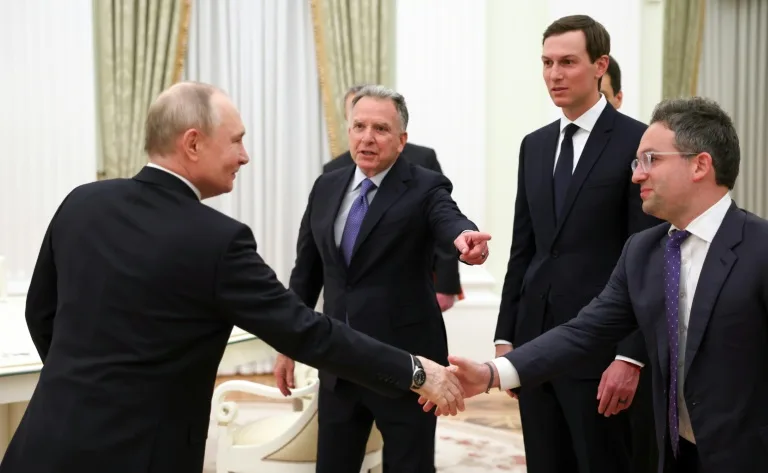
How Much Is Russia Really Helping Iran? Intelligence Support Matters More Than Weapons.
Russia isn’t saving Iran—but it may be helping it survive.
As the war intensifies, a central question is quietly shaping the battlefield: how far is Russia willing to go to support Iran?
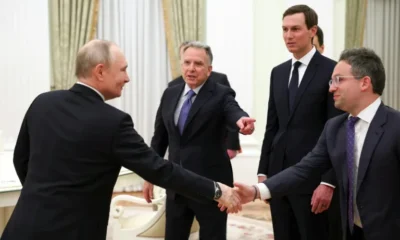
Publicly, the answer appears modest. Donald Trump described Moscow’s role as “a bit” of help. Even Iranian officials have kept their language cautious. But beneath that ambiguity lies a more strategic reality—Russia’s support is limited in scale, yet carefully calibrated for impact.
At the core of that support is intelligence.
Western and Ukrainian sources suggest Moscow is sharing satellite data on U.S. naval movements, likely through its Liana surveillance system—designed specifically to track aircraft carriers and naval groups.
In a conflict where maritime control, particularly around the Strait of Hormuz, is decisive, such information can sharpen Iran’s targeting without requiring Russian boots on the ground.
This is not about volume. It is about precision.
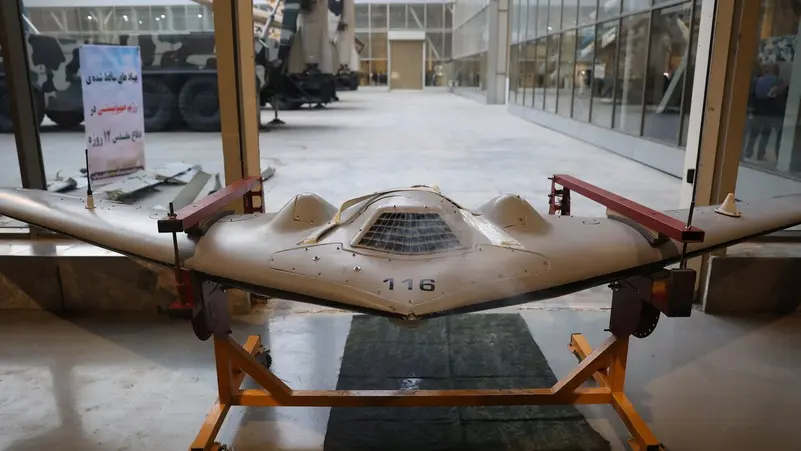
Russia’s contribution also extends into technology and expertise. Its earlier role in launching Iran’s Khayyam satellite—and its experience upgrading Iranian-designed Shahed drones during the Ukraine war—has created a feedback loop. Some of those battlefield improvements, including anti-jamming navigation systems, are now reportedly appearing in Iranian operations.
In effect, Iran is absorbing lessons from Ukraine’s frontlines.
Yet the limits of this partnership are just as important as its capabilities. Despite years of military cooperation, Moscow and Tehran do not share a mutual defense pact. Russia has not intervened directly, nor has it delivered its most advanced systems, such as the S-400 air defense platform.
That restraint is deliberate.
For Vladimir Putin, the war offers strategic advantages without requiring escalation. Rising oil prices—driven by disruptions in Gulf shipping—are boosting Russian revenues, easing the economic pressure of the Ukraine war. A prolonged Middle East crisis also diverts Western attention and resources.
In that sense, instability works in Moscow’s favor.
There is also a deeper calculation: Russia does not necessarily need Iran to win. It needs Iran to endure. A weakened but resilient Tehran can continue to challenge U.S. influence, stretch regional alliances, and maintain pressure on global markets—all without forcing Russia into direct confrontation.
Analysts describe the current support as symbolic but functional—a “goodwill gesture” that sustains the partnership while preserving Russia’s flexibility.
For Iran, that reality is well understood. Facing overwhelming military pressure from Israel and the United States, Tehran is not relying on Moscow for victory. Instead, it is leaning on asymmetric tactics—missiles, drones, and economic disruption—to level the playing field.
The partnership, then, is not about alliance in the traditional sense.
It is about convergence.
Russia provides just enough intelligence, technology, and political backing to keep Iran in the fight. Iran, in turn, sustains a conflict that reshapes global energy markets and stretches Western strategy.
In modern warfare, that may be all either side needs.

Israel Reports Second Attack from Yemen

Trump Floats Seizing Iran’s Oil as War Strategy

Yemen: Government Accuses Iran of Hijacking the War


-

 US-Israel war on Iran1 month ago
UK Refuses Iran Strike Access, Trump Fires Back
-
 Russia-Ukraine War1 month ago
Europe’s Spies Challenge Trump’s Ukraine Peace Optimism
-
 Top stories4 weeks ago
War Expands Across Region as Iranian Militias Join Fight
-
 US-Israel war on Iran1 month ago
Iran Pledges ‘Never, Ever’ to Hold Bomb-Grade Material
-
 Top stories1 month ago
India Turns to Brazil in Strategic Minerals Push Against China
-
 US-Israel war on Iran1 month ago
Syria Under Fire on Two Fronts
-
 Russia-Ukraine War1 month ago
Estonia Warns NATO Would Strike Deep Inside Russia if Baltics Are Invaded
-
 Terrorism4 weeks ago
Regional Army Moves Against Expanding Armed Groups