The war may be ending—or about to explode into something bigger. The difference now is geography.
As the war edges toward what some officials describe as a possible endgame, a striking reality is emerging: no one—not even those leading it—knows how it will end.
Sources close to Benjamin Netanyahu acknowledge that Israel’s political and military leadership cannot determine how much longer the conflict will last. At the same time, uncertainty surrounding Donald Trump has added another layer of unpredictability, with shifting deadlines, mixed signals on negotiations, and repeated threats of escalation.
The result is a war caught between momentum and ambiguity.
Trump has alternated between issuing ultimatums and signaling openness to diplomacy, delaying strikes one moment and warning that “it will be too late” the next. His envoys, including Steve Witkoff, suggest there are “strong signs” of a deal, yet no confirmed meeting with Iran has materialized. Even as Washington claims progress, Tehran continues to deny direct talks.
This disconnect is shaping the final phase.
Israeli assessments suggest the conflict could be nearing conclusion within days. But the absence of a clear diplomatic breakthrough—and the continued military pressure—means that any ending remains conditional, not guaranteed.
At the same time, a new and more dangerous dynamic is emerging.
Iran appears to be looking beyond the current battlefield. Intelligence assessments indicate Tehran is pressuring its regional allies, particularly the Houthi movement in Yemen, to enter the conflict more directly in what officials describe as an effort to “maximize gains” before any ceasefire.
So far, the Houthis have stopped short of full engagement, despite rhetorical support and calls for mobilization by Abdul-Malik al-Houthi. But the strategic pressure is clear—and the implications are significant.
Because the next phase of the war may not be decided by airstrikes or negotiations alone.
It may be decided by geography.
Warnings from Yemen, including those issued by Muammar al-Iryani, point to a broader Iranian strategy: transforming maritime chokepoints into tools of leverage.
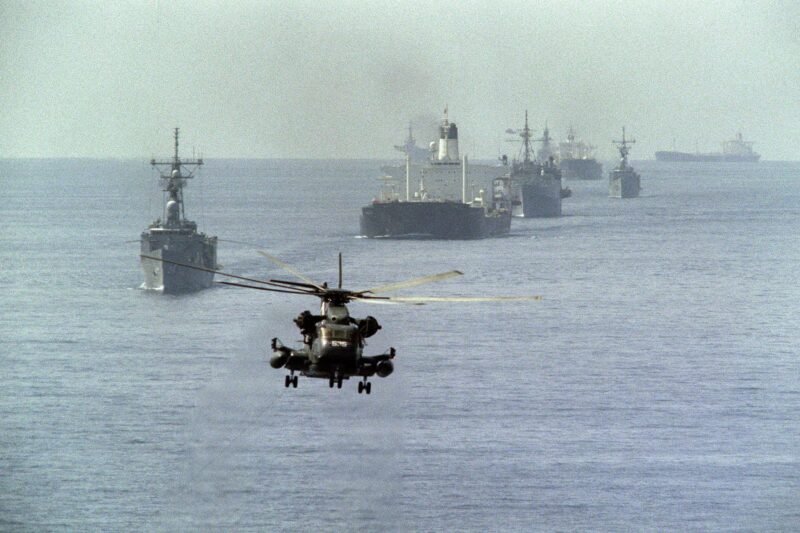
The Strait of Hormuz has already demonstrated how energy flows can be weaponized. Expanding that pressure to the Bab al-Mandab Strait would effectively place both ends of the Arabian Peninsula’s shipping routes under threat.
That would change the nature of the conflict.
A war that began with targeted strikes could evolve into a systemic disruption of global trade, drawing in new actors and raising the cost of inaction for countries far beyond the region.
Even limited attacks on shipping lanes could trigger cascading effects—on oil prices, insurance markets, and supply chains.
This is the paradox of the current moment.
The war appears close to resolution, yet the risks of escalation are widening. The closer it gets to an end, the more each side is incentivized to strengthen its position—militarily, politically, and economically—before any agreement is reached.
That creates a volatile window.
If diplomacy succeeds, both sides may claim victory and step back from the brink. If it fails, the conflict could expand into a broader contest over the arteries of global commerce.
In that sense, the final question is no longer just when the war ends.
It is how far it spreads before it does.