
US-Israel war on Iran
U.S. Plans Full Withdrawal of 1,000 Troops from Syria


After years on the ground in Syria, the U.S. may be pulling out entirely. What does this mean for ISIS, the Kurds — and Iran?
The United States is preparing to withdraw all of its roughly 1,000 troops from Syria over the next two months, according to multiple U.S. media reports, marking a significant shift in Washington’s military posture in the Middle East.
The Wall Street Journal first reported the planned pullout, citing unnamed officials who said the decision follows the Syrian government’s consolidation of control across much of the country. Television network CBS also reported the withdrawal plan, referencing U.S. officials familiar with the matter.
American forces have already vacated several key installations, including bases at al-Tanf and al-Shadadi, which had been central to the U.S.-led coalition’s campaign against ISIS. Those positions were long viewed as strategic footholds in eastern Syria, particularly near the Iraqi border.
The move comes amid broader political shifts inside Syria. After the fall of former President Bashar al-Assad in late 2024, Washington has cautiously engaged with Syria’s new authorities. At the same time, the Kurdish-led Syrian Democratic Forces — once a crucial U.S. partner in combating ISIS — have pledged to integrate into the Syrian state structure.
Thousands of ISIS detainees previously held in Syrian facilities have been transferred to more secure sites in Iraq, according to the reports, reducing one of Washington’s major security concerns tied to its presence.
The planned withdrawal unfolds against a backdrop of rising tensions elsewhere in the region. The United States has recently increased its military deployments near Iran, where officials have warned of retaliatory action if attacked. Separate reports indicate Washington is positioning assets that could be used for potential strikes against Iranian targets, though President Donald Trump has not publicly finalized any decision.
The Pentagon has not officially confirmed the Syria withdrawal plan and did not immediately respond to requests for comment.
If carried out, the exit would close a chapter in a military mission that began during the fight against ISIS and evolved into a complex balancing act involving Kurdish allies, regional rivals, and shifting alliances across a fractured Syrian landscape.














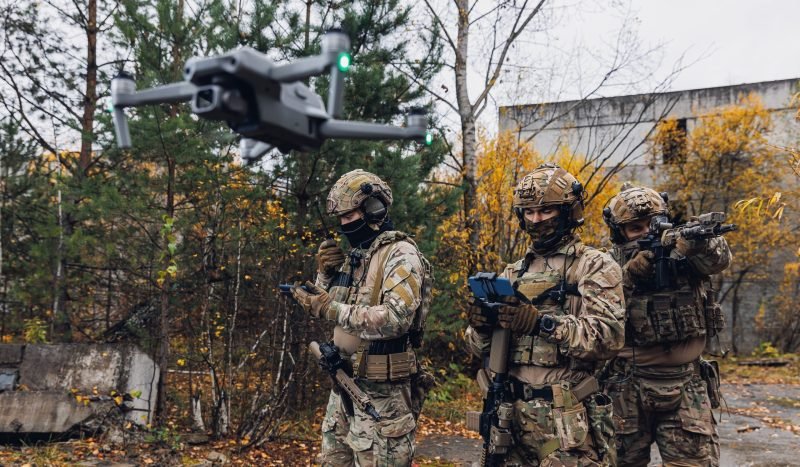
Drones were supposed to change everything. They did—but not in the way armies expected.
The search for a decisive weapon—one that ends wars quickly and cheaply—has shaped military thinking for centuries. From gunpowder to nuclear arms, each technological leap promised a shortcut to victory.
Yet one month into the war involving Iran, a familiar reality is reasserting itself: new weapons rarely deliver clean endings. Instead, they reshape the battlefield—and often prolong the fight.
Drones are the latest example of this paradox. Their appeal is obvious. They are relatively cheap, widely accessible and capable of delivering both surveillance and precision strikes in real time.
In conflicts like the war in Ukraine, and now across the Middle East, unmanned systems have become central to military operations. They allow weaker actors to punch above their weight, while enabling stronger powers to extend their reach without risking pilots or expensive platforms.
But this “democratization” of firepower carries a cost. Because drones are affordable and easy to produce—even with off-the-shelf components—they lower the threshold for sustained conflict.
A single cruise missile can cost millions; a loitering drone may cost tens of thousands. The result is not decisive victory, but endurance warfare—where both sides can keep fighting longer than expected.
Iran has embraced this logic. Despite heavy airstrikes, it continues to deploy waves of drones across the region, targeting infrastructure and threatening maritime routes like the Strait of Hormuz.
These systems may lack the sophistication of advanced missiles, but they compensate with volume, flexibility and psychological impact. The constant presence of drones—often heard before they are seen—creates a persistent climate of fear among civilian populations.
This psychological dimension is as important as the physical damage. Warfare is no longer confined to front lines; it is experienced in cities, ports and even digital spaces. The line between military and civilian targets becomes increasingly blurred, amplifying both disruption and uncertainty.
Yet drones are not a magic solution. Their rise has exposed a deeper imbalance: defending against cheap weapons is often far more expensive than deploying them. Interceptors, radar systems and advanced defenses strain resources, creating an unsustainable equation.
As former U.S. commander David Petraeus has argued, no military can indefinitely counter low-cost threats with high-cost responses.
The next phase is already taking shape. Militaries are racing to develop cheaper countermeasures—electronic jamming, laser defenses and AI-driven detection systems. But history suggests this cycle will continue: innovation followed by adaptation, advantage followed by erosion.
What emerges is a sobering conclusion. Technology changes how wars are fought, but not the fundamental nature of war itself. There is no single breakthrough that guarantees victory. Instead, each new tool expands the battlefield, deepens the complexity and often extends the conflict.
The age of drones has arrived. But rather than ending wars, it is making them harder to finish—and easier to sustain.
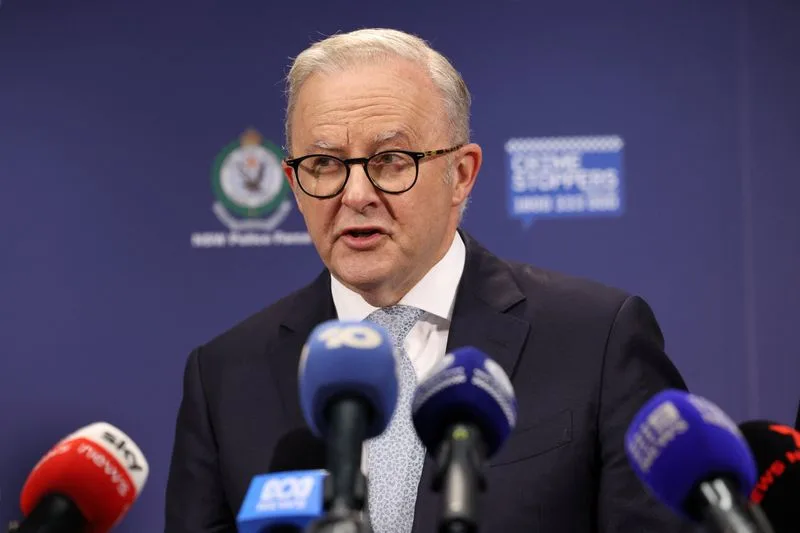
Australia isn’t in the war—but it’s already feeling the pain. Leaders warn the crisis could drag on for months.
Australia’s government has issued one of its clearest warnings yet about the global fallout from the war involving Iran, cautioning that the economic shock is far from over and could linger for months.
In a rare nationwide address, Prime Minister Anthony Albanese told citizens that the conflict—though geographically distant—has triggered the most severe spike in fuel costs in the country’s history. The message, broadcast across major television and radio networks, echoed crisis-era communications typically reserved for moments like the 2008 financial collapse or the COVID-19 pandemic.
Australia imports roughly 90 percent of its fuel, leaving it highly exposed to disruptions in global supply chains. The effective blockade of the Strait of Hormuz—a vital artery for global oil shipments—has sharply reduced available supply and sent petrol and diesel prices soaring. Localized shortages have already begun to emerge in parts of the country.
Albanese struck a measured but urgent tone, urging restraint rather than panic. He asked Australians not to stockpile fuel ahead of the Easter travel period and encouraged a shift toward public transportation where possible. The appeal reflects growing concern within the government that consumer behavior—particularly hoarding—could worsen supply pressures and accelerate price increases.
“We are not participants in this war,” Albanese said, “but every Australian is paying the price.”
The government has moved quickly to cushion the blow. Officials announced a temporary halving of fuel excise taxes and the suspension of heavy-road-user charges for three months, a package expected to cost around A$2.55 billion. At the same time, authorities are releasing fuel from strategic reserves and relaxing fuel standards to boost immediate availability.
Yet structural vulnerabilities remain. Despite holding its highest fuel reserves in 15 years, Australia still falls well short of the 90-day supply benchmark recommended by the International Energy Agency. That gap leaves the country particularly sensitive to prolonged disruptions in global energy markets.
Treasurer Jim Chalmers signaled additional support for businesses, including easier access to credit for sectors hit hardest by rising transport and operating costs. Still, officials acknowledge that policy measures can only soften—not eliminate—the impact.
This is not a short-term shock. It is a sustained global adjustment, driven by disrupted energy flows and geopolitical instability, that will test economies far beyond the battlefield.
For Australians, the war may be distant. But its consequences are now embedded in everyday life—from the price at the pump to the broader cost of living—and there is little expectation of relief anytime soon.
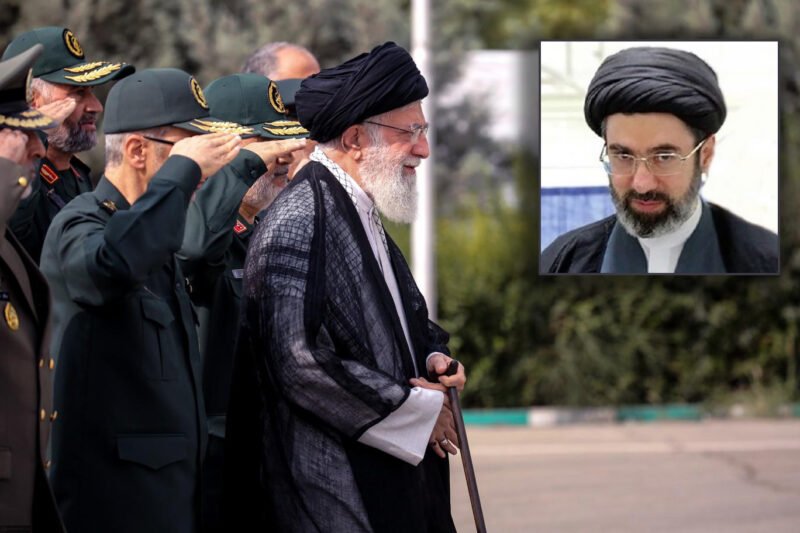
Is Iran changing—or just replacing one face with the same system?
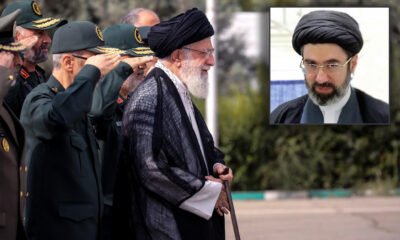
The rise of Mojtaba Khamenei is often framed as a potential turning point for Iran. In reality, it may signal the opposite: not transformation, but consolidation.
What appears on the surface as a dynastic transition is better understood as the maturation of a system built over decades by Ali Khamenei. The defining feature of that system—what can be described as “Khameneism”—is not tied to an individual. It is institutional, embedded, and designed to reproduce itself.
Over nearly four decades, Iran’s power structure was not merely maintained but engineered. Constitutional authority concentrated in the office of the Supreme Leader was expanded in practice through a network of parallel institutions, informal mechanisms, and ideological enforcement bodies.
Structures like the Supreme Council of the Cultural Revolution and the Guardian Council evolved from advisory or supervisory roles into instruments of control, shaping not just political outcomes but the boundaries of acceptable thought and participation.
This transformation fundamentally altered the nature of governance. Elections became managed processes rather than open contests. Institutional autonomy narrowed.
Reformist currents were gradually neutralized. What emerged was a system calibrated to eliminate unpredictability—where outcomes are increasingly preconfigured rather than negotiated.
Within this architecture, Mojtaba Khamenei’s rise is not an anomaly. It is a byproduct of institutional design. The traditional markers of leadership legitimacy—religious authority, broad political consensus—have been superseded by structural alignment with the system itself.
The succession process reflects this shift: less a moment of choice than the execution of a long-prepared outcome. The deeper implication is that the question of succession has become secondary.
The system now constrains the leader more than the leader defines the system. Any successor operates within a fixed framework shaped by priorities that have become structurally entrenched—regime preservation, centralized authority, and a strategic posture defined by resistance to Western influence and confrontation with Israel.
This is the paradox at the heart of Khameneism. Its strength lies in its ability to ensure continuity and suppress internal disruption. But that same rigidity limits adaptability.
A system built to prevent deviation struggles to accommodate change. Over time, the mechanisms that guarantee survival—control, exclusion, and ideological uniformity—can also erode flexibility, public trust, and long-term resilience.
Mojtaba Khamenei, therefore, does not represent a new phase in Iran’s political trajectory. He represents its culmination. The system has reached a point where leadership transitions matter less than the structure itself.
The real question is no longer who leads Iran—but whether a system designed to avoid change can sustain itself indefinitely without it.
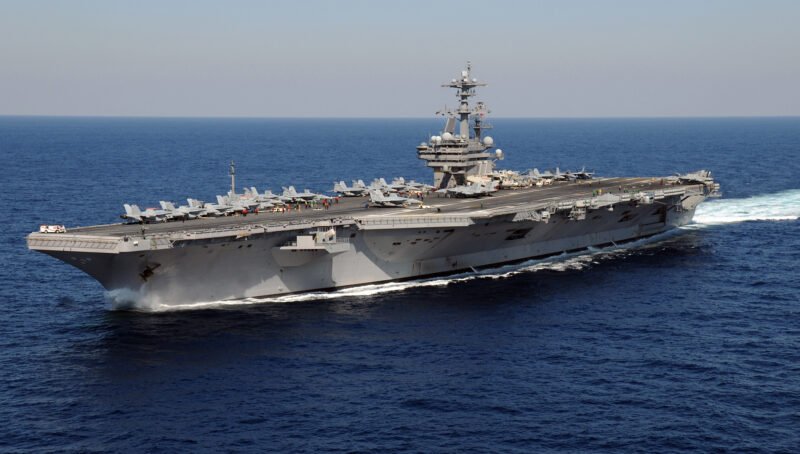
Three US aircraft carriers now moving toward the same war zone. Is this deterrence—or preparation for something bigger?
The United States is reinforcing its military posture in the Middle East, dispatching a third aircraft carrier as tensions with Iran continue to escalate and the conflict enters a more uncertain phase.
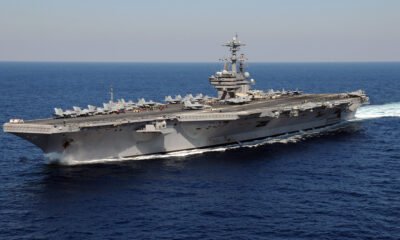
According to officials familiar with the deployment, the USS George H.W. Bush has departed U.S. waters and is en route to the region. It is expected to rotate in for one of the two carriers already operating near the conflict zone—the USS Abraham Lincoln and the USS Gerald R. Ford—both of which have been central to sustained U.S.-Israeli air operations.
The presence of multiple carrier strike groups underscores the scale and flexibility of American military options. Each carrier brings a floating airbase capable of launching dozens of sorties per day, supported by escort vessels, missile defense systems, and surveillance assets.
Together, they provide the United States with the ability to project force across the Gulf, the Arabian Sea, and the broader Middle East without relying on fixed bases.
This latest deployment comes alongside a broader buildup that includes amphibious assault ships, advanced fighter aircraft, and thousands of additional Marines and sailors.
The layered reinforcement suggests Washington is preparing for a range of scenarios—from sustained air campaigns to potential maritime or limited ground operations.
President Donald Trump has continued to signal that further escalation remains on the table if Tehran refuses to meet U.S. demands related to its nuclear program, missile capabilities, and regional alliances.
The movement of additional naval power appears designed both to sustain current operations and to increase pressure on Iran ahead of any potential diplomatic breakthrough.
At the same time, the deployment reflects a strategic balancing act. While Washington has indicated it may scale down operations in the coming weeks, the arrival of another carrier suggests that de-escalation is not yet assured—and that the United States is keeping its military options firmly open.
In practical terms, three carriers in or near the same theater represent one of the most significant U.S. naval concentrations in recent years.
Whether it serves primarily as deterrence or as preparation for expanded operations may depend on decisions made in the days ahead—both in Washington and in Tehran.
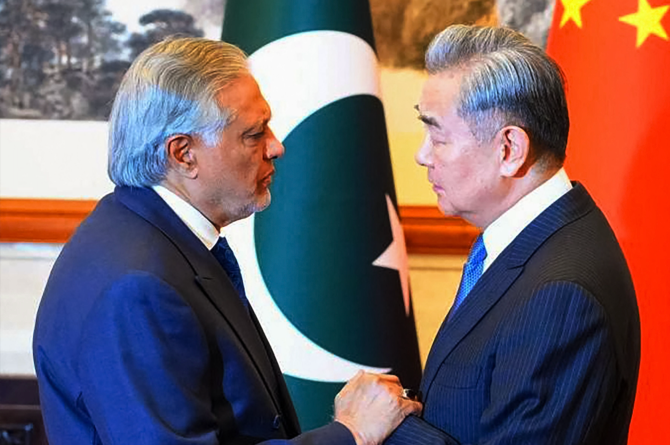
Two major powers step in as mediators. Can China and Pakistan stop a war shaking global energy?
China and Pakistan have jointly called for an immediate ceasefire and the launch of peace negotiations to end the escalating war involving Iran, positioning themselves as key diplomatic actors as the conflict enters its fifth week.
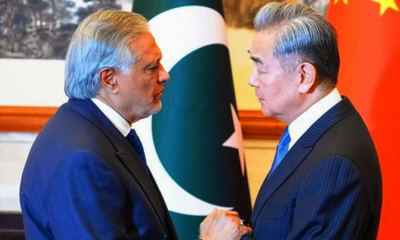
The appeal came during high-level talks in Beijing between Chinese Foreign Minister Wang Yi and his Pakistani counterpart Ishaq Dar. In a coordinated five-point initiative, both countries emphasized that dialogue—not military escalation—remains the only viable path to resolving the crisis.
Central to their proposal is the urgent need to restore stability in the Strait of Hormuz, where ongoing hostilities have severely disrupted global shipping and energy flows. The two sides called for immediate measures to ensure the safe passage of commercial vessels and to normalize navigation through one of the world’s most critical maritime chokepoints.
Pakistan’s role has become increasingly prominent. With a long border and established ties to Iran, as well as growing engagement with Washington, Islamabad has positioned itself as a rare intermediary capable of communicating with all sides.
Officials have indicated readiness to host or facilitate direct talks between the United States and Tehran, a diplomatic channel that has gained urgency as the conflict widens.
The joint statement also underscored broader principles aimed at stabilizing the region. Both countries called for the protection of civilian lives and infrastructure, respect for national sovereignty, and safeguards for peaceful nuclear facilities—signaling concern over the expanding scope of military targets.
For Beijing, the initiative reflects its strategic interest in preserving global trade routes and preventing further economic disruption. For Islamabad, it reinforces its emerging role as a regional mediator at a time when traditional diplomatic channels are strained.
The timing is critical. With the Strait of Hormuz partially restricted and energy markets under pressure, the stakes extend far beyond the Middle East. A prolonged disruption risks triggering wider economic consequences, particularly for Asian economies heavily dependent on Gulf energy supplies.
Whether this diplomatic push gains traction remains uncertain. But the entry of China and Pakistan into active mediation highlights a shifting dynamic: as Western military pressure intensifies, alternative power centers are stepping forward to shape the path toward de-escalation.
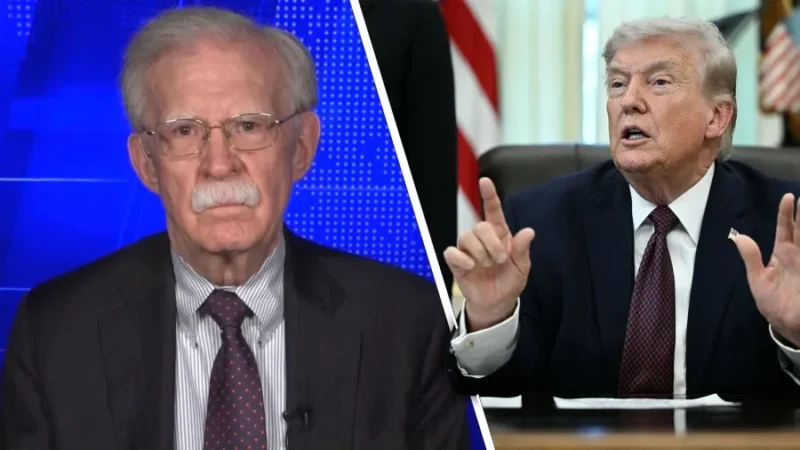
The war may end—but who actually wins? Bolton says an early exit could hand victory to Iran.
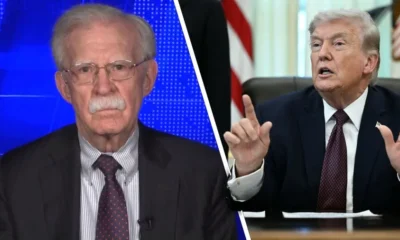
Former U.S. National Security Adviser John Bolton has issued a stark warning over plans by Donald Trump to wind down military operations in Iran within weeks, arguing that a premature withdrawal could turn battlefield gains into a strategic loss.
Speaking in a televised interview, Bolton challenged the administration’s narrative that the campaign has achieved its core objectives. While acknowledging the scale of military damage inflicted on Iran, he said the broader strategic picture remains unresolved—particularly the absence of regime change or a lasting shift in Tehran’s behavior.
Bolton dismissed suggestions that Iran’s leadership has fundamentally changed, arguing instead that the current structure reflects continuity in ideology and intent. He likened the regime to a “wounded animal,” warning that if it regains stability, it will resume its previous policies, including regional intervention and confrontation with the West.
His central concern is the timing of a potential U.S. exit. If Washington withdraws before securing key objectives—especially reopening the Strait of Hormuz—Bolton argues it would signal to Iran that it can disrupt global trade and withstand military pressure without lasting consequences.
“This tells the leadership in Tehran they can do it again,” he warned, framing the risk not just in regional terms but as a precedent for future conflicts.
Bolton also criticized the administration’s handling of alliances, pointing to a lack of coordination with European partners and warning of long-term damage to NATO cohesion. He argued that fractures within the Western alliance could reshape global power dynamics in ways that benefit U.S. adversaries.
The debate reflects a broader divide within U.S. strategic thinking. On one side is the administration’s apparent push to declare success and limit prolonged engagement. On the other is a more traditional view that military action must translate into durable political outcomes—or risk undermining its own objectives.
As fuel prices rise and domestic pressure grows, the White House appears increasingly focused on ending the conflict quickly. But Bolton’s warning underscores a critical question that now hangs over the war’s final phase:
Ending a war is one thing. Ensuring it does not return—stronger—is another.

Syria’s New Leader Steps Into Britain’s Power Circle

Iran’s Lifeline Cut—Dubai Moves Against IRGC Money Networks

Why Drones Are Making Wars Longer, Not Shorter


-
 US-Israel war on Iran1 month ago
UK Refuses Iran Strike Access, Trump Fires Back
-
 Russia-Ukraine War1 month ago
Europe’s Spies Challenge Trump’s Ukraine Peace Optimism
-
 Top stories1 month ago
War Expands Across Region as Iranian Militias Join Fight
-
 Top stories1 month ago
India Turns to Brazil in Strategic Minerals Push Against China
-
 US-Israel war on Iran1 month ago
Iran Pledges ‘Never, Ever’ to Hold Bomb-Grade Material
-
 US-Israel war on Iran1 month ago
Syria Under Fire on Two Fronts
-
 Russia-Ukraine War1 month ago
Estonia Warns NATO Would Strike Deep Inside Russia if Baltics Are Invaded
-
 Terrorism1 month ago
Regional Army Moves Against Expanding Armed Groups