
Top stories
Leaked Liberal Plan to Ban Migrants from Gaza, Somalia Faces Pushback

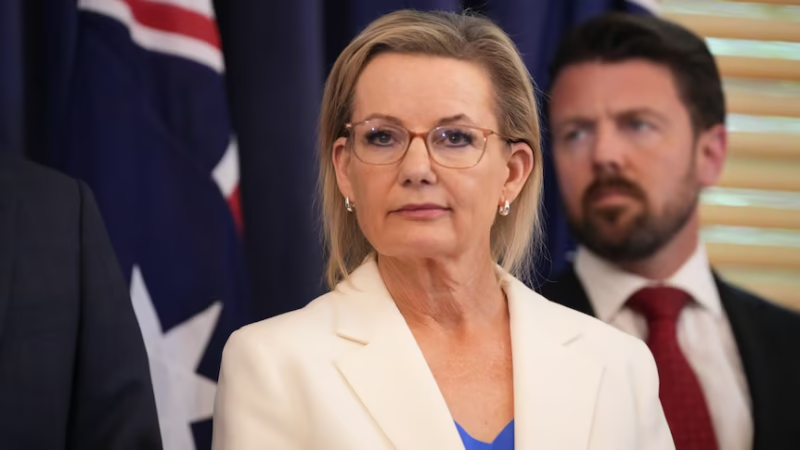
A proposed migration ban covering 13 countries. A leadership spill. And a shadow minister saying: “I never agreed.”
A leaked Liberal Party immigration proposal to ban migrants from specific regions in 13 countries — including Gaza, Afghanistan and Somalia — has triggered internal backlash, with the party’s former shadow immigration minister distancing himself from the plan.
The proposal, developed before Sussan Ley was removed as Liberal leader, outlined bans affecting 37 regions across Afghanistan, Algeria, Cameroon, Egypt, Lebanon, Libya, Mali, Niger, Nigeria, Palestine, the Philippines, Somalia and Yemen. The regions were reportedly selected based on areas where designated terrorist organisations hold territorial control.
Guardian Australia reported that the plan was not presented to shadow cabinet before Ley’s leadership loss and that her successor, Angus Taylor, had not reviewed the document.
Former shadow immigration minister Paul Scarr said he had “serious concerns” about such a policy. “I never proposed any such policy. I never agreed to any such policy,” he said, adding that he had raised objections internally.
Beyond regional bans, the draft plan reportedly sought to accelerate the removal of up to 100,000 asylum seekers and international students, restrict appeal rights for visa holders and tighten screening of social media activity to identify extremist views. It also proposed cuts to permanent migration, student visas and net overseas migration.
Taylor, who has made immigration a central issue under his leadership, said Australia must ensure newcomers uphold democratic values and the rule of law. “Numbers have been too high and standards have been too low,” he told reporters.
The federal government has set the permanent migration intake for 2025–26 at 185,000, with net overseas migration projected at 260,000 — already a decline from post-pandemic peaks.
The episode highlights tensions within the Liberal Party over how far to go in reshaping migration policy, as Taylor prepares to unveil a new shadow cabinet in the coming days.












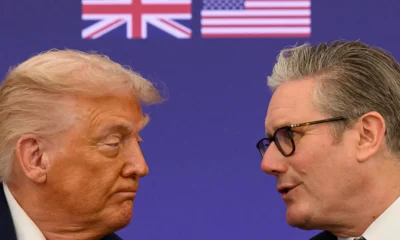


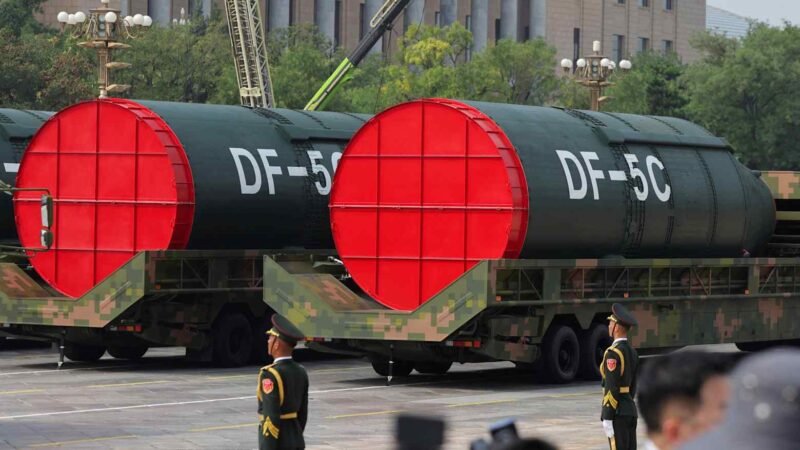
From Europe to Asia, countries are quietly asking a once-taboo question: do we need nuclear weapons now?
The war involving Iran is no longer confined to missiles and airstrikes—it is reshaping the global nuclear debate in ways that could outlast the conflict itself.
According to Bloomberg, governments across Europe and Asia are increasingly—and more openly—discussing whether they should develop their own nuclear arsenals. The shift reflects a growing sense that traditional security guarantees may no longer be sufficient in an era of escalating great-power confrontation.
At the center of this anxiety is the credibility of extended deterrence, particularly the U.S. nuclear umbrella that has protected allies for decades. Countries that once relied almost exclusively on Washington are now reassessing their options.
In Europe, both Poland and Germany are signaling openness to alternative arrangements, including support for France expanding its nuclear deterrent to cover the continent. The idea—once politically sensitive—is gaining traction as the war raises questions about long-term security guarantees and the risks of regional spillover.
The concern is not limited to Europe. Across the Western Pacific and other regions, policymakers are quietly revisiting assumptions that have guided nuclear restraint for decades.
Rafael Grossi, head of the International Atomic Energy Agency, warned that discussions about acquiring weapons of mass destruction are now taking place even in countries that had previously committed never to pursue them.
His message was stark: expanding the number of nuclear-armed states will not enhance global security—it will erode it.
Yet the logic driving this shift is difficult to ignore. The Iran conflict has exposed how quickly regional crises can escalate, how vulnerable global energy routes are, and how unpredictable great-power responses can become. For many governments, the lesson is not abstract—it is strategic.
Adding to the unease are reports that the United States—the only country to have used nuclear weapons in war—is considering resuming nuclear testing, a move that could further weaken the global non-proliferation framework.
Taken together, these developments point to a subtle but significant transformation. The world is not yet in a new nuclear arms race—but the conversation that precedes one has already begun.
The danger lies not in a single decision, but in a chain reaction.
If one country moves, others may follow—not out of ambition, but out of fear.
And in a geopolitical climate already defined by mistrust and fragmentation, that may be all it takes to shift the nuclear order from restraint to competition.
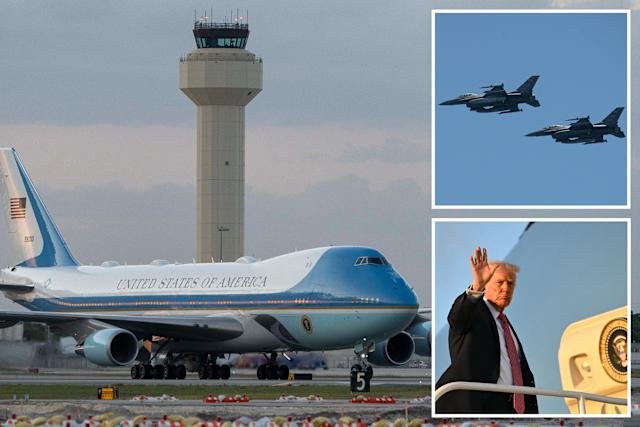
Flares in the sky, jets scrambled—what really happened near Trump’s plane in Florida?
A security scare unfolded near Palm Beach International Airport after a civilian aircraft briefly lost contact with air traffic control and entered restricted airspace tied to the movements of Donald Trump.
The incident triggered an immediate response from the North American Aerospace Defense Command, which scrambled F-16 fighter jets to intercept the aircraft. As part of standard protocol, the jets deployed flares—highly visible warning measures used to get a pilot’s attention and establish communication.
Officials said the alert coincided with the scheduled departure of Air Force One, the presidential aircraft, prompting a temporary shutdown of the surrounding airspace as a precaution.
Within minutes, the situation was brought under control. NORAD confirmed that the civilian plane was safely escorted out of the restricted zone, and authorities emphasized that there was no direct threat to the president or his aircraft.
The Federal Aviation Administration attributed the incident to a temporary communication lapse between the pilot and air traffic control—a scenario that automatically triggers heightened security responses, especially near sensitive flight operations.
Both the White House and the Secret Service moved quickly to dispel early speculation. Officials confirmed that the event was not linked to drone activity or any form of attack, and that the president was never in danger.
Additional confusion arose from reports of helicopters in the area, but authorities clarified these were pre-authorized flights unrelated to the incident.
Air traffic resumed normal operations shortly afterward, but the episode underscores the strict and immediate enforcement of airspace restrictions around presidential travel—particularly at Palm Beach, a frequent departure point for Trump’s trips to his Mar-a-Lago residence.
While the disruption was brief, it highlighted the razor-thin margin for error in U.S. airspace security—where even a momentary loss of communication can trigger a full-scale military response.
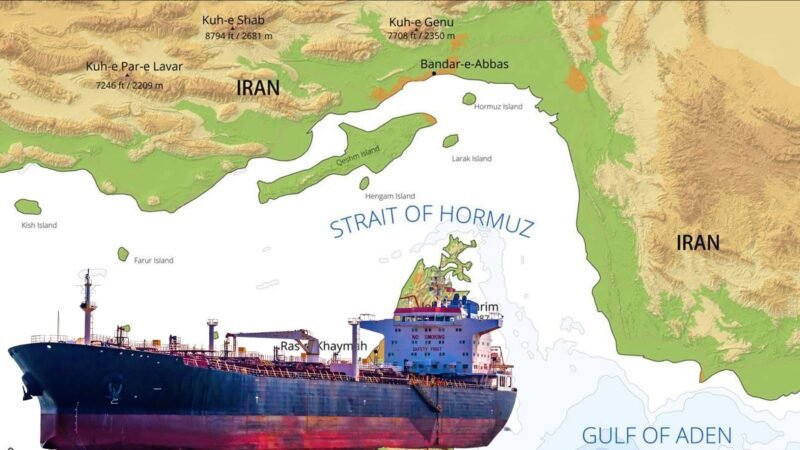
The Hormuz crisis isn’t just about the Gulf anymore—Africa’s oil is now caught in the storm.
The fallout from the war around Strait of Hormuz is now rippling far beyond the Middle East, slowing crude trade in West Africa and reshaping global energy flows in real time.
Despite a tightening global market, traders say April-loading West African cargoes are moving unusually slowly. The reason is counterintuitive: supply exists, but sellers are holding back.
Producers and trading firms are increasingly choosing to refine their own crude rather than sell into a volatile market—unless buyers are willing to pay sharply elevated prices. As one trader put it, “they don’t need to sell.”
This shift marks a deeper distortion in the global oil system. Traditionally, unsold cargoes signal weak demand. Today, they signal strategic hesitation—producers betting that prices could climb even higher as the conflict intensifies.
Benchmark dynamics reflect that tension. Nigerian Bonny Light crude is now trading at a steep premium to Brent, reaching levels not seen since the shock triggered by Russia’s invasion of Ukraine. The message is clear: replacement barrels are scarce, and buyers are scrambling.
The disruption traces directly back to the near shutdown of Hormuz, a passage that normally carries roughly a fifth of the world’s oil. With Gulf producers cutting output and tanker traffic constrained, refiners have turned to alternative sources—including West Africa.
But that pivot comes with friction.
Freight costs to Asia, a primary destination for African crude, have surged to multi-year highs. The logistics burden is now shaping trade decisions as much as supply itself. Even as demand rises, expensive shipping is dampening deal flow.
Meanwhile, major buyers like China and India—which together account for nearly 40% of West African exports—are becoming more selective. Traders say Chinese refiners, in particular, are opting for discounted Russian and Iranian barrels where available, further complicating the market.
What is emerging is a fragmented oil landscape.
Instead of a smooth rebalancing after Middle East disruptions, the market is splintering into competing price zones, logistical bottlenecks, and strategic stockpiling. Sellers are cautious. Buyers are opportunistic. And the flow of oil—once predictable—is now shaped by risk as much as demand.
The broader implication is significant.
The Hormuz crisis is no longer a regional disruption; it is a systemic shock. From the Gulf to West Africa, energy markets are being reordered under pressure, with Africa unexpectedly pulled into the center of the global supply equation.
If the strait remains constrained, this may only be the beginning.
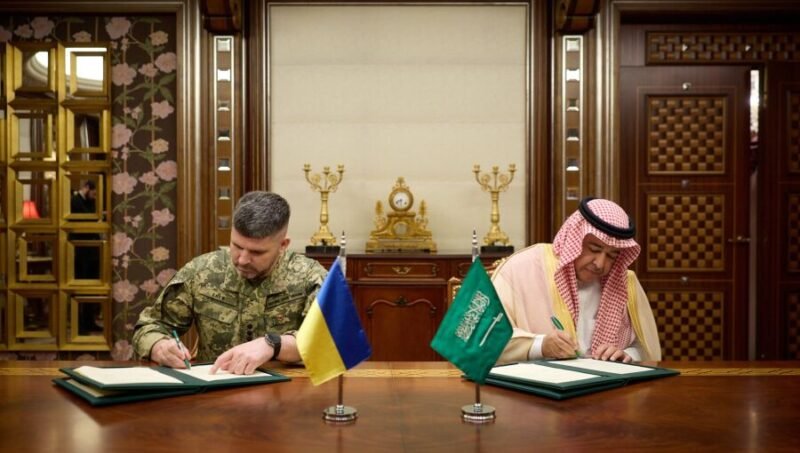
From oil to arms—Saudi Arabia quietly expands its global defense footprint with Ukraine.
In a move that underscores shifting global security alignments, Saudi Arabia and Ukraine signed a defense procurement agreement on Friday, formalizing cooperation in military equipment and services.
The memorandum of understanding, signed in Jeddah, brings together senior defense officials from both countries.
Saudi Arabia was represented by Khalid Al-Bayari, assistant minister of defense for executive affairs, while Ukraine’s delegation was led by Andriy Hinatov, chief of the general staff.
According to the Saudi Press Agency, the agreement focuses on strengthening collaboration in the acquisition of military equipment and related services—an area of growing importance as both countries navigate evolving security challenges.
The timing of the deal is significant.
For Saudi Arabia, it reflects a broader strategy to diversify defense partnerships beyond traditional Western suppliers while building domestic capabilities under its long-term modernization agenda.
Riyadh has increasingly positioned itself as both a buyer and an emerging player in the global defense ecosystem.
For Ukraine, the agreement comes amid continued conflict with Russia, where securing diversified supply channels and international defense cooperation remains critical. Partnerships like this offer Kyiv not only material support but also political reinforcement from influential regional actors.
The deal also hints at a deeper geopolitical recalibration.
Saudi Arabia has maintained a delicate balancing act—strengthening ties with Western allies, engaging China and Russia economically, and now expanding defense links with Ukraine. This multi-vector approach allows Riyadh to hedge against uncertainty while enhancing its strategic autonomy.
At the same time, Ukraine’s outreach to Gulf states signals an effort to broaden its diplomatic and military support base beyond Europe and North America.
While the agreement’s operational details remain limited, its implications are clear: defense cooperation is becoming increasingly global, fluid, and interconnected.
In a world shaped by overlapping conflicts—from Eastern Europe to the Middle East—partnerships like this are no longer peripheral. They are part of a wider contest to secure influence, resilience, and long-term strategic advantage.

A European vote on Tibet just triggered a sharp response from Beijing — and reignited a global dispute over religion and power.
Tensions between China and the Czech Republic have escalated after Prague’s Senate passed a resolution supporting the Tibetan people’s right to choose the next Dalai Lama—a move Beijing has condemned as interference in its internal affairs.
The dispute centers on one of the most sensitive issues in Chinese politics: succession in Tibetan Buddhism. The resolution urges the Czech government to back the “free choice” of the 15th Dalai Lama, directly challenging Beijing’s longstanding claim that it holds ultimate authority over the process.
Chinese officials reacted swiftly.
In a statement, Beijing’s embassy in Prague accused Czech lawmakers of disregarding China’s “solemn position” on Tibet, insisting that Tibetan affairs are strictly domestic matters. The response reflects how deeply the issue cuts into China’s broader concerns about sovereignty and territorial integrity.
At the heart of the disagreement is the future of Dalai Lama, the exiled spiritual leader who fled Tibet in 1959 following a failed uprising. While widely regarded internationally as a religious figure and symbol of nonviolent resistance, Beijing views him as a political actor advocating separatism.
That divergence has only sharpened under Xi Jinping, whose administration has expanded state control over religious institutions in Tibet. Policies now require Tibetan Buddhism to align with the Chinese political system, reinforcing the government’s position that it will oversee the selection of the next Dalai Lama.
The Czech resolution challenges that framework.
By endorsing Tibetan autonomy in the succession process, Prague is aligning itself with a broader international view that religious leadership should remain independent of state control. The move follows a series of actions by Czech officials—including meetings with the Dalai Lama—that have already strained relations with Beijing.
For China, the implications go beyond symbolism.
Control over the Dalai Lama’s succession is seen as critical to maintaining long-term stability in Tibet. Any external support for alternative mechanisms is viewed as a threat to that objective—and, by extension, to national unity.
For Europe, the episode reflects a familiar dilemma.
Balancing economic ties with China against political commitments to human rights and religious freedom has become increasingly complex. The Czech Senate’s decision signals a willingness, at least in some capitals, to take a more assertive stance—even at the risk of diplomatic fallout.
What emerges is more than a bilateral dispute.
It is part of a broader contest over who defines legitimacy: a state asserting sovereignty over religious institutions, or a global community advocating for autonomy and self-determination.
As the question of succession looms, that contest is likely to intensify—well beyond the borders of Tibet.
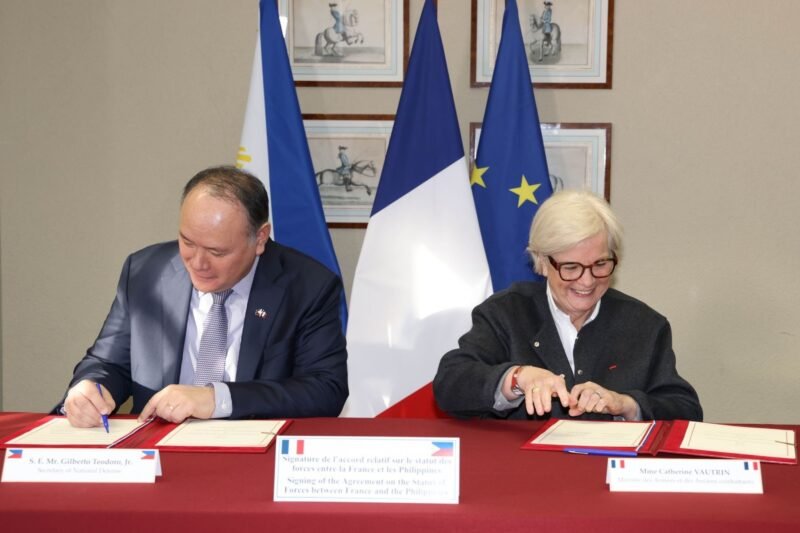
A new military pact just dropped in Asia—and it’s aimed at one thing: pushing back in the South China Sea.
The Philippines and France have signed a new military agreement that signals a widening network of security partnerships in response to rising tensions in the South China Sea.
The visiting forces agreement, signed in Paris by Philippine Defense Secretary Gilberto Teodoro and French Armed Forces Minister Catherine Vautrin, will allow troops from both countries to train on each other’s territory. Officials say the deal provides a legal framework for joint exercises and deeper military coordination—an increasingly important element of Manila’s defense strategy.
The timing is significant.
The agreement comes just one day after Philippine forces accused a Chinese naval vessel of conducting an “unsafe and unprofessional” maneuver near Thitu Island, a key Philippine outpost in contested waters. Incidents like this have become more frequent as China continues to assert sweeping claims over the South China Sea—claims rejected by an international tribunal in 2016 but still enforced through patrols and military pressure.
For Manila, the message is clear: partnerships are no longer optional—they are essential.
The Philippines already maintains similar agreements with the United States, Japan, Australia, and New Zealand. Adding France—one of Europe’s leading military powers with a strategic presence in the Indo-Pacific—expands that network beyond traditional regional allies.
France, for its part, is signaling a broader global role.
Paris has increasingly framed itself as a defender of a “rules-based international order,” particularly in maritime domains where freedom of navigation is under pressure. Its involvement in the Indo-Pacific reflects both economic interests and a strategic effort to counterbalance rising tensions in key trade corridors.
The South China Sea is central to that calculus.
More than $3 trillion in global trade passes through its waters each year, making it one of the most critical arteries of the world economy. Any instability—whether from military confrontation or coercive tactics—carries global consequences.
That is why the language surrounding the agreement matters.
Both Manila and Paris emphasized peaceful dispute resolution, supply chain resilience, and adherence to international law. Yet behind those diplomatic phrases lies a harder reality: the region is becoming more militarized, and alliances are quietly expanding in response.
This pact is not an isolated development.
It is part of a broader shift in global security, where regional disputes are drawing in extra-regional powers, and where local tensions increasingly intersect with global strategic competition.
In that environment, the Philippines is no longer standing alone.
And France is making clear it intends to be part of the balance.
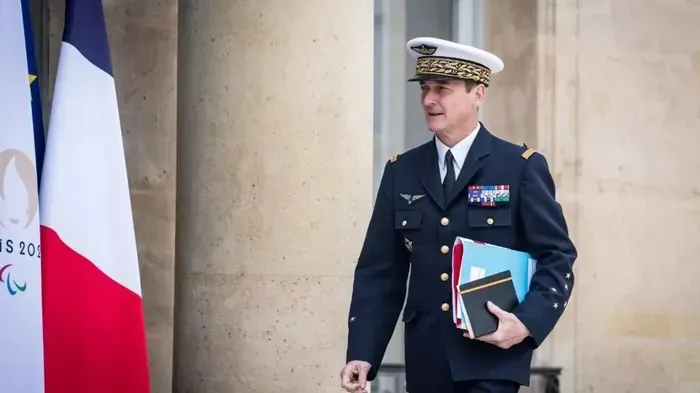
The war may end—but the real battle could be who controls the world’s most important oil route.
As the war in the Gulf grinds on, a new phase of strategic planning is quietly taking shape. France has begun discussions with roughly 35 countries on a potential multinational mission to secure the Strait of Hormuz—a move that signals growing concern over what comes after the fighting ends.
French military officials, led by Armed Forces Chief Fabien Mandon, held wide-ranging consultations with partners across multiple continents, exploring how to restore safe passage through a waterway that carries about one-fifth of the world’s oil. Shipping traffic has already slowed dramatically following Iranian strikes on vessels during the conflict.
The initiative, French officials stress, is strictly defensive.
Unlike ongoing military operations involving the United States and Israel, the proposed mission would focus on stabilizing maritime routes after hostilities subside. Its objective is not escalation, but normalization: reopening shipping lanes, reassuring insurers, and preventing a prolonged disruption to global energy flows.
Still, the scale of the consultations reflects the complexity of the task.
Senior naval leaders from countries including United Kingdom, Germany, Italy, India, and Japan have already been involved in early exchanges. The emerging consensus is that no single country—even the United States—can manage the challenge alone.
At the heart of the planning is a phased approach.
Initial efforts would likely focus on mine-clearing operations, a technically demanding process that could take weeks or months depending on the scale of contamination. This would be followed by escort missions to protect commercial tankers transiting the strait, ensuring that shipping can resume without immediate threat.
The need for such coordination highlights a deeper strategic reality.
Even if active fighting ends, Iran retains the capacity to disrupt Hormuz—either directly or through asymmetric tactics. For global markets, that means the risk does not disappear with a ceasefire; it lingers in the form of uncertainty, insurance costs, and the potential for renewed escalation.
Emmanuel Macron has suggested that any mission should ideally operate under a broader international framework, possibly involving the United Nations, and with at least tacit acceptance from Iran. Without that, even a defensive deployment could be interpreted as provocation.
Parallel efforts are also underway in London, where Prime Minister Keir Starmer has emphasized the need for a “viable” and coordinated plan—while warning that reopening the strait will be extremely difficult without broader de-escalation.
The message from European capitals is clear.
The war may determine who holds military advantage, but the aftermath will determine who controls stability. And in a world where energy routes are inseparable from economic security, the reopening of Hormuz is not just a logistical task—it is a geopolitical contest in its own right.
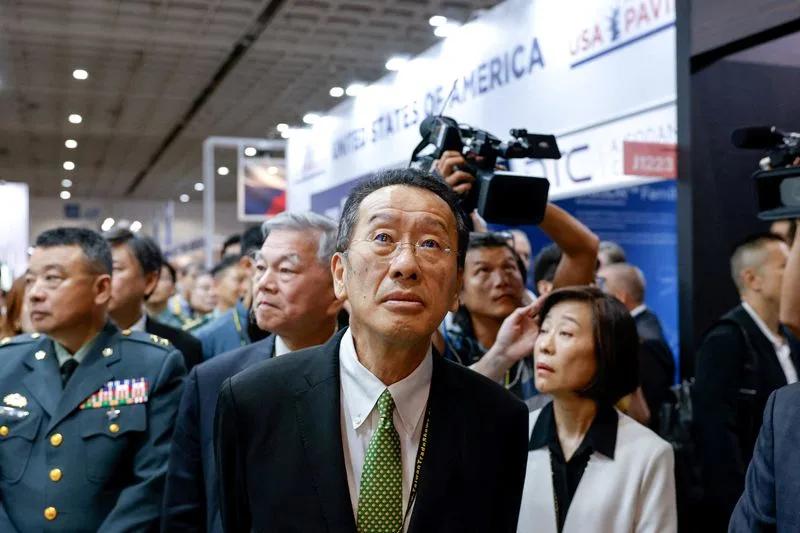
$14 Billion Signal: Even amid war in the Middle East, the U.S. just sent a clear message to China.
As global attention remains fixed on the war in the Middle East, a parallel strategic signal is emerging in Asia—one that underscores how interconnected today’s conflicts have become.
Officials in Taiwan say their next major arms purchase from the United States remains on track, backed by a formal guarantee from Washington. The package, reportedly worth around $14 billion, includes advanced interceptor missile systems designed to strengthen the island’s air and missile defenses.
The timing is notable.
The deal is moving forward even as Donald Trump prepares for a high-stakes meeting with Xi Jinping in Beijing—talks expected to place Taiwan at the center of an already fragile relationship. Beijing has repeatedly warned Washington against arms sales to the island, which it considers part of its territory.
Yet Washington’s position appears unchanged.
Despite the absence of formal diplomatic ties, the U.S. remains legally committed to supporting Taiwan’s self-defense capabilities. That commitment has translated into increasingly large and sophisticated arms packages in recent years, reflecting growing concern over China’s military pressure on the island.
For Taipei, the guarantee offers reassurance at a moment of heightened uncertainty.
Taiwanese Defense Minister Wellington Koo confirmed that the deal is progressing through internal U.S. review, with no indication of delays. Behind the scenes, officials from both sides are also discussing financing arrangements, including potential adjustments to payment timelines as Taiwan’s parliament debates additional defense spending.
For Beijing, however, the move is another escalation.
Chinese officials have condemned the proposed sale, warning of its “serious harmfulness” to bilateral relations. The issue is particularly sensitive as China continues to ramp up military exercises around Taiwan, signaling its readiness to use force if necessary.
The broader implication is difficult to ignore.
Even as Washington is deeply engaged in a volatile conflict involving Iran, its strategic competition with China remains active—and, in many ways, intensifying. Far from being a distraction, the Middle East war is unfolding alongside a parallel contest in the Indo-Pacific.
This dual-track pressure raises critical questions about capacity and priorities.
Can the United States sustain simultaneous commitments across multiple theaters? And how will China interpret continued arms support for Taiwan at a moment when global instability is already high?
For now, the message from Washington is clear: its security commitments in Asia will not be sidelined.
But as tensions rise on both fronts, the risk is that separate crises may begin to intersect—transforming regional disputes into a broader global confrontation.

Gulf Unity Emerges: Stop the War Before It Spreads

Italy Blocks US Use of Sicily Air Base

Inside Iran’s War Tactic: Turning Civilian Spaces into Battle Zones


-
 US-Israel war on Iran1 month ago
UK Refuses Iran Strike Access, Trump Fires Back
-
 Russia-Ukraine War1 month ago
Europe’s Spies Challenge Trump’s Ukraine Peace Optimism
-
 Top stories4 weeks ago
War Expands Across Region as Iranian Militias Join Fight
-
 US-Israel war on Iran1 month ago
Iran Pledges ‘Never, Ever’ to Hold Bomb-Grade Material
-
 US-Israel war on Iran1 month ago
Syria Under Fire on Two Fronts
-
 Top stories1 month ago
India Turns to Brazil in Strategic Minerals Push Against China
-
 Russia-Ukraine War1 month ago
Estonia Warns NATO Would Strike Deep Inside Russia if Baltics Are Invaded
-
 Terrorism4 weeks ago
Regional Army Moves Against Expanding Armed Groups