Putin’s Calculated Distance from Iran Exposes the Limits of Russia’s Alliances.
Alliances built on convenience rarely survive real pressure. The current standoff between Washington and Tehran has laid bare a quiet but telling shift: Vladimir Putin, long portrayed as Iran’s strategic patron, is now carefully stepping aside as the Islamic Republic faces one of its gravest moments in decades.
As President Donald Trump warns that a U.S. naval armada is moving toward the Gulf and openly hints that strikes on Iran remain an option, Moscow’s response has been conspicuously restrained. Russia’s foreign ministry has advised its citizens against traveling to Iran. Russian officials have offered mediation rather than protection. And the Kremlin has made no move suggesting it would place itself between Tehran and Washington.
This is not accidental. It is strategic abandonment.
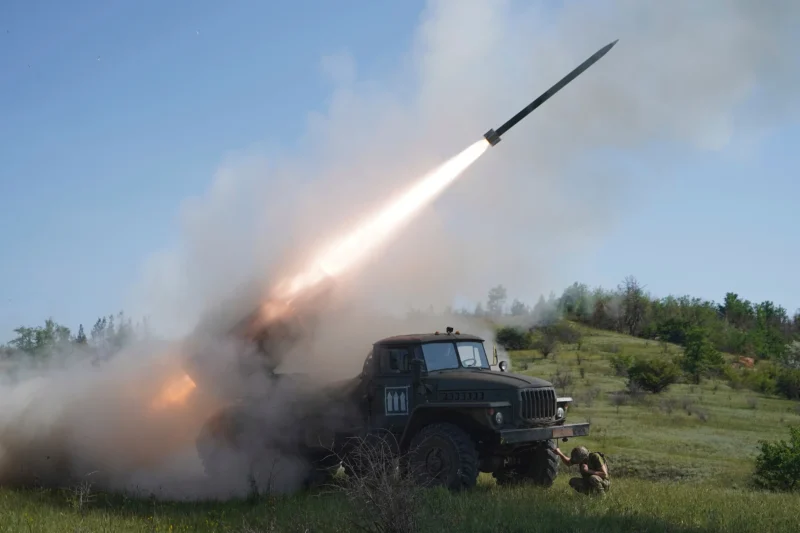
For over a decade, Russia and Iran forged a partnership built on opposition to Western power. That relationship deepened after Moscow’s invasion of Ukraine, when Iran supplied Russia with Shahed kamikaze drones that helped sustain the Kremlin’s campaign against Ukrainian cities. In return, Tehran expected unprecedented military cooperation, including advanced aircraft and air defense systems.
Yet the partnership was always transactional, never existential.
Russia localized drone production by 2023, reducing its dependence on Iranian supply. China and North Korea now matter far more to Moscow’s war effort. And the collapse of the Assad regime in Syria in late 2024 — a regime jointly propped up by Russia and Iran — dealt a severe blow to their shared regional architecture.
Even their much-vaunted “comprehensive strategic partnership treaty” signed in early 2025 stopped short of any mutual defense obligation. That omission now looks deliberate. Russia wants flexibility, not entanglement.
The moment of truth came last summer when Israel and later the United States systematically dismantled Iran’s air defenses and struck its nuclear infrastructure — humiliating Tehran in full view of the world. Iranian envoys rushed to Moscow. They returned empty-handed.
Now, as protests sweep Iran and the regime faces mounting internal and external pressure, Putin has again chosen distance over loyalty. His priority is not Tehran’s survival. It is staying in Trump’s good graces as negotiations over Ukraine intensify. By letting the foreign ministry issue ritual condemnations while avoiding concrete commitments, Putin shields himself from consequences while signaling to Washington that Iran is expendable.
Even the limited Russian support visible — a handful of military cargo flights and vague arms assistance — falls far short of what would meaningfully alter Iran’s fate. Moscow cannot spare systems from Ukraine, and it will not risk escalation for a partner whose core survival is not tied to Russia’s own.
This moment exposes a deeper truth about Putin’s world: Russia’s partnerships are designed to be reversible. Loyalty flows upward, never reciprocally.
For Washington, this is an opportunity. Not merely to isolate Iran, but to demonstrate to Russia’s other partners that when pressure arrives, the Kremlin’s friendship has a sharp expiration date.
Putin’s silence today may echo far beyond Tehran.