The Widening Rift Between Trump and Europe Is a Strategic Gift to Putin.
The latest rupture in trans-Atlantic relations is unfolding at a moment of acute geopolitical vulnerability—and Moscow is wasting no time exploiting it.
As U.S. President Donald Trump escalates public criticism of European leaders and questions the viability of continued support for Ukraine, the Kremlin sees a strategic opening it has sought for years: deepening mistrust between Washington and Europe, weakening NATO cohesion, and eroding the West’s unified posture against Russian aggression.
Trump’s remarks this week, dismissing Europe as “weak” and “decaying” because of its immigration policies, came just days after his administration released a national security strategy portraying European governments as obstacles to peace in Ukraine.
According to the document, Europe’s “unrealistic expectations” and alleged “subversion of democratic processes” have hindered Washington’s efforts to negotiate an end to the war.
For European leaders, the message was unmistakable. German Chancellor Friedrich Merz pushed back sharply, warning that elements of the U.S. strategy were “unacceptable” and stressing that Europe “does not need help from the United States to save democracy.” The diplomatic strain is widening—precisely the dynamic Moscow has sought to amplify since the first day of its invasion.
The Kremlin’s reaction was immediate. Spokesman Dmitry Peskov praised the new U.S. strategy as “consistent with our vision,” while Kirill Dmitriev—one of Moscow’s key intermediaries in the backchannel dialogue with Trump’s envoys—celebrated the administration’s scolding of Europe.
Russian officials have long understood that political division within the West is a force multiplier for their operations in Ukraine, and Trump’s framing delivers precisely that.
Meanwhile, Trump’s assertion that Ukraine is “losing” and that President Volodymyr Zelensky must “start accepting things” reinforces a narrative Russia has been pushing aggressively across European information ecosystems.
It mirrors the Kremlin’s psychological operations: project inevitability, erode Western resolve, and force Kyiv into concessions it cannot survive.
Moscow’s information war is tailored to exploit wavering public opinion in Europe, where the economic costs of supporting Ukraine remain a contentious domestic issue.
Sergey Karaganov, a hardline Russian political theorist, spelled out the strategic intent on state television: “We are at war with Europe, not with a pitiful, misled Ukraine… This war will not end until we smash Europe morally and politically.”
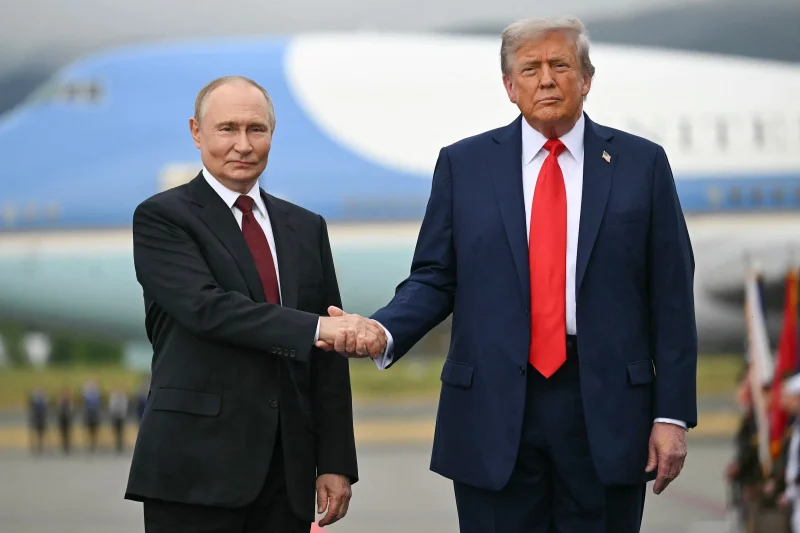
Even Russian President Vladimir Putin, while meeting Trump’s emissaries in Moscow, issued a blunt signal to European capitals: Russia is “ready right now” for conflict if Europe provokes one.
The message was aimed squarely at European publics already questioning the durability of U.S. support.
For Putin, the trans-Atlantic rift is more than a diplomatic spat—it is a geopolitical windfall.
If Europe doubts America’s commitment, if NATO’s center of gravity shifts, if Ukraine’s coalition fractures, then Moscow achieves what it cannot win on the battlefield: strategic depth, political time, and a divided West.