
Maritime Security
Anduril’s $1.1bn Deal Boosts Australia’s Undersea Defence Industry


U.S. defence firm Anduril Industries opened a Sydney factory this week to build its “Ghost Shark” autonomous undersea vehicles, a tangible milestone in Australia’s push for sovereign maritime capability.
The A$1.7 billion ($1.1 billion) program — awarded in September to co-develop a fleet for the Royal Australian Navy — signals Canberra’s growing appetite for unmanned systems that can patrol littoral waters, deter aggression, and extend surveillance without putting sailors at direct risk.
Anduril says the first Ghost Shark is complete and ready for in-water trials ahead of a January delivery. The 7,400-square-metre plant will scale to full production in 2026 and create roughly 150 skilled jobs, while more than 40 local suppliers will feed parts into the programme.
For Australia, that supply-chain angle matters as much as the hardware: domestic manufacturing reduces reliance on foreign suppliers, creates political capital at home, and opens an export pathway to allies — subject, of course, to Canberra’s export controls.
Strategically, Ghost Sharks fit a wider logic. Australia faces an intensifying maritime environment in the Indo-Pacific where seabed sensors, unmanned surface vessels, and autonomous underwater systems increasingly define naval competition.
Autonomous systems can operate persistently, collect acoustic and electronic intelligence, and create layered defense zones around critical ports and sea lines of communication.
That matters for Australia’s deterrence posture in the face of sophisticated undersea capabilities deployed by regional peers.
But delivered capability will hinge on integration. Fielding dozens of underwater drones is not merely a procurement exercise; it requires doctrine, secure communications, maintenance networks, and robust rules of engagement to avoid accidents or escalation.
Interoperability with existing naval platforms and allied forces will determine whether Ghost Sharks are a niche tool or a force-multiplying node in a distributed maritime architecture.
There are also political tradeoffs. Building military kit locally brings jobs and industrial resilience, yet it raises questions about export controls, technology transfer, and alliance dependency if critical components remain foreign-sourced.
Anduril’s Sydney plant promises local content, but Canberra must guard against hollow sovereignty — factories onshore that still depend on offshore supply and design authority.
If the in-water tests succeed and the factory hits its stride in 2026, Australia will have a credible path to fielding persistent undersea autonomy at scale.
That outcome would mark a turning point: not just in capability, but in how democracies build resilient defence industries for the age of unmanned warfare.
















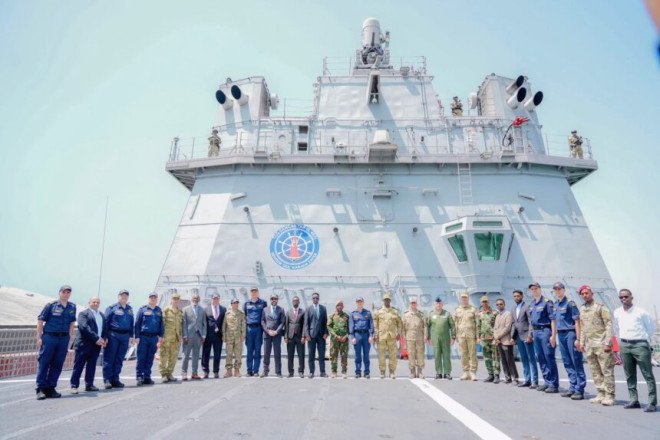
Ankara says “stability.” Somaliland sees risk. The Horn of Africa is entering a new strategic chapter — and the stakes are rising fast.
When Turkish warships docked in Mogadishu, alongside reports of F-16 fighter jet deliveries and offshore drilling plans, the signal was unmistakable: Ankara is deepening its footprint in Somalia. For Somaliland — whose collective memory still carries the trauma of the 1988 bombardment of Hargeisa by the regime of Siad Barre — the optics alone are unsettling. Military expansion in Mogadishu is rarely viewed as defensive. It is viewed through history.
Yet a sober assessment of the Turkey–Somalia defense and economic framework suggests a more complex reality. Turkey is unlikely to launch — or support — an offensive campaign against Somaliland. The strategic costs would be immense.
As a key member of NATO, Ankara positions itself as a regional stabilizer, not a proxy combatant in Somalia’s internal territorial disputes. An unprovoked escalation against a relatively stable and democratic territory with informal ties to the United Kingdom, the UAE and Ethiopia would undermine Turkey’s diplomatic standing at a time when it seeks influence across Africa and the Red Sea corridor.
Economics also act as a restraint. Turkey’s maritime doctrine — often described as the “Blue Homeland” — prioritizes sea lanes, energy access and trade routes. A regional war would jeopardize precisely the offshore prospects and shipping stability Ankara hopes to cultivate. Investors do not drill in active conflict zones.
Ethiopia further complicates any military calculus. Somaliland’s memorandum of understanding with Ethiopia creates a deterrent layer Ankara cannot ignore. Turkey maintains significant economic and defense ties with Addis Ababa; it is unlikely to risk indirect confrontation over Mogadishu’s maximalist claims.
Still, the danger lies less in intent than in imbalance. Advanced aircraft in a fragile security environment introduce new variables. Even if initially deployed against Al-Shabaab, the capability itself alters regional power equations. History in Somalia has shown how quickly state assets can be redirected.
Maritime cooperation carries similar risks. If Turkish-trained Somali naval units patrol waters claimed by Somaliland — particularly near the vital Berbera corridor — even minor incidents could escalate into diplomatic crises.
The most combustible element may be energy exploration. Should Turkish drilling vessels operate in offshore blocks Somaliland considers within its jurisdiction, a commercial venture could morph into a sovereignty dispute with international implications.
Turkey is not preparing an invasion. It is consolidating influence — military, economic and maritime — in a strategically vital region. For Somaliland, the challenge is not alarmism but strategy: direct engagement with Ankara, stronger regional integration with Ethiopia, and early internationalization of maritime boundary concerns.
In the Horn of Africa, power shifts rarely announce themselves loudly. They unfold quietly — until they don’t.

The European Union has dispatched a naval warship to the Somali coast following what maritime officials describe as the first suspected act of Somali piracy since 2024, raising renewed fears over the security of one of the world’s most vital shipping lanes.
The incident occurred Monday off the coast of Mogadishu, where armed assailants opened fire on a commercial tanker after attempting to board it, maritime risk firms reported.
No crew injuries were confirmed, but the attack marks the first credible reemergence of Somali piracy after nearly a decade of relative calm.
The EU’s Operation Atalanta, its long-running counter-piracy mission based out of Spain, confirmed Wednesday that it was “aware of the situation” and had deployed a naval asset to the area, though it declined to provide operational details for security reasons.
British maritime security companies Ambrey and Vanguard said the incident bears the hallmarks of a “Somali Pirate Action Group” operating more than 300 nautical miles offshore — unusually far from the coast for such operations.
Vanguard added that the pirates may have seized a Seychelles-flagged fishing vessel earlier this week to use as a mothership, a common tactic that allows them to launch speedboat attacks farther into international waters.
Maritime sources also confirmed that an Iranian fishing vessel was reportedly seized by unknown assailants, though it remains unclear whether the attack was linked to the same group.
“These vessels fit the classic target profile of Somali pirates: unarmed, low-freeboard ships moving slowly through the region,” Ambrey said in a statement.
The renewed incidents have triggered alarms across the shipping industry. The Gulf of Aden and western Indian Ocean serve as key arteries for energy and goods moving between Asia, Africa, and Europe.
Although Somali piracy had been largely suppressed through joint naval patrols and onboard security teams, the latest attacks suggest that criminal networks may be reorganizing amid the broader instability in the region.
The resurgence comes as Yemen’s Houthi militia, backed by Iran, continues to disrupt commercial traffic in the Red Sea, forcing hundreds of shipping companies to reroute around the Cape of Good Hope — a costly detour that adds weeks to delivery schedules.
While the Houthis recently agreed to a limited truce on targeting U.S.-linked vessels, maritime insurers and shipping operators remain wary of both Houthi drones and a potential resurgence of Somali piracy, which in its 2008–2011 peak cost the global economy billions of dollars in ransoms and insurance premiums.
European and regional security officials are now watching closely to determine whether the latest attack represents an isolated criminal act or the revival of organized Somali piracy, a threat once thought contained but never fully eradicated.

A small livestock carrier, Merinos Livestock, sailed near the Yemeni coastline on Thursday, en route from Bosaso, Somalia, to the Port of Jeddah in Saudi Arabia. Local authorities briefly detained the vessel due to its position, rather than a targeted action by Houthi (Ansar Allah) forces.
Maritime security sources report that the ship disabled its Automatic Identification System (AIS) transmissions, raising suspicion and likely prompting the interception. Vessels navigating Yemen’s volatile waters often turn off AIS to avoid interference by armed groups, especially the Ansar Allah militia led by Abdul-Malik al-Houthi.
Unconfirmed reports suggest that the Yemeni Coast Guard detained the vessel, but no group has officially claimed responsibility for the brief detention. The situation around the waters remains unstable.
Sources indicate that authorities held Merinos Livestock on suspicion but later released it. The vessel was near the Hanish Islands, about 30 nautical miles northwest of Mocha, Yemen, when officials intercepted it.

Securing the Gulf of Aden: Somaliland’s Strategic Maritime Role.
As global maritime chokepoints grow increasingly volatile, Somaliland—a quiet but stable actor along the Gulf of Aden—stands at the threshold of regional leadership in maritime security. With piracy, illicit trafficking, and sabotage returning to regional waters, the time for Somaliland to rise as a maritime guardian is now.
Somaliland controls a critical stretch of the Gulf, where over 20,000 commercial vessels pass annually. Unlike neighboring states mired in instability, Somaliland’s democratic governance and functional institutions position it uniquely to lead on security. But leadership requires strategy.
A Somaliland Maritime Security Strategy would focus on four pillars: regional coordination, advanced surveillance, a national maritime policy, and international engagement. Satellite tracking, drone monitoring, legal reform, and multinational exercises are no longer optional—they’re essential.
The world cannot afford to overlook this under-recognized actor. Somaliland’s role in securing sea lanes can deliver ripple effects far beyond its shores—from reducing insurance costs for global shippers to deterring terrorist threats along the Horn of Africa.

In the era of asymmetric threats, Somaliland’s emergence as a maritime power may be the stabilizing force the region urgently needs.
By Mahad Ahmed
Independent Maritime Security Advisor, Hargeisa, Somaliland
📧 mahaddayr@gmail.com

President Irro appoints Colonel Khadar Mohamed Issa as Deputy Commander of the Coast Guard—marking a generational shift in Somaliland’s maritime security leadership.

In a landmark move signaling Somaliland’s strategic pivot toward youth-led reform and maritime modernization, President Abdirahman Mohamed Abdillahi Irro has appointed Colonel Khadar Mohamed Issa as the new Chief of Staff and Deputy Commander of the Somaliland Coast Guard.
Colonel Khadar, who becomes the youngest officer ever to assume such a senior command in the force, is widely seen as a rising star in Somaliland’s security establishment. His elevation is not just symbolic—it’s strategic.
Trained in the UK, Ethiopia, Kenya, the Philippines, and Seychelles, Colonel Khadar represents the new breed of internationally-trained Somali officers capable of applying global best practices to local realities. His background in maritime security, naval operations, and coast guard interoperability is expected to bring fresh energy and rigor to one of Somaliland’s most critical frontline institutions.

This appointment comes at a decisive time. The geopolitical stakes in the Red Sea and Gulf of Aden are higher than ever. Piracy, arms trafficking, illegal fishing, and strategic foreign rivalries have turned the waters around Somaliland into a contested maritime corridor. Strengthening coastal defense and asserting maritime sovereignty is no longer optional—it’s existential.
President Irro’s decision to appoint a next-generation officer speaks volumes about his administration’s vision. Rather than recycling worn-out commanders or appeasing traditional networks, Irro is staking the future of Somaliland’s maritime power on youth, merit, and international credibility. This aligns with his broader reformist agenda—emphasizing competence, innovation, and long-term security architecture.

Colonel Khadar’s pending return from an official mission abroad only adds to the anticipation. Insiders suggest he is already in talks with international partners about technical capacity building, equipment modernization, and digital surveillance enhancements for the Coast Guard.
In a region where military appointments are too often political, Colonel Khadar’s selection stands out. It reflects a forward-leaning, results-oriented strategy that prioritizes maritime security not just as defense, but as an economic and geopolitical imperative.
If the Somaliland Coast Guard succeeds under this youthful leadership, it may become a model not just for Somali territories—but for other unrecognized or under-resourced nations looking to assert themselves in strategic waters.
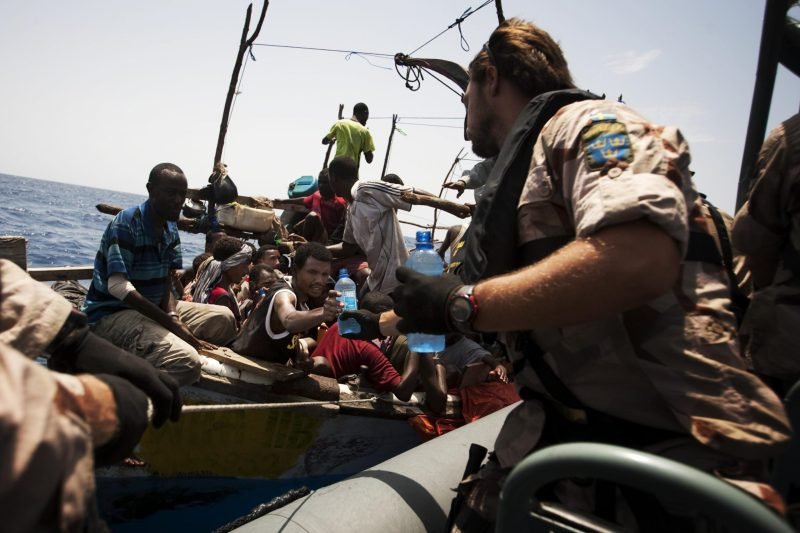
Somaliland, with its strategically vital coastline along the Gulf of Aden, plays an indispensable role in safeguarding one of the world’s most critical maritime arteries. For years, the specter of piracy loomed large over these waters, threatening global trade and regional stability. Today, a different narrative unfolds: Somaliland’s seas are remarkably free from piracy, a testament to robust local efforts significantly bolstered by the invaluable partnership with the European Union Capacity Building Mission in Somalia (EUCAP Somalia).
EUCAP Somalia, a civilian crisis management mission, has emerged as a silent but powerful force in enhancing maritime security across the region. Operating directly in Hargeisa, among other key locations, EUCAP’s commitment to building indigenous capacity has been exemplary. Their mission is clear: to assist Somaliland authorities in developing an effective internal security framework and upholding the rule of law, with a particular and successful emphasis on maritime security.
The success story is evident in the continuous professional development of the Somaliland Coast Guard. EUCAP provides strategic advising, mentoring, and specialized training, equipping the Coast Guard with the latest advancements in maritime security techniques and operational capabilities. This hands-on, collaborative approach has transformed the Somaliland Coast Guard into a formidable guardian of its territorial waters. Their enhanced ability to patrol, interdict, and respond has been crucial in deterring illicit activities and ensuring the safety of maritime traffic.
This partnership extends beyond Somaliland’s immediate coastline, contributing directly to the broader security of the Gulf of Aden. By strengthening maritime law enforcement in Somaliland, EUCAP and the local authorities are collectively securing a vital international shipping lane, benefiting global commerce and regional stability. It is an inspiring example of how targeted capacity building can yield tangible and far-reaching security dividends.
Somaliland’s dedication to maintaining peace and order, even as it pursues international recognition, is deeply admirable. The nation’s proactive engagement with partners like EUCAP underscores its commitment to being a responsible and effective actor in regional security. The freedom from piracy in Somaliland’s waters is not merely a fortunate circumstance; it is the direct result of tireless efforts by the Somaliland Coast Guard, empowered and enhanced by the strategic and practical support of EUCAP Somalia. This collaboration stands as a shining example of effective international partnership, proving that with the right investment in capacity and trust, even the most daunting security challenges can be overcome.
Charting a New Course: The Transformative Role of Somaliland’s National Security Advisor
Why Somaliland’s Holistic Approach to Maritime Security Should Be a Global Model
EUCAP Somalia workshop paves the way for women’s leadership in fisheries
Mahad Ahmed
Independent Maritime Security Advisor
Hargeisa, Somaliland
Email: mahaddayr@gmail.com

U.S. Burns Through 850 Tomahawk Missiles in Iran War

Africa Becomes the Next Battlefield of the Hormuz Crisis

Rubio Says U.S. Can Achieve Iran War Goals Without Ground Troops


-
 Terrorism2 months ago
America Pulls Back From Somalia but Doubles Down Next Door
-

 Analysis2 months ago
How Chinese Speculators Set the Stage for the Gold and Silver Crash
-
 Top stories2 months ago
Rubio Signals Preemptive Military Option as U.S. Tightens Pressure on Iran
-

 Russia-Ukraine War1 month ago
Russian General Boasted of Torture and Killing of Ukrainian Prisoners
-

 US-Israel war on Iran1 month ago
UK Refuses Iran Strike Access, Trump Fires Back
-

 Russia-Ukraine War1 month ago
Europe’s Spies Challenge Trump’s Ukraine Peace Optimism
-

 Top stories4 weeks ago
War Expands Across Region as Iranian Militias Join Fight
-

 US-Israel war on Iran4 weeks ago
Iran Pledges ‘Never, Ever’ to Hold Bomb-Grade Material