The Dragon in the Gulf: China’s Quiet March into African Waters.
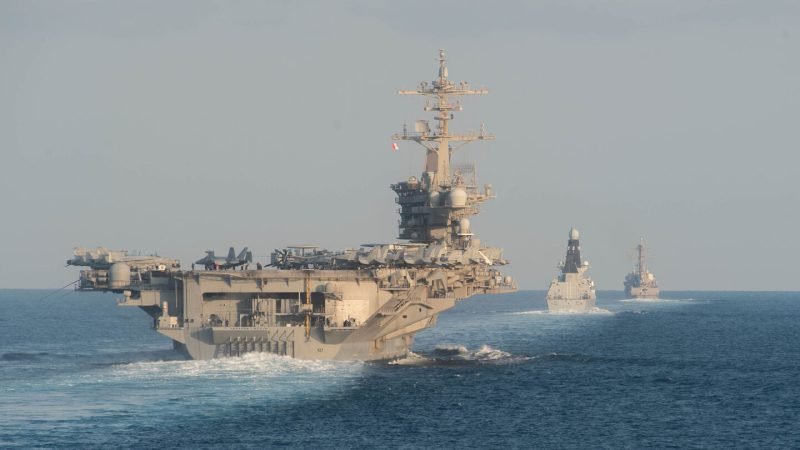
China’s latest deployment of a People’s Liberation Army Navy (PLAN) fleet to the Gulf of Aden marks more than a routine rotation — it signals Beijing’s growing military entrenchment in one of the world’s most strategic maritime corridors, where Western influence has long dominated.
On October 11, a 48th naval fleet — comprising a missile destroyer, missile frigate, and a supply vessel carrying special forces and attack helicopters — departed Qingdao to “continue escort missions” off the Somali coast.
Officially, the task is anti-piracy. In reality, analysts say, it represents China’s steady transformation from commercial partner to regional power with permanent military reach across the Red Sea and Indian Ocean.
Since 2008, China has maintained an unbroken presence in the Gulf of Aden — an area vital to global trade and, increasingly, to Beijing’s economic and energy lifelines through the Suez Canal.
Each successive deployment has been more sophisticated, more autonomous, and more politically charged.
The current fleet’s advanced composition — including long-range guided missile systems and amphibious-capable units — reveals operational ambitions far beyond simple convoy duties.
WARYATV regional defense observers note that this mission coincides with heightened tension in the Red Sea, where Houthi attacks, U.S. naval patrols, and Somali piracy networks have created a volatile maritime environment.
Beijing’s expanded patrols allow it to position itself as a security alternative to the U.S. Fifth Fleet, projecting power while collecting critical maritime intelligence on Western and regional movements.
More quietly, Chinese vessels are now operating close to Somaliland’s coast, not far from the Berbera corridor — a vital trade route that U.S. and Gulf states have been eyeing for joint defense and logistics hubs.
Beijing’s persistent presence could challenge emerging Western partnerships in the region, including Somaliland’s cooperation with the United Kingdom and the United States on maritime and counterterror operations.
Strategically, China’s new deployment fits its dual-track approach — economic expansion under the Belt and Road Initiative paired with military normalization under the guise of “escort missions.” The Gulf of Aden operation grants the PLA Navy both a legitimate presence and continuous live training near U.S.- and NATO-controlled routes.
For Somalia and Somaliland, the implications are complex. China’s proximity offers surveillance leverage but raises sovereignty concerns. Any future conflict or power vacuum could quickly draw Chinese assets into political or even kinetic involvement along the Horn of Africa’s coast.
As the 48th Fleet enters the Red Sea corridor, one fact is clear: the world’s newest naval superpower is not just protecting trade — it’s positioning itself to control it.