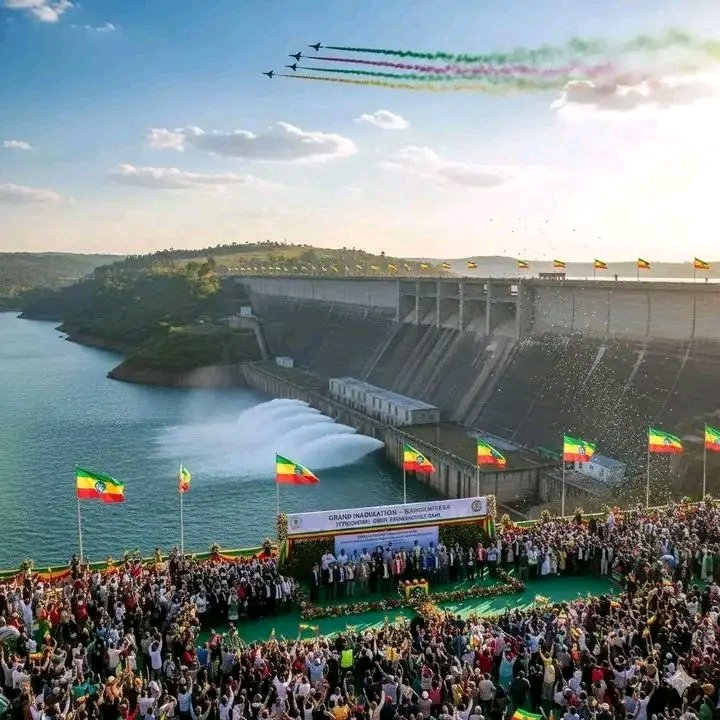
For more than a decade, Egypt and Sudan fought desperately to block the Grand Ethiopian Renaissance Dam (GERD). They filed petitions at the UN, lobbied Washington, staged endless negotiations, and issued threats. None of it worked. Ethiopia’s $4.2 billion dam is now complete. Its turbines are generating power, its 74-billion-cubic-meter reservoir is filled, and its official inauguration this September will mark not just the opening of Africa’s largest hydroelectric plant but the end of an era: Egypt’s century-long monopoly over the Nile.
The fundamental reality is clear: GERD is irreversible. Downstream nations no longer have veto power over upstream development. The age of denial is over; the age of adaptation has begun.
End of Egypt’s Hydro-Hegemony
Egypt’s foreign minister admitted in July 2025 that 12 years of talks with Ethiopia “yielded no concrete outcomes.” Behind that diplomatic phrase lies a blunt truth: the colonial-era treaties that guaranteed Cairo near-total control of the Nile are dead. For decades, Egypt relied on the 1929 and 1959 agreements to secure 55.5 billion cubic meters of Nile water annually and to veto upstream projects. But Ethiopia — which contributes more than 80 percent of the river’s flow — was never a party to those deals. With GERD, it has rewritten the rules.
This is more than a water dispute; it is a psychological collapse of Egypt’s regional dominance. Once the self-styled guardian of the Nile, Cairo is now reduced to protest letters at the UN Security Council, while Ethiopia proceeds with new dams and electricity exports. The balance of power has shifted upstream.
Sudan’s position is more tragic. Politically fractured and scarred by civil war, it cannot decide whether GERD is a threat or a lifeline. On paper, regulated water flows and cheap electricity from Ethiopia could stabilize Sudan’s fragile economy. In practice, Khartoum aligns with Cairo, voicing opposition it can neither enforce nor benefit from. In history’s ledger, Sudan risks being recorded not as a beneficiary of GERD but as collateral damage — too divided to claim its own interests.
Ethiopia’s Triumph of Self-Reliance
GERD’s most powerful lesson lies not in its turbines but in its financing. When Egypt blocked international loans, Ethiopia turned inward. Civil servants donated salaries, schoolchildren gave lunch money, diaspora communities bought bonds. Against all odds, they raised billions and built the dam with domestic resources. GERD is therefore not only concrete and steel but also proof of African self-determination. It has become a continental symbol: Africans funding African projects without waiting for foreign permission.
Egypt and Sudan have cast GERD as an existential threat. Hydrological studies tell a different story. The dam does not consume Nile water; it passes it downstream after generating electricity. Its massive reservoir will actually help regulate droughts and floods, potentially saving billions of cubic meters from evaporating in Lake Nasser. Coordinated management between GERD and the Aswan High Dam could increase efficiency for all riparian states. The real issue is not water scarcity but control — Egypt’s loss of unilateral authority over the river.
The crossroads is clear. Egypt and Sudan can cling to confrontation, wasting resources on futile diplomacy, or they can pivot to adaptation and cooperation. For Egypt, that means modernizing irrigation, diversifying its economy, and accepting that hydro-hegemony is over. For Sudan, it means stabilizing internally and leveraging GERD’s benefits instead of echoing Cairo’s anger.
A Continental Model
The GERD story is larger than the Nile. It demonstrates that African nations can defy external pressure, finance their own mega-projects, and reorder regional geopolitics. Ethiopia’s dam is now among the world’s 20 largest power plants, and it positions Addis Ababa as an energy hub for East Africa, exporting electricity to neighbors and catalyzing industrialization at home.
On Ethiopia’s New Year this September, when the inauguration ceremony is held, two centuries of Nile politics will end. Ethiopia has invited Egypt and Sudan to attend, offering cooperation over confrontation. Whether they accept or boycott, the dam will operate. The water will flow, but the power to control it has shifted.
The choice for Cairo and Khartoum is stark: adapt to the new reality and find shared prosperity, or persist in denial and risk decline. Either way, GERD stands as the defining symbol of Africa’s new era of self-reliance and continental transformation.