
Top stories
Mombasa–Nairobi SGR hits 3,000-day safety milestone, nearing 16M passengers

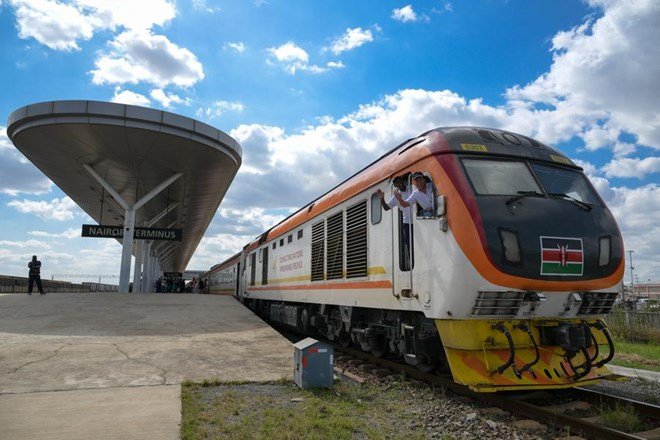
Kenya’s Chinese-built Mombasa–Nairobi Standard Gauge Railway has logged 3,000 days of safe operations, operator Africa Star Railway Operation Company (Afristar) said Sunday. Launched on May 31, 2017, the 472-km line has carried roughly 15.93 million passengers and moved more than 41.96 million tons of cargo, according to the company.
Designed, built, and operated by China Road and Bridge Corporation to Chinese standards, the SGR is Kenya’s first new railway since independence and a flagship of China–Kenya cooperation under the Belt and Road Initiative. Afristar says the line has boosted transport efficiency and added about 1.5% to Kenya’s GDP.
Beyond trains and tonnage, the project has had a sizable jobs and skills footprint: around 74,000 jobs created during construction and operations, and 2,800 Kenyan specialists trained in standard-gauge railway technology. As Afristar put it, the SGR has offered Kenyans a faster, more reliable way to travel while helping local trade pick up speed.









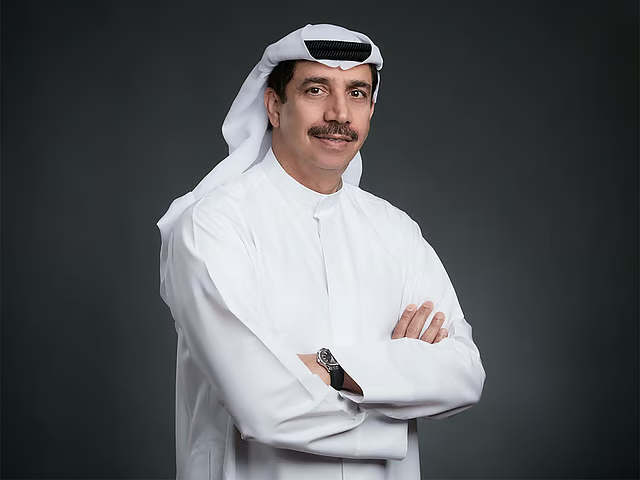
A major reshuffle at one of the world’s largest port operators — DP World names new leadership as it eyes long-term growth.
DP World announced Friday the appointment of Essa Kazim as chairman of its board of directors and Yuvraj Narayan as group chief executive officer, marking a significant leadership transition at the global logistics and port operator.
Kazim, who currently serves as governor of the Dubai International Financial Centre and chairman of Borse Dubai, brings decades of experience in financial and economic policy. He has also held senior roles within Dubai’s regulatory and fiscal institutions, including deputy chairman of the Supreme Legislation Committee and member of the Securities and Exchange Higher Committee.
His career began at the UAE Central Bank in 1988 before moving to the Dubai Department of Economic Development. He later served as director-general and then chairman of the Dubai Financial Market, playing a central role in shaping the emirate’s capital markets.
Narayan, who has been with DP World since 2004 and served as group chief financial officer since 2005, takes the helm after overseeing key strategic and financial initiatives that supported the company’s global expansion. The company credited him with strengthening financial resilience and operational efficiency across international markets.
Before joining DP World, Narayan held senior finance roles at ANZ Group and served as chief financial officer at Salalah Port Services in Oman.
DP World said the appointments align with its long-term strategy for sustainable growth and reinforce its position as an integrated global supply chain provider.
In a related move, Mohammed bin Rashid Al Maktoum issued a decree appointing Abdulla bin Damithan as chairman of the Ports, Customs and Free Zone Corporation, further reshaping leadership within Dubai’s trade and logistics sector.
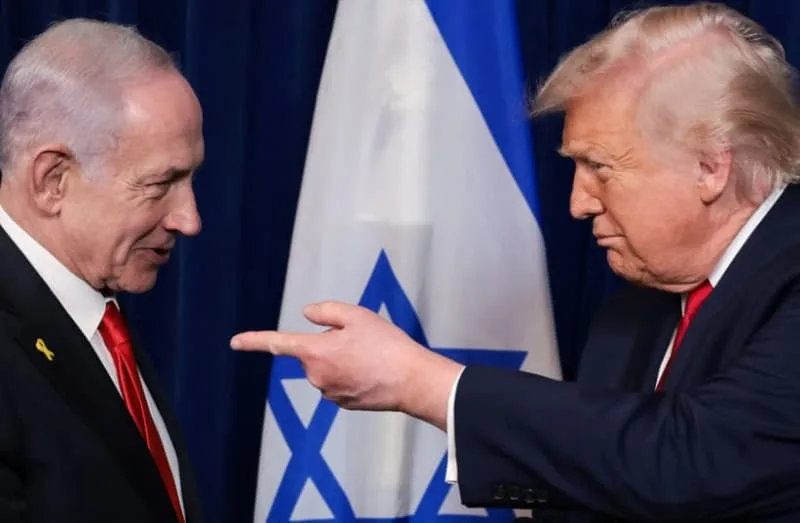
A mid-air moment of diplomacy: Trump calls for Netanyahu’s pardon — Herzog answers at 30,000 feet.
Israeli President Isaac Herzog pushed back Thursday after U.S. President Donald Trump publicly urged him to pardon Prime Minister Benjamin Netanyahu, saying Israel’s decisions are governed by its own laws.
Trump made the remarks during a White House event while Herzog was returning from a four-day visit to Australia. “He should give it,” Trump said, referring to a pardon for Netanyahu. “The people of Israel should really shame him. He’s disgraceful for not giving it.”
According to Israeli officials, Herzog was informed of Trump’s comments mid-flight and convened advisers aboard the plane to craft a response. In a statement issued from the aircraft, the President’s Residence said that any pardon request submitted by Netanyahu is currently under review by Israel’s Justice Ministry for a legal opinion.
“Only after the process is concluded will the president examine the request in accordance with the law, the good of the state, and his conscience — and without any influence from external or internal pressures of any kind,” the statement said.
The statement also expressed appreciation for Trump’s support of Israel’s security but emphasized that Israel is “a sovereign state governed by the rule of law.”
Pressed by reporters traveling with him for a personal reaction, Herzog replied tersely: “To the best of my recollection, I am the president of Israel.”
Netanyahu has been facing ongoing legal proceedings in Israel, and the question of a presidential pardon has drawn intense domestic debate. Herzog has previously said any such request would be handled strictly according to established legal procedures.
The exchange highlights the delicate balance between Israel’s close relationship with Washington and the independence of its judicial and constitutional processes.
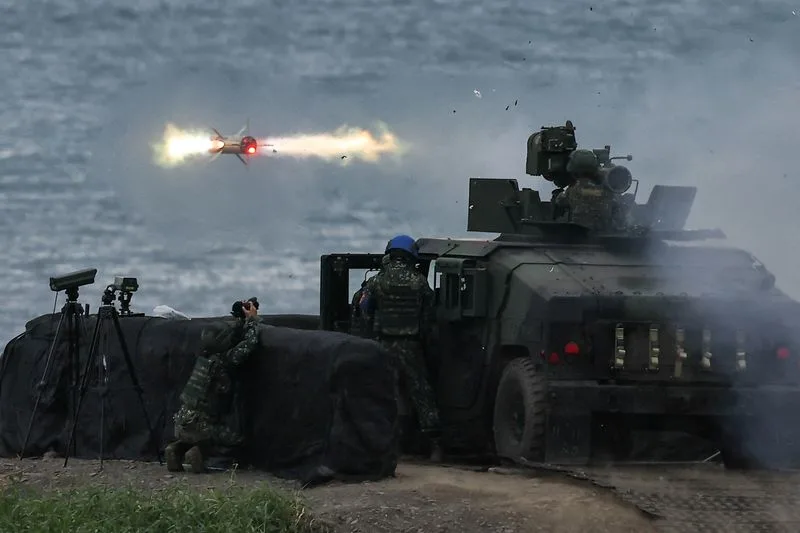
A bipartisan group of 37 U.S. lawmakers has urged Taiwan’s parliament to approve a stalled defense spending package, warning that the threat from China is intensifying.
In a letter addressed to Legislative Speaker Han Kuo-yu and leaders of Taiwan’s main political parties, the lawmakers said Beijing’s pressure on the island “has never been greater.” The letter cited Chinese President Xi Jinping and accused China of using all elements of its national power to assert control over Taiwan.
President Lai Ching-te last year proposed roughly $40 billion in additional defense spending to strengthen Taiwan’s military capabilities and accelerate U.S. weapons purchases. But opposition parties, including the Kuomintang and the Taiwan People’s Party, which control a majority in parliament, have declined to review the full proposal, advancing smaller alternatives instead.
The U.S. lawmakers acknowledged delays in American weapons deliveries but said Taiwan must also increase its own investment to maintain credible deterrence.
Taiwan’s defense minister has warned that further delays could weaken coordination with Washington. The United States remains Taiwan’s primary security partner despite the absence of formal diplomatic ties.
China considers Taiwan part of its territory and has not ruled out the use of force to bring the island under its control.
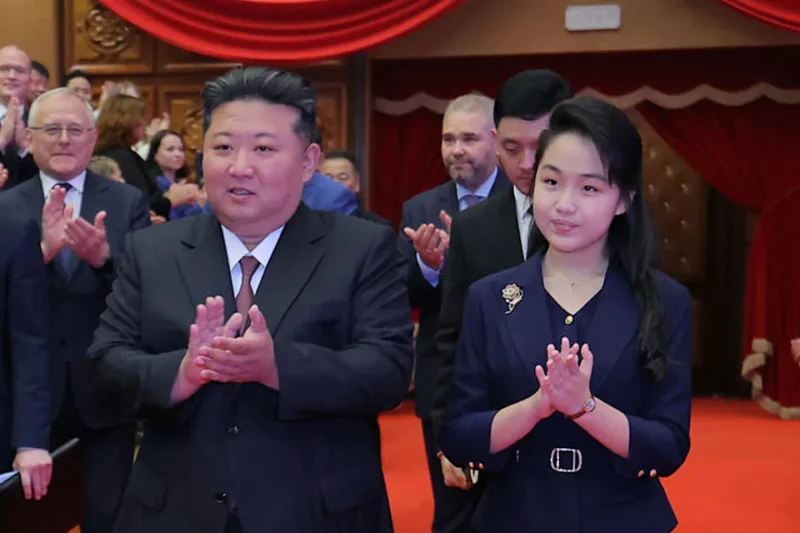
A missile launch debut. A mausoleum visit. A party congress ahead. Is North Korea preparing its next ruler?
South Korea’s intelligence agency told lawmakers Thursday that it believes the teenage daughter of North Korean leader Kim Jong Un is approaching formal recognition as his successor, signaling a potential fourth generation of dynastic rule in Pyongyang.
In a closed-door briefing, the National Intelligence Service said Kim’s daughter — widely believed to be named Kim Ju Ae and around 13 years old — appears to be entering what officials described as a “successor-designate stage.” The assessment marks a notable shift from earlier descriptions of her being in “successor training.”
The timing is significant. North Korea is preparing for a major congress of the Workers’ Party of Korea later this month, where Kim is expected to outline five-year policy goals and consolidate his authority. Lawmakers briefed by the agency said intelligence officials are closely watching whether the girl appears alongside her father before thousands of party delegates — a symbolic gesture that could carry political weight.
Kim Ju Ae first appeared publicly at a long-range missile test in November 2022. Since then, she has accompanied her father to high-profile military parades, weapons inspections and factory openings. Her presence at a summit in Beijing last year and, more recently, at Pyongyang’s Kumsusan Palace of the Sun — the mausoleum housing the embalmed bodies of Kim Il Sung and Kim Jong Il — intensified speculation that she is being positioned as heir.
North Korea has never publicly confirmed her name, referring to her only as Kim’s “most beloved” or “respected” child. The belief that she is Kim Ju Ae stems from remarks by former NBA star Dennis Rodman, who said he held Kim’s infant daughter during a 2013 visit.
For decades, North Korea’s leadership has passed exclusively through male members of the Kim family. Analysts previously questioned whether the country’s deeply patriarchal political culture would accept a female successor. But her increasingly prominent role in state propaganda has prompted reassessment.
Some experts argue that Kim Jong Un’s own abrupt ascent — formally designated heir at 26 after his father suffered a stroke — may influence his approach. Introducing a successor early could provide greater continuity and stability.
Whether the upcoming party congress formalizes her status remains uncertain. Formal party rules set age thresholds for senior posts, suggesting any confirmation could be subtle rather than explicit. Observers say language praising the “inheritance of the revolution” could serve as an indirect signal.
If confirmed, the move would reinforce the Kim dynasty’s grip on power, extending a lineage that has ruled the isolated state since 1948 — and reshaping the future of one of the world’s most tightly controlled political systems.
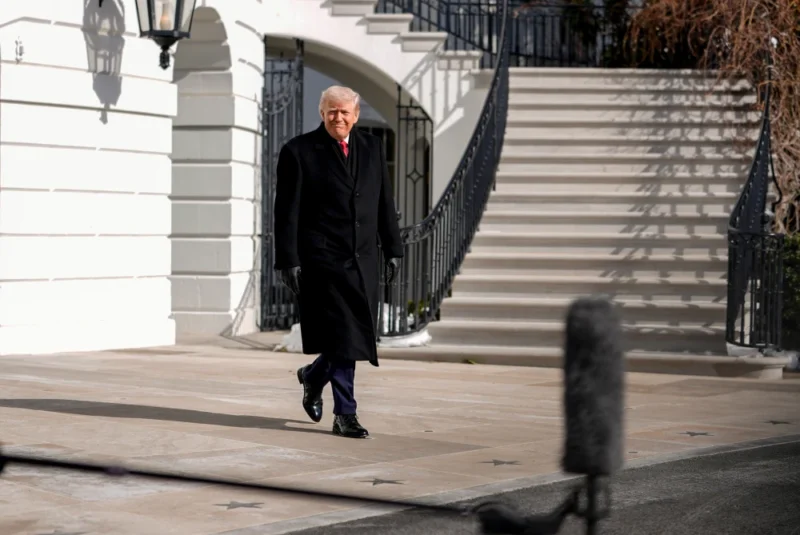
A bipartisan tradition turns political. Why are two Democratic governors excluded from Trump’s White House invite list?
President Donald Trump said Wednesday that he has invited nearly every U.S. governor — Democrat and Republican alike — to a long-standing bipartisan meeting at the White House next week, carving out two exceptions: Maryland Gov. Wes Moore and Colorado Gov. Jared Polis.
The annual session, organized in connection with the National Governors Association (NGA), has traditionally served as a rare moment of cross-party dialogue between state leaders and the president. This year’s gathering, scheduled for Feb. 20, instead ignited confusion and partisan friction.
In a post on Truth Social, Trump asserted that invitations “were sent to ALL governors” except Moore and Polis. He also criticized Oklahoma Gov. Kevin Stitt, the NGA chair, calling him a “RINO” — Republican in name only — and accusing him of misrepresenting the White House’s position.
Trump’s statement appeared to contradict earlier communications from NGA officials. Last week, the group said it had been informed by the White House that only Republican governors would be invited to the Feb. 20 business meeting. As a result, NGA leaders said they removed the event from their formal agenda, citing the association’s bipartisan mission.
Shortly before Trump’s post, NGA Chief Executive Brandon Tatum said Stitt had spoken with the White House and that all governors from “all 55 states and territories” would attend. In an email obtained by NBC News, Stitt told fellow governors that Trump had been “very clear” that the event was intended for the full NGA membership and that a scheduling misunderstanding had been addressed.
Complicating matters further, a source familiar with the situation said Moore had received an invitation Wednesday afternoon, prior to Trump’s public statement. A spokesperson for Polis declined to confirm whether Colorado had been formally invited, but said the governor remained focused on bipartisan cooperation regardless of the administration’s posture.
The status of a separate governors’ dinner, typically held alongside the business session, remains uncertain.
The dispute underscores how even routine Washington traditions can become flashpoints in an era of heightened political polarization. What was once a symbolic display of federal-state partnership has, at least for now, become another test of party lines — and presidential messaging.
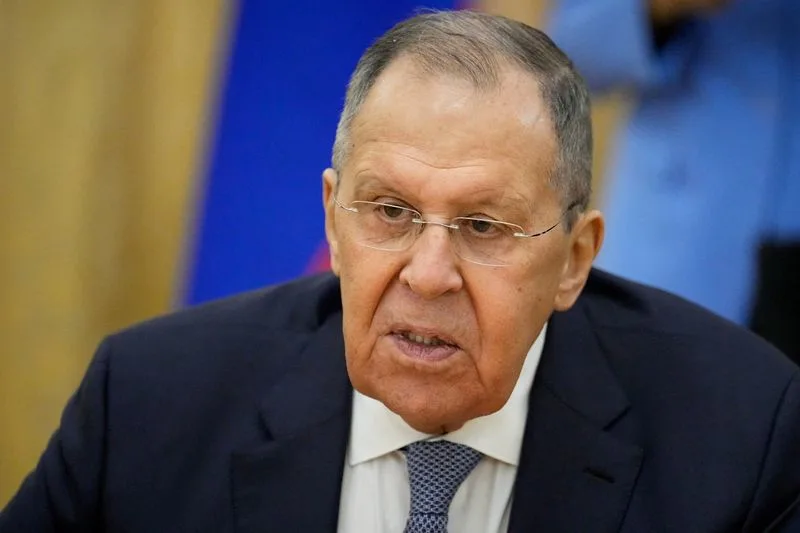
The last guardrail is gone. Russia says it will show restraint — but only if Washington does the same.
Russia said Wednesday it would continue observing the missile and warhead ceilings set under the now-expired New START agreement — provided the United States does not exceed those limits.
Speaking before the State Duma, Foreign Minister Sergei Lavrov described Moscow’s position as a conditional moratorium. “Our position is that this moratorium on our side that was declared by the president is still in place, but only as long as the United States doesn’t exceed the said limits,” he said.
The 2010 treaty formally expired on February 5, removing binding constraints on the world’s two largest nuclear arsenals for the first time in more than 50 years. The lapse has fueled concerns among arms-control advocates about a renewed strategic competition — potentially involving not only Washington and Moscow but also Beijing, whose nuclear stockpile remains smaller but is expanding rapidly.
U.S. President Donald Trump declined an offer from Russian President Vladimir Putin to voluntarily extend adherence to the treaty’s limits for another year. Trump said he preferred negotiating what he described as a “new, improved and modernized” agreement rather than prolonging the existing framework.
Lavrov suggested Moscow believes Washington has little immediate incentive to break from the treaty’s numerical thresholds, though he did not detail the intelligence underpinning that assessment. He also renewed calls for a broader “strategic dialogue,” saying such talks were “long overdue.”
Analysts say Russia’s pledge leaves important gaps. Georgia Cole, a security analyst at Chatham House in London, noted that Moscow remains free to continue developing nuclear systems that were not covered under New START’s scope. At the same time, she said, the Kremlin’s conditional restraint allows it to frame the United States as the destabilizing actor should Washington move to expand its arsenal beyond previous limits.
Economic considerations may also shape Moscow’s approach. Russia’s budget remains under strain from its prolonged war in Ukraine. A full-scale nuclear buildup would carry significant financial costs, even if the Kremlin sought to match any major U.S. expansion.
If hostilities in Ukraine ease, more resources could shift toward strategic forces. Yet rebuilding conventional capabilities would also compete for funding. For now, both sides appear to be signaling caution — even as the formal architecture that once enforced it has disappeared.

Iran Rules Out Broader Talks as Trump Signals Possible Second Carrier Deployment.
Iran said Wednesday it is willing to negotiate with the United States over its nuclear program but firmly rejected expanding talks to include its ballistic missile arsenal, drawing a clear line as diplomatic efforts intensify and military pressure mounts in the region.
President Masoud Pezeshkian, speaking in Tehran during ceremonies marking the anniversary of the 1979 Islamic Revolution, reiterated that Iran is not seeking nuclear weapons and is prepared to accept verification measures. At the same time, senior Iranian officials made clear that missile capabilities and broader defense issues remain off the table.
“We are not seeking nuclear weapons and we are ready for any kind of verification,” Pezeshkian told crowds gathered in the capital. But advisers to Supreme Leader Ayatollah Ali Khamenei emphasized that Iran’s missile program is non-negotiable, describing it as a core component of national defense.
The remarks come as President Donald Trump increases both diplomatic outreach and military signaling. The USS Abraham Lincoln aircraft carrier is already operating in the region, and Trump indicated this week that a second carrier group could be deployed if negotiations falter.
“We have an armada that is heading there and another one might be going,” Trump said in an interview, warning that time is “running out” for Tehran to reach what he described as a fair agreement.
The escalating rhetoric coincides with renewed talks between U.S. and Iranian officials, including a recent round of discussions in Oman. While Trump has said negotiations are underway, he has also warned that failure to reach a deal could result in decisive military action.
Israeli Prime Minister Benjamin Netanyahu, who met Trump in Washington, is expected to press for any agreement to address not only Iran’s nuclear activities but also its expanding ballistic missile stockpiles and support for regional proxy groups. Israeli officials view Iran’s missile arsenal as a direct and immediate threat, particularly after last year’s 12-day conflict between the two countries.
Iranian leaders, however, have rejected linking missile discussions to nuclear negotiations. Foreign Minister Abbas Araghchi said earlier this week that while nuclear talks are possible, Iran’s defense capabilities “will never be negotiated.”
Tensions have been further heightened by domestic unrest inside Iran. Nationwide protests erupted in late December over rising living costs before evolving into broader anti-government demonstrations. Human rights groups report thousands of deaths during the crackdown, though official figures released by Iranian authorities are significantly lower. Independent verification of casualty numbers remains difficult.
As the diplomatic track continues, both sides are balancing pressure and positioning. Washington has expanded its military presence in the Middle East, while Tehran has warned that any attack would trigger a regional confrontation. Iranian military leaders say forces are on high alert.
Despite the hardened rhetoric, officials in both capitals have signaled that negotiations remain possible. The coming weeks are likely to determine whether talks yield a limited nuclear understanding or whether escalating military deployments push the crisis toward a more dangerous phase.
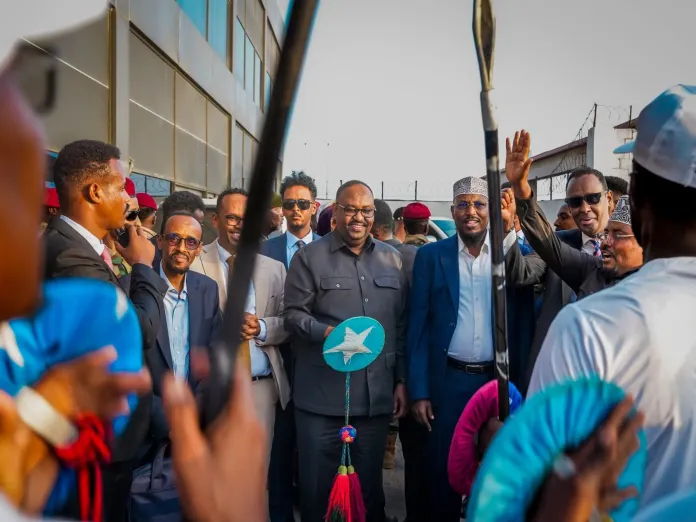
Puntland President Said Abdullahi Deni and Jubaland President Ahmed Mohamed Islam arrived in Mogadishu on Tuesday, marking a rare joint return to the capital after a prolonged political standoff with the federal government.
President Deni landed at Aden Adde International Airport accompanied by a delegation that included security officials. He was received by members of parliament, senators, opposition figures and representatives of civil society before being escorted to his residence at the Halane camp.
His arrival followed that of President Ahmed Madobe, who reached Mogadishu earlier in the day after an absence of roughly 18 months. Madobe was similarly welcomed by senior officials and community representatives at the airport.
Both leaders are attending a conference convened by Somali President Hassan Sheikh Mohamud, bringing together Villa Somalia and members of the Future Council. The talks are expected to focus on national priorities, including elections, constitutional disputes, unity, security, the fight against Al-Shabaab and the broader governance crisis.
Deni and Madobe have largely stayed away from Mogadishu in recent years due to escalating tensions with the federal government, which at times led to a breakdown in cooperation between the centre and key federal member states.
The conference, scheduled to begin imminently, is being closely watched as a potential turning point in strained federal-state relations. Both presidents are expected to address the media and outline their positions as discussions get under way.

U.S. Sends Ford to Gulf as Iran Standoff Intensifies

DP World Appoints Essa Kazim as Chairman

Addis Ababa at the Center of Africa’s Future as Ethiopia Hosts AU Leaders


-
 Interagency Assessment2 months ago
TOP SECRET SHIFT: U.S. MILITARY ORDERED INTO SOMALILAND BY LAW
-
 Somaliland4 months ago
Somaliland Recognition: US, UK, Israel, and Gulf Bloc Poised for Historic Shift
-
 Minnesota1 month ago
Fraud Allegations Close In on Somalia’s Top Diplomats
-

 Middle East2 months ago
Saudi Arabia vs. UAE: How The Gulf Rivalry is Heating Up
-

 American Somali3 months ago
Why Frey Won a Significant Share of the Somali Vote Against a Somali Opponent
-
 Middle East2 months ago
Turkey’s Syria Radar Plan Triggers Israeli Red Lines
-

 Editor's Pick2 months ago
Why India Is Poised to Become the Next Major Power to Recognize Somaliland
-

 The Million-Follower Exile2 months ago
Why America Deported Its Most Famous Somali TikTok Star And Who Paid The Price