Defending the High Seas: U.S. Airstrikes Target Houthis in Bid to Secure Maritime Routes.
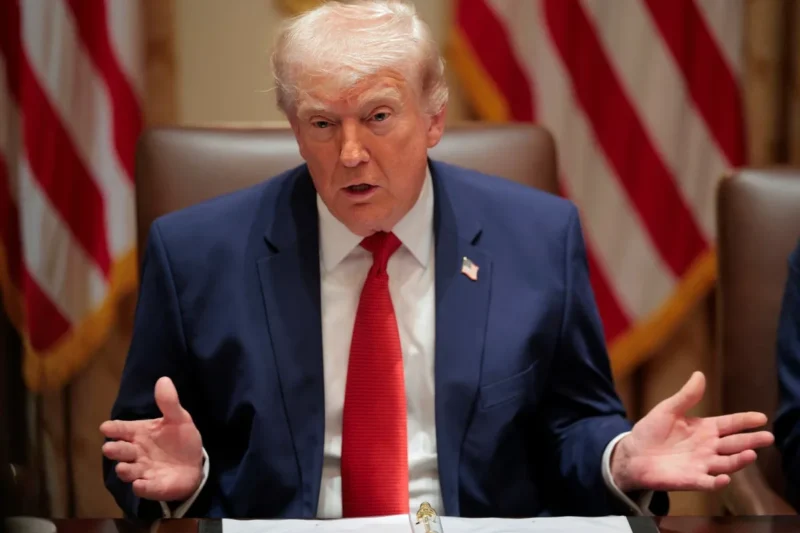
The recent airstrikes ordered by President Donald Trump on Houthi-held areas in Yemen represent a significant escalation in the U.S. military’s engagement in the region, marking a robust response to the Iranian-backed Houthi rebels’ continued assaults on international shipping lanes. This aggressive stance underscores Trump’s commitment to using “overwhelming lethal force” to secure vital maritime corridors and protect U.S. and international interests from Houthi disruptions.
This military action comes at a time when the U.S. is looking to reinforce its stance against Iran’s expansionist policies in the Middle East, particularly its support for proxy groups like the Houthis. The timing of these strikes is critical, following an offer for bilateral talks aimed at curtailing Iran’s nuclear ambitions—an offer juxtaposed starkly against military actions signaling a readiness to use force if diplomatic efforts falter.
The airstrikes targeted multiple locations including the Houthi stronghold provinces of Sanaa and Saada, as well as strategic military sites across Hodeida, Bayda, and Marib. The operations were a direct consequence of the Houthis’ resumed threats to international shipping, particularly their recent vows to attack Israeli vessels in response to Israeli actions in Gaza. Such provocations have seen the Houthis increasingly portray themselves as defenders of Palestinian causes, aiming to win regional support and justify their actions on a larger ideological battleground.
The use of such heavy military assets by the U.S., including the deployment of the USS Harry S. Truman carrier strike group, underscores the seriousness with which the Trump administration views the Houthi threat to both regional stability and the safety of maritime trade routes. These routes are vital not just to the U.S. but to the global economy, with billions of dollars and critical energy supplies passing through the waters affected by Houthi activities.
The civilian casualties reported, however, highlight the complex ethical and strategic dilemmas faced by such military interventions. While aiming to neutralize threats, the strikes have also inflicted suffering on the Yemeni populace, complicating the narrative around U.S. actions and potentially fueling further anti-American sentiment in the region.
Furthermore, the direct military action against the Houthis, independent of broader coalition efforts, marks a significant policy shift in the U.S. approach under Trump’s administration. This move away from collaborative regional defense strategies towards unilateral military actions could have far-reaching implications for U.S. relations with Middle Eastern allies and the dynamics of regional conflict.
Looking ahead, the sustainability and effectiveness of such military responses remain in question. While they might deter immediate Houthi aggression, they do not address the underlying political and humanitarian crises in Yemen that fuel such conflicts. Nor do they necessarily curb Iran’s influence in the region, which continues to leverage proxy groups to assert its power.
In conclusion, while the immediate impacts of the airstrikes on Houthi military capabilities are apparent, the broader consequences for regional politics, U.S. foreign policy, and Yemeni civilian lives are complex and uncertain. The Trump administration’s strategy seems to be a gamble, betting that a show of force will lead to a strategic advantage, but at what long-term cost remains to be seen.