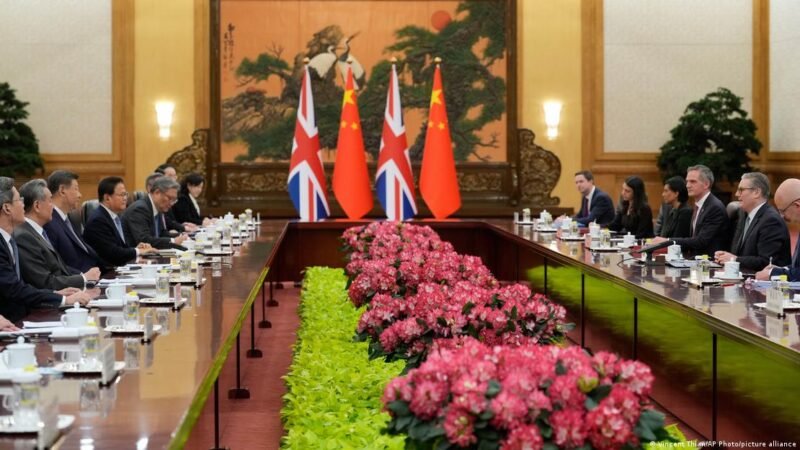
As Europe faces a watershed moment in its defense strategy, the aftermath of the London summit has left more questions than answers. The assembly of world leaders, noticeably absent U.S. President Donald Trump, grappled with the evolving dynamics of the Western defense alliance and the apparent withdrawal of American reliability under Trump’s administration.
The discussions, spurred by Trump’s harsh critique of Ukrainian President Volodymyr Zelenskyy, have sparked a renewed urgency across the continent. European leaders are now poised to recalibrate their defense strategies independent of the U.S., a shift underscored by U.K. Prime Minister Keir Starmer’s assertion that Europe must now shoulder the responsibility of safeguarding Ukraine against Russian aggression.
This call to action reflects a significant pivot from reliance on American military might to a more autonomous European defense posture. The proposed U.K.-French-led peacekeeping initiative, termed a “coalition of the willing,” symbolizes this shift, aiming to enforce peace without assured American backup.
However, as Europe gears up for a decisive defense summit in Brussels, there remains a stark gap between the leaders’ resolute declarations and the tangible details needed to actualize these ambitions. French President Emmanuel Macron’s call for increased defense spending to 3 to 3.5 percent of GDP underscores the urgency but also highlights the challenges of scaling up military budgets swiftly.
The critical Brussels meeting is expected to be a linchpin for Europe’s future military and strategic orientation. It will test the continent’s resolve to transcend traditional reliance on U.S. security guarantees and to confront emerging threats with a unified stance. However, internal divisions, such as Hungarian Prime Minister Victor Orbán’s sympathetic stance towards Russia, could complicate consensus.
As Europe stands at this crossroads, the outcomes of this week’s discussions will be pivotal in defining the continent’s defense trajectory and its capacity to navigate the complex geopolitical landscapes without the accustomed support of the United States. The stakes are high, and the world watches as Europe attempts to forge a path towards greater self-reliance in defense matters, a path fraught with both opportunity and peril.