A heated exchange between President Trump and Ukrainian President Zelenskyy disrupts peace talks, highlighting deep divisions.
A highly anticipated meeting at the White House between President Donald Trump and Ukrainian President Volodymyr Zelenskyy rapidly devolved into a contentious altercation, overshadowing discussions on a ceasefire and a potential minerals deal. The confrontation not only strained diplomatic relations but also cast doubt on the future of U.S.-Ukraine cooperation.
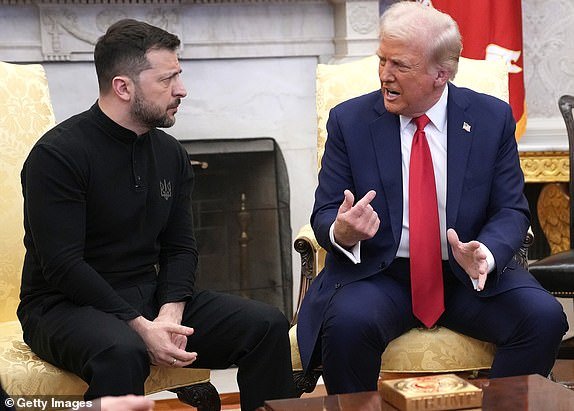
The meeting, intended to solidify a strategic minerals deal and discuss peace efforts in Ukraine, took a dramatic turn approximately 40 minutes in. Trump accused Zelenskyy of “gambling with World War III” and disrespecting the United States, a sentiment echoed by Vice President J.D. Vance who criticized Zelenskyy for not showing sufficient gratitude for American support.
At one point, the discussion became physical when Trump reportedly shoved Zelenskyy in an attempt to emphasize his point about the critical role of U.S. military aid to Ukraine. This unprecedented physical interaction marked a significant escalation in what was already a tense encounter.
The meeting ended abruptly without the planned joint press conference. Instead, a visibly upset delegation of Ukrainian officials quickly exited the White House, with Zelenskyy leaving in his motorcade shortly thereafter. The White House did not conduct the usual ceremonial send-off, indicating the serious nature of the diplomatic breakdown.
This confrontation has potentially far-reaching implications for U.S.-Ukraine relations and the broader geopolitical landscape. Trump’s insistence on tying support for Ukraine to economic concessions and his direct negotiations with Russia without Kyiv or European allies present a significant shift in U.S. foreign policy. Furthermore, his approach raises questions about the reliability of U.S. support for its allies under his administration.
Experts suggest that this breakdown in diplomacy could lead to a cooling of relations between the U.S. and Ukraine at a critical time when unified support against Russian aggression is paramount. The incident also reflects internal U.S. political dynamics, where Trump’s aggressive negotiation style and focus on transactional relationships continue to influence his foreign policy decisions.
As the situation develops, the international community remains watchful of how these events will affect the ongoing conflict in Ukraine and the stability of international diplomatic relations.