
Analysis
SSC-Khatumo Declares War for Erigavo Amid Geopolitical Shifts Undermining Somaliland


Rising tensions as SSC-Khatumo leader Abdulqadir Ahmed Aw-Ali vows military action to capture Sanaag’s capital; Somaliland faces diplomatic isolation after Ankara Agreement.
The leader of SSC-Khatumo, Abdulqadir Ahmed Aw-Ali (Firdhiye), has escalated the conflict by declaring a military campaign to capture Erigavo, the capital of the Sanaag region, from Somaliland forces. Speaking at a gathering in Lasanood, Firdhiye urged the SSC-Khatumo community to mobilize for what he called a decisive struggle for land and self-determination.
This declaration comes amid mounting tensions in the region. Firdhiye accused Somaliland forces of targeting local communities and vowed to expel them from Erigavo and other areas. His call for war follows recent skirmishes in Erigavo and highlights the growing instability in Somaliland’s eastern territories.
At the same time, Somaliland faces a significant geopolitical setback in the wake of the Ankara Agreement, which has further marginalized its position. The deal, signed by Somali President Hassan Sheikh Mohamud and Ethiopian Prime Minister Abiy Ahmed, grants Ethiopia access to the sea via Somaliland’s port of Saylac. The arrangement, which includes the establishment of Ethiopian military and commercial facilities, effectively sidelines Somaliland and diminishes its regional influence.
The agreement has provoked outrage within Somaliland and among Red Sea nations such as Egypt, Djibouti, and Eritrea, who view Ethiopia’s military presence in Saylac as a violation of sovereignty. Egypt, in particular, has strongly opposed the move, warning of its implications for Red Sea security.
Moreover, Ethiopia and Somalia have downgraded Ethiopia’s diplomatic presence in Somaliland, closing the Ethiopian Embassy in Hargeisa and transitioning it into a consulate under Mogadishu’s authority. This symbolic shift reflects Somaliland’s diminishing recognition on the international stage.
These developments highlight the precarious position Somaliland finds itself in. Domestically, it is grappling with insurgencies like SSC-Khatumo, while externally, it faces diplomatic isolation and erosion of its autonomy. For Somaliland, the convergence of internal strife and geopolitical marginalization poses an existential challenge to its long-standing quest for independence and self-governance.
The coming months will test Somaliland’s resilience as it seeks to navigate escalating conflicts and assert its legitimacy in an increasingly hostile regional environment.



















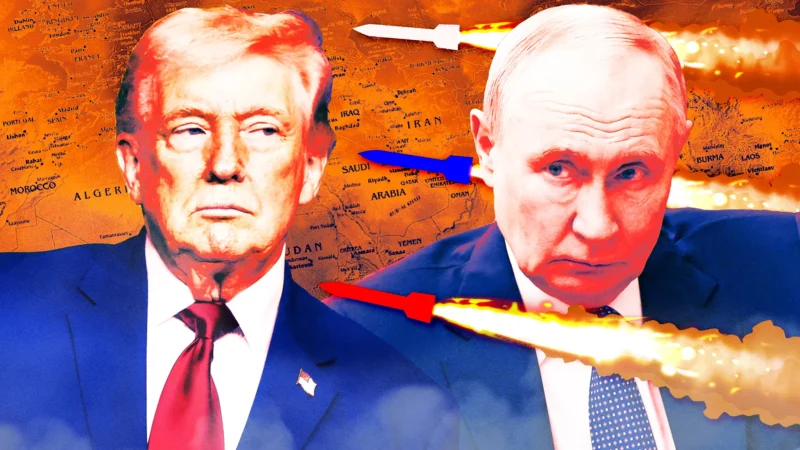
As Moscow Deepens Support for Tehran, the Iran Conflict Risks Becoming a Direct U.S.–Russia Confrontation.
If Russia is helping Iran target U.S. forces, this isn’t just a Middle East war anymore — it’s something far more dangerous.
The most unsettling question about the war with Iran is no longer how it ends in Tehran, but whether it quietly expands toward Moscow.
Reports that Russia is supplying Iran with intelligence, satellite imagery and technical guidance on drone warfare suggest the conflict may be evolving into something Washington has long tried to avoid: a proxy confrontation with a nuclear power.
For decades, U.S. presidents have sought to prevent exactly this scenario. From the Bay of Pigs fiasco in 1961 to the Cuban Missile Crisis that followed, American leaders learned how quickly regional miscalculations can escalate into global standoffs.
President John F. Kennedy ultimately defused that crisis through restraint and backchannel diplomacy, aware that nuclear brinkmanship leaves little margin for error.
Today, the geopolitical terrain is more fragmented — and arguably more volatile.
If Moscow is indeed sharing battlefield insights with Tehran, including expertise on Shahed-style drones that Russia has used extensively in Ukraine, then the Kremlin is no longer a distant observer. It becomes an indirect participant in a conflict where American forces are deployed and already absorbing casualties.
That changes the strategic equation.
President Donald Trump has publicly described his conversations with Vladimir Putin as constructive, even suggesting the Russian leader wants to be “helpful” on the Middle East. Yet intelligence-sharing allegations, if accurate, undermine the premise that Moscow is neutral — let alone cooperative.
Russia has incentives to prolong the crisis. A widening Middle East war diverts Western focus from Ukraine, complicates NATO coordination, and strains global energy markets. It also places Washington in the uncomfortable position of confronting two adversarial theaters at once.
The deeper risk lies in escalation dynamics. Proxy wars often begin with deniable support — intelligence feeds, weapons transfers, tactical advice — before evolving into direct confrontation. The United States and the Soviet Union spent decades managing that risk in Vietnam, Afghanistan and across the Cold War periphery.
But today’s environment lacks the stabilizing guardrails of structured superpower diplomacy. Communication channels are thinner. Mutual trust is minimal. Domestic political pressures are higher.
If Iranian forces, bolstered by Russian expertise, inflict sustained harm on U.S. troops or Gulf allies, the pressure for retaliation could expand beyond Iran itself. Conversely, if Washington escalates against Tehran while Moscow feels strategically cornered in Ukraine, retaliation could take asymmetric forms elsewhere.
This is how great-power entanglements grow — not through deliberate design, but through cumulative miscalculation.
The Iran war may have begun as a targeted campaign against nuclear and military infrastructure. Yet the emerging Russian dimension introduces a second layer of confrontation, one that reaches beyond the Gulf.
The frightening possibility is not simply a prolonged regional war. It is the normalization of a U.S.–Russia proxy battlefield in the Middle East — with nuclear-armed states once again testing each other’s limits.
History suggests such moments demand caution, clarity and disciplined diplomacy.
Whether those qualities prevail now will determine whether this conflict remains regional — or becomes something far harder to contain.
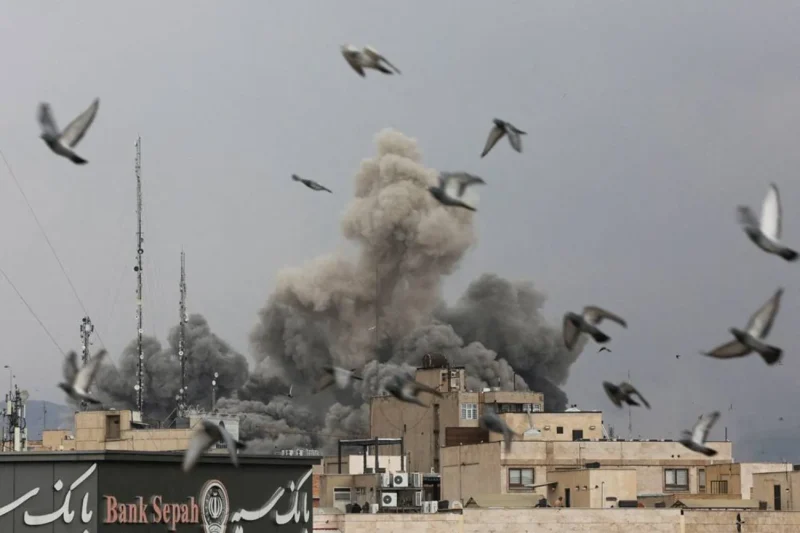
This isn’t just another Middle East war. It may be the moment the post–Cold War world finally gives way to something harsher.
How the U.S.-Israeli Campaign Could Accelerate the Collapse of Post–Cold War Stability.
The war against Iran was presented in Washington and Jerusalem as a defensive necessity — a move to eliminate a nuclear threat before it materialized. U.S. and Israeli officials argued that Tehran was edging dangerously close to weapons capability. Yet as the bombing campaign unfolded, it became clear that nuclear concerns were only part of a larger geopolitical reckoning.
This conflict is not simply another chapter in the Middle East’s long history of violence. It may represent the next phase in a transformation that began in 1991, when the United States launched Operation Desert Storm and, almost simultaneously, the Soviet Union collapsed. That moment marked the beginning of what many called the “unipolar era” — a period of unrivaled American dominance.
The decades that followed were defined by intervention and instability: the wars in Afghanistan and Iraq, the upheavals of the Arab Spring, the Libyan intervention, the Syrian civil war. Each crisis drew in new actors. Each reshaped regional balances. And each left behind unresolved consequences.
Now, the confrontation with Iran pushes that trajectory further.
Donald Trump had campaigned on reducing American entanglements abroad. Yet Iran posed a different challenge. It is not a peripheral actor but a central pillar of regional politics — a state of nearly 90 million people with deep influence across Lebanon, Iraq, Syria and Yemen. Attempting to dismantle such a power inevitably alters the entire system.
In Tel Aviv, Prime Minister Benjamin Netanyahu has framed the campaign as a historic opportunity to eliminate a long-standing threat.
In Washington, some believed a sharp, decisive blow might trigger internal collapse in Tehran. But rapid regime implosion has not occurred. Instead, the conflict has widened, energy routes have been disrupted, and the global economy has absorbed fresh shocks.
The deeper impact may lie in the norms being reshaped. The targeted killing of Iran’s supreme leader marked a dramatic escalation in statecraft. What was once reserved for non-state militant leaders has now been applied to the head of a sovereign state. That precedent will not be forgotten.
Nor will the erosion of multilateral procedure. Where past interventions at least sought the veneer of United Nations backing, today force is justified openly through necessity and strength. International law appears increasingly secondary to strategic calculation.
For many governments watching from afar, the lesson may be stark: nuclear deterrence is no longer optional insurance but essential political survival. Countries that feel vulnerable could accelerate their own military programs, deepening a cycle of proliferation.
At the same time, a new regional architecture may be taking shape. One pillar would be Israeli military predominance. Another would be tighter economic integration between Israel and Gulf monarchies, with the United States positioned as guarantor and beneficiary.
Türkiye remains an independent actor, yet still embedded within NATO structures.
But history offers caution. The collapse of Iraq’s regime in 2003 produced not stability but prolonged chaos. Even if Iran’s leadership were weakened or transformed, the aftermath could prove more destabilizing than the war itself.
The broader trend is unmistakable. Power politics is resurging. Bilateral leverage is favored over multilateral consensus. Military capability is again central to national strategy.
The post–Cold War order, built on assumptions of liberal expansion and cooperative security, appears increasingly fragile. Replacing it with something durable will require more than force.
The war on Iran may not only redraw the Middle East. It may accelerate the transition to a harsher global era — one in which strength defines security, deterrence defines survival, and the old rules no longer reliably apply.
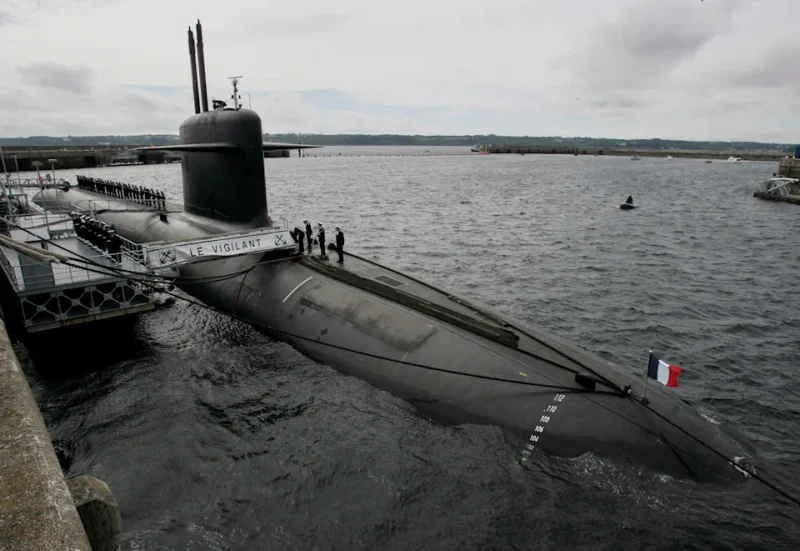
As US-Israeli Strikes Continue, Questions Grow Over Whether Any Regional Force Would Risk a Ground War.
Airstrikes can punish. But who would actually march into Iran?
After the first week of sustained US-Israeli airstrikes on Iran, one conclusion is difficult to avoid: regime change from the sky alone appears unlikely. If Washington were to pursue a decisive outcome, it would face an uncomfortable question — who, exactly, would provide the boots on the ground?
The United States shows no appetite for a large-scale invasion. That leaves the possibility of regional intermediaries. Yet each potential candidate comes with steep risks.
The Kurdish Factor
The Iraqi Kurds are often mentioned first. The Peshmerga, the armed forces of Iraq’s autonomous Kurdish region, are battle-tested and geographically positioned near Iran’s Kurdish provinces. Kurdish communities span both sides of the border, and unrest in those areas has periodically flared.
But a Kurdish push into Iran would face severe limitations. The Peshmerga is not a unified national army but a collection of factions with limited heavy weaponry. Even if Iranian Kurds offered support, advancing far beyond border regions would be improbable without substantial external backing.
There is also the political hazard. Kurdish forces entering Iran could provoke backlash not only from Tehran but from Baghdad, with whom relations remain delicate. A cross-border campaign could destabilize northern Iraq itself.
Azerbaijan’s Calculus
Another name circulating in regional speculation is Azerbaijan. Northern Iran is home to millions of ethnic Azeris, raising the theoretical prospect of nationalist leverage. Yet direct Azerbaijani involvement would expose Baku’s critical energy infrastructure in the Caspian Sea to retaliation. Oil exports are Azerbaijan’s economic lifeline. A war with Iran would threaten that foundation.
At most, limited border maneuvers aimed at securing strategic corridors seem conceivable — but a full-scale invasion would be a far more dangerous gamble.
Pakistan and the Gulf States
Pakistan shares a border with Iran and has historically managed a complex relationship with Tehran. But Islamabad faces its own internal security pressures and economic fragility. Direct intervention would risk igniting sectarian tensions at home.
Gulf Arab states, meanwhile, have already been targeted by Iranian missiles. Their priority remains de-escalation and protection of energy infrastructure. Joining a ground invasion would upend decades of cautious regional balancing.
The Strait of Hormuz
Much hinges on maritime control. If US and Israeli forces can reopen and secure the Strait of Hormuz — through which roughly a fifth of global oil flows — Tehran would lose a powerful lever. A reopened strait would blunt Iran’s economic and strategic leverage, reducing pressure for a land campaign.
The Proxy Dimension
An expanded war could invite outside powers. Russia might provide logistical or technical support; China could extend financial lifelines. Yet neither appears eager for direct confrontation. Beijing, in particular, relies heavily on Gulf energy flows and would risk economic blowback from prolonged disruption.
For now, no regional army appears ready — or able — to carry out a large-scale invasion on Washington’s behalf. The gap between aerial dominance and political transformation remains wide.
Air power can weaken, disrupt, and signal resolve. But absent a willing ground force, the path from bombardment to regime change is far from straightforward.
In that sense, the central question may not be who could invade Iran — but who would dare.
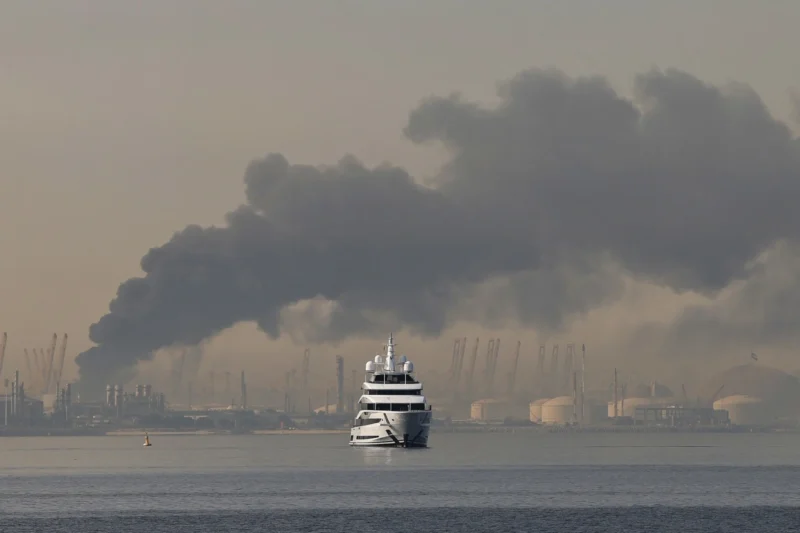
When your skyline becomes a battlefield, can you still claim neutrality?
When Iranian missiles and drones struck cities from Dubai to Doha, they shattered more than glass towers and airport terminals. They punctured the Gulf’s most valuable asset: its reputation as a safe haven in a volatile region.
For decades, the Gulf Cooperation Council (GCC) states have marketed themselves as islands of stability — hubs of finance, tourism and diplomacy insulated from Middle Eastern turmoil. Now, smoke over their skylines has forced a stark question: Do they retaliate and risk being seen as fighting alongside Israel, or do they absorb the blows and appear unable to defend their sovereignty?
The dilemma is acute. Sheikh Hamad bin Jassim bin Jaber Al Thani, Qatar’s former prime minister, warned publicly that Gulf states “must not be dragged into a direct confrontation with Iran,” even while acknowledging Tehran’s violation of their sovereignty. His message reflected a broader regional instinct: this is not our war.
Indeed, Gulf leaders had worked to prevent this escalation. Oman was mediating indirect talks between Washington and Tehran. Gulf capitals lobbied against the use of their bases for offensive operations. They sought de-escalation, not entanglement.
Yet missiles have a way of collapsing diplomatic nuance.
Analysts describe the Gulf position as a strategic trap. Joining the fight alongside the United States and Israel risks inflaming domestic opinion and undermining regional legitimacy. Remaining passive risks projecting weakness — a dangerous image for governments whose authority rests heavily on security and prosperity.
Public expectations matter. Seeing Manama, Dubai or Doha hit by missiles carries a psychological weight akin to an attack on major Western cities. Leaders must be seen as protecting their populations. But they also understand that direct confrontation with Iran could devastate infrastructure on which their survival depends: energy terminals, desalination plants, power grids.
The nightmare scenario is not symbolic damage. It is sustained attacks on the infrastructure that keeps the Gulf habitable and profitable.
A potential middle path is emerging. Rather than simply opening airspace to U.S. or Israeli forces, Gulf states could respond collectively, through mechanisms such as the Peninsula Shield Force, asserting agency rather than appearing subordinate. That would allow them to frame any action as defensive and regionally led.
Still, escalation carries immense risk. Roughly a third of global oil flows through the Strait of Hormuz. Prolonged conflict would ripple instantly into global markets, raising prices and unsettling economies far beyond the Gulf.
The deeper threat may be reputational. The Gulf’s brand as a predictable sanctuary for capital and talent has underpinned its economic transformation. Repeated strikes could erode that perception, even if infrastructure remains intact.
What is unfolding may mark a shift from proxy warfare to direct state-on-state confrontation in the Middle East — a paradigm the Gulf states have long sought to avoid.
For now, their preference remains clear: de-escalation, unity, and distance from the front lines. But with their cities already scarred, staying on the sidelines is becoming harder by the day.
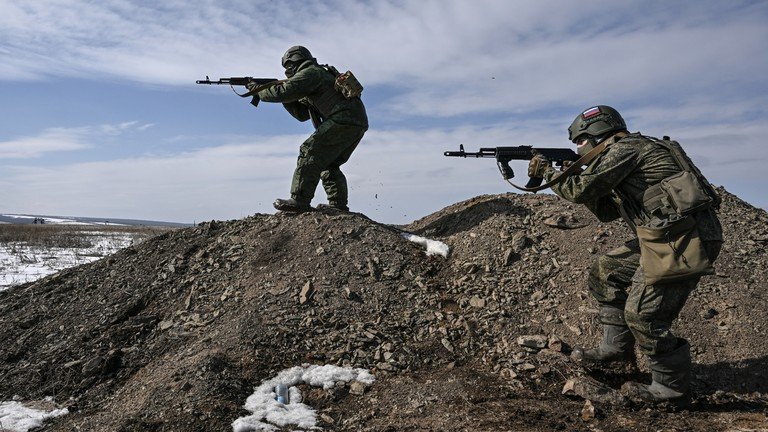
From Oil Prices to Missile Stockpiles, the US-Iran Conflict Could Reshape the Battlefield in Eastern Europe.
If Washington is tied down in Tehran, what happens in Kyiv?
The widening war between the United States, Israel and Iran may appear geographically distant from Ukraine. Strategically, it is anything but. The trajectory of the Iran conflict — whether swift resolution, grinding stalemate or strategic overreach — carries direct consequences for Kyiv’s military position and political confidence.
Three broad scenarios stand out.
A quick U.S. success
If Washington forces Tehran into rapid concessions or regime restructuring, the immediate signal would be one of restored American deterrence. That could embolden U.S. policymakers elsewhere, reinforcing perceptions that American power remains decisive despite years of strain.
For Ukraine, such an outcome would likely lift morale and strengthen expectations of sustained Western backing. A demonstration of U.S. military effectiveness could reinforce confidence in Washington’s capacity to sustain pressure on Moscow.
However, there would also be economic consequences. A swift de-escalation in the Gulf would likely push oil prices lower, reducing revenue for Russia — a financial setback for the Kremlin’s war effort.
A prolonged war of attrition
A drawn-out conflict in the Persian Gulf would create a very different dynamic. Sustained missile exchanges and naval operations would consume large volumes of precision-guided munitions and air-defense interceptors — the same categories of equipment Ukraine relies on.
The U.S. and its NATO partners already face production constraints in replenishing advanced missile systems. If inventories are redirected to protect Gulf bases and allies, deliveries to Kyiv could slow further.
At the same time, prolonged instability would likely keep oil prices elevated, bolstering Russian export revenues. Higher energy income would provide Moscow with additional fiscal breathing room as it sustains operations in Ukraine.
Politically, global attention would drift. A major Middle Eastern war inevitably competes for diplomatic bandwidth, media focus and legislative funding priorities in Washington.
A stalemate
Perhaps the most complex outcome is an inconclusive standoff — one in which Washington scales back operations without achieving decisive change in Tehran.
Such a scenario could dent perceptions of U.S. leverage. For Kyiv, which depends heavily on American military and financial support, doubts about U.S. resolve or capacity would be unsettling.
At the same time, missile stockpile depletion in a stalemate scenario would still constrain Western resupply to Ukraine, regardless of political messaging.
The broader pattern is clear: the Iran war stretches U.S. resources across multiple theaters. Every interceptor launched over the Gulf is one less available elsewhere. Every additional deployment complicates long-term planning.
For Moscow, distraction and resource dilution are strategic advantages. For Kyiv, sustained focus and material flow are existential necessities.
The coming weeks in the Gulf will therefore resonate far beyond Tehran. In modern great-power competition, conflicts are rarely isolated. They overlap, interact and amplify each other — and Ukraine may soon feel the consequences of a war fought hundreds of miles away.

A podcast conversation in Washington has triggered diplomatic protests across the Middle East. Why did it hit such a nerve?
A recent interview between commentator Tucker Carlson and U.S. Ambassador to Israel Mike Huckabee has reverberated far beyond American media circles, prompting formal objections from more than a dozen Middle Eastern governments and reopening debate about how religious ideas shape U.S. policy toward Israel.
At the heart of the controversy were remarks interpreted as endorsing expansive biblical claims tied to the concept of a Land of Israel stretching from the Nile to the Euphrates. While supporters described the conversation as calm and substantive — a rare example of civil dialogue on polarizing issues — critics in the region viewed the comments as politically charged and destabilizing.
Foreign ministries from countries including the United Arab Emirates, Egypt, Jordan, Saudi Arabia and Qatar issued a joint condemnation, calling the remarks “dangerous and inflammatory” and warning they violated international law and threatened regional stability. Several of those governments maintain diplomatic ties with both Washington and Israel, underscoring the sensitivity of the issue.
The reaction reflects deeper anxieties. For decades, U.S. policy has rested on a framework balancing support for Israel’s security with commitments to a negotiated two-state solution. Public references to biblical claims — particularly when voiced by a senior diplomat — risk blurring the line between religious conviction and official policy.
The interview also touched on civilian casualties in Gaza and the reliability of data from the Hamas-run health ministry, raising broader questions about accountability and independent verification in conflict zones.
Yet the debate extends beyond a single podcast. Within parts of the American conservative and evangelical community, the Gaza war has sparked renewed discussion about Christian Zionism and the theological roots of support for Israel. That internal U.S. debate is increasingly visible abroad.
Regional observers note that nationalist narratives rooted in history and faith are not unique to Israel. Turkish, Arab and Kurdish political movements have all invoked expansive historical claims at various points. But in a region marked by overlapping borders and unresolved conflicts, such rhetoric can inflame tensions quickly.
Whether the Carlson-Huckabee exchange represents a shift in U.S. policy or simply personal expression remains unclear. What is certain is that Middle Eastern governments are listening closely — and responding swiftly — whenever American officials appear to redraw the map, even rhetorically.
In today’s volatile climate, words spoken in a studio thousands of miles away can ripple through capitals across the region.
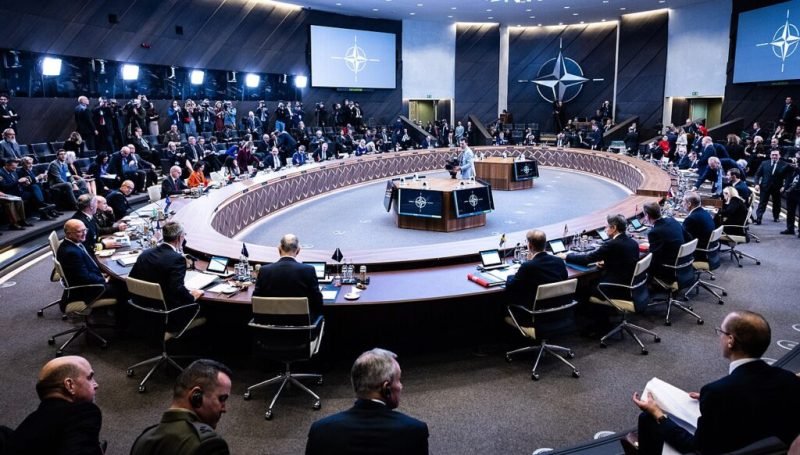
Analysis: NATO’s Ability to Deter Russia Has Taken a Hit.
For most of its history, NATO’s strength rested less on troop numbers than on credibility—the shared belief that an attack on one would trigger a response from all. That credibility, analysts now warn, has been quietly eroding, not because Europe is unwilling to spend on defense, but because trust inside the alliance has frayed.
European allies and Canada are pouring unprecedented resources into military budgets and into Ukraine’s war effort. Yet deterrence depends on perception, and recent trans-Atlantic infighting has punctured the image of NATO as a unified force under U.S. leadership.
The most damaging rupture came not on the battlefield but in rhetoric. U.S. President Donald Trump’s repeated threats to seize Greenland—a semiautonomous territory of NATO member Denmark—crossed a psychological line for allies. Even without force, the suggestion that one ally might coerce another undermines the alliance’s core principle: that members’ borders are inviolable.
That principle is embedded in Article 5, NATO’s collective-defense clause. While Article 5 does not apply to internal disputes, its power lies in the assumption that allies will never threaten one another in the first place. Once that assumption cracks, so does deterrence.
European unease deepened after Trump’s disparaging remarks about allied troops who fought alongside U.S. forces in Afghanistan. Though partially walked back, the comments reinforced an old fear: that Washington’s commitment is conditional, transactional, and ultimately unpredictable.
From Moscow’s perspective, this uncertainty is an opportunity. Russian Foreign Minister Sergey Lavrov has openly noted the upheaval inside NATO, while Russian state media mock what they describe as Europe’s “impotent rage.” The message is clear: deterrence weakens when resolve looks divided.
To counter U.S. criticism over burden-sharing, NATO allies agreed last year to dramatically raise defense spending, pledging up to 5% of GDP over time when security-related investments are included. NATO Secretary-General Mark Rutte has framed this as proof of the alliance’s renewed strength. But spending, however necessary, cannot substitute for political cohesion.
The danger lies not in an immediate Russian assault, but in gradual erosion. Deterrence fails not all at once, but through probing—cyberattacks, sabotage, intimidation, and gray-zone operations that test whether NATO will respond decisively. European officials already report mysterious drone flights, infrastructure sabotage, and information warfare across the continent.
For Russian President Vladimir Putin, the calculation is straightforward: if NATO members doubt each other, escalation becomes less risky. As EU officials warn, Russia is not deterred by declarations alone, but by the belief that unity will hold under pressure.
The unresolved question is the U.S. military footprint in Europe. American troops remain central to NATO’s deterrence posture, yet uncertainty over future deployments—especially after partial withdrawals near Ukraine—has amplified doubts. Even if U.S. forces do not leave en masse, ambiguity itself weakens the deterrence equation.
NATO is not collapsing. Its military capacity is growing, and its members still share core interests. But credibility is fragile. Once allies begin to wonder whether commitments are real—or whether allies might turn on one another—the deterrence edifice becomes shakier.
For Europe, the lesson is stark. Rearmament is necessary, but it is not enough. Deterrence depends on unity, predictability, and restraint among allies themselves. When those erode, adversaries do not need to attack. They simply wait—and watch.

Flights Turned Back, Trust Grounded: Why the Puntland–Jubaland Incident Matters for Somalia’s 2026 Elections.
A Small Incident With Big Political Consequences.
At first glance, the decision to turn back two flights bound for Mogadishu may appear like a technical dispute over landing clearances. In reality, the incident has exposed a far deeper crisis in Somalia’s fragile political process—one that goes to the heart of trust, security guarantees, and the credibility of the country’s path toward elections in 2026.
On Sunday, advance delegations from Puntland and Jubaland were ordered to return to Garowe and Kismayo just minutes before landing at Aden Adde International Airport. The timing could not have been more sensitive. February 1 was the date originally scheduled for a national consultative forum intended to lay the groundwork for Somalia’s next electoral process.
The reaction from international partners was unusually direct. The European Union, through its ambassador Francesca Di Mauro, publicly expressed regret and urged Somali leaders to find a solution that would allow the dialogue to proceed. The United Nations mission in Somalia, United Nations, echoed those concerns, stressing the need to prioritize dialogue as constitutional mandates near their end.
That convergence of EU and UN messaging matters. It signals that the incident is not being treated as a routine administrative mishap, but as a political warning sign.
Security or Control?
The federal government’s explanation, delivered by Defence Minister Ahmed Macalin Fiqi, was that Puntland and Jubaland were attempting to bring excessive armed personnel and weapons into Mogadishu. Both regional administrations categorically rejected the accusation, insisting that only standard presidential security details and staff were on board.
This dispute highlights a central dilemma in Somalia’s federal system. Regional leaders do not trust Mogadishu to guarantee their safety without their own security details. Mogadishu, in turn, views those same details as a challenge to its authority over the capital. The result is a zero-sum security logic that turns even routine political travel into a high-risk confrontation.
When Puntland President Said Abdullahi Deni labeled the incident a “criminal act,” he was not just speaking about aviation safety. He was framing the episode as evidence that the federal government cannot be trusted to act as a neutral convener.
The Cost to the Electoral Process
The immediate casualty of the incident is the national consultative forum itself. Technical committees had spent weeks preparing the agenda alongside the Federal Government and political stakeholders. That work is now overshadowed by a more basic question: can Somali leaders even gather in the same room under mutually accepted conditions?
Elections require more than laws and timelines. They require confidence that participation will not be punished, manipulated, or physically endangered. Turning back delegations—especially on the day talks were due to begin—undermines that confidence in a way that is difficult to repair quickly.
The fact that Jubaland also reported civilian flights being denied landing permission deepens the concern. Whether intentional or not, the optics suggest collective punishment and politicization of airspace, a dangerous precedent in a country where mobility is already constrained by insecurity.
Why This Moment Matters
Somalia is approaching a convergence of deadlines: expiring mandates, contested electoral models, and growing polarization between Mogadishu and key federal member states. Against that backdrop, inclusivity is not a slogan—it is a requirement.
By grounding planes instead of guaranteeing safe passage, Somali politics has sent the opposite signal. International partners have noticed. So have domestic actors.
What makes this episode especially damaging is not that talks were delayed, but that trust was publicly broken. Rebuilding that trust will require more than statements. It will require clear, enforceable guarantees that all stakeholders—federal and regional—can participate in national processes without fear or humiliation.
In Somalia’s long political journey, crises often emerge not from grand confrontations, but from seemingly small acts that reveal deeper intentions. This was one of those moments. The planes turned back, but the larger risk is that dialogue itself may now struggle to take off.

Blasts Rock Dubai as U.S. Warplane Crashes in Iraq

$11.3 Billion in Six Days: The Hidden Cost of Trump’s Iran War

Is Trump Sleepwalking Into a Proxy War With Russia?


-
 Somaliland2 months ago
F-35s Over Hargeisa: The Night Somaliland’s Sovereignty Went Supersonic
-
 Terrorism1 month ago
America Pulls Back From Somalia but Doubles Down Next Door
-

 Somalia2 months ago
Aid Destroyed, Trust Shattered: Somalia Loses U.S. Support for Good
-

 Terrorism2 months ago
Foreign ISIS Pipeline Exposed: Puntland Captures Dozens of Non-Somali Fighters
-

 Opinion2 months ago
Turkey’s Selective Morality: From the Ruins of Gaza to the Red Sea
-

 Somaliland2 months ago
Somaliland at Davos: The Moment Somaliland Entered the World’s Inner Circle
-
 Diplomacy2 months ago
Ethiopia–Israel Axis Strengthens as Regional Stakes Rise
-

 US-Israel war on Iran2 months ago
US War Plans Against Iran Enter Advanced Stage