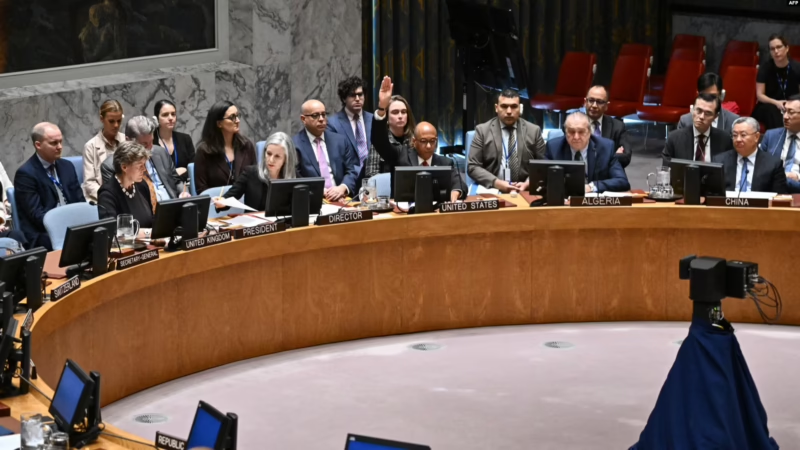
In a notable gesture toward Africa, President Joe Biden used his address at the UN General Assembly to elevate the continent’s concerns on the global stage, but questions remain about the depth of U.S. commitment to African interests.
During his speech, Biden underscored the need for expanding African representation on the U.N. Security Council and called attention to pressing issues like Sudan’s ongoing conflict and public health crises in the Democratic Republic of Congo. The announcement of a future trip to Angola further signals his administration’s late-stage effort to strengthen ties with Africa.
While Biden’s support for adding two African seats to the U.N. Security Council is a welcome step, the U.S. remains resistant to extending veto powers to new members, leaving African leaders feeling that real power-sharing may still be out of reach. Analysts argue this inconsistency risks undermining Biden’s efforts to promote Africa’s role in international decision-making.
Cameron Hudson, from the Center for Strategic and International Studies, noted that the lack of veto power for African nations has left many puzzled. “Biden’s push for Security Council membership without veto power has left Africans scratching their heads,” Hudson said, highlighting the gap between rhetoric and meaningful reform.
Biden’s attention to Sudan’s devastating conflict, which has raged for 17 months and displaced millions, was a significant moment during his UN address. However, experts like John Fortier of the American Enterprise Institute question whether this call to action will result in concrete steps to resolve the crisis. Sudan’s conflict, while critical, has struggled to maintain international focus, and Biden’s remarks may serve more to elevate awareness than provoke decisive action.
Daniel Volman, director of the African Security Research Project, suggested that while Biden’s attention to Sudan is genuine, his reluctance to pressure key allies like Egypt and the UAE—who are arming the warring factions—limits his capacity to force real change. Volman believes that any U.S. efforts, such as increased humanitarian aid, will likely fall short of resolving the conflict.
Biden’s announcement of a trip to Angola next month reflects a commitment to visit Africa, but as his presidency enters its final months, analysts like Hudson are skeptical of how impactful this visit will be. Coming so late in his term, Biden’s Africa policy may be seen as symbolic rather than transformative, lacking the follow-through needed to leave a lasting legacy on U.S.-Africa relations.
Biden’s outreach to Africa at the UN General Assembly signals a late-stage effort to engage with the continent on important issues like Security Council reform and regional conflicts. However, without meaningful changes, such as granting veto power or exerting pressure on influential actors in conflicts like Sudan, many of these overtures risk being perceived as hollow gestures.
As Biden approaches the end of his presidency, the question remains whether his administration’s initiatives in Africa will lead to tangible, long-term benefits or simply fade into diplomatic symbolism.