
Report
Ethiopian Migrants in Egypt Trapped in a Brutal Cycle of Abuse


As tensions between Ethiopia and Egypt escalate over the contentious Grand Ethiopian Renaissance Dam (GERD), another, less visible crisis is unfolding in the shadows—one that threatens to break the spirit of thousands of Ethiopian migrants in Egypt. As diplomatic confrontations play out between the two governments, Ethiopian refugees and asylum seekers in Egypt are facing a nightmarish reality of harassment, exploitation, and arbitrary detention, their voices muffled by geopolitical strife.
A Silent Human Crisis Amid the Diplomatic Standoff
With no formal protection and few avenues for justice, these vulnerable migrants have become collateral damage in the broader conflict. Ethiopian community leaders on the ground, speaking under the cloak of anonymity to avoid retaliation, paint a grim picture. Migrants and asylum seekers are routinely detained, often without due process, despite possessing valid UNHCR identification cards—many of which are either valid or pending renewal.
“People are being rounded up and thrown into cells without explanation,” said one Ethiopian community leader. “Even those recognized as asylum seekers face harassment, financial exploitation, and violence.”
No Refuge, No Escape: The Vanishing Safety Net for Migrants
The desperation of the Ethiopian migrant community in Egypt is palpable. For many, Egypt was once a place of relative safety, but as tensions over the GERD reached a fever pitch, Ethiopian refugees are now in the crosshairs. Many are being targeted based solely on their nationality, caught in the whirlwind of rising xenophobia and political tensions.
Suliman Ali, an Ethiopian migrant who fled to Egypt in 2014, describes the harrowing ordeal of his brother, who was detained in Cairo’s notorious Basati prison after being attacked by gangs and extorted by local police. “We paid the bribe, but it didn’t matter—my brother was locked up for months,” Suliman recounts, his frustration palpable.
The story is a recurring one. Hundreds of Ethiopians in Egypt are facing arbitrary detention in squalid conditions, their pleas for justice falling on deaf ears. UNHCR-issued documents, which should afford them some protection, are routinely ignored by Egyptian authorities.
“We used to escape to Sudan when things got bad,” another migrant lamented. “But with Sudan now in civil war, there’s nowhere left to run.”
Tensions Boil Over: GERD Conflict Fueling Hostility
The backdrop to this crisis is the heated standoff between Ethiopia and Egypt over the GERD, a project that has become a symbol of national pride for Ethiopia but a perceived existential threat for Egypt. As Prime Minister Abiy Ahmed recently celebrated the completion of the dam’s fifth filling phase, Egypt’s President Abdel Fattah el-Sisi has intensified his opposition, leading to a diplomatic deadlock that is now spilling over into the streets of Cairo.
The Ethiopian diaspora in Egypt, estimated to include 12 different ethnic communities, is bearing the brunt of these tensions. Xenophobic attacks have been on the rise since 2020, but in 2023, as the GERD talks faltered, these incidents have reached an alarming level. Ethiopian community members report frequent physical assaults, kidnappings, and police raids, often accompanied by demands for bribes. Despite repeated attempts to engage with the UNHCR, community leaders say they have received little to no meaningful support.
Caught Between Two Nations: Ethiopian Migrants as Pawns in a Larger Game
The broader geopolitical chessboard offers little hope for these migrants. As Egypt and Ethiopia continue their saber-rattling, deploying troops and ramping up rhetoric, Ethiopian refugees are treated as a bargaining chip, their suffering overlooked in favor of grand political strategy.
In early September 2024, Egypt made a show of deploying military forces to Somalia—seen by some as a direct provocation toward Ethiopia. Ethiopia, in turn, warned that it “cannot stand idle” while its neighbors engage in destabilizing activities. This intensifying rhetoric is stoking fears of further retaliation against Ethiopian nationals in Egypt.
For Ethiopian migrants like Suliman and his brother, this geopolitical tension has turned their daily lives into a nightmare. “We are not affiliated with any political group,” Suliman stressed. “We are simply refugees, trying to survive, yet we are treated like criminals.”
Bribes, Beatings, and Injustice: A System Rigged Against the Vulnerable
Reports of bribes demanded by Egyptian authorities to allow food deliveries to detained migrants have become disturbingly common. Community leaders report receiving four to five daily notifications of members being imprisoned, while at least 100 individuals from a single Ethiopian community are currently behind bars. Attempts to address these violations with UNHCR have so far yielded no tangible results, leaving migrants trapped in a Kafkaesque loop of detention, extortion, and abuse.
“This isn’t just about the GERD. It’s about power, and we’re caught in the middle,” one community leader explained. “The tension between Ethiopia and Egypt has put a target on our backs.”
A Future in Limbo: No End in Sight for the Migrants’ Plight
As Ethiopia, Egypt, and Sudan inch closer to a potential conflict over water rights, the human toll is mounting. Ethiopian migrants in Egypt are left wondering how much longer they can endure the cycle of abuse, arbitrary detention, and violence. Their hope for international intervention is waning as the world seems to focus on the GERD’s geopolitical implications, rather than the humanitarian crisis it has triggered.
The situation for Ethiopian migrants in Egypt is not just a reflection of diplomatic hostility—it is a tragedy of human lives trapped in a hostile environment where survival itself has become a daily battle. As world leaders debate dam regulations, thousands of Ethiopian refugees remain in the shadows, hoping for a resolution that may never come.
Their cries for help echo in silence, overshadowed by a political standoff that shows no sign of abating. And for now, they remain trapped in the crossfire of a conflict far beyond their control, with no escape in sight.

















Gulf States Weigh New Oil Pipelines to Bypass Strait of Hormuz Amid Iran Tensions.
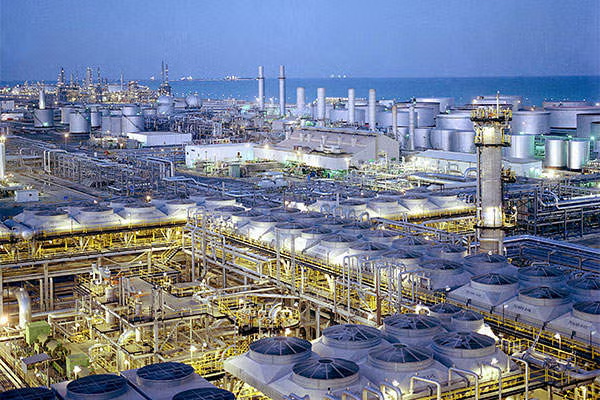
At the Red Sea port of Yanbu, oil continues to flow—quietly, steadily—far from the tension gripping the Gulf. The route it takes tells a larger story.
As Iran tightens its grip over the Strait of Hormuz, Gulf states are revisiting a long-standing question: how to move energy without relying on a passage that can be disrupted overnight. The answer, increasingly, lies not at sea—but underground.
Officials and industry executives are now exploring new pipeline networks designed to bypass Hormuz entirely. The urgency reflects a shift in thinking. What was once considered an expensive contingency is now being reframed as a strategic necessity.
By the third layer of this debate, the implications extend beyond infrastructure. Control over export routes is becoming as critical as production itself. In a region where roughly a fifth of the world’s oil typically passes through a single corridor, vulnerability has become a structural risk.
Saudi Arabia already offers a glimpse of an alternative. Its East-West pipeline—stretching roughly 1,200 kilometers—carries up to 7 million barrels of oil per day from the Gulf to the Red Sea, effectively sidestepping Hormuz. Built in the 1980s, it was designed for a different era of geopolitical tension. Today, it has become a strategic lifeline.
Now, Riyadh is considering expansion. With daily production exceeding 10 million barrels, the kingdom is evaluating whether more of its exports can be rerouted through pipelines rather than exposed to maritime chokepoints.
There are broader ambitions as well. One proposal under renewed discussion is the India-Middle East-Europe Economic Corridor, a U.S.-backed initiative aimed at linking India to Europe through the Gulf. While still in early stages, such a corridor could reshape not only energy flows but trade routes across multiple continents.
Still, the challenges are significant. Building new pipelines requires vast capital, complex cross-border agreements, and long timelines. Geography alone imposes limits; not every producing region can be easily connected to alternative ports. Political coordination—particularly across multiple sovereign states—adds another layer of difficulty.
There are also economic trade-offs. Pipelines offer security but lack the flexibility of shipping. Once built, routes are fixed, and adapting to market shifts becomes more complicated. For energy producers accustomed to global maritime access, that rigidity carries its own risks.
Yet the current crisis is altering those calculations. Iran’s ability to restrict or condition access through Hormuz has demonstrated how quickly global supply chains can be disrupted. Even partial blockages have driven up prices and forced companies to rethink logistics.
The emerging strategy is not to replace maritime routes entirely, but to diversify them—reducing reliance on any single chokepoint. In that sense, pipelines are less a substitute than a hedge.
What is taking shape is a reconfiguration of energy security. Instead of assuming open seas, Gulf states are planning for constrained ones.
The longer-term consequence may be profound. If alternative routes expand, the Strait of Hormuz could lose some of its central leverage over global markets. Not entirely—but enough to shift the balance.
And in a region where geography has long dictated power, even a partial redraw of the map can change how that power is exercised.
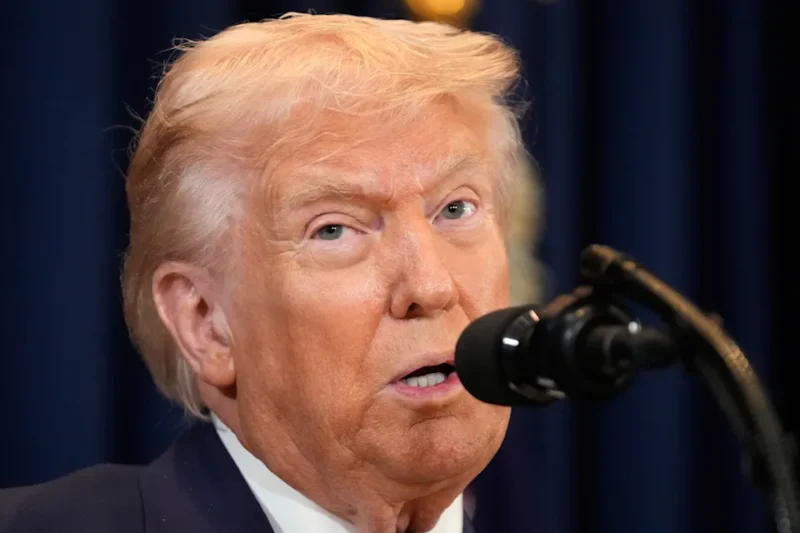
Majorities Oppose U.S. Military Action, Fear Higher Gas Prices and Reject Ground Troops.
Most Americans see Iran as a threat. But most also oppose this war.
As the war with Iran enters its second week, new national polls show Americans are divided along party lines — yet opposition to U.S. military action currently outweighs support.
Surveys conducted by Quinnipiac, Ipsos, Fox News, CNN and the AP-NORC Center suggest a cautious and anxious public, worried not only about security but also about economic fallout and the possibility of a prolonged conflict.
More Oppose Than Support Strikes
A new Quinnipiac poll found 53% of registered voters oppose U.S. military action against Iran, while 40% support it. Ipsos reported similar findings, with more Americans disapproving than approving of the strikes.
A Fox News poll showed a closer divide, with voters split evenly at 50% approval and 50% disapproval.
At the same time, a majority of Americans question whether Iran posed an “imminent” threat before the strikes. In the Quinnipiac survey, 55% said they did not believe Iran posed an immediate military danger. However, other polls indicate that many Americans still view Iran as a broader national security threat.
Economic Anxiety Rising
Economic concerns are emerging as a major driver of public unease. Large majorities say they are worried about rising oil and gasoline prices as a result of the war.
According to Ipsos, about two-thirds of Americans expect gas prices to worsen over the next year due to U.S. military action. Even among Republicans, more respondents predicted higher fuel costs than lower ones.
With oil prices fluctuating sharply, economic uncertainty may weigh heavily on voters — especially if the conflict drags on.
Doubts About Safety and Leadership
Roughly half of voters in Quinnipiac and Fox News polls said the military action makes the United States “less safe,” while only about three in ten believe it makes the country safer.
A CNN poll found that about six in ten Americans trust President Donald Trump “not much” or “not at all” to make the right decisions regarding the use of force in Iran. An earlier AP-NORC survey showed similar skepticism about his judgment on military matters.
Republicans overwhelmingly back the president, but even within his party there are signs of caution — particularly over the possibility of ground troops.
Strong Opposition to Sending Troops
One area of broad bipartisan agreement: Americans do not want boots on the ground.
Nearly three-quarters of voters oppose sending U.S. troops into Iran, according to Quinnipiac. Even among Republicans, more oppose than support deploying ground forces.
The Ipsos poll found overwhelming concern — across party lines — about risking American military lives in an expanded conflict.
A Delicate Political Moment
The polling paints a complicated picture. Many Americans see Iran as a threat. Many also distrust Tehran’s intentions. Yet a larger share currently opposes the war itself, fears economic consequences and rejects escalation.
For the White House, the message is clear: public support may hold if the conflict is short and contained. But if it stretches into months — or demands American troops — political backing could erode quickly.
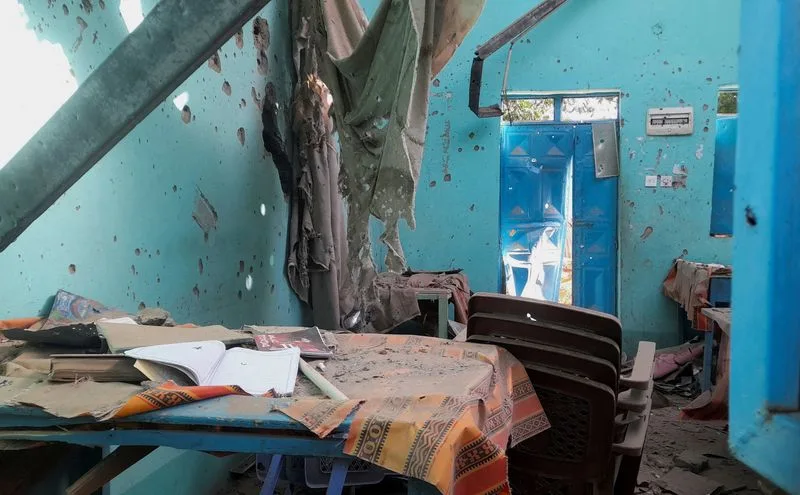
More than 6,000 killed in three days. A new UN report accuses Sudan’s RSF of atrocities that could constitute war crimes.
The Office of the United Nations High Commissioner for Human Rights said Friday that violations committed by Sudan’s Rapid Support Forces (RSF) during the capture of al-Fashir amount to war crimes and may constitute crimes against humanity.
Al-Fashir, the capital of North Darfur state, fell to RSF fighters in October 2025 after a prolonged siege marked by intense fighting and reports of mass killings.
According to a new report by the UN Human Rights Office, investigators documented more than 6,000 killings in the first three days of the RSF’s offensive following the siege. The findings are based on interviews with more than 140 victims and witnesses conducted in Sudan’s Northern State and in eastern Chad late last year.
The report describes “widespread atrocities” carried out during the assault, including summary executions and attacks on civilians. It concludes that the scale and pattern of violations may amount to war crimes and possible crimes against humanity under international law.
UN High Commissioner for Human Rights Volker Turk renewed calls for all parties to Sudan’s conflict to prevent further abuses by forces under their command. He also urged countries with influence over the warring sides to take immediate steps to halt the flow of weapons and military support.
“This includes respecting the arms embargo already in place, and ending the supply, sale or transfer of arms or military material to the parties,” he said in a statement.
Sudan has been engulfed in conflict between rival military factions since 2023, with Darfur once again emerging as a focal point of violence. Rights groups have warned that the scale of atrocities risks deepening an already severe humanitarian crisis and entrenching impunity in the region.

Al-Shabaab’s Money Trail Hits the U.S.—And Somaliland Holds the Key.
The alleged diversion of billions of dollars from U.S. welfare programs into a shadowy pipeline potentially feeding the terrorist group Al-Shabaab has done more than ignite a political firestorm in Minnesota. It has exposed a deeper, long-ignored strategic failure in U.S. and Western policy toward the Horn of Africa.
When Minnesota’s Republican congressional delegation demanded a federal probe into the suspected fraud, they were not just calling for financial accountability. They were inadvertently quantifying the real-world cost of allowing one of Africa’s most unstable political environments to continue shaping American security risks.
The allegation—that taxpayer funds intended for children and vulnerable families may have been laundered abroad and siphoned toward a Foreign Terrorist Organization—lands with particular force because it ties domestic dysfunction directly to geopolitical negligence.
It is not only a story about corruption; it is a story about the consequences of refusing to reward stable governance in a region where stability is the exception, not the rule.
This is precisely the argument laid out in A Roadmap to Recognition, the All-Party Parliamentary Group on Somaliland’s comprehensive case for Somaliland’s sovereign recognition A Roadmap to Recognition.
The APPG report stresses that Somaliland has built three decades of democratic institutions, internal security, territorial control, and functional governance—meeting all the criteria of statehood under the Montevideo Convention.
It argues that Somaliland is not only a moral candidate for recognition, but a strategically indispensable partner for counterterrorism, maritime security, and the wider stability of the Red Sea corridor.
The contrast with the current crisis could not be sharper. Minnesota lawmakers are demanding a federal investigation because the alleged fraud thrives in the governance collapse of southern Somalia, where Al-Shabaab controls large swaths of territory, extracts taxes, exploits global diaspora networks, and survives through exactly the kind of financial leakage the delegation fears.
The instability in Somalia is not an abstraction; it has material consequences in American cities, American courts, and now the American Congress.
The APPG report makes the opposite case: that Somaliland represents the antidote to this model of dysfunction. It is a functioning state—unrecognized, but orderly—where Al-Shabaab has failed to establish a presence for over 15 years.
It maintains its own currency, army, democratic elections, and internal security structures. Its port, Berbera, sits on the Bab el-Mandeb chokepoint, a critical artery for global trade. And unlike Mogadishu, Hargeisa does not rely on foreign troops to maintain peace.
The Minnesota scandal, therefore, places policymakers in Washington and London before a stark choice. Either they continue to prop up a dysfunctional union that produces security threats and humanitarian crises, or they pivot toward a model that rewards the governance Somaliland already practices.
Every dollar suspected of leaking into Al-Shabaab’s hands is, in effect, a direct cost of withholding recognition from the one actor in the region that consistently demonstrates stability, democratic will, and counterterrorism effectiveness.
What appears at first to be a Minnesotan political dispute is in fact a case study in the price of geopolitical inertia. By refusing to update a decades-old foreign policy framework, Western capitals are subsidizing instability that reaches directly into their own institutions.
Recognition of Somaliland is not simply a diplomatic question; it is a security investment. The APPG report offers a clear blueprint. Minnesota has supplied the cautionary tale.
Together, they force a long-overdue rethink of the strategic cost of ignoring a stable, democratic partner in one of the world’s most volatile regions.
Trump Orders Review of All Somali Green Cards After DC Shooting

Finland has recorded the highest number of suspected hate crimes since the country began tracking such cases, with new data showing a sharp rise fueled largely by racism and xenophobia.
According to figures released Monday by the Police University College and reported by public broadcaster Yle, authorities registered 1,808 suspected hate crimes in 2025, a 13 percent increase from the previous year.
Nearly 70 percent of all cases were motivated by the victim’s ethnic or national background, making racism the leading driver of the surge.
Police noted that most incidents involved verbal insults, threats, or harassment — behavior that Finnish authorities say has been steadily rising since around 2020.
Researchers say the trend underscores a deepening polarization in Finnish society. While Finland’s criminal code does not contain a separate legal category for hate crimes or hate speech, a hate motive is considered grounds for a harsher sentence.
“Any act that is defined by legislation as a crime can be a hate crime,” the Police University College noted.
The report cited a range of targeted groups, including people with disabilities and religious minorities. Researcher Jenita Rauta said the rise in attacks on people with disabilities reflects “a broader societal polarization in which those in vulnerable positions are targeted.”
Syrians living in Finland were the most frequently targeted ethnic group in the latest data, while Muslims were the most commonly affected religious group.
Much of the abuse took place online, echoing a wider European trend in which digital spaces have become a primary venue for xenophobic and extremist behavior.
The findings come at a time when Finland — long regarded as one of Europe’s most stable and egalitarian societies — has been grappling with rising nationalist rhetoric, political polarization, and shifting attitudes toward immigration.
Officials say the upward trajectory in hate crime reports is likely to continue unless stronger preventive measures, community engagement efforts, and online monitoring frameworks are put in place.
Report
South Sudan’s Fragile Peace Frays as Rivals Recruit Fighters, Defying Constitution and Peace Accord
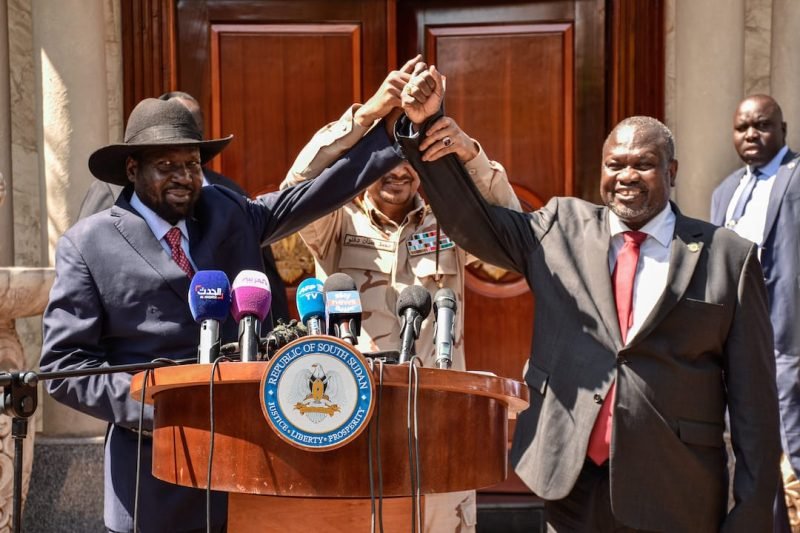
As Juba and opposition forces mobilize, international monitors warn that South Sudan’s unity government is collapsing — a crisis that could redraw East Africa’s fragile balance.
An oversight body tasked with monitoring South Sudan’s 2018 peace agreement has issued a stark warning: both the government and opposition are recruiting new fighters, abducting children, and arming for what could be a return to full-scale war. The findings — presented Tuesday in Juba by the Reconstituted Joint Monitoring and Evaluation Commission (RJMEC) — mark the most serious alarm yet that the country’s tenuous peace is unraveling.
At the heart of the report lies a constitutional crisis with regional and geopolitical stakes. The government’s June decision to recruit 4,000 new soldiers and open a new training center violates the spirit, if not the letter, of the 2018 accord — which requires a unified national army before elections can be held.
Opposition factions loyal to former vice president Riek Machar, meanwhile, are accused of mobilizing their own forces and abducting children into service. Together, these actions erode what remains of the fragile power-sharing framework that ended South Sudan’s last civil war.
The RJMEC’s interim chairman, George Aggrey Owinow, warned bluntly that “if the current challenges are not urgently addressed, there is a high risk of reversal of all the gains already made.” His remarks underscore fears that the Kiir–Machar unity government — extended twice beyond its initial mandate — has entered a dangerous limbo: too weak to implement reforms, yet too divided to hold credible elections.
The government’s response was strikingly dismissive. Cabinet Affairs Minister Martin Elia Lomuro sought to calm fears, insisting the situation “will not derail the peace process.” Yet reports from the U.N. and humanitarian agencies suggest otherwise: civilian casualties have risen nearly 60% since last year, more than 320,000 people have been displaced, and humanitarian access incidents have doubled.
The immediate flashpoint is the prosecution of Machar, now under house arrest and facing charges that include terrorism and crimes against humanity — accusations he denies. His allies say the charges are politically motivated, warning that they risk dismantling the balance of power that has kept the peace deal barely intact. The RJMEC has called for his release, arguing that a fair and inclusive process is essential to prevent renewed conflict.
But the deeper issue is structural. The transitional government’s mandate, designed to integrate rival forces and restore a single national chain of command, remains incomplete. Instead, both sides are rearming — a constitutional breach that undermines state legitimacy.
Regional actors, particularly the Intergovernmental Authority on Development (IGAD), which brokered the peace, face growing pressure to intervene decisively.
South Sudan’s instability is not just a domestic affair. Its collapse would reverberate across a volatile region already stretched by wars in Sudan and the Congo.
A renewed conflict could send hundreds of thousands fleeing into neighboring Uganda, Kenya, and Ethiopia, destabilizing borders and humanitarian corridors.
The RJMEC’s report is more than an administrative rebuke — it is a final warning that South Sudan’s peace deal is disintegrating from within. Without swift international mediation, enforcement of disarmament provisions, and constitutional clarity on power-sharing, the world’s youngest nation may once again slide into war — a failure not just of leadership in Juba, but of the international system that pledged to help it stand.

Al-Shabaab has become al-Qaida’s most lucrative franchise, generating as much as $200 million a year through a system of forced taxation, extortion, and illicit trade that now underwrites a growing insurgency across Somalia, according to a new counterterrorism assessment from the Combating Terrorism Center at West Point.
The report, The Global State of al-Qa‘ida 24 Years After 9/11, describes the group’s financial network as “sophisticated and institutionalized,” rivaling the Somali state in reach and efficiency.
Revenue from road levies, smuggling, and remittance skimming sustains an estimated 18,000 fighters, enabling the militants to retake strategic ground in central and southern Somalia, including Adan Yabaal—a key crossroads northeast of Mogadishu.
Residents and traders say payments, often framed as zakat, or Islamic alms, are demanded at every level of commerce.
Transporters, herders, farmers, and importers pay fees simply to move goods. In many regions, businesses find Al-Shabaab’s parallel system more reliable than federal or regional authorities, even as it funds the group’s campaign of violence.
Flush with cash, the militants have regained momentum after early setbacks during President Hassan Sheikh Mohamud’s 2022 offensive.
Their capture of Adan Yabaal has reopened a vital corridor linking Mogadishu to central regions, turning the town into a staging hub for fighters and supplies.
The setback highlights persistent weaknesses in Somalia’s security forces, which struggle to hold territory despite support from clan militias and African Union troops.
The United States has carried out 71 airstrikes in Somalia this year, targeting training camps and leadership compounds, while the U.S.-Gulf Terrorist Financing Targeting Center froze assets tied to 15 Somali financiers in April.
Somali authorities have also tightened regulations on informal hawala networks and frozen hundreds of accounts linked to suspected tax collectors since 2025.
Yet the CTC warns that shifting Western priorities toward great-power competition has given al-Qaida affiliates in Africa greater room to operate.
For ordinary Somalis, the result is a landscape of overlapping demands—government levies, clan militia fees, and Al-Shabaab’s relentless extortion—that leave traders and families caught between fragile state institutions and militant coercion.
The report concludes that while al-Qaida’s senior leadership has eroded, its African affiliates, particularly Al-Shabaab, now serve as the financial backbone of the global network.
In Somalia, the militants’ ability to tax, collect, and spend at scale has made financing not just a tool of insurgency but the core of their war effort.
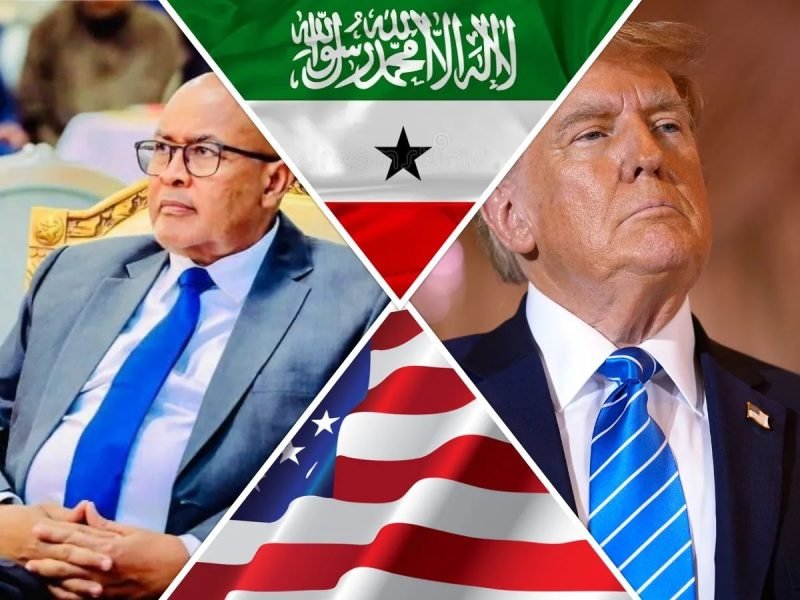
Washington’s Dilemma: Ditch Somalia for a Strategic Somaliland Base?
The Swedish Defence Research Agency’s recent report paints Somaliland’s recognition as a destabilizing gamble, but this framing underestimates both Somaliland’s record and the shifting global order. Far from opening a “Pandora’s box,” recognition would reward stability, secure a strategic ally, and serve long-term U.S. and Western interests in the Horn of Africa.
The Stability Myth Exposed
For three decades, the international community has clung to the fiction of a “One Somalia” policy — hoping against reality that Mogadishu could unify a fractured state.
That experiment has failed. Somalia remains engulfed in clan divisions, corruption, and the enduring threat of al-Shabaab. Somaliland, by contrast, has built democratic institutions, organized peaceful transfers of power, and provided a level of stability unmatched anywhere in the region.
To argue that recognition would “weaken counterterrorism” is to ignore the fact that Mogadishu’s instability itself fuels extremism. Strengthening Somaliland gives the West a firmer foothold against al-Shabaab.
African Union Fears Overblown
The AU’s opposition is rooted less in principle than in fear. The notion that Somaliland would trigger a wave of secession ignores its unique history: a former British protectorate that entered — and then lawfully withdrew from — a voluntary union.
Somaliland’s claim is not a breakaway rebellion but a restoration of sovereignty.
Treating it as equivalent to other separatist movements is a category error. Recognition here would establish clarity, not chaos.
Strategic Imperative for the West
Geography alone makes Somaliland indispensable. The port of Berbera sits at the gateway to the Bab al-Mandab Strait, a lifeline for global shipping and energy flows.
China already operates a base in Djibouti — right next to the U.S.’s only permanent base in Africa. Continuing to ignore Somaliland hands Beijing leverage. Recognizing it would open the way for U.S. basing rights, enhanced maritime security, and secure access to critical minerals at a time when global supply chains are under siege.
The Cost of Delay
Washington and Brussels risk repeating the mistakes of the past by waiting for consensus that will never come. Every year of hesitation drives Somaliland closer to alternative partners — from Taiwan to potential overtures by Beijing itself.
The West must decide whether to treat Somaliland as an opportunity or as a bargaining chip sacrificed to maintain illusions in Mogadishu.
Recognition as Realism
Somaliland does not need to prove its viability — it has already done so for 34 years. What remains is for the international community to abandon outdated frameworks and recognize what is obvious on the ground: Somaliland is a functioning state that has earned its place among nations.
Recognition would not destabilize the Horn; it would anchor it.

Defense Secretary Hegseth Forces Out Army Chief

Bridges Fall, Missiles Rise—War Enters a More Destructive Phase

Iran Executes 18-Year-Old Protester


-

 US-Israel war on Iran1 month ago
UK Refuses Iran Strike Access, Trump Fires Back
-
 Russia-Ukraine War1 month ago
Europe’s Spies Challenge Trump’s Ukraine Peace Optimism
-
 Top stories1 month ago
War Expands Across Region as Iranian Militias Join Fight
-
 Top stories1 month ago
India Turns to Brazil in Strategic Minerals Push Against China
-
 US-Israel war on Iran1 month ago
Iran Pledges ‘Never, Ever’ to Hold Bomb-Grade Material
-
 US-Israel war on Iran1 month ago
Syria Under Fire on Two Fronts
-
 Russia-Ukraine War1 month ago
Estonia Warns NATO Would Strike Deep Inside Russia if Baltics Are Invaded
-

 Top stories3 weeks ago
Meloni Breaks Ranks: Italy Warns on Iran War