Venezuela’s President Suspends Access to X, Alleging Social Media Platform’s Role in Political Unrest Following Disputed Election
Venezuelan President Nicolás Maduro announced the suspension of the social network X (formerly known as Twitter) for 10 days, accusing its owner, Elon Musk, of using the platform to foment hatred and unrest in the wake of Venezuela’s highly contested presidential election. The decision underscores the escalating tension between the self-proclaimed socialist leader and the tech billionaire, marking a new chapter in the ongoing political crisis gripping the South American nation.
By Thursday night, users across Venezuela reported that posts on X had ceased to load on major private telephone services and the state-owned provider Movilnet, effectively cutting off access to the platform. This suspension follows Maduro’s accusations that Musk has violated X’s own rules, claiming that the platform has been weaponized by opposition forces to destabilize the country and incite violence against his government.
“Elon Musk is the owner of X and has violated all the rules of the social network itself,” Maduro declared during a speech at a pro-government rally. “Musk has incited hatred,” he added, without elaborating on specific examples.
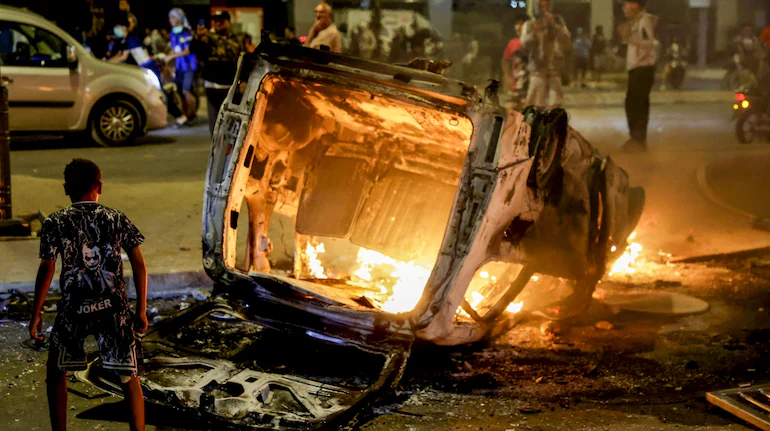
Maduro’s decision to block X comes amid an intense political standoff following the July 28 presidential election, which has been widely disputed. Despite electoral authorities declaring Maduro the winner, they have yet to release the full voting tallies, fueling suspicions of electoral fraud. Meanwhile, the opposition claims to possess records from over 80% of the nation’s 30,000 electronic voting machines, which they say show their candidate, Edmundo González, as the true victor.
The dispute over the election results has drawn the ire of Elon Musk, who took to X to accuse Maduro of orchestrating a “great electoral fraud.” Musk’s condemnation of Maduro’s regime was met with swift retribution, as the Venezuelan president moved to block the social network, citing the need to “regulate” social media in the country.
Maduro has also accused X of being a tool for his opponents to threaten the families of his followers, political allies, military personnel, and police officers, creating an atmosphere of fear and anxiety across Venezuela. This narrative of social media as a destabilizing force plays into Maduro’s broader strategy of maintaining tight control over information and suppressing dissent, a hallmark of his increasingly authoritarian rule.
The suspension of X is not just a crackdown on a social media platform; it is a clear message to both domestic opponents and international observers that Maduro is willing to go to great lengths to silence criticism and control the narrative in the wake of the disputed election. By targeting Musk and his platform, Maduro is attempting to shift the focus away from the unresolved questions surrounding the election and onto the alleged role of foreign entities in meddling in Venezuela’s internal affairs.
While it remains to be seen how this temporary block on X will affect the political landscape in Venezuela, the move has already sparked outrage among opposition figures and human rights organizations, who view it as yet another attempt by Maduro to stifle free speech and undermine democratic processes.
As tensions continue to rise, the world watches closely to see how this latest clash between a powerful autocrat and a tech titan will unfold. With Elon Musk unlikely to back down from his criticism, and Maduro showing no signs of loosening his grip on power, the stage is set for a protracted and potentially explosive conflict that could have far-reaching implications for both Venezuela and the broader global community.