As threats of retaliation loom, the U.S. bolsters support for Israel amid increasing regional instability.
With the Middle East teetering on the brink, President Joe Biden is set to discuss the escalating regional tensions with his national security team today. A critical meeting with Jordan’s King Abdullah II is also on the agenda, as Israeli leaders warn of a “heavy price” for any attacks, reflecting concerns over potential actions by Iran or its proxies.
Jordan’s Foreign Minister Ayman Safadi’s recent trip to Iran underscored the urgency, as he called for de-escalation and a return to “peace, security, and stability” in the region. Meanwhile, U.S. Defense Secretary Lloyd Austin reiterated the “ironclad U.S. support for Israel’s security” in a discussion with Israeli Defense Minister Yoav Gallant. The Pentagon emphasized moves to bolster U.S. force posture, ensuring protection for American personnel and deterring broader regional tensions.
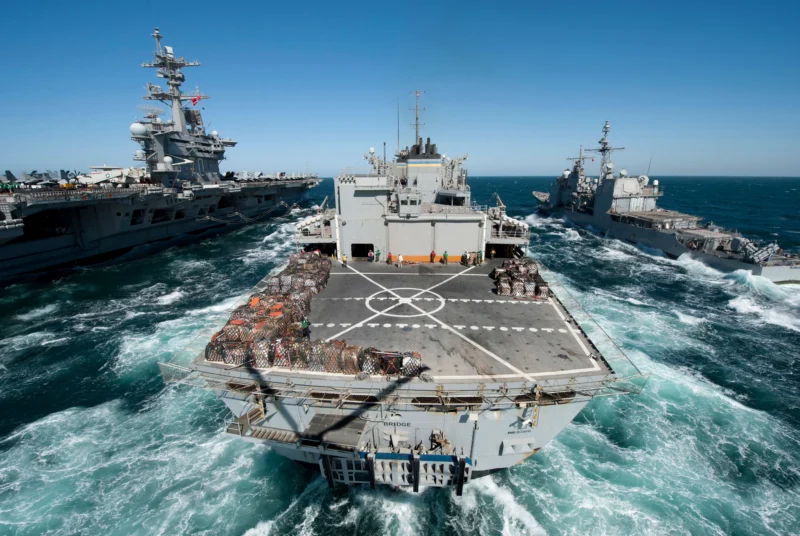
The United States is reinforcing its military presence by deploying an aircraft carrier group and additional air assets to the region, a move confirmed by the Pentagon last Friday. Jonathan Finer, the White House National Security Council deputy adviser, emphasized on CBS’ “Face the Nation” that the U.S. aims for de-escalation, deterrence, and the defense of Israel. He reiterated that the U.S. is preparing for “every possibility” and warned that a regional war serves no one’s interests.
The recent surge in violence follows last week’s Israeli airstrike on Beirut, which killed Hezbollah commander Fouad Shukur, and the subsequent assassination of Hamas political leader Ismail Haniyeh in Tehran. Iran has blamed Israel for both killings. These events have intensified the volatile situation, prompting France, the U.S., Canada, Jordan, and Britain to urge their citizens to leave Lebanon. Airline services to the region have been curtailed in response.
The assassination of Haniyeh, especially, has heightened tensions. Following the attack, Iran’s supreme leader, Ayatollah Ali Khamenei, vowed vengeance, ordering a direct strike on Israel. White House national security spokesperson John Kirby emphasized the seriousness of Khamenei’s threats, stating, “We have to make darn sure we’re ready.”
Israeli Prime Minister Benjamin Netanyahu has accused Iran and its proxies of trying to encircle Israel with a “stranglehold of terrorism,” vowing to counter threats on all fronts. Netanyahu’s firm stance reflects the high stakes, as he warned, “Whoever seeks to harm us will pay a very heavy price.”
U.S. Secretary of State Antony Blinken has been in talks with G7 foreign ministers, stressing the urgent need to de-escalate tensions in the Middle East. The collective commitment to Israel’s security and calls for maximum restraint aim to prevent the conflict from spiraling further.
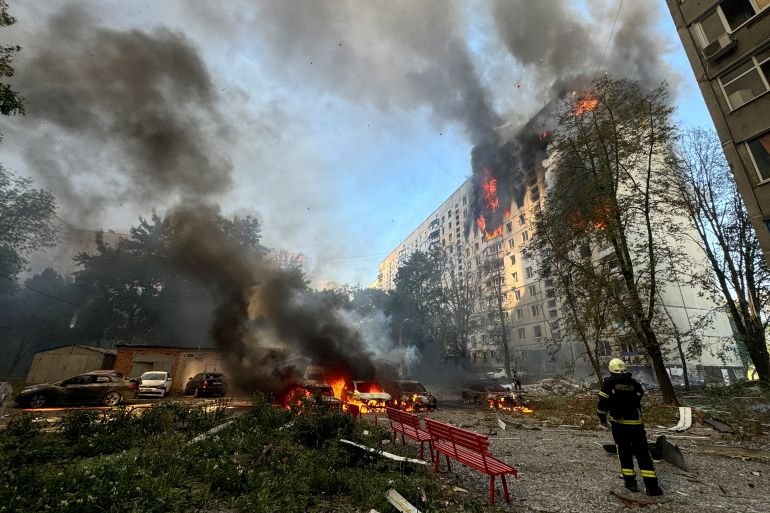
The Israeli military reported intercepting several suspicious aerial targets from Lebanon on Monday, one of which injured two Israeli personnel. The near-daily exchanges of fire between Israel and Hezbollah have become a grim routine since the onset of the Israeli-Hamas war in Gaza nearly ten months ago.
Israel’s relentless campaign against Hamas follows the October 7 attack, which resulted in the deaths of 1,200 people and the capture of 250 hostages. Israel’s counteroffensive has been devastating, with Gaza’s health ministry reporting at least 39,580 deaths, though it does not differentiate between combatants and civilians.
The killing of Haniyeh, a key negotiator for Hamas, raises significant concerns about the viability of ceasefire efforts. Mediators from Qatar, Egypt, and the U.S. face a challenging road ahead as they strive to broker peace and facilitate the exchange of hostages and Palestinian prisoners.
As the region teeters on the edge, the international community watches closely, bracing for the potential fallout from these escalating tensions. The coming days will be crucial in determining whether cooler heads prevail or if the Middle East is destined for a broader, more devastating conflict.