Russia-Ukraine War
CIA Says Ukraine Never Tried to Kill Russian President
U.S. Intelligence Says Ukraine Did Not Target Putin in Alleged Drone Strike.
U.S. intelligence has concluded that Ukraine did not attempt to assassinate Russian President Vladimir Putin in a supposed drone strike near his country residence, directly contradicting claims made by the Kremlin.
According to a source familiar with the assessment, the CIA determined that Ukrainian forces were targeting a legitimate military objective in the same region—not Putin’s personal residence near Lake Valdai in northern Russia. Moscow has provided no evidence to support its allegation.
CIA Director John Ratcliffe briefed President Donald Trump on the findings earlier this week. Shortly after, Trump publicly amplified skepticism of the Russian narrative by sharing a New York Post editorial accusing Moscow of manufacturing excuses to derail peace talks.
The revelation comes at a sensitive diplomatic moment. Trump recently met Ukrainian President Volodymyr Zelenskyy at Mar-a-Lago, where both leaders said they were “very close” to a deal to end the war—an assessment the Kremlin itself initially echoed, despite continuing to press maximalist territorial demands.
Zelenskyy forcefully rejected Russia’s accusation, calling it a “complete fabrication” designed to justify further Russian attacks and sabotage diplomacy. “Typical Russian lies,” he wrote, accusing Moscow of deliberately undermining negotiations with Washington.
The intelligence finding reinforces growing Western suspicion that the Kremlin is weaponizing disinformation to stall peace while escalating military pressure. As talks inch forward, the episode underscores a familiar pattern: when diplomacy gains momentum, Moscow changes the story.
Russia-Ukraine War
Putin Revives Hypersonic Threat as Warning to West: Oreshnik Is Back
Putin Fires Oreshnik Hypersonic Missile to Signal Escalation to Ukraine, Europe and the U.S.
President Vladimir Putin’s decision to fire the Oreshnik hypersonic missile — a weapon Russia has not used since late 2024 — is less about battlefield impact and more about political intimidation at a sensitive moment in the war.
The strike in western Ukraine came after a bruising week for Moscow. The United States captured Venezuelan President Nicolás Maduro, one of Putin’s closest allies. Days later, U.S. forces seized a Russian-flagged oil tanker in the North Atlantic. At the same time, Britain and France announced plans to deploy troops to Ukraine if a ceasefire is reached — a move Russia immediately warned would turn foreign soldiers into “legitimate combat targets.”
Against that backdrop, the Oreshnik launch looks deliberate. Analysts say Moscow feels sidelined by diplomatic talks between Washington, Kyiv and European capitals, and especially angered by the prospect of Western troops on Ukrainian soil. The missile, capable of carrying nuclear or conventional warheads, was reportedly fitted with inert payloads — reinforcing the idea that the message, not destruction, was the objective.
Western officials read it exactly that way. European leaders branded the strike “escalatory,” while EU foreign policy chief Kaja Kallas called it a direct warning to Europe and the United States. The launch took place just 60 kilometers from NATO-member Poland, ensuring it could not be ignored.
Russia’s official explanation — that the missile was retaliation for an alleged Ukrainian drone attack on one of Putin’s residences — has been widely dismissed. Ukrainian officials deny such an attack ever happened, and even prominent Russian war bloggers questioned the credibility of the claim.
Military analysts describe the Oreshnik as a psychological weapon in this context: a reminder that Russia remains a nuclear-armed power willing to escalate if it feels cornered. Dmitry Medvedev, Putin’s deputy on the Security Council, openly linked the strike to recent U.S. actions and looming sanctions, framing it as a necessary shock to a chaotic global order.
Crucially, Russian commentators acknowledge the missile is scarce and unlikely to be used often. That only sharpens its meaning. Oreshnik is not routine firepower — it is a strategic signal.
The message from Moscow is blunt: Russia wants back into the center of negotiations, demands to be taken seriously, and is prepared to escalate symbolically if ignored. Whether that intimidation hardens Western resolve or pulls talks back toward Moscow remains the next test.
Russia-Ukraine War
Moscow Threatens to Strike British and French Forces in Ukraine
RED LINE DRAWN — Russia Warns Western Troops in Ukraine Would Be “Legitimate Targets” as UK and France Plan Post-Ceasefire Force.
Russia has issued its bluntest warning yet to Europe, declaring that any Western troops deployed to Ukraine would be treated as “legitimate combat targets,” a sharp escalation in rhetoric that underscores how fragile — and potentially explosive — any future ceasefire could be.
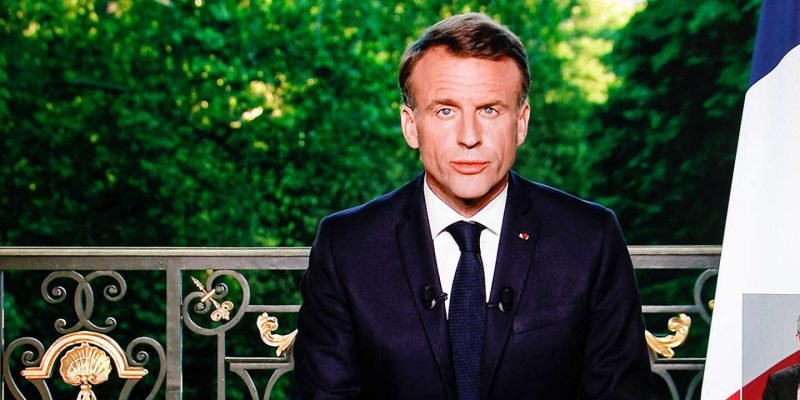
The threat came hours after Britain and France unveiled plans for a multinational force to deploy to Ukraine if hostilities pause. Meeting in Paris, leaders of the so-called “coalition of the willing” outlined a framework that could see thousands of European troops operating on Ukrainian soil to help secure airspace, protect maritime routes and assist in rebuilding Ukraine’s armed forces. French President Emmanuel Macron openly floated the idea of deploying French troops, while British Prime Minister Keir Starmer said the initiative would establish a legal basis for long-term Western military involvement.
Moscow’s response was immediate and unforgiving. In a statement, Russia’s Foreign Ministry warned that Western military units, infrastructure or depots in Ukraine would constitute “foreign intervention” and pose a direct threat to Russian security. Any such presence, it said, would fall squarely within the Russian military’s list of lawful targets. The ministry went further, branding the European initiative a dangerous “axis of war” that risks dragging the continent into a deeper, costlier confrontation.
The language matters. For the first time, the Kremlin is explicitly signaling that a post-ceasefire Western presence would not be treated as peacekeeping, but as an extension of the battlefield itself. That framing narrows the diplomatic space and raises the stakes for European capitals weighing how far they are willing to go to guarantee Ukraine’s security.
Russia continues to argue that its 2022 invasion was a pre-emptive move to stop NATO’s eastward expansion and prevent Ukraine from becoming a Western military outpost. It has long insisted that the stationing of foreign troops in Ukraine is a non-negotiable red line. Ukraine and its allies counter that Moscow’s real aim is territorial conquest and long-term domination, pointing to Russia’s occupation of nearly 20 percent of Ukrainian territory.
The United States has drawn its own limits. Washington has ruled out sending American troops but has voiced support for security arrangements designed to deter future Russian attacks. That gap — European ambition paired with American restraint — is now shaping a dangerous gray zone.
At its core, the dispute exposes the central paradox of any Ukraine ceasefire: Kyiv wants guarantees strong enough to prevent another invasion, while Moscow sees those same guarantees as provocation. Russia’s warning suggests that unless this contradiction is resolved, even “peace” could come with the constant risk of a wider European war.
Russia-Ukraine War
Putin Moves the Nuclear Line West: Hypersonic Oreshnik Missiles Roll Into Belarus
Russia Deploys Nuclear-Capable Oreshnik Missiles to Belarus, Expanding Strike Reach Across Europe.
Russia has publicly unveiled the deployment of its nuclear-capable hypersonic Oreshnik missile systems in Belarus, marking a sharp escalation in Moscow’s nuclear signaling toward Europe.
Footage released by Russian state media shows mobile missile launchers maneuvering through forested terrain in Belarus, with Russian officers confirming the systems have entered active combat duty. The missiles, personally championed by President Vladimir Putin, are claimed to be capable of traveling at more than ten times the speed of sound—making them, according to Moscow, effectively impossible to intercept.
By stationing the missiles in Belarus, which borders Ukraine and NATO members Poland, Lithuania, and Latvia, Russia shortens warning times for potential strikes across Europe. Analysts say the move is less about battlefield utility and more about strategic intimidation, reinforcing Moscow’s reliance on nuclear threats to deter NATO support for Ukraine.
The Oreshnik was first tested in November 2024 against a Ukrainian target using a conventional warhead. Putin has since asserted that even without nuclear payloads, its destructive power rivals that of atomic weapons. With a reported range of up to 5,500 kilometers, the system places most of Europe firmly within reach.
Western officials remain skeptical. U.S. intelligence sources have downplayed the missile’s impact, calling it “not a game-changer,” while independent analysts suggest the deployment serves primarily political and psychological objectives.
Belarusian leader Alexander Lukashenko, a close Kremlin ally, confirmed that up to a dozen missiles may be stationed in the country, citing “Western aggression.” Though Belarus has not sent troops into Ukraine, its territory continues to serve as a forward platform for Russian military power.
The message from Moscow is unmistakable: as the war in Ukraine grinds on and diplomacy stalls, the Kremlin is doubling down on nuclear leverage—bringing the front line of deterrence closer to NATO’s borders.
Russia-Ukraine War
Zelensky Meets Trump in Florida as Russian Missiles Pound Kyiv.
Ukrainian President Volodymyr Zelensky is set to meet US President Donald Trump on Sunday in West Palm Beach, Florida, in a high-stakes bid to push stalled peace talks toward a breakthrough—while Russia continues to bombard Kyiv with missiles and drones.
The surprise 1 p.m. ET meeting at Mar-a-Lago, announced just days ago, comes after weeks of intensive US-led negotiations aimed at finalizing a peace framework to end the nearly four-year war. Trump’s original 28-point proposal has been narrowed to a 20-point plan, with US officials saying 90% of the deal is agreed. Zelensky confirmed that figure on Friday.
The remaining issues are the hardest: territorial concessions, security guarantees, and the future of the Russian-occupied Zaporizhzhia nuclear power plant. Moscow continues to demand full control of eastern Donbas, while Kyiv has begun signaling limited flexibility—contingent on a ceasefire and a national referendum.
Even as talks accelerate, Russia has escalated attacks. Ukraine’s air force said Moscow launched 519 drones and 40 missiles overnight into Saturday. Zelensky warned that Russia’s actions on the battlefield contradict its diplomatic posture.
US officials say Trump believes he can push both sides toward agreement, including persuading Russia to accept US-backed security guarantees modeled on NATO’s Article 5. The package—described by officials as the “platinum standard”—would deter future Russian aggression and outline consequences for violations. Trump is reportedly open to taking the guarantees to Congress.
Russia will not participate in Sunday’s meeting. President Vladimir Putin said Saturday that if Kyiv refuses a political settlement, Moscow will achieve its goals “by military means.”
Trump struck a familiar note of leverage ahead of the meeting, telling Politico: “He doesn’t have anything until I approve it.”
With European leaders sidelined from this round of talks, Sunday’s meeting could determine whether diplomacy overtakes battlefield momentum—or whether the war grinds on despite near-complete negotiations.
Russia-Ukraine War
Kyiv Bombed as Zelenskyy Prepares Defining Meeting with Trump
As Ukraine pushes toward what could be the most consequential phase of peace negotiations since Russia’s full-scale invasion, Volodymyr Zelenskyy is set to meet European leaders and Donald Trump amid a renewed wave of Russian strikes on Kyiv that underscored the urgency—and fragility—of the diplomatic moment.
European leaders, including European Commission President Ursula von der Leyen, were scheduled to join a call on Saturday with Zelenskyy and Trump, according to a commission spokesperson, as coordination intensifies ahead of the Ukrainian president’s trip to Florida on Sunday.
Zelenskyy has framed the meeting with Trump as pivotal, saying it would focus on the most sensitive elements of a proposed peace deal, including security guarantees, postwar reconstruction, and territorial questions surrounding the Donbas region and the Zaporizhzhia nuclear power plant.
The outlines of the deal are taking shape but remain incomplete. Zelenskyy said Friday that a proposed 20-point peace plan is “90% ready,” adding that Ukrainian and American negotiating teams have made “significant progress.” The aim of the Florida talks, he said, is to close the remaining gaps.
According to Axios, Zelenskyy has signaled a willingness to put the deal to a national referendum—if Russia agrees to a ceasefire of at least 60 days—particularly if Ukraine fails to secure what he considers a strong position on territorial integrity.
Yet even as diplomacy accelerated, the war did not pause. In the early hours of Saturday, Kyiv came under one of its most intense attacks in weeks. Ukrainian officials said Russia launched a mix of Kinzhal hypersonic missiles, Iskander ballistic missiles, Kalibr cruise missiles, and drones, striking at least seven locations across the capital.
Eleven people were injured, including two children. Fires broke out in high-rise residential buildings in multiple districts, and power outages were reported in parts of the surrounding region.
The assault rippled beyond Ukraine’s borders. Poland scrambled fighter jets, and airports in Rzeszów and Lublin were temporarily closed, highlighting how closely the conflict is watched—and felt—by NATO’s eastern flank.
The current push follows a burst of behind-the-scenes diplomacy last weekend in Miami, where Trump’s envoy Steve Witkoff held separate meetings with Russian and Ukrainian representatives, as well as with Trump’s son-in-law Jared Kushner. The emerging proposal is described as an updated version of an earlier 28-point framework developed in US–Russia contacts, a document that critics say leaned heavily toward Moscow’s demands.
Ukraine has insisted that any agreement must include robust security guarantees, ideally modeled on NATO’s Article 5 mutual defense clause. Whether Russia would accept such guarantees remains deeply uncertain.
Moscow has already pushed back. Russian Deputy Foreign Minister Sergei Ryabkov said Friday that Kyiv and its European backers were trying to “torpedo” an agreement and warned that the current proposal diverges sharply from earlier drafts discussed with US officials.
Trump, for his part, struck a characteristically transactional note. In an interview with Politico, he said he expected a “good” meeting with Zelenskyy but emphasized that no deal exists without his approval. “He doesn’t have anything until I approve it,” Trump said.
The juxtaposition is stark. As negotiators refine text and trade assurances, missiles continue to fall. Whether the Florida meeting narrows the gap between diplomacy and battlefield reality—or exposes how wide it remains—may determine not only the future of Ukraine’s war, but the credibility of the peace process itself.
Analysis
How Russia Is Bleeding Western Security Without Firing a Shot
A broken train line in Poland. Fires in Estonia. Balloons from Belarus. None of it is random — and all of it is costing Europe more than Moscow ever pays.
Europe is confronting a form of warfare that leaves no craters, no front lines and few public acknowledgments — yet steadily drains its security capacity. Western intelligence officials say Russia is deliberately overwhelming European states through a sustained campaign of sabotage designed to be cheap for Moscow and exhausting for everyone else.
The evidence is mounting. In eastern Poland, a passenger train carrying nearly 500 people was forced to stop after an overhead line collapsed, smashing windows and damaging tracks. Elsewhere on the same route, explosives detonated beneath a freight train. No one was killed, but Warsaw reacted as if the warning was unmistakable: 10,000 troops were deployed to protect critical infrastructure. Polish authorities blamed Russia’s intelligence services.
That incident is one of at least 145 cases logged in an Associated Press database that Western officials link to Russia, its proxies or its ally Belarus since the invasion of Ukraine in 2022. The acts range from arson and explosives plots to cyberattacks, vandalism and warehouse fires. Most cause limited physical damage. That is precisely the point.
European intelligence officials say the real cost lies in the response. Every incident triggers multinational investigations, intelligence sharing and surveillance operations. One senior intelligence chief told AP that Russian interference now consumes as much agency time as counterterrorism. From Moscow’s perspective, tying up Europe’s security machinery is already a strategic win.
The scale is accelerating. AP data shows arson and explosives plots jumping from one documented case in 2023 to 26 in 2024, with several more already recorded in 2025. Poland and Estonia — both bordering Russia and among Ukraine’s strongest backers — are the most frequently targeted, followed by Germany, France, the U.K. and Latvia.
Officials believe Moscow briefly slowed the campaign late last year, likely to avoid antagonizing the incoming Trump administration in Washington. That pause is over. “They are back to business,” one European official said.
Russia’s method is calculated. Rather than risking trained intelligence officers, Moscow outsources operations to criminals, smugglers and foreign nationals with little to lose. Recruits are often found in prisons or through organized crime networks. One suspect linked to sabotage of Polish railways had worked for Russia’s GRU while moving across borders unnoticed, exploiting gaps in intelligence sharing.
Even failed plots serve a purpose. In Lithuania, a cache of drone parts and explosives hidden in a cemetery was uncovered before an attack could occur — but only after months of surveillance and coordination. In Latvia and Estonia, foreign operatives with no local ties have forced authorities into cross-border manhunts stretching from the Baltics to Italy.
The strategy is brutally efficient. Europe spends millions to stop attacks that cost Moscow almost nothing to organize.
Yet the pressure has produced one unintended effect: deeper cooperation. Baltic prosecutors have formed joint investigation teams. British police are training officers to recognize state-backed sabotage. Intelligence sharing is improving, even as Russia tests new methods — from arson to weather balloons drifting from Belarus that repeatedly shut down airports.
For now, the damage remains limited. But officials warn the campaign is evolving. What carries cigarettes today, they note, could carry something far more dangerous tomorrow.
This is not chaos. It is a system — and Europe is learning, belatedly, that the quiet wars can be the most corrosive of all.
Russia-Ukraine War
Zelensky Tests Washington’s Red Lines on Ukraine War
Zelensky Seeks U.S. Backing to Freeze Ukraine Front Line as Berlin Talks Begin.
Berlin — Ukrainian President Volodymyr Zelensky entered high-stakes talks in Berlin on Sunday with a clear objective: securing U.S. support for freezing the war’s front line along its current positions, effectively locking in a ceasefire without conceding additional territory to Russia.
Speaking before his arrival, Zelensky framed the proposal as the most realistic and “fairest possible option” under current battlefield conditions. “To stay where we are,” he said, “is a ceasefire.”
He acknowledged Moscow’s resistance to such an arrangement but made clear that Washington’s stance will be decisive. “I would like the Americans to support us on this issue,” he told reporters.
The Berlin meetings bring together Zelensky, U.S. President Donald Trump’s envoy Steve Witkoff, and senior European leaders at a moment of acute diplomatic tension.
Trump has intensified pressure on Kyiv to reach an agreement since unveiling a peace framework last month that critics say mirrors core Russian demands, including territorial concessions by Ukraine.
That proposal triggered urgent coordination between Kyiv and its European allies, leading Ukraine to submit revised amendments to Washington.
Zelensky confirmed he has not yet received a formal U.S. response but said signals from Washington suggest dialogue remains open. “The summit in Berlin is important,” he said. “We are meeting with both the Americans and the Europeans. These talks are happening today and tomorrow.”
At the heart of Kyiv’s position is a strategic recalibration rather than a retreat. Freezing the front line would halt Russia’s incremental advances, preserve Ukrainian-controlled territory, and create space for longer-term negotiations—without formally recognizing Moscow’s claims. Zelensky underscored that any plan must begin with a basic principle: “Russia started the war.”
The diplomatic push comes as fighting continues unabated on the ground. Ukrainian officials reported a fresh wave of Russian attacks overnight, including 138 drones and a ballistic missile.
A drone strike hit a hospital in Kherson, wounding two people, while at least 11 others were injured in the Zaporizhzhia region.
For Washington, the Berlin talks test the balance Trump is trying to strike between ending the war quickly and avoiding the perception of rewarding aggression.
For Europe, they underscore growing anxiety that U.S.-led diplomacy could harden the conflict’s territorial realities rather than reverse them.
For Kyiv, freezing the front line is not presented as peace—but as damage control. Zelensky’s message in Berlin is blunt: Ukraine is prepared to talk, but not to surrender the outcome of the war at the negotiating table after resisting it on the battlefield.
Analysis
Trump-Europe Rift Strengthens Putin’s Position as Ukraine War Enters Critical Phase
The Widening Rift Between Trump and Europe Is a Strategic Gift to Putin.
The latest rupture in trans-Atlantic relations is unfolding at a moment of acute geopolitical vulnerability—and Moscow is wasting no time exploiting it.
As U.S. President Donald Trump escalates public criticism of European leaders and questions the viability of continued support for Ukraine, the Kremlin sees a strategic opening it has sought for years: deepening mistrust between Washington and Europe, weakening NATO cohesion, and eroding the West’s unified posture against Russian aggression.
Trump’s remarks this week, dismissing Europe as “weak” and “decaying” because of its immigration policies, came just days after his administration released a national security strategy portraying European governments as obstacles to peace in Ukraine.
According to the document, Europe’s “unrealistic expectations” and alleged “subversion of democratic processes” have hindered Washington’s efforts to negotiate an end to the war.
For European leaders, the message was unmistakable. German Chancellor Friedrich Merz pushed back sharply, warning that elements of the U.S. strategy were “unacceptable” and stressing that Europe “does not need help from the United States to save democracy.” The diplomatic strain is widening—precisely the dynamic Moscow has sought to amplify since the first day of its invasion.
The Kremlin’s reaction was immediate. Spokesman Dmitry Peskov praised the new U.S. strategy as “consistent with our vision,” while Kirill Dmitriev—one of Moscow’s key intermediaries in the backchannel dialogue with Trump’s envoys—celebrated the administration’s scolding of Europe.
Russian officials have long understood that political division within the West is a force multiplier for their operations in Ukraine, and Trump’s framing delivers precisely that.
Meanwhile, Trump’s assertion that Ukraine is “losing” and that President Volodymyr Zelensky must “start accepting things” reinforces a narrative Russia has been pushing aggressively across European information ecosystems.
It mirrors the Kremlin’s psychological operations: project inevitability, erode Western resolve, and force Kyiv into concessions it cannot survive.
Moscow’s information war is tailored to exploit wavering public opinion in Europe, where the economic costs of supporting Ukraine remain a contentious domestic issue.
Sergey Karaganov, a hardline Russian political theorist, spelled out the strategic intent on state television: “We are at war with Europe, not with a pitiful, misled Ukraine… This war will not end until we smash Europe morally and politically.”
Even Russian President Vladimir Putin, while meeting Trump’s emissaries in Moscow, issued a blunt signal to European capitals: Russia is “ready right now” for conflict if Europe provokes one.
The message was aimed squarely at European publics already questioning the durability of U.S. support.
For Putin, the trans-Atlantic rift is more than a diplomatic spat—it is a geopolitical windfall.
If Europe doubts America’s commitment, if NATO’s center of gravity shifts, if Ukraine’s coalition fractures, then Moscow achieves what it cannot win on the battlefield: strategic depth, political time, and a divided West.
-
Analysis10 months agoSaudi Arabia’s Billion-Dollar Bid for Eritrea’s Assab Port
-
Opinion17 years agoSomaliland Needs a Paradigm Change: Now or Never!
-
Interagency Assessment4 weeks agoTOP SECRET SHIFT: U.S. MILITARY ORDERED INTO SOMALILAND BY LAW
-
Somaliland3 months agoSomaliland Recognition: US, UK, Israel, and Gulf Bloc Poised for Historic Shift
-
EDITORIAL1 year agoDr. Edna Adan Champions the Evolving Partnership Between Somaliland and Ethiopia
-
ASSESSMENTS10 months agoOperation Geel Exposes the Truth: International Community’s Reluctance to Embrace Somaliland as a Strategic Ally
-
Somaliland12 months agoSomaliland and UAE Elevate Ties to Comprehensive Strategic Partnership
-
Top stories2 years ago
Ireland, Norway and Spain to recognize Palestinian state