
Somaliland
President Irro Promotes Somaliland’s Strategic Role at Davos

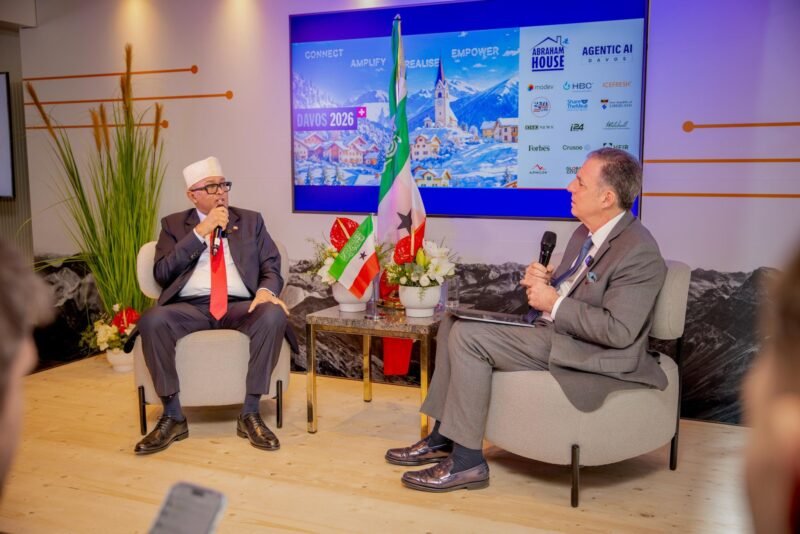
DAVOS, Switzerland — The President of the Republic of Somaliland, Abdirahman Mohamed Abdullahi “Irro,” used his ongoing participation at the World Economic Forum (WEF) in Davos to position Somaliland as a stable, democratic and investable partner in one of the world’s most volatile regions.
Speaking to international leaders and global investors attending the forum, President Irro called for a reassessment of Somaliland’s role on the international stage, highlighting the territory’s record of more than three decades of peace, democratic governance, security and political stability in the conflict-prone Horn of Africa.
In an in-depth interview with journalist John Defterios and during meetings on the sidelines of the annual gathering, the president described Somaliland as a strategic gateway linking Africa, the Middle East and major global trade routes. He detailed investment opportunities across key sectors including livestock, agriculture, fisheries, minerals and oil.
President Irro stressed that Somaliland is seeking partnership, not dependency.
“We are not asking for help. We have come to offer cooperation based on peace, democracy and shared opportunities,” he said.
He told investors that Somaliland offers political stability, legal certainty, and security — rare attributes in the Horn of Africa — making it a reliable destination for long-term investment.
The president also welcomed Israel’s recent recognition of Somaliland, thanking the Israeli government for what he called a courageous and historic decision. He urged other nations to follow suit and recognize what he described as the “real political realities” in the region.
Irro further outlined Somaliland’s growing regional cooperation, including plans to serve as a Red Sea trade corridor for Ethiopia and to expand cross-border trade, energy links and infrastructure development.
In his closing remarks, the president called on the international community to reward Somaliland’s long-standing stability with full international recognition, enabling it to formally participate in the global economy.
“Together, let us turn our commitment into progress, our power into shared prosperity and historic cooperation,” he said.













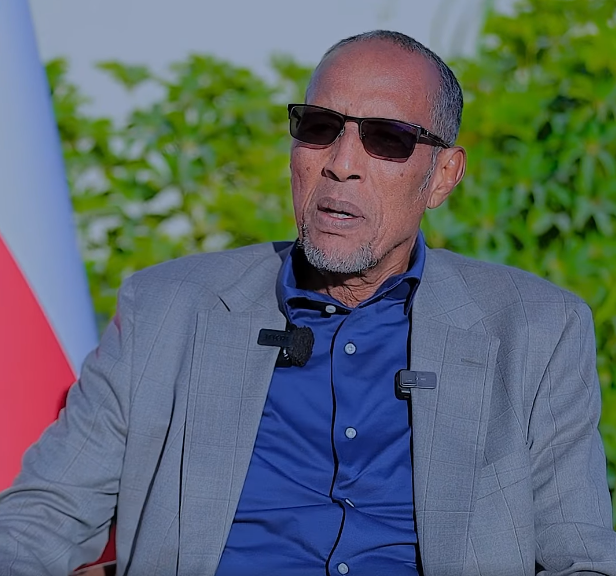
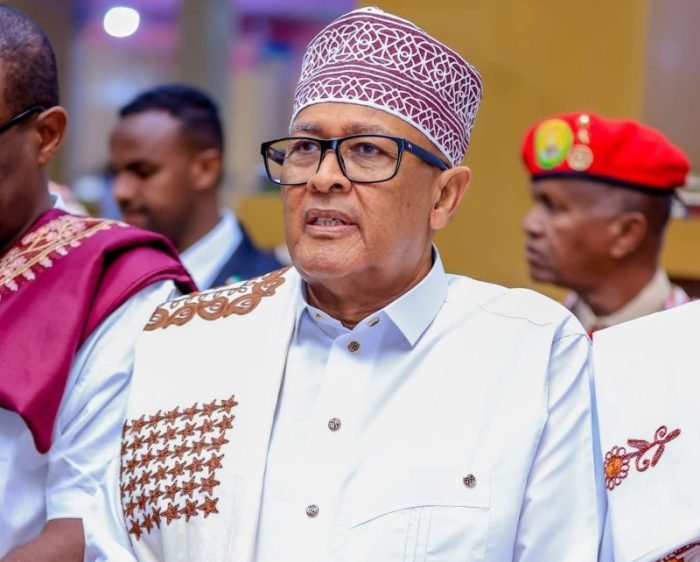
HARGEISA, Somaliland — In the high-stakes theater of Somaliland’s quest for international legitimacy, silence can be as loud as a declaration of war. For weeks, the political air in Hargeisa has been thick with the unanswered questions surrounding former President Muse Bihi Abdi.
On February 20, 2026, Bihi stood before the nation and cast himself as the guardian of Somaliland’s moral and legal integrity.
He challenged the administration of President Abdirahman Mohamed Abdullahi (Irro) to bring the “Jerusalem Declaration” into the light, specifically questioning whether the partnership with Israel was a treaty, a memorandum, or a lopsided arrangement that might compromise Islamic values. “If it is not an equal agreement,” Bihi warned, “it will be discussed.”
But today, that discussion has hit a wall of silence.
The catalyst for the current tension is a series of revelations five days ago suggesting that Israel will begun construction on a specialized military outpost near the strategic port of Berbera.
Despite his previous insistence on transparency—and his specific dismissal of such reports as “market news” in late February—the former President has retreated from the public eye.
At WARYATV, we examine the two primary theories circulating within the diplomatic corridors of the Horn of Africa.
The Financial Co-option Theory
The most cynical explanation among Hargeisa’s political elite is that the former President has been “brought into the fold.” Sources close to the current administration suggest that the Irro government, recognizing Bihi’s potential to stir populist religious sentiment against the deal, may have offered a “stability package.”
This theory suggests that the silence was purchased through a combination of high-level state protections and a secret role in the “Berbera Corridor” logistics network.
If Bihi has indeed transitioned from a critic to a silent stakeholder, it would signal a profound shift in the territory’s internal power dynamics, effectively consolidating the elite’s grip on the Israeli partnership.
The Security & Extortion Theory
The darker alternative is that the former President’s silence is not a choice, but a requirement. Following the revelation of the Berbera base, reports have surfaced of intense behind-the-scenes pressure. Political analysts suggest that Bihi may have been presented with a “Red Line” by either domestic intelligence or regional partners.
Given his own tenure’s history of defense procurement and maritime deals, critics argue that the current administration possesses significant leverage over the former leader.
In this scenario, Bihi’s silence is a calculated move to avoid a legal or reputational “scorched earth” campaign that could be launched against him if he continues to undermine the territory’s most important diplomatic breakthrough in 34 years.
The Constitutional Stake
Beyond the personal motives lies a legal crisis. Somaliland’s constitution is explicit about foreign military activities. By staying silent on the Berbera base, Bihi—the man who once claimed the constitution would never allow such a thing—is implicitly allowing the legal precedent to be rewritten.
As of this writing, WARYATV’s investigative team has reached out to the office of the former President multiple times. Each request for comment has been met with a “no response” status.
This analog silence is beginning to look like an admission of a deeper, more troubling arrangement.
Whether paid or pressured, Bihi’s withdrawal from the transparency debate has left the Somaliland public to navigate the complexities of the Israeli deal alone.
The “market news” he once mocked has become a physical reality of concrete and steel in Berbera, and the man who promised to stand guard has left his post.
The historic recognition of Somaliland by Israel in December 2025 was initially hailed as a masterstroke of diplomacy. However, as 2026 unfolds, the “Jerusalem-Hargeisa Axis” is revealing itself to be a double-edged sword.
President Abdirahman Mohamed Abdullahi (Irro) finds himself navigating a strategic “pincer movement”: external military threats from the Yemeni Houthis and an internal surge of tribal friction and civil suppression.
The fundamental failure of the recognition strategy lies in the asymmetry of risk. While Israel gains a strategic “foothold” to counter Houthi dominance and Iranian maritime influence, Somaliland has inherited a regional bullseye.
The warning from Abdel-Malik al-Houthi is not mere rhetoric. By entertaining the possibility of an Israeli base west of Berbera, Somaliland has transitioned from a stable “beacon of peace” to a frontline actor in the Middle East’s most volatile conflict.
Unlike the UAE or Israel, Somaliland lacks a sophisticated missile defense shield. Critics argue that President Irro has traded long-term security for symbolic status, leaving Hargeisa and Berbera vulnerable to Houthi long-range projectiles and “suicide” drones.
Internal Erosion: The Crackdown on Dissent
Perhaps more damaging than the external threat is the perceived erosion of Somaliland’s democratic exceptionalism. Reports of a “mounting crackdown” on social media critics and journalists suggest that the administration is using the “security crisis” as a pretext to tighten control.
The arrest of individuals for Facebook posts has created a chilling effect that contradicts Somaliland’s 34-year reputation as a free society.
Most concerning are the allegations of tribalism being weaponized against specific clans (Habar Awal and Arap). In the delicate “Clan Consensus” model of Somaliland, using security forces to target rival groups is a recipe for internal collapse.
Analysts point to reports that Hargeisa may be hedging its bets by maintaining secret contacts with countries opposing the recognition. This “double-game” suggests a lack of confidence in the very alliance the government publicly champions.
Business vs. Elites
The perception of political interference in commerce—specifically in the oil and shipping sectors—has added a layer of public frustration. When political elites tied to the presidency attempt to monopolize the “Blue Economy” of the Berbera corridor, it alienates the very business community that funded Somaliland’s self-reliance.
A Policy Shift or a Strategic Error?
While Somaliland looks to the Trump administration for the “ultimate prize” of U.S. recognition, the internal instability may disqualify it. Washington and Brussels are unlikely to reward a state that appears to be descending into clan-based authoritarianism.
Every arrest in Hargeisa and every Houthi threat serves the narrative of Turkey and the Federal Government of Somalia (FGS). They are successfully framing Somaliland as a “destabilizing force” rather than a sovereign success.
President Irro stands at a crossroads. The pursuit of Israeli recognition was intended to be the final step toward global integration. Instead, it has triggered a “Digital Civil War” and placed the nation in the crosshairs of regional proxies.
The Verdict: If the Irro administration does not immediately pivot toward internal reconciliation, release political detainees, and distance itself from being a “military platform” for foreign powers, the recognition of 2025 may be remembered as the moment Somaliland’s hard-won stability began to unravel.
Somaliland Puts Minerals and Bases on the Table for Washington
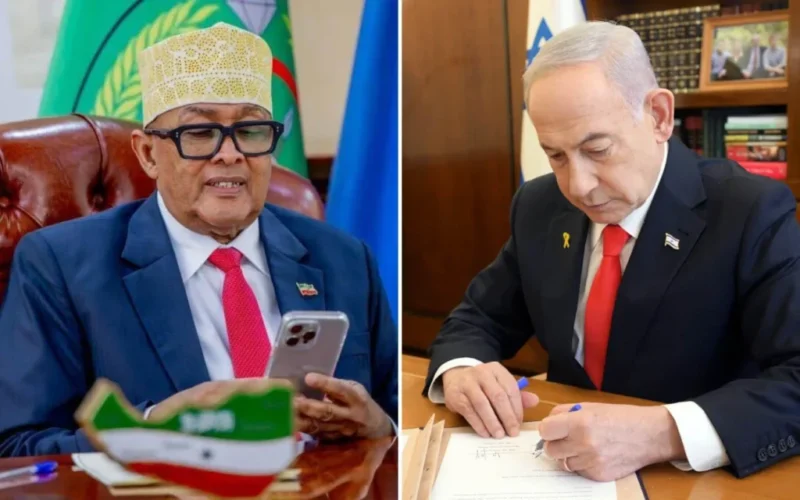
From recognition to real partnership — is Somaliland reshaping its global alliances?
Somaliland President Abdirahman Mohamed Abdillahi “Irro” is expected to travel to Israel in late March for his first official visit since Israel formally recognized Somaliland’s independence last year, according to sources cited by The Jerusalem Post.
The visit marks a significant diplomatic milestone. In December, Israel became the first country to formally recognize Somaliland since it declared the restoration of its 1960 independence in 1991. That move reshaped regional calculations and elevated Somaliland’s international profile.
President Irro’s trip is expected to focus not only on symbolic diplomacy but on practical cooperation. Somaliland officials are seeking to deepen engagement in technology, agriculture and innovation — sectors where Israel has built a global reputation. The aim, according to reports, is to translate recognition into tangible economic gains and institutional capacity-building.
The invitation for the visit followed a high-level virtual meeting on December 26 between Irro and Israeli Prime Minister Benjamin Netanyahu, shortly after Israel announced recognition.
The outreach to Israel comes as Somaliland simultaneously intensifies efforts to engage Washington. Khadar Hussein Abdi, Somaliland’s Minister of the Presidency, recently indicated the territory would consider offering the United States exclusive access to mineral resources and potential military facilities in exchange for diplomatic recognition.
That dual-track diplomacy — strengthening ties with Israel while courting the United States — underscores Somaliland’s broader strategy: leverage strategic geography, untapped mineral potential and regional security relevance to secure international legitimacy.
For Israel, the relationship offers a foothold along the Red Sea corridor, a waterway critical to global trade and regional security.
For Somaliland, the upcoming visit represents more than protocol. It is a calculated step in a decades-long campaign for recognition — and a signal that Hargeisa is willing to anchor its future in new alliances if traditional diplomatic doors remain closed.
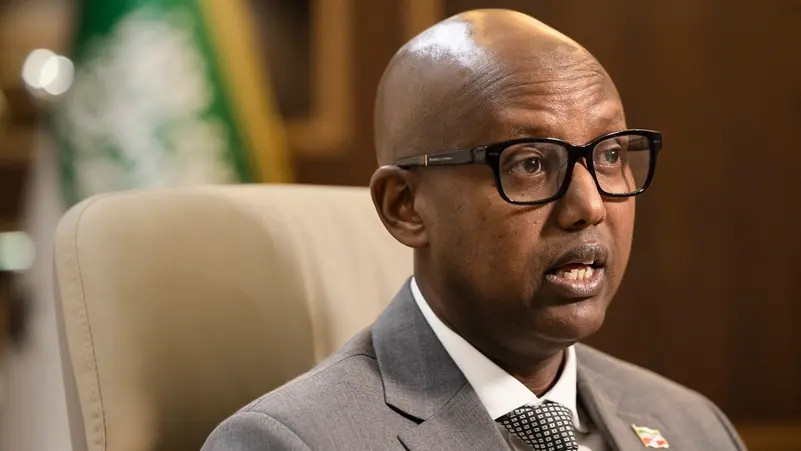
Minerals, military bases, and recognition — Somaliland is raising the stakes in its push for global legitimacy.
Somaliland has signaled it is prepared to grant the United States access to its mineral resources and potentially host American military bases, as the republic intensifies its campaign for international recognition.
Khadar Hussein Abdi, minister of the Somaliland presidency, told AFP that Hargeisa would be willing to offer Washington exclusive access to strategic minerals and open discussions on military cooperation.
“We are willing to give exclusive access to our minerals to the United States. Also, we are open to offering military bases,” he said, adding that Somaliland hopes to reach an understanding with Washington.
The remarks come months after Israel became the first country to formally re-recognize Somaliland’s independence in December — a diplomatic breakthrough for Somaliland.
President Abdirahman Mohamed Abdullahi has also floated the idea of granting Israel privileged access to mineral resources. Abdi did not rule out the possibility of Israel establishing a military presence as well.
Somaliland is believed to hold significant deposits of lithium, coltan and other critical minerals increasingly sought after for electric vehicles, renewable energy technology and advanced electronics. Its strategic coastline along the Gulf of Aden, near key Red Sea shipping lanes, further enhances its geopolitical value.
The United States has defended Israel’s right to recognize Somaliland, though President Donald Trump has indicated he is unlikely to follow suit, despite backing from some Republican lawmakers.
Abdi also addressed concerns raised by Turkey, which objected to Israel’s recognition move. He urged Ankara to engage directly with Somaliland rather than Mogadishu, arguing that Somalia’s federal government lacks cohesion.
“It is fragmented factions who sit in Mogadishu,” he said, asserting that focusing solely on Somalia’s central authorities does little to advance regional stability.
For Somaliland, the strategy is clear: leverage its strategic geography and natural resources to attract powerful allies. Whether Washington or other global players are ready to reciprocate remains the defining question.

Trade corridors, oil by 2027, minerals for technology — Somaliland’s president signals an aggressive economic push.
Abdirahman Mohamed Abdullahi Irro said a cargo and trade agreement with Ethiopia is close to completion, underscoring his administration’s push to position Somaliland as a regional investment hub.
In an interview with CNN Business Arabic, Irro said negotiations over a cargo agreement are progressing and expressed hope that the deal would be finalized soon. The agreement is expected to deepen commercial ties between the landlocked Horn of Africa nation and Somaliland’s ports, reinforcing cross-border trade flows.
Irro said his broader goal is to create a peaceful and stable economic zone where trade can flourish. He emphasized Somaliland’s readiness to enter agreements with international partners, including the United States, particularly in the development and export of precious minerals.
The president also referenced a potential trade arrangement with Israel, first mentioned in a recent interview with Reuters, involving the sale of minerals in exchange for advanced Israeli technology and equipment.
To attract foreign capital, Irro said investors would benefit from long-term tax incentives and opportunities in sectors such as mining, hydrocarbons and marine resources. He added that two companies are currently engaged in oil development projects, with production targeted for 2027.
Highlighting Somaliland’s economic potential, Irro cited mineral deposits, oil and gas reserves, fisheries, tourism assets and arable land. He also noted that while Somaliland has domestic banks, his government is encouraging international financial institutions to establish branches in Hargeisa to ease investment flows.
The remarks signal an assertive economic strategy aimed at diversifying partnerships and strengthening Somaliland’s trade corridors, particularly as regional competition for investment intensifies.
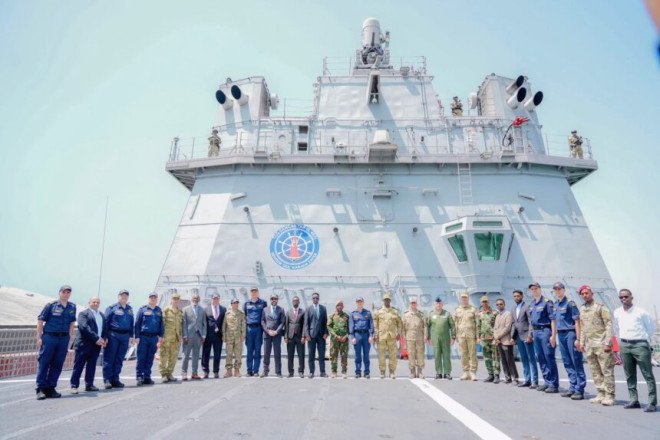
Ankara says “stability.” Somaliland sees risk. The Horn of Africa is entering a new strategic chapter — and the stakes are rising fast.
When Turkish warships docked in Mogadishu, alongside reports of F-16 fighter jet deliveries and offshore drilling plans, the signal was unmistakable: Ankara is deepening its footprint in Somalia. For Somaliland — whose collective memory still carries the trauma of the 1988 bombardment of Hargeisa by the regime of Siad Barre — the optics alone are unsettling. Military expansion in Mogadishu is rarely viewed as defensive. It is viewed through history.
Yet a sober assessment of the Turkey–Somalia defense and economic framework suggests a more complex reality. Turkey is unlikely to launch — or support — an offensive campaign against Somaliland. The strategic costs would be immense.
As a key member of NATO, Ankara positions itself as a regional stabilizer, not a proxy combatant in Somalia’s internal territorial disputes. An unprovoked escalation against a relatively stable and democratic territory with informal ties to the United Kingdom, the UAE and Ethiopia would undermine Turkey’s diplomatic standing at a time when it seeks influence across Africa and the Red Sea corridor.
Economics also act as a restraint. Turkey’s maritime doctrine — often described as the “Blue Homeland” — prioritizes sea lanes, energy access and trade routes. A regional war would jeopardize precisely the offshore prospects and shipping stability Ankara hopes to cultivate. Investors do not drill in active conflict zones.
Ethiopia further complicates any military calculus. Somaliland’s memorandum of understanding with Ethiopia creates a deterrent layer Ankara cannot ignore. Turkey maintains significant economic and defense ties with Addis Ababa; it is unlikely to risk indirect confrontation over Mogadishu’s maximalist claims.
Still, the danger lies less in intent than in imbalance. Advanced aircraft in a fragile security environment introduce new variables. Even if initially deployed against Al-Shabaab, the capability itself alters regional power equations. History in Somalia has shown how quickly state assets can be redirected.
Maritime cooperation carries similar risks. If Turkish-trained Somali naval units patrol waters claimed by Somaliland — particularly near the vital Berbera corridor — even minor incidents could escalate into diplomatic crises.
The most combustible element may be energy exploration. Should Turkish drilling vessels operate in offshore blocks Somaliland considers within its jurisdiction, a commercial venture could morph into a sovereignty dispute with international implications.
Turkey is not preparing an invasion. It is consolidating influence — military, economic and maritime — in a strategically vital region. For Somaliland, the challenge is not alarmism but strategy: direct engagement with Ankara, stronger regional integration with Ethiopia, and early internationalization of maritime boundary concerns.
In the Horn of Africa, power shifts rarely announce themselves loudly. They unfold quietly — until they don’t.
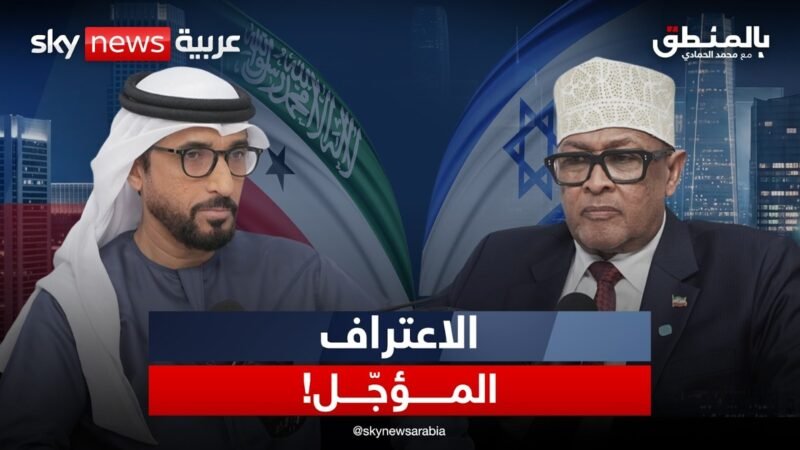
Somaliland President Abdirahman Mohamed Abdullahi Irro has said that calls for Somali unity are misplaced unless they first include other Somali-inhabited territories in the Horn of Africa, arguing that Somaliland’s status should only be discussed after those regions are unified with Somalia.
Speaking to Sky News Arabia, Irro said that if genuine Somali unity is the goal, then Djibouti, the Somali Regional State of Ethiopia, and Kenya’s Northeastern Frontier District should be part of that conversation first.
“If Somali unity is desired, Djibouti should join Somalia, it used to be part of it; the Somali Region of Ethiopia should not join Somalia; the NFD should not join. If the world wants Somali unity, they should unite,” Irro said, questioning why the union between Somalia and Somaliland is treated as unique.
He argued that many governments misunderstand Somali history, noting that Somali territories were divided into five parts during the 1884 Berlin Conference. Somaliland, he said, became the first Somali territory to gain independence in 1960 and was recognized by 35 countries, including Israel.
Irro said Somalilanders quickly rejected the union with Somalia after independence due to abuses and marginalization, making any future reunification impossible. “Another union is never possible,” he said.
Tensions between Somaliland and the Somalia federal government resurfaced late last year following Israel’s recognition of Somaliland, a move that angered leaders in Mogadishu.
Somaliland continues to push an international diplomatic campaign seeking formal recognition, insisting its case is rooted in history, sovereignty and the will of its people.
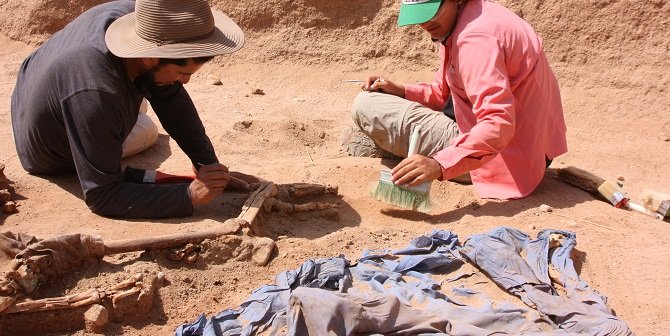
Mapping the Perpetual Threat: Foreign Intervention and the Siege of Somaliland’s Sovereignty.
By Mo Saeed
Introduction:
This report examines two distinct but thematically linked allegations concerning external military intervention in Somaliland. The first is a well-documented historical case: the hiring of foreign mercenary pilots by the Mohamed Siad Barre regime to conduct a brutal aerial campaign against Hargeisa and other northern cities in 1988–1989. The second is a contemporary genocide against Somaliland that the current Federal Government of Somalia is seeking military support from Turkey, Egypt, and Saudi Arabia for similar purposes. This analysis aims to present the available facts, highlight potential parallels, and assess the implications of such external involvements.
The Historical Case:
Foreign Mercenaries in the 1988–1989 Bombing Campaign:
In May 1988, the Somali National Movement (SNM) launched a major offensive in northern Somalia (present-day Somaliland), capturing parts of Hargeisa as they could no longer watch Barre’s regime systematically wiping Isaq people out from the Horn of Africa . The Siad Barre regime responded with a massive and indiscriminate military campaign aimed at crushing the rebellion and terrorizing the civilian population, actions widely characterized as war crimes and crimes against humanity. The Isaaq genocide, also known as the Hargeisa Holocaust.
Recruitment and Origin of Pilots:
To supplement its air force, the Barre regime hired foreign mercenaries . These pilots were primarily recruited from South Africa and former Rhodesia (Zimbabwe).
One specific account notes that “bombing raids on the towns for one month were conducted mainly by mercenaries recruited in Zimbabwe.
These mercenaries operated during the peak of the conflict in 1988–1989. They flew missions from the Hargeisa airport, targeting not only SNM positions but also conducting widespread, indiscriminate bombing of civilian areas in Hargeisa and surrounding regions. Their role was to provide the regime with additional aerial strike capacity for a campaign of collective punishment.
The objective was to support the Somali army in suppressing the civilians uprising by terrorising the civilian population through sustained aerial bombardment. This campaign resulted in the destruction of a large part of Hargeisa, Burao and caused thousands of civilian casualties, and is a central element of the planned and executed genocide against the Isaaq clan. The use of mercenaries allowed the regime to conduct this intense bombing campaign despite potential constraints within its own military.
Recent reports and statements indicate that the current Federal Government of Somalia is seeking direct military assistance from foreign states specifically Turkey, Egypt, and Saudi Arabia for operations against Somaliland with the aim of committing genocide again past genocide survivors. A prominent fact is that Somalia’s Minister of Defence requested his Saudi counterpart to conduct airstrikes against Somaliland and to facilitate the capture of its president.
Turkey already has a significant military training and infrastructure presence in Somalia. The current evidence suggests this partnership could be expanded to include direct combat support.
Egypt and Saudi Arabia are being asked by Somalia to provide aerial military capabilities, reminiscent of the mercenary model used in 1988, though ostensibly through state-to-state agreements rather than private contracts.
Turkey has already deployed F-16 fighter jets to Somalia to be precisely part of this plan.
As of February 2026, these specific evidence of requests for bombing and capture operations reflect heightened tensions between Mogadishu and Hargeisa and a genuine fear in Somaliland of a return to large-scale, externally supported violence.
Historical Parallels:
The current requests evoke a direct parallel to the 1988 strategy, the Somali government seeking external aerial firepower to resolve its 60 year occupation with Somaliland. The historical precedent shows that such outsourcing of violence can lead to disproportionate and indiscriminate attacks on civilians, with lasting humanitarian and political consequences.
Key Differences:
The historical case involved private mercenaries, while current evidence point to formal state actors.
The 1988 campaign occurred during the Cold War with less international scrutiny. Today, any such overt foreign military action would face immediate global attention and potential legal ramifications under international law.
Potential Implications:
For Somaliland this reinforces its deep-seated security fears and unhealed genocide scars and it could destabilize the relative peace maintained since the 1990s.
For Regional Stability, it could draw neighboring states into a proxy conflict, escalating tensions in the Horn of Africa.
For International Law, it would raise serious questions about the legality of cross-border military actions at the request of a government against a territory that has maintained de facto independence for decades and has legitimate and legal state continuity.
Conclusion:
The use of South African and Rhodesian mercenary pilots by the Siad Barre regime in 1988–1999 is a documented historical fact that exemplifies how external military capabilities can be harnessed for internal repression, resulting in atrocities. If Israel would not recognise Somaliland , Somalia was seeking support from Turkey, Egypt, and Saudi Arabia for assisting with their planned genocide.
The international community must remain vigilant to ensure that external military involvement, in any form, does not enable further human mainly by mercenaries recruited in Turkey, Egypt or Saudi Arabia.
This recurring threat of genocide from Somalia to Somaliland which is a de jure state underscore the critical need for the failed state of somalia respecting for international law and living peacefully with its neighbours to prevent any recurrence of the devastating genocide and violence witnessed by somaliland in the past.
Somaliland is not claiming a right to secede from a functioning state. it is reclaiming a pre-existing statehood after a failed merger. This makes its case sui generis.
By Mo Saeed
Somaliland legal research (SLR)

Israel Reportedly Kills IRGC Navy Chief Linked to Hormuz Closure

Trump Ready to ‘Unleash Hell’ on Iran as Talks Remain Uncertain

Denmark Election: Danish Voters Ignore Global Tensions at the Ballot Box


-
 Terrorism2 months ago
America Pulls Back From Somalia but Doubles Down Next Door
-

 Analysis2 months ago
How Chinese Speculators Set the Stage for the Gold and Silver Crash
-

 Top stories2 months ago
Rubio Signals Preemptive Military Option as U.S. Tightens Pressure on Iran
-
 Top stories2 months ago
France Blocks EU Push to Let Ukraine Buy British Storm Shadow Missiles
-
 Russia-Ukraine War1 month ago
Russian General Boasted of Torture and Killing of Ukrainian Prisoners
-
 US-Israel war on Iran1 month ago
UK Refuses Iran Strike Access, Trump Fires Back
-
 Russia-Ukraine War1 month ago
Europe’s Spies Challenge Trump’s Ukraine Peace Optimism
-
 Analysis2 months ago
Iran Warns, Qatar Mediates, Washington Deploys: A Crisis Managed in Public and Private