
World Economic Forum
NATO Chief Credits Trump for Europe’s Economic and Defense Surge

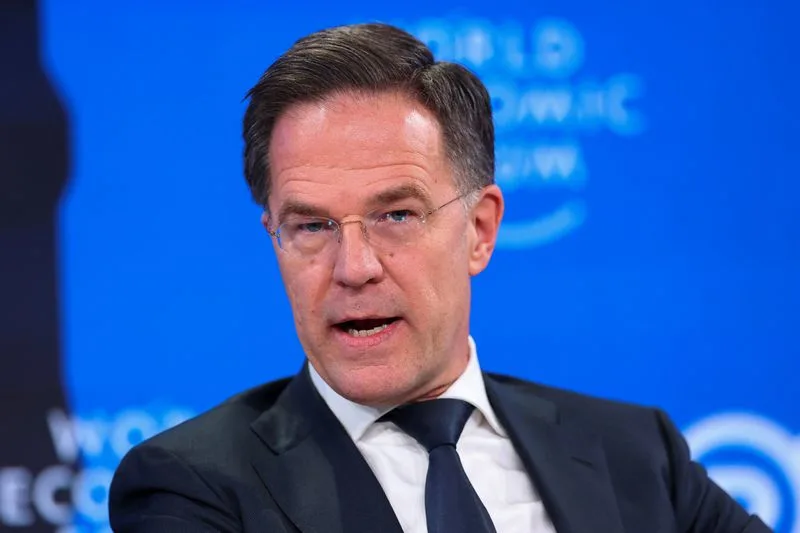
Rutte: Without Trump, Europe Would Still Be Weak
DAVOS, Switzerland — NATO Secretary-General Mark Rutte on Wednesday delivered unusually direct praise for U.S. President Donald Trump, arguing that Europe’s recent economic and defense momentum would not have materialized without Trump’s return to power.
Speaking at the World Economic Forum in Davos, Rutte credited Trump with forcing European governments to confront long-standing underinvestment in both their economies and military capabilities.
“Do you really think that without Donald Trump, eight big economies in Europe — including Spain, Italy and Belgium — would have reached 2 percent growth in 2025 when they were only at 1.5 percent at the beginning of the year? No way,” Rutte said. “Without Donald Trump, this would never have happened.”
Rutte acknowledged that Trump remains controversial in many European political circles but argued that his pressure has produced tangible results. Over the past year, several European states sharply increased defense and economic spending, reversing years of fiscal restraint and reliance on U.S. security guarantees.
The NATO chief also linked Trump’s influence to a landmark shift in alliance policy: the agreement at last year’s NATO summit in The Hague to move toward defense spending equivalent to 5 percent of GDP, including 3.5 percent for core military capabilities.
“Do you really think that would have happened if President Trump had not been reelected? No way,” Rutte said. “It would never have happened.”
Rutte’s comments come amid strained relations between Washington and European allies over Trump’s push to acquire Greenland, a semiautonomous Danish territory. While Trump ruled out using military force in a speech Wednesday, he reaffirmed that U.S. control of Greenland remains a strategic priority.
Rutte echoed Trump’s emphasis on the Arctic, warning that growing Chinese and Russian activity has transformed the region into a critical security frontier.
“We need to defend the Arctic,” Rutte said, noting that seven of the eight Arctic-bordering states are NATO members, with Russia the lone exception. “And China is increasingly active there as well. President Trump and other leaders are right — we have to protect the Arctic.”
The remarks highlight a broader recalibration inside NATO, where Trump’s confrontational approach has increasingly been framed not as destabilizing, but as catalytic — forcing Europe to shed strategic complacency and assume greater responsibility for its own security and economic resilience.










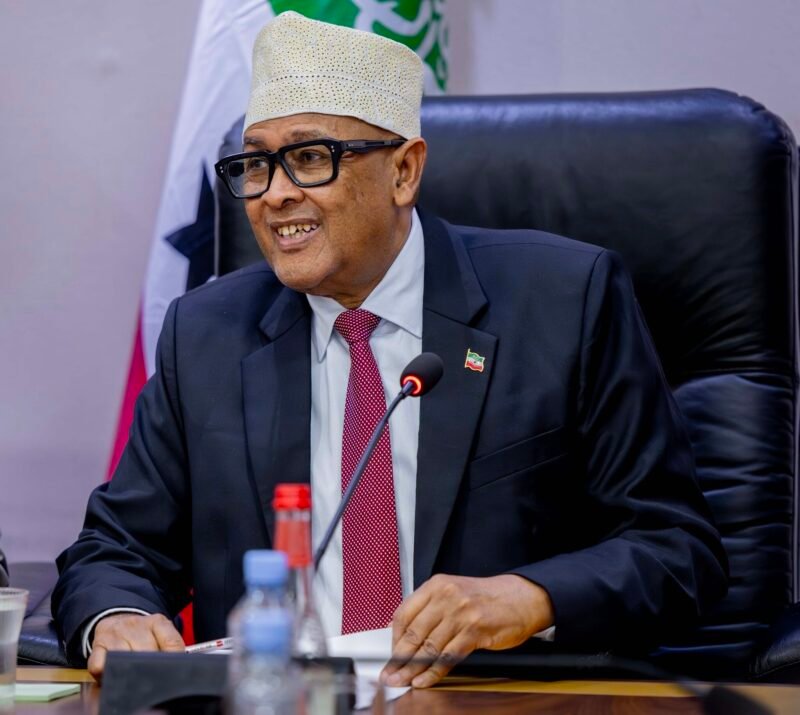
Irro: Davos Marks Somaliland’s Highest Global Profile in 34 Years.
Hargeisa — President of the Republic of Somaliland, Abdirahman Mohamed Abdullahi (Irro), accompanied by Vice President Mohamed Ali Aw Abdi, on Tuesday convened an extraordinary meeting of the Council of Ministers to present a comprehensive report on his participation in the World Economic Forum (WEF) Annual Meeting in Davos, Switzerland.
Addressing the cabinet, President Irro described the Davos summit as a historic milestone for Somaliland, marking the first time the Republic has taken part in a global forum attended by presidents, world leaders and top international investors. He said the participation gave Somaliland its highest international visibility and status in more than three decades.
The President told ministers that the forum firmly placed Somaliland on the global political and investment map, enabling him to deliver key messages reflecting the country’s identity and ambitions. Among those messages, he said, was that Somaliland is ready for international recognition, open to global investment, and anchored in peace, stability, democracy and good governance.
President Irro emphasized that Somaliland’s presence in Davos was not symbolic but strategic, noting that the delegation established high-level connections with international politicians, business leaders and major global media outlets.
He added that during the forum he demonstrated to the international community that Somaliland is a mature and responsible nation, capable of balanced diplomacy and confident in its role in contributing to stability in the Horn of Africa, the Red Sea and the Gulf of Aden region.
At the conclusion of the extraordinary cabinet session, President Irro outlined the national gains secured through Somaliland’s participation in Davos and urged ministers to translate diplomatic momentum into concrete action. He called on the government to strengthen national security and defense, preserve social unity, and accelerate efforts toward international recognition.
The President further directed the Council to inform the public about the new phase Somaliland has entered, explaining the historic achievements secured and the major challenges ahead, particularly in the areas of economic growth and development.
Members of the Council of Ministers warmly commended President Irro, stating that his achievements at the Davos forum significantly enhanced Somaliland’s international reputation, political standing and economic prospects.
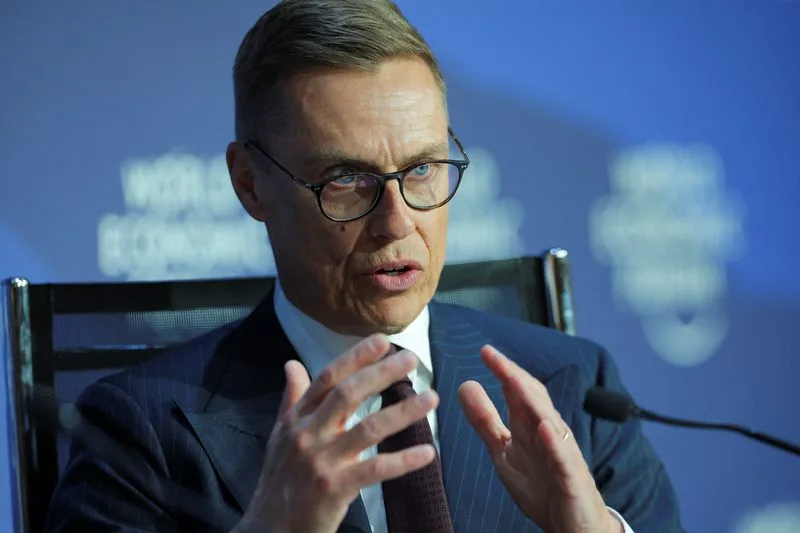
Finnish President Stubb Says Trump Is Increasing Pressure on Russia Over Ukraine War.
DAVOS, Switzerland — Finnish President Alexander Stubb said Thursday that U.S. President Donald Trump is intensifying pressure on Russia over the war in Ukraine, arguing that conditions are now evolving in a way that favors Western powers and Kyiv.
Speaking to Reuters on the sidelines of the World Economic Forum in Davos, Stubb said diplomatic momentum toward a peace deal has strengthened in recent weeks, particularly after Jared Kushner began supporting the efforts of U.S. special envoy Steve Witkoff.
“I think President Trump is putting a lot of pressure on Russia, and I hope he continues to do that,” Stubb said, adding that the evolving negotiations now appear “favourable” from the perspectives of Ukraine, the United States and Europe.
The Finnish leader pointed to a proposed 20-point peace plan that includes security guarantees for Ukraine and a comprehensive reconstruction framework for the war-ravaged country. He said the plan reflects growing alignment among Western allies on how a post-war settlement could take shape.
Stubb’s comments came just days after Washington and European capitals de-escalated a tense dispute over Greenland, a development he said had helped refocus diplomatic energy on Ukraine and wider European security.
Despite his optimism, Stubb expressed doubts that Moscow would readily accept the proposal, citing domestic political constraints inside Russia.
“I’m not convinced Russia will accept the plan,” he said, “largely due to internal political considerations.”
Earlier in Davos, President Trump said his meeting with Ukrainian President Volodymyr Zelenskiy was “very good” and reiterated that his message to Russian President Vladimir Putin was clear: the war must end.
Trump has in recent weeks sought to position himself as a central broker in efforts to wind down the conflict, signaling a shift toward more direct engagement with both Kyiv and Moscow while coordinating with European allies.
For Finland — a frontline NATO member bordering Russia — Stubb’s remarks underscore how closely Northern Europe is watching Washington’s recalibrated role in shaping the next phase of the Ukraine war.
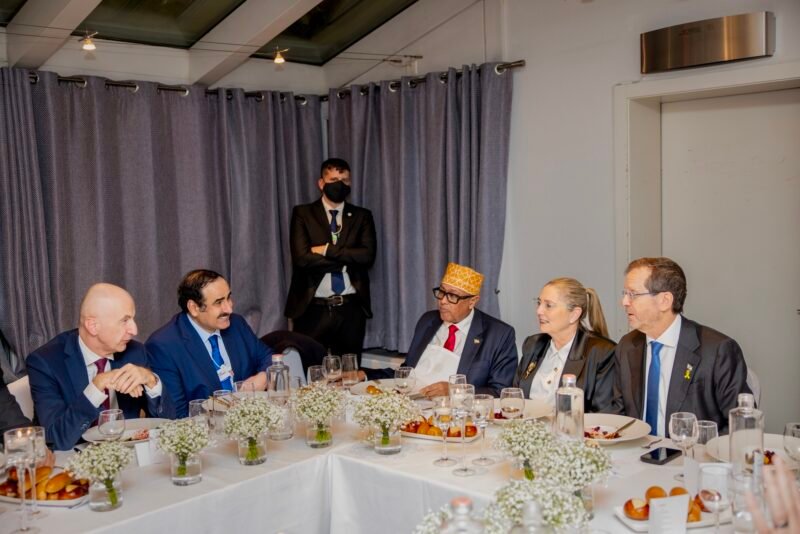
Behind Closed Doors in Davos: Inside Somaliland’s High-Level Diplomatic Dinner – The Power Circle Hosting Somaliland’s President.
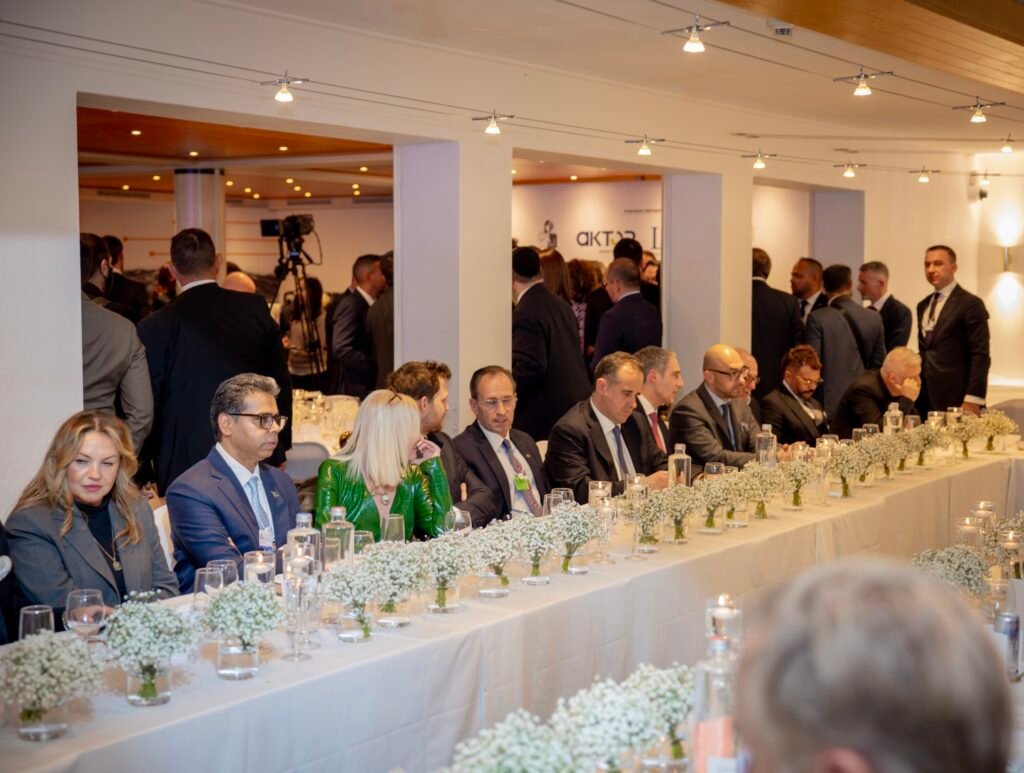
As global leaders gathered in the Swiss Alps for the World Economic Forum, one private dinner quietly redrew the diplomatic map for Somaliland.
President Abdirahman Mohamed Abdillahi “Irro” hosted a special, invitation-only dinner with Israeli President Isaac Herzog on the sidelines of the Davos summit — a meeting that symbolized the rapid deepening of relations between Somaliland and Israel following Tel Aviv’s formal recognition of Somaliland’s sovereignty.
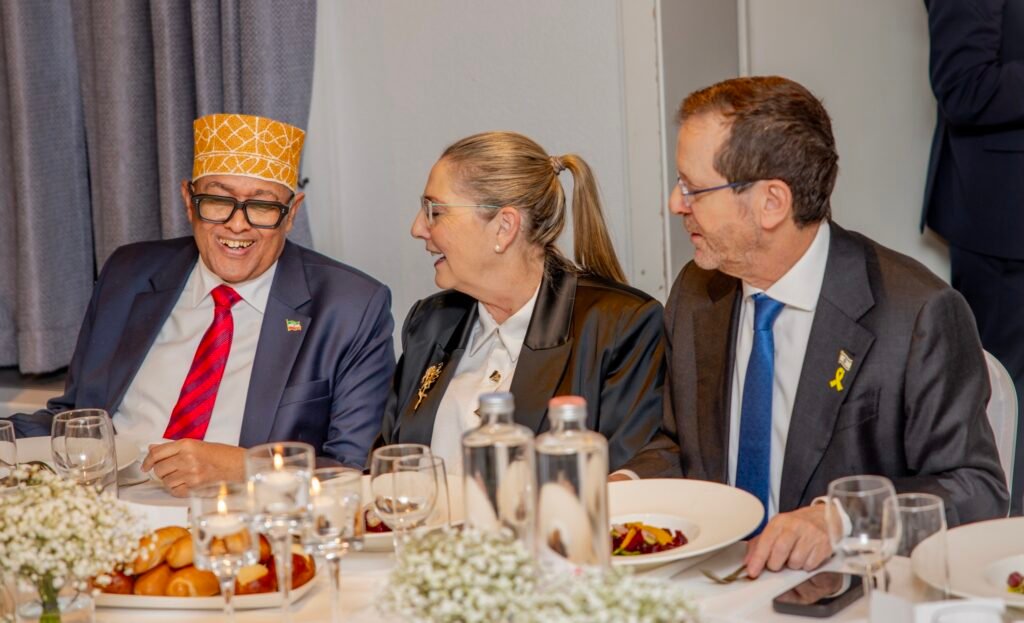
President Herzog publicly welcomed the establishment of diplomatic ties and expressed hope that cooperation between the two nations would expand for the benefit of both peoples, marking one of the highest-profile international endorsements Somaliland has received in three decades.
But the significance of the evening extended well beyond the two presidents.
In a statement posted on Facebook, President Irro confirmed that the dinner was attended by senior politicians and international business leaders, including Eric Trump, son of U.S. President Donald Trump. Although not a government official, Eric Trump serves as Executive Vice President of the Trump Organization and is a close political adviser to his father. He had earlier attended a separate Davos event hosted at the same venue titled “Global Changes and Opportunities in Emerging Markets.”
While the full guest list was not officially released, WARYATV independently analyzed photographs shared by President Irro, cross-referencing publicly available data and verified attendee databases linked to the event. That review confirmed the presence of several prominent figures at the dinner.
Among the most notable was Nir Barkat, Israel’s Minister of Economy and Industry and a former mayor of Jerusalem, who plays a central role in Israel’s economic diplomacy and engagement with international investors.
The gathering also included some of the world’s most influential business leaders:
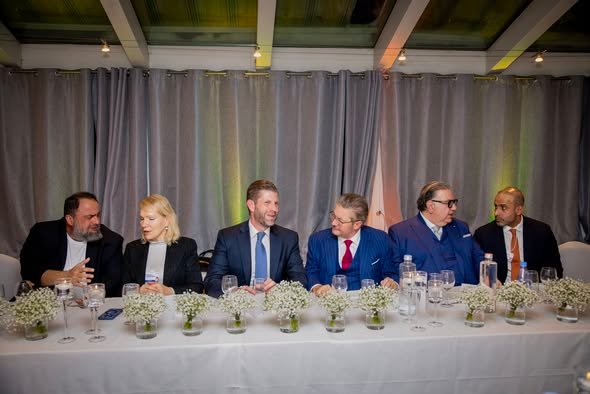
Margarita Louis-Dreyfus, Chairwoman of the Louis Dreyfus Group, one of the largest global commodity trading firms spanning agriculture, energy and logistics.
Luděk Sekyra, a Czech billionaire with major investments in real estate, infrastructure and European philanthropy.
Evangelos Marinakis, Greek shipping magnate, energy transport tycoon and owner of Premier League club Nottingham Forest.
John S. Koudounis, President and CEO of U.S.-based Calamos Investments, a major institutional asset management firm.
Rainer Schorr, founder and chairman of European real estate group Standard Land SA.
Nadav Sarfir, a senior official at Israel’s Ministry of Technology and Innovation.
The dinner was part of a broader program hosted by Greek House Davos, led by Eirini Vantaraki, who has described the platform as a hub for discreet strategic meetings away from public panels. According to Vantaraki, Davos is increasingly shifting from open forums to closed-door encounters where political power, capital, and long-term strategy converge.
What remains unclear is the full scope of discussions or the complete list of attendees, as the gathering was private and by invitation only.
What is clear, however, is the geopolitical signal it sent.
The presence of Somaliland — a state not yet broadly recognized internationally — among senior Israeli officials, figures tied to U.S. political power, and global economic elites underscores a striking diplomatic development: Somaliland is no longer waiting outside the room. It is being welcomed inside it.
And in Davos, that distinction matters.
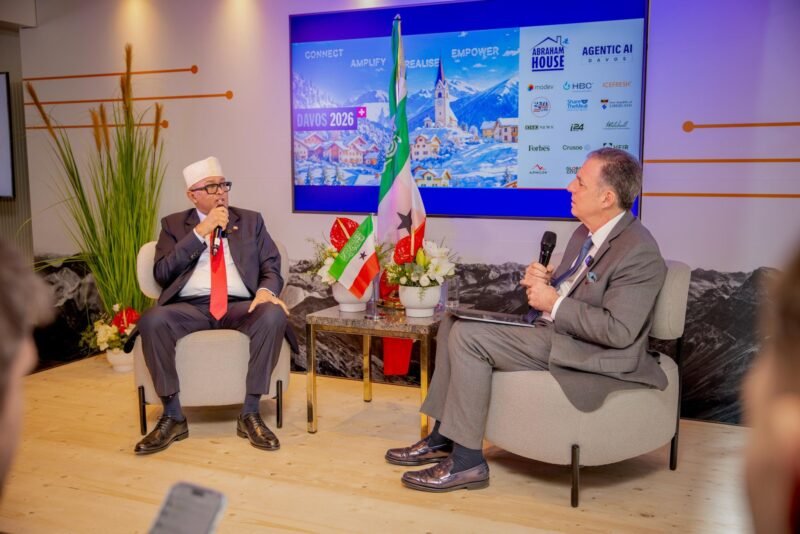
DAVOS, Switzerland — The President of the Republic of Somaliland, Abdirahman Mohamed Abdullahi “Irro,” used his ongoing participation at the World Economic Forum (WEF) in Davos to position Somaliland as a stable, democratic and investable partner in one of the world’s most volatile regions.
Speaking to international leaders and global investors attending the forum, President Irro called for a reassessment of Somaliland’s role on the international stage, highlighting the territory’s record of more than three decades of peace, democratic governance, security and political stability in the conflict-prone Horn of Africa.
In an in-depth interview with journalist John Defterios and during meetings on the sidelines of the annual gathering, the president described Somaliland as a strategic gateway linking Africa, the Middle East and major global trade routes. He detailed investment opportunities across key sectors including livestock, agriculture, fisheries, minerals and oil.
President Irro stressed that Somaliland is seeking partnership, not dependency.
“We are not asking for help. We have come to offer cooperation based on peace, democracy and shared opportunities,” he said.
He told investors that Somaliland offers political stability, legal certainty, and security — rare attributes in the Horn of Africa — making it a reliable destination for long-term investment.
The president also welcomed Israel’s recent recognition of Somaliland, thanking the Israeli government for what he called a courageous and historic decision. He urged other nations to follow suit and recognize what he described as the “real political realities” in the region.
Irro further outlined Somaliland’s growing regional cooperation, including plans to serve as a Red Sea trade corridor for Ethiopia and to expand cross-border trade, energy links and infrastructure development.
In his closing remarks, the president called on the international community to reward Somaliland’s long-standing stability with full international recognition, enabling it to formally participate in the global economy.
“Together, let us turn our commitment into progress, our power into shared prosperity and historic cooperation,” he said.
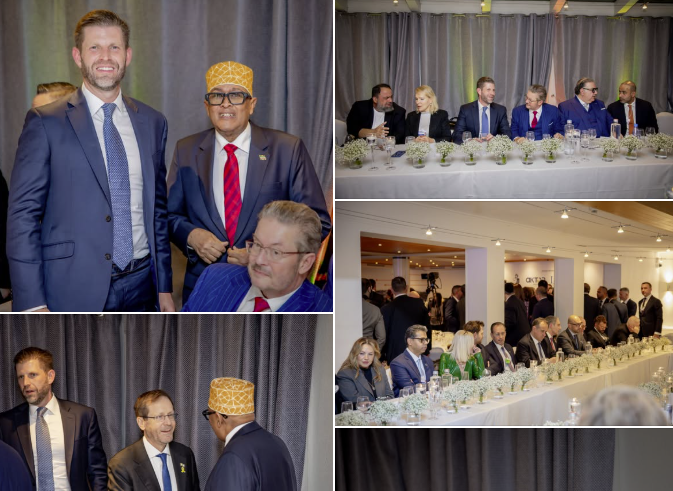
From Recognition to Alliance: Somaliland President Irro Meets Israeli President Isaac Herzog and Eric Trump in Davos, Marking a New Strategic Era.
In the rarefied corridors of Davos, where power is often exercised more quietly than it is announced, President Abdirahman Mohamed Abdulaahi “Irro” delivered a moment that may redefine Somaliland’s global posture.
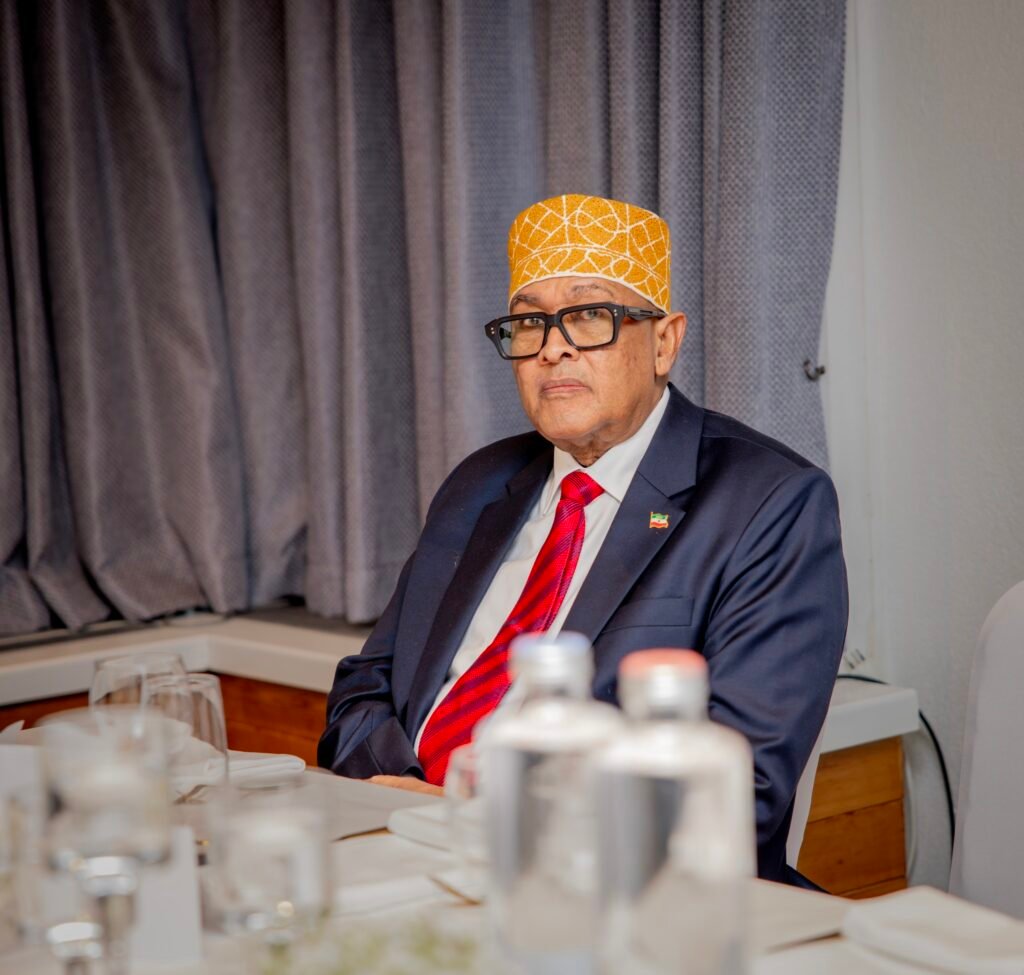
At a historic dinner meeting in Switzerland, the President of the Republic of Somaliland sat alongside the President of the State of Israel, Isaac Herzog, and Eric Trump, son of the President of the United States — a tableau that speaks louder than any formal communiqué.
This was not ceremonial diplomacy. It was strategic choreography.
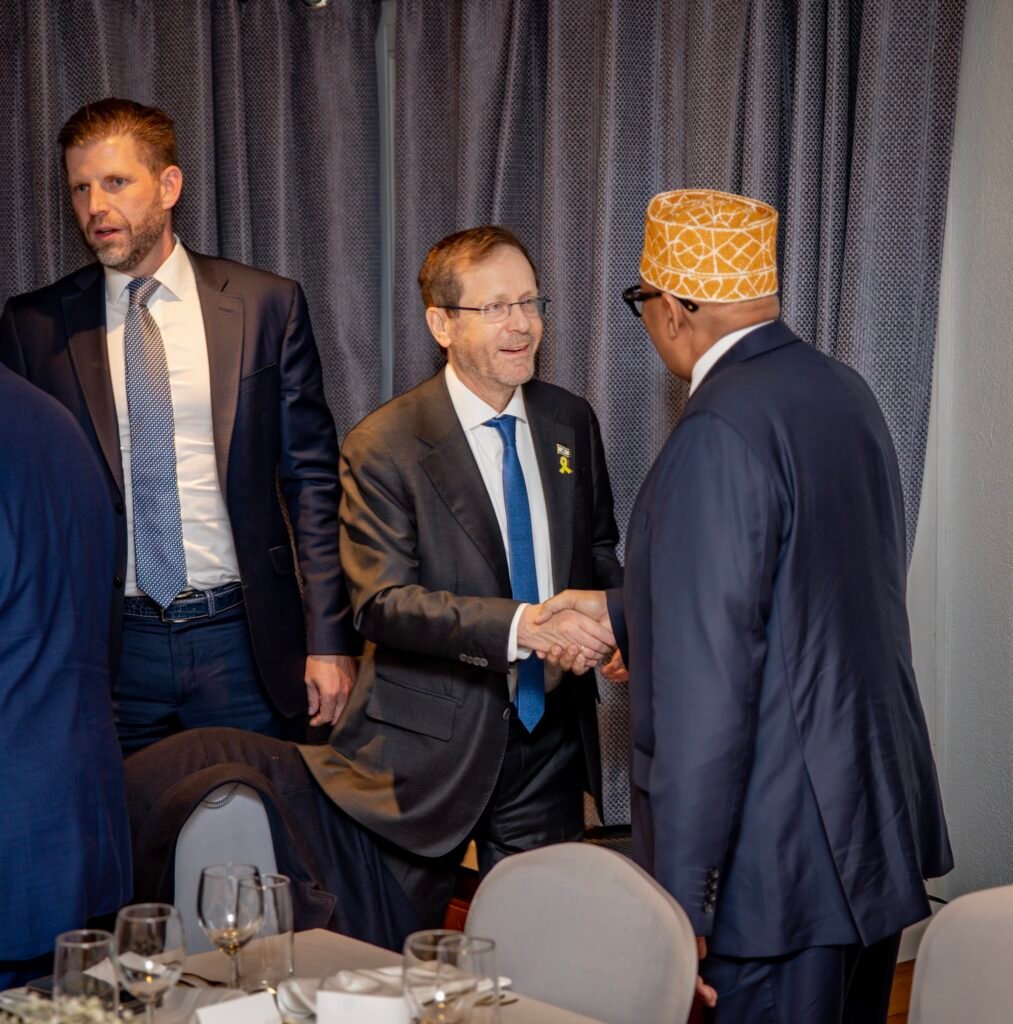
The meeting marked the first high-level public engagement following Israel’s official recognition of Somaliland on December 26, 2025 — a decision that shattered three decades of diplomatic inertia and repositioned Somaliland firmly within the architecture of emerging global alliances.
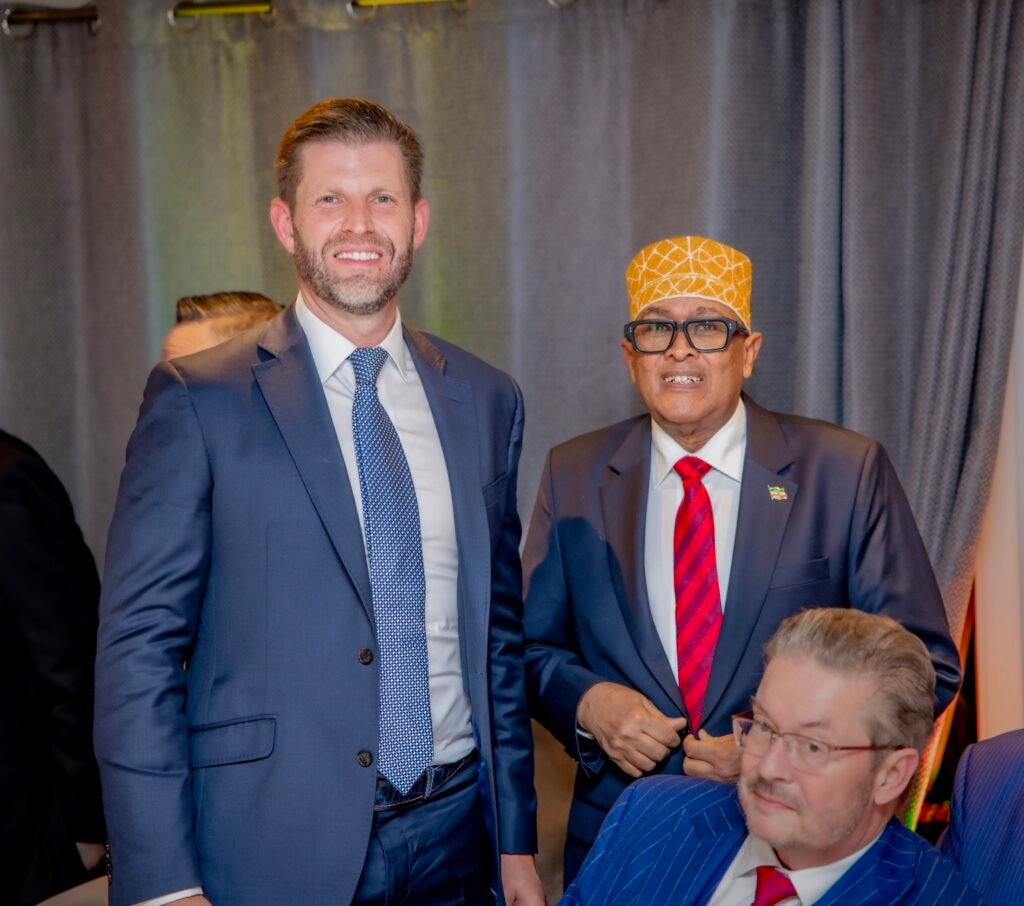
Held in an atmosphere described by officials as one of mutual respect and trust, the talks moved swiftly beyond symbolism into substance. Both presidents discussed the foundations of a state-to-state partnership, exploring cooperation across a spectrum of strategic sectors: security and defense, technology and cyber capabilities, agriculture and water management, healthcare, energy development, and mining.
These are not soft fields. They are pillars of state-building.
For Somaliland, the significance is twofold. First, it confirms that recognition is not an endpoint but an entry point into the world’s strategic systems. Second, it demonstrates that Somaliland is not approaching global partnerships as a passive beneficiary, but as a contributing actor — offering stability, maritime security, and geopolitical relevance in one of the world’s most sensitive corridors: the Horn of Africa and the Red Sea basin.
President Irro used the occasion to formally thank Israel’s government and people for what he described as a “historic and courageous” recognition — one that affirmed, after 34 years, the right of Somaliland’s people to stand as a sovereign state within the international community.
But the message went deeper.
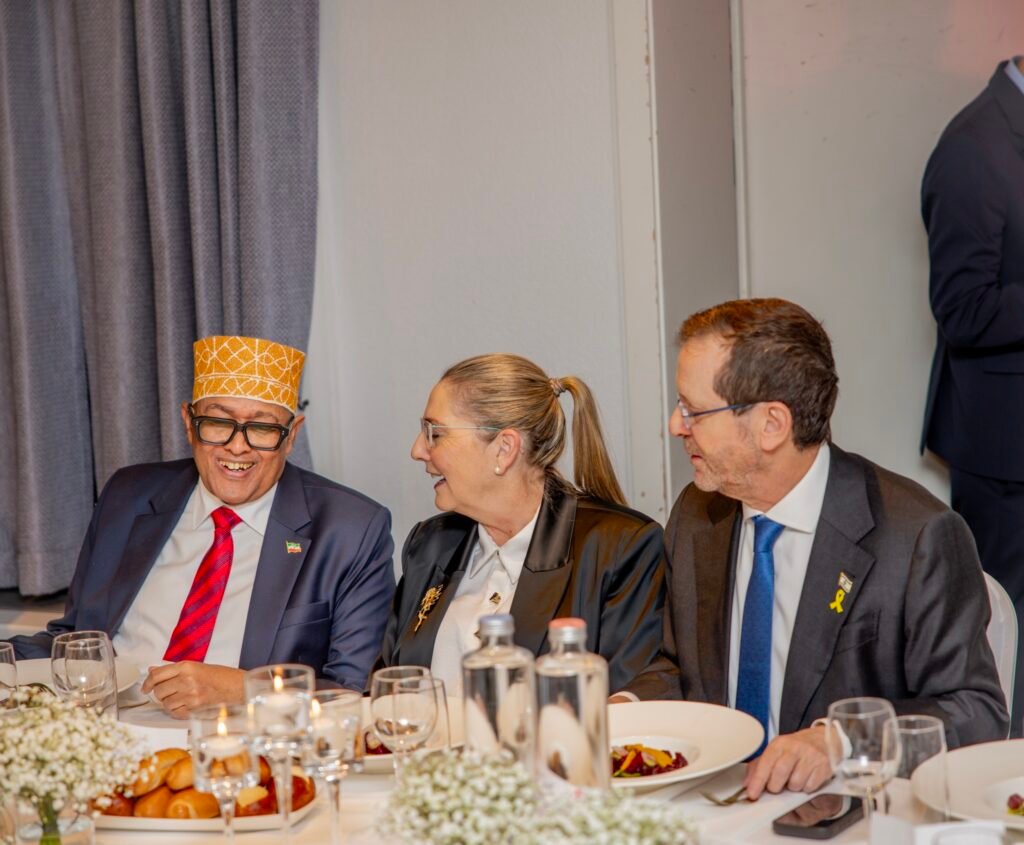
By emphasizing Somaliland’s identity as a peace-loving, democratic, and law-abiding state, Irro positioned the country not merely as a recipient of diplomatic goodwill, but as a model of post-conflict statehood in a region too often defined by instability.
The presence of Eric Trump at the table added a powerful layer of geopolitical subtext. While not a government official, his proximity to the U.S. presidency — particularly in the current political climate — underscores Somaliland’s expanding visibility within influential American political and strategic circles. In diplomacy, access often precedes alignment.
This meeting, in effect, signaled that Somaliland’s recognition by Israel is not an isolated diplomatic event. It is the opening move in a broader realignment — one that connects Hargeisa to Jerusalem, Washington, Abu Dhabi, and beyond.
What emerged in Davos was not simply a dinner.
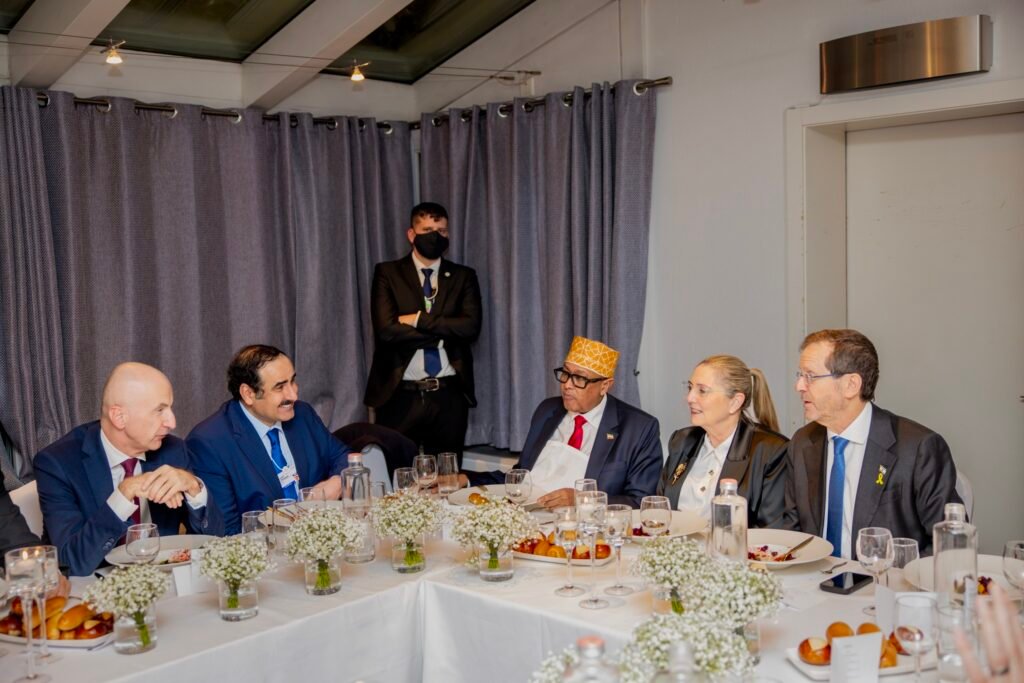
It was a declaration of arrival.
Somaliland is no longer negotiating its existence. It is shaping its alliances.
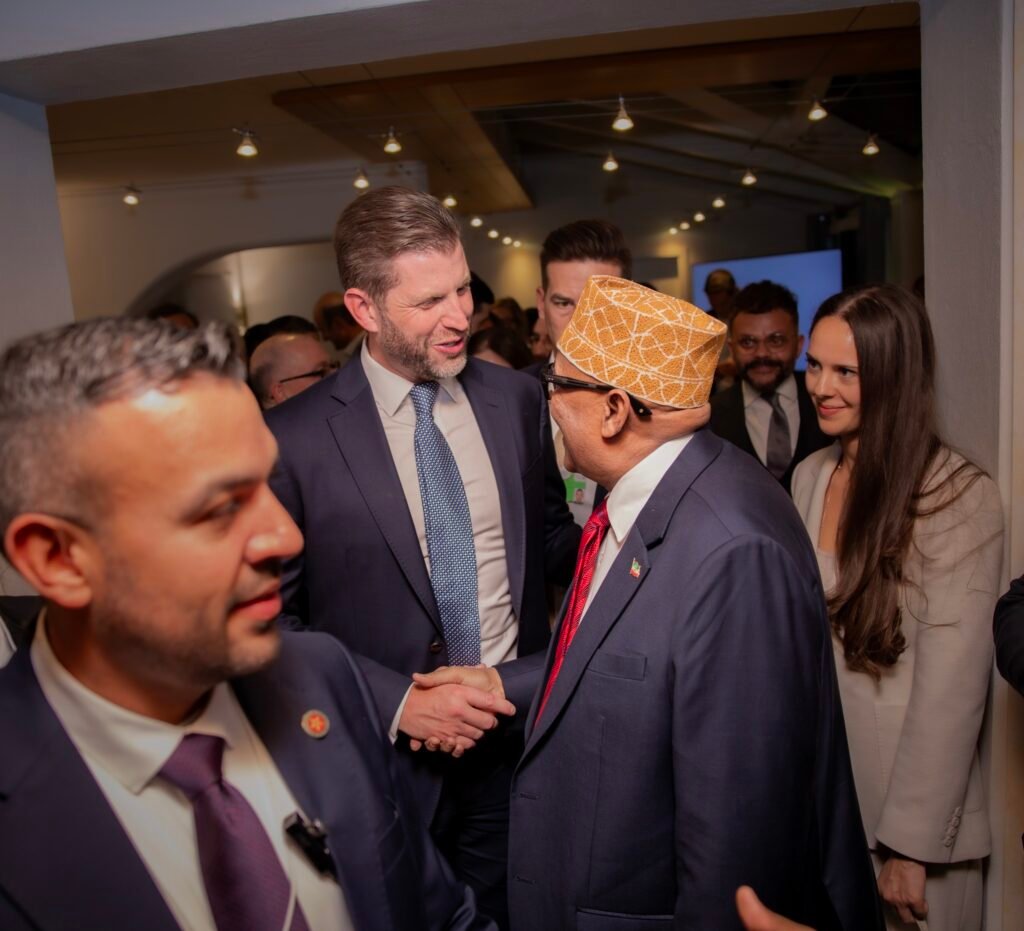
As global power centers quietly recalibrate their priorities around security corridors, maritime routes, and technological resilience, Somaliland is positioning itself where it belongs: at the table where the future is being written, not merely read.
And in the thin Alpine air of Davos, one truth became unmistakably clear:
The Republic of Somaliland has entered its era of strategic diplomacy — not as a hopeful claimant, but as a recognized, reliable, and rising state.
Ayaan Hirsi Ali Backs Trump’s Davos Speech, Calling Defense of Western Civilization “Priority No. 1”.
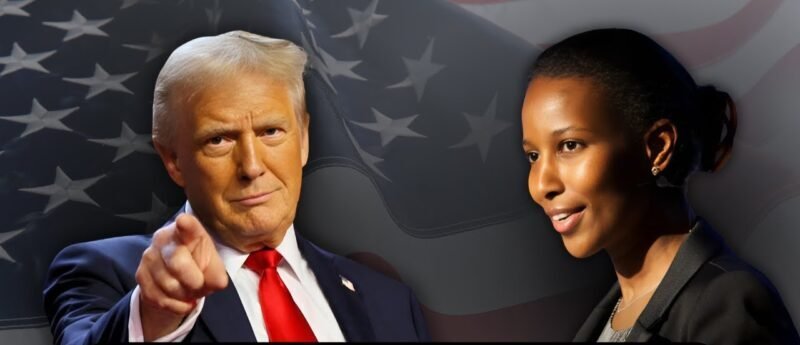
When Donald Trump used the World Economic Forum in Davos to declare that Western civilization faces an “existential attack,” the reaction among global elites ranged from discomfort to outright disbelief. But one voice emerged not in opposition, but in firm support: Ayaan Hirsi Ali.
For Hirsi Ali — a Somali-born activist, former Dutch lawmaker, and one of the most prominent critics of political Islam in the West — Trump’s intervention was not provocative theater. It was overdue clarity.
“I don’t think it’s an important thing,” she said afterward. “I think it is the most important thing.”
Her response crystallized what Trump’s Davos address truly represented: a pivot from economic and military metrics of power to something more fundamental — cultural survival.
Trump’s claim that “the West cannot mass import foreign cultures which have failed to build successful societies of their own” was jarring in its bluntness. But Hirsi Ali framed it as strategic honesty, arguing that prosperity, security, and democratic stability flow not merely from institutions, but from values.
“What made America and Europe great is this unique culture,” she argued. “If we do not defend it, we risk losing it.”
This framing moves the immigration debate beyond border enforcement and into the terrain of civilizational identity. Trump was not merely criticizing migration volumes; he was questioning whether the West can absorb large-scale populations whose cultural norms fundamentally conflict with liberal democratic order — without altering that order itself.
Nowhere was this sharper than in his reference to Minnesota’s multi-million-dollar fraud scandal involving Somali residents. Trump described it as symptomatic of deeper structural failures exported from fragile states. Hirsi Ali did not reject that framing — she amplified it.
“The president is right when he says Somalia hasn’t even made it into a nation,” she said, citing clan politics, radical ideology, and institutional collapse as barriers to statehood.
Her remarks went further, suggesting that Western welfare systems are not simply exploited, but strategically manipulated through the language of civil rights and anti-racism — creating what she described as a shield against scrutiny.
This is where Hirsi Ali’s support for Trump becomes politically consequential. It reframes the debate not as xenophobia versus inclusion, but as governance versus cultural erosion.
For her, the crisis is not only fiscal or legal — it is existential.
“If we keep importing large populations that depend on welfare and refuse to assimilate,” she warned, “we’re committing cultural, national, and political suicide.”
Her prescription is equally uncompromising: enforced assimilation or the withdrawal of citizenship for those who reject the host society’s norms. Such proposals challenge long-held liberal assumptions about pluralism, tolerance, and the limits of state authority — but they resonate in a Europe and America increasingly shaken by identity politics, social fragmentation, and security anxieties.
What makes this moment significant is not simply Hirsi Ali’s endorsement of Trump, but the platform she validates: Davos — once a cathedral of globalization — becoming a venue for civilizational reckoning.
Her final assessment was blunt: Trump’s speech was a “breakthrough.”
Not because it united leaders, but because it forced them to confront a question too long deferred:
What exactly is the West fighting to preserve?
In that sense, Davos 2026 may be remembered not for financial forecasts or climate pledges — but as the moment when culture overtook capital as the central axis of geopolitical power.
And Ayaan Hirsi Ali, once a refugee from a failed state, now stands as one of the loudest voices demanding that the West decide what it truly stands for — before someone else decides for it.
From Hargeisa to Davos: Somaliland at Davos: President Irro’s Arrival Signals a New Era of Global Legitimacy.
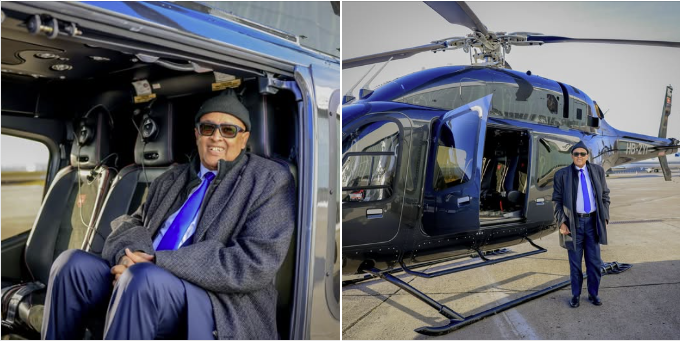
In global diplomacy, optics often matter as much as formal treaties. This week, as a helicopter touched down in the snow-covered enclave of Davos-Klosters, Switzerland, a single image quietly altered the political gravity of the Horn of Africa.
President Abdirahman Mohamed Abdullahi “Irro,” stepping onto Alpine ground at the World Economic Forum, did more than attend a conference. His arrival sent a message that resonated far beyond the Swiss mountains: Somaliland is no longer knocking at the door of international legitimacy — it is walking through it.
Davos is not just another summit. It is a gatekeeper of relevance. The World Economic Forum convenes leaders who shape capital flows, security architectures, and the future of global governance. Invitations are not extended to “regional administrations” or symbolic entities. They are reserved for actors deemed capable of influencing the world’s direction.
That is why the absence of Somalia — and the presence of Somaliland — carried such political weight.
For Mogadishu and Somaliland’s long-standing detractors, the shock was not merely symbolic. It was structural. While Somalia remains mired in dependency politics and internal fragmentation, Somaliland’s head of state was entering the room where global priorities are debated, funded, and implemented.
This is the “Spirit of Dialogue” made tangible — a dialogue in which Hargeisa is now formally present.
President Irro’s public message to Somalilanders spoke of “peace, prosperity, and goodwill.” But the subtext was unmistakable: sovereignty is no longer a claim; it is a practiced reality.
By linking his greetings to an image from Davos, Irro anchored Somaliland’s local struggle for recognition to the global pursuit of stability and growth. For citizens at home and in the diaspora, the image validated more than three decades of self-governance, democratic transitions, and economic resilience built without international recognition — and now, increasingly, without apology.
The theme of this year’s WEF, “Connecting leaders to make sense of global challenges,” aligns almost surgically with Somaliland’s emerging geopolitical posture. As Somaliland navigates the post-recognition phase following Israel’s recognition and its deepening integration into the UAE-led Red Sea security and trade architecture, Davos offers a critical platform to translate political legitimacy into material power.
Three strategic priorities stand out.
First, engaging global capital. Somaliland is signaling a shift from aid dependency toward direct investment, placing Berbera, logistics, energy, and digital infrastructure into conversations with sovereign wealth funds and multinational CEOs.
Second, solidifying alliances. In a neutral, high-level setting like Davos, Somaliland can quietly reinforce ties with Abraham Accords partners and maritime security stakeholders without the diplomatic noise that often surrounds bilateral visits.
Third, defining the Horn of Africa’s future. By positioning Berbera and the corridor linking Ethiopia to the Gulf as a cornerstone of global supply chains, Somaliland inserts itself into discussions previously dominated by Djibouti, Kenya, and fragile federal Somalia.
The symbolism could not be sharper. The roar of F-35s over Hargeisa days earlier spoke to territorial security. The hum of helicopter blades in Davos spoke to the expansion of influence. One secures the nation. The other projects it.
President Irro’s presence in Switzerland reflects more than diplomatic ambition. It represents a new Somaliland doctrine: security at home, legitimacy abroad, and relevance everywhere in between.
Somaliland has not simply arrived in Switzerland. It has arrived on the global stage — not as a petitioning territory, but as a contributing actor in shaping tomorrow’s world.
And for the first time in modern history, Somaliland is no longer asking to be recognized.
It is being recognized by where it stands.
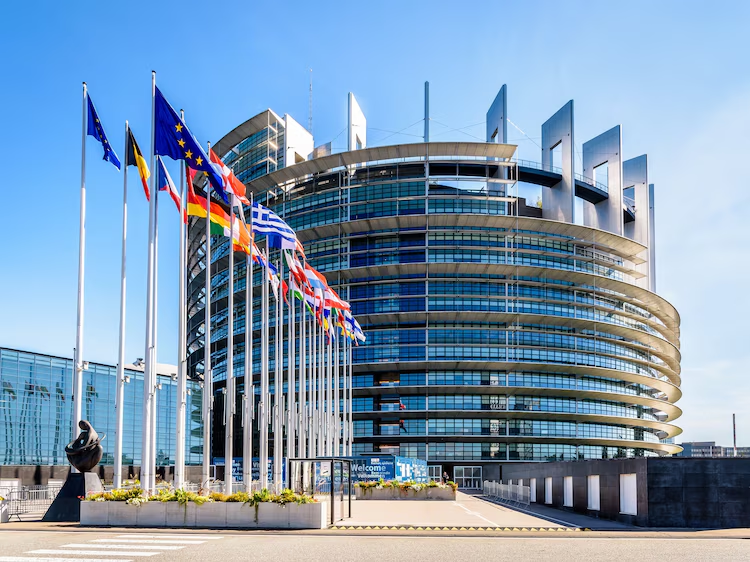
Europe has drawn a hard line — and this time, it is not symbolic.
The European Union has formally suspended the ratification of its newly signed trade agreement with the United States, responding to President Donald Trump’s tariff threats linked to his push for U.S. ownership of Greenland. The move marks one of the most serious ruptures in transatlantic economic relations in years and signals that the Greenland dispute has now crossed from diplomatic tension into open economic confrontation.
The timing was no coincidence.
Minutes after Trump doubled down on his Greenland ambitions at the World Economic Forum in Davos, European lawmakers halted the agreement, accusing Washington of using trade as a coercive weapon against EU sovereignty. The message from Brussels was unusually blunt: territorial pressure backed by tariffs is incompatible with a stable trade relationship.
This matters because the deal, signed just months ago in July, was meant to stabilize EU-US commerce after years of tariff skirmishes. European Commission President Ursula von der Leyen had hailed it as a pillar of certainty in an unstable world. Now, that certainty is gone.
Trump’s plan would impose 10% tariffs starting February 1 on eight European countries — including Denmark, France, Germany, and the UK — escalating to 25% by June. For Europe, this is not just about economics; it is about precedent. Allowing a major power to threaten tariffs in pursuit of territorial ambitions would undermine the entire rules-based trading system the EU was built to defend.
What makes this escalation particularly destabilizing is Trump’s framing.
While he ruled out military force in Davos, he openly tied economic punishment to geopolitical demands. In doing so, Trump has blurred the line between trade policy and territorial pressure — a tactic more associated with coercive diplomacy than allied negotiation.
Markets immediately reacted. US stocks slid sharply before partially recovering, while European markets turned cautious. But the political signal was clearer than any financial fluctuation: the EU is prepared to absorb economic pain rather than legitimize economic blackmail.
For Europe, Greenland is not merely a remote Arctic territory — it is a test case for sovereignty under pressure. For Washington, the standoff risks transforming a strategic ambition into a self-inflicted transatlantic crisis.
What happens next will shape more than trade. It will define whether economic power can still be separated from territorial coercion — or whether the two are now permanently fused in global politics.

Israel Reportedly Kills IRGC Navy Chief Linked to Hormuz Closure

Trump Ready to ‘Unleash Hell’ on Iran as Talks Remain Uncertain

Denmark Election: Danish Voters Ignore Global Tensions at the Ballot Box


-
 Terrorism2 months ago
America Pulls Back From Somalia but Doubles Down Next Door
-

 Analysis2 months ago
How Chinese Speculators Set the Stage for the Gold and Silver Crash
-

 Top stories2 months ago
Rubio Signals Preemptive Military Option as U.S. Tightens Pressure on Iran
-
 Top stories2 months ago
France Blocks EU Push to Let Ukraine Buy British Storm Shadow Missiles
-
 Russia-Ukraine War1 month ago
Russian General Boasted of Torture and Killing of Ukrainian Prisoners
-
 US-Israel war on Iran1 month ago
UK Refuses Iran Strike Access, Trump Fires Back
-
 Russia-Ukraine War1 month ago
Europe’s Spies Challenge Trump’s Ukraine Peace Optimism
-
 Analysis2 months ago
Iran Warns, Qatar Mediates, Washington Deploys: A Crisis Managed in Public and Private