
Diplomatic Purge
Trump Recalls 30 Ambassadors to Install Loyalists Abroad

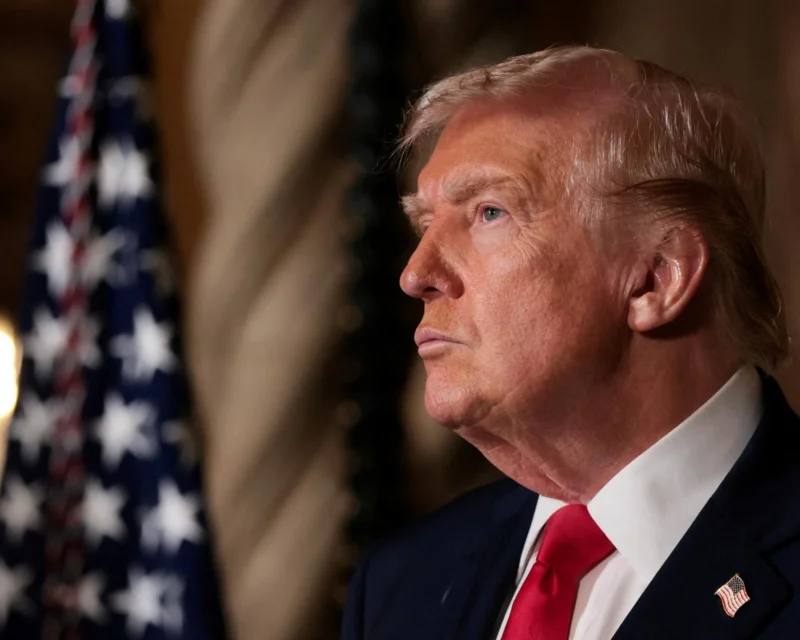
Career diplomats out. Loyalists in. Washington’s foreign service enters a dangerous new phase.
The Trump administration has quietly recalled nearly 30 U.S. ambassadors and senior overseas diplomats, signaling a sharp escalation in its campaign to reshape the State Department around political loyalty rather than professional neutrality, according to multiple diplomatic sources.
The recall—confirmed by current and former senior officials—has raised alarm precisely because it targets career Foreign Service officers, who are traditionally retained across administrations to preserve continuity and insulate diplomacy from partisan politics. Such sweeping removals are rare, and critics say they amount to a politicization of America’s diplomatic corps.
Officials close to Donald Trump have framed the move as routine. A senior State Department official said ambassadors are “personal representatives of the president” and that Trump has the right to ensure U.S. envoys advance his “America First” agenda. The official confirmed the diplomats will be reassigned rather than fired.
But the scale and secrecy of the recalls tell a different story.
The effort aligns with the administration’s long-stated goal of dismantling what it calls the “deep state,” a term critics argue is being used to justify purging experienced professionals. Diplomats interviewed described confusion, fear, and a lack of transparency, with recall orders delivered quietly over the weekend and staff scrambling to compile lists of who was removed—and why.
“This is a travesty,” said one former senior official who spoke with affected ambassadors. “It’s random. No one knows why they were pulled or spared.”
Africa was hit hardest. Around a dozen chiefs of mission were recalled from Niger, Uganda, Senegal, Somalia, Côte d’Ivoire, Mauritius, Nigeria, Gabon, Congo, Burundi, Cameroon, and Rwanda. Additional recalls affected U.S. missions in Egypt and Algeria, while European posts including Slovakia, Montenegro, Armenia, and North Macedonia also saw removals.
The American Foreign Service Association, which represents U.S. diplomats, issued a sharply worded statement expressing “deep concern.” AFSA warned that the promotion process now appears skewed to elevate diplomats perceived as politically aligned with the administration—penalizing those who faithfully served under previous governments.
“Foreign Service staff who dutifully executed the policies of a previous administration should not be penalized,” the union said, adding that the department must explain how fairness is preserved when loyalty outweighs merit.
Democratic lawmakers echoed those concerns. Jeanne Shaheen, the ranking Democrat on the Senate Foreign Relations Committee, warned that recalling seasoned ambassadors amid roughly 80 vacant posts “hands U.S. leadership to China and Russia.”
Secretary of State Marco Rubio confirmed last week that hundreds of diplomats had been nominated for promotion after the administration rewrote evaluation criteria and reshaped promotion panels—moves tied to the rollback of Diversity, Equity, and Inclusion policies across federal agencies.
Behind the scenes, powerful White House figures such as Stephen Miller have pushed to place ideological allies inside the State Department, particularly to advance stricter immigration enforcement and nationalist policy goals.
For critics, the recalls mark a dangerous turning point. Diplomacy, they argue, depends on credibility, institutional memory, and the perception of professionalism. Turning ambassadors into political enforcers risks weakening U.S. influence abroad—at a moment of intensifying global competition.
What emerges is not merely a reshuffle, but a redefinition of American diplomacy itself: less insulated, more ideological, and increasingly aligned with the political priorities of one administration. Whether that shift strengthens U.S. power—or erodes it—may soon be tested on the world stage.












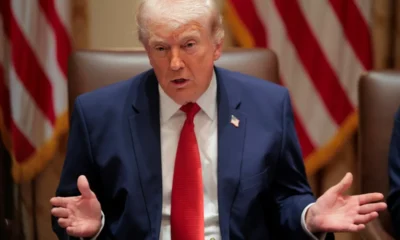



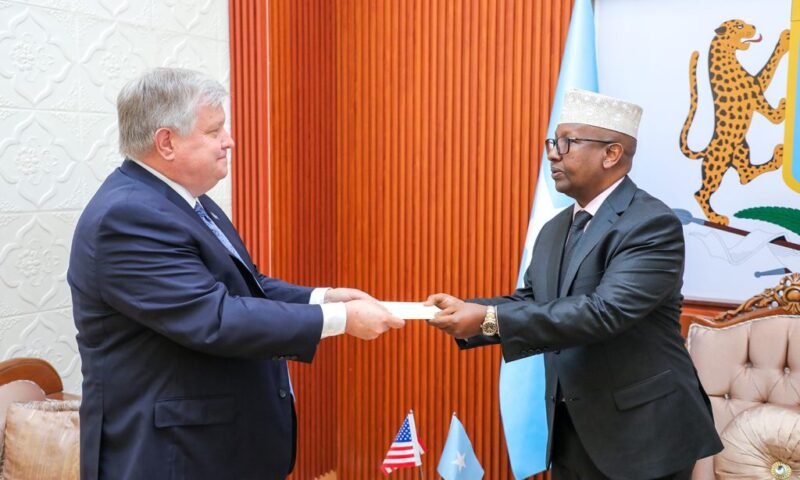
Career diplomats sidelined as loyalty reshapes U.S. foreign policy—Somalia now caught in the fallout.
The U.S. Ambassador to Somalia is among nearly 30 career diplomats recalled under a quiet but sweeping shake-up ordered by the administration of Donald Trump, a move that signals a sharper turn toward ideological alignment inside America’s foreign service.
According to two State Department officials speaking on condition of anonymity, ambassadors and senior chiefs of mission in at least 29 countries were notified last week that their assignments would end in January. Among them is Richard H. Riley, a veteran diplomat who took up his post in Mogadishu in May 2024.
Riley’s tenure has coincided with a delicate phase in Somalia’s political trajectory. He has overseen U.S. engagement on security cooperation, governance reform, and development assistance, while working closely with Somali leaders amid mounting political tensions. His recall comes as Somalia approaches contentious elections, marked by an opposition boycott and warnings from analysts that the process could trigger unrest.
The diplomats affected were all appointed during the Biden administration but had initially survived earlier personnel changes in the opening months of Trump’s second term, which focused largely on political appointees. This latest round, however, cuts deeper—targeting career Foreign Service officers traditionally expected to serve across administrations regardless of political shifts.
Africa has been hit hardest. Ambassadors or chiefs of mission have been recalled from 13 countries, including Burundi, Cameroon, Cape Verde, Gabon, Côte d’Ivoire, Madagascar, Mauritius, Niger, Nigeria, Rwanda, Senegal, Uganda, and Somalia.
Asia follows with changes affecting Fiji, Laos, the Marshall Islands, Papua New Guinea, the Philippines, and Vietnam. Europe has seen recalls in Armenia, Montenegro, North Macedonia, and Slovakia, while Algeria, Egypt, Nepal, Sri Lanka, Guatemala, and Suriname are also affected.
The U.S. State Department declined to comment on specific numbers or individual cases but defended the move as routine. Officials described ambassadors as “personal representatives of the president,” arguing that it is within Trump’s authority to ensure that those serving abroad fully advance his “America First” agenda.
Critics, however, warn the scale and timing of the recalls risk politicizing the diplomatic corps and weakening U.S. credibility—particularly in fragile states like Somalia, where continuity and institutional trust are critical.
For Mogadishu, Riley’s departure removes a senior U.S. interlocutor at a moment of political uncertainty. For Washington, the recall underscores a broader recalibration: experience and continuity are giving way to loyalty and alignment, even in regions where instability leaves little margin for diplomatic disruption.
As the Trump administration presses ahead with reshaping America’s presence abroad, Somalia’s inclusion in the recall list highlights how domestic political priorities in Washington are now directly reshaping diplomacy on some of the world’s most sensitive front lines.

Gulf Unity Emerges: Stop the War Before It Spreads

Italy Blocks US Use of Sicily Air Base

Inside Iran’s War Tactic: Turning Civilian Spaces into Battle Zones


-
 US-Israel war on Iran1 month ago
UK Refuses Iran Strike Access, Trump Fires Back
-
 Russia-Ukraine War1 month ago
Europe’s Spies Challenge Trump’s Ukraine Peace Optimism
-
 Top stories4 weeks ago
War Expands Across Region as Iranian Militias Join Fight
-
 US-Israel war on Iran1 month ago
Iran Pledges ‘Never, Ever’ to Hold Bomb-Grade Material
-
 Top stories1 month ago
India Turns to Brazil in Strategic Minerals Push Against China
-
 US-Israel war on Iran1 month ago
Syria Under Fire on Two Fronts
-
 Russia-Ukraine War1 month ago
Estonia Warns NATO Would Strike Deep Inside Russia if Baltics Are Invaded
-
 Terrorism4 weeks ago
Regional Army Moves Against Expanding Armed Groups