
BALCAD’S BIG LIE
Mogadishu’s Narrative of Engagement With Somaliland Seen as Political Incitement


FGS Claims of “Direct Talks” With Somaliland Exposed as Strategic Deception.
Mogadishu’s newest diplomatic claim—that it maintains “direct and regular contact” with Somaliland—marks a familiar return to political theater disguised as dialogue.
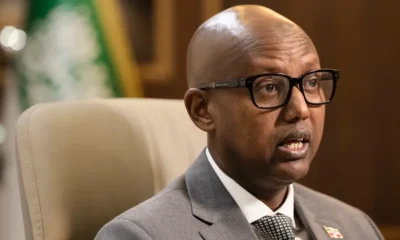
Somali Minister of State for Foreign Affairs Ali Omar Balcad delivered the assertion to Qatari media this week, framing it as evidence of active engagement between the Federal Government of Somalia (FGS) and the Republic of Somaliland.
In reality, the statement reflects an information campaign designed not to foster negotiation but to fabricate the appearance of one.
Somaliland’s position is unequivocal: all communication with Mogadishu has been suspended, Somaliland has repeatedly stated that no talks, formal or informal, are underway.
The insistence by Mogadishu that dialogue continues—despite clear evidence to the contrary—reveals less about Somaliland’s diplomacy and far more about the political fragility of the FGS.
Balcad’s narrative serves three strategic purposes for a government that finds itself increasingly isolated. First, it allows Mogadishu to project the illusion of diplomatic relevance at a time when it holds no leverage over Somaliland’s decision-making.
Portraying Somaliland as engaged in a political settlement process helps the FGS save face before regional and international partners who expect progress on national reconciliation.
Second, the disinformation is engineered to undermine public trust in Somaliland’s elected leadership. By suggesting that the government is secretly negotiating with Somalia, Mogadishu hopes to sow suspicion at a moment when localized issues—such as grievances in Borama—offer fertile ground for exploitation.
This tactic mirrors a longstanding pattern: a weak central government attempting to destabilize a stronger, more cohesive neighbor by manufacturing internal tension.
Third, Balcad uses the interview to redirect attention toward Somalia’s geographic position along the Gulf of Aden and the Red Sea, portraying Mogadishu as the indispensable guardian of regional security.
It is an attempt to pressure international stakeholders into viewing the FGS—not Somaliland—as the central actor in maritime stability, despite Somalia’s limited capacity to manage its own coastal environment.
Talk of “unity” serves as a thin political veil. The underlying strategy is clear: to reassert authority over the 1960 borders through messaging and intimidation rather than through governance, consensus, or legitimacy.
Somaliland, for its part, has remained firm. The Presidency’s refusal to engage in any discussion that presupposes reunification underscores Hargeisa’s political maturity and its commitment to sovereign decision-making.
Mogadishu’s current approach is not diplomacy; it is an exercise in incitement and psychological pressure, aimed at weakening Somaliland’s internal cohesion rather than resolving any dispute.
For Somaliland, the strategic response remains unchanged: strengthen institutions, preserve internal unity, and pursue recognition based on its proven track record of stability.
The FGS’s fabricated dialogue cannot alter the reality that Somaliland’s future will be determined in Hargeisa—not in Mogadishu.
















US Embassy in Riyadh Targeted by Drones

Netanyahu: Iran Conflict Won’t Be “Endless War”

Oil Surges, Gas Soars as Gulf War Threatens Global Energy Arteries


-
 Somaliland1 month ago
F-35s Over Hargeisa: The Night Somaliland’s Sovereignty Went Supersonic
-

 Somalia1 month ago
Aid Destroyed, Trust Shattered: Somalia Loses U.S. Support for Good
-
 Terrorism1 month ago
Foreign ISIS Pipeline Exposed: Puntland Captures Dozens of Non-Somali Fighters
-

 Somaliland1 month ago
Somaliland at Davos: The Moment Somaliland Entered the World’s Inner Circle
-
 Terrorism1 month ago
America Pulls Back From Somalia but Doubles Down Next Door
-
 Top stories2 months ago
Somali Pirates Hijack Chinese Fishing Vessel off Puntland Coast
-

 Middle East2 months ago
US War Plans Against Iran Enter Advanced Stage
-
 Analysis2 months ago
Why Putin Is Silent on Maduro’s Abduction—and the Limits of Putin’s Power