Top stories
Minneapolis Police Department Welcomes First Somali Woman and Non-Citizen Officers
A Historic Milestone in Rebuilding Trust
The Minneapolis Police Department (MPD) took a significant step forward in its ongoing effort to rebuild both its ranks and its relationship with the community. With the addition of 23 new officers, the city’s police force is now more reflective of the diverse communities it serves, marking a powerful shift in a department that has faced immense scrutiny in recent years. Among the new recruits are Ikran Mohamed, the first Somali woman to join the MPD, and Lesly Vera, the department’s first non-citizen officer, symbolizing new possibilities for inclusivity and representation.
Speaking at a graduation ceremony that celebrated these new officers, MPD Chief Brian O’Hara emphasized the weight of responsibility that comes with the badge, vowing to protect and support the latest recruits as they embark on this critical journey.
Breaking Barriers: Somali Woman and Non-Citizen Make History
For the first time, the MPD welcomed a Somali woman, Ikran Mohamed, to its ranks, and with her comes a powerful message: Representation matters. “This is what I wanted to do, and it was very challenging,” Mohamed said, beaming with pride. “I want to be that somebody, [to] be a role model for girls who look like me. So they can say, I can do it too.”
Mohamed’s story is emblematic of the changing face of the MPD, an organization that’s striving to rebuild after years of controversy and reform. Her presence within the force serves as a beacon of hope to young Somali girls and women who may have never thought a career in law enforcement was within their reach.
Equally groundbreaking is the recruitment of Lesly Vera, a permanent resident who moved from Mexico to Minneapolis when she was just four years old. Thanks to a recent law change, non-citizens can now serve in the MPD. Vera, who identifies as Latina, highlighted the importance of reflecting her community within the force. “I didn’t see anybody that really looked like me,” she said, discussing her motivation to join the department. “I want to have that face for my people.”
A Department Reflecting the Community
Mayor Jacob Frey took note of the powerful moment, remarking on the significance of a police department that is beginning to look more like the communities it serves. “It’s moving. It’s emotional,” Frey said. “Our police department is looking more and more like the communities that we are charged with protecting and serving.”
This shift in culture—beyond just the numbers—is what city leaders have been striving for since the department was thrust into the national spotlight following George Floyd’s murder in 2020. The MPD’s commitment to rebuilding trust with the public is taking shape, and these two new officers are central to that mission.
Despite the positive momentum, Chief O’Hara acknowledged that there would be critics—especially regarding the department’s decision to hire a non-citizen. However, he firmly stood by Officer Vera, drawing parallels to the long history of immigrants serving in the U.S. military. “There may be people who question it, but that’s completely ridiculous,” O’Hara stated. “Someone like [Officer Vera], who has been here essentially her entire life, absolutely is entitled to protect her community in the same way that anyone else has.”
The inclusion of 12 experienced officers from other agencies and 11 new recruits brings not only fresh faces but also seasoned expertise to the department. These additions are a vital part of the city’s multi-year effort to not just rebuild numbers but foster a culture that is more inclusive, empathetic, and in tune with the diverse communities it serves.
A New Era for Policing in Minneapolis
The graduation ceremony also welcomed four new Minneapolis Park Police Officers, adding to the sense of optimism and renewal that pervaded the event. As the city continues to rebuild its police force, it is clear that these steps are more than just symbolic—they represent a fundamental shift in how the department aims to engage with its citizens.
For Minneapolis, a city still healing from the wounds of the past, this moment of transformation signals hope for the future. The MPD’s latest recruits are not just officers—they are trailblazers, role models, and ambassadors for a police force that strives to better understand and serve its people.
Top stories
U.S. Senator Warns Somalia Crisis Poses Direct Security Risks to America
Washington is losing patience. Somalia’s instability is no longer seen as a distant problem — U.S. lawmakers say it’s a direct threat.
A senior U.S. senator has warned that instability in Somalia poses real and growing security risks to the United States, urging that all American counterterrorism and humanitarian assistance be strictly aligned with U.S. interests.
Speaking amid renewed debate in Washington over aid to Somalia, Jim Risch, a member of the U.S. Senate, said preventing corruption and financial abuse must be the top priority in any engagement with Mogadishu.
“The United States faces real security threats from the crisis in Somalia, and it is imperative that efforts related to counterterrorism and humanitarian assistance serve the interests of the United States first,” Risch said. He stressed that American funds must be managed transparently to ensure they do not end up benefiting armed groups, corrupt officials, or criminal networks.
Risch’s remarks come as U.S. policymakers reassess decades of assistance to Somalia, amid concerns that aid has, at times, fueled instability rather than reduced it. Washington recently suspended portions of its assistance after allegations of corruption, including the diversion of food aid from humanitarian warehouses. Aid was later partially restored after the Somali government returned the stolen supplies.
The comments also reflect the broader posture of the Trump administration, which has tightened scrutiny of foreign aid and severed ties with several international agencies. Officials have said future funding must demonstrate clear benefits to U.S. national security and foreign policy objectives.
President Donald Trump has repeatedly criticized how aid to Somalia has been managed, arguing that weak oversight risks empowering extremist groups and undermining U.S. interests in the Horn of Africa.
Risch’s statement underscores a hardening stance in Washington: Somalia is no longer viewed solely as a humanitarian concern, but as a potential source of direct threats if U.S. engagement is not tightly controlled and accountable.
Top stories
Germans Grow More Anxious About Social Inequality
Public concern over social inequality in Germany is rising, according to a new nationwide opinion poll, as Chancellor Friedrich Merz’s conservative bloc loses ground amid heated debate over welfare reforms.
The ARD-Deutschlandtrend survey, conducted by infratest-dimap between February 2 and 4 among roughly 1,300 voters, shows slight losses for Merz’s CDU/CSU alliance and modest gains for their coalition partners, the Social Democratic Party (SPD). The findings come after weeks of controversy over proposals to restructure Germany’s welfare state.
At the start of February, the CDU/CSU stood at 26% support, down slightly from January. The SPD gained two points, a rare upward shift, while the far-right Alternative for Germany (AfD) slipped marginally but remains the second-largest force at 24%. The Greens and the Left Party held steady at 12% and 10% respectively.
A clear majority of respondents expressed concern about growing inequality. Sixty-two percent said social injustice is increasing, up two points from July last year, and most believe the gap between rich and poor is widening. Thirteen percent more than a year ago now say taxes and social security contributions are unfairly distributed.
Among all parties, the SPD was seen as most capable of promoting social justice, with 24% of respondents placing their trust in the center-left party. Only 9% said they believe foreigners or asylum-seekers receive preferential treatment over Germans, a decline from previous surveys.
Pollsters attribute the SPD’s gains partly to Finance Minister Lars Klingbeil, whose popularity rose five points after he adopted a tougher tone toward U.S. President Donald Trump. Defense Minister Boris Pistorius remains Germany’s most respected politician, followed by Foreign Minister Johann Wadephul, while Chancellor Merz trails with an approval rating of 25%.
Merz has drawn criticism for recent remarks questioning Germans’ work-life balance and sick leave, as well as proposals from CDU-linked groups to curb part-time work and social benefits. While there is broad agreement that Germany’s welfare system needs reform, the poll suggests voters are increasingly wary of changes they see as deepening inequality.
Top stories
Jubaland President Meets U.S. AFRICOM Special Operations Officers
The President of Jubaland, Ahmed Mohamed Islam, held a meeting with U.S. Special Operations officers serving under the United States Africa Command mission in Jubaland, praising their role in recent security operations across the region.
According to Jubaland officials, the president thanked the officers for their continued cooperation in training and joint operations targeting the militant group commonly referred to locally as the Khawarij, a term used for Al-Shabab. He credited the partnership with contributing to recent military successes against the group in several parts of Jubaland.
President Ahmed Mohamed Islam commended the officers for what he described as their professionalism, courage, and operational support, noting that the collaboration has strengthened local security capabilities.
During the meeting, the Jubaland leader formally awarded the Special Operations officers Medals of Honor and Certificates of Appreciation in recognition of their contribution to regional stability and counterterrorism efforts.
The engagement underscores ongoing security cooperation between Jubaland authorities and U.S. forces as part of broader efforts to combat militant activity in southern Somalia.
Top stories
Trump’s Curbs on CEO Pay and Dividends Rattle Defense Stock Investors
Bigger defense budgets, smaller rewards. Is Washington fixing procurement failures — or breaking the incentives that power the arms industry?
Investors in U.S. defense contractors are growing uneasy after President Donald Trump imposed new restrictions on executive pay, dividends, and stock buybacks, injecting fresh uncertainty into a sector already navigating rising geopolitical demand and government oversight.
Under an executive order signed January 7, defense firms are barred from paying dividends or repurchasing shares until they can deliver weapons “on time and on budget.” Trump has also proposed capping CEO compensation at $5 million annually. The moves come even as the administration signals a major increase in overall defense spending.
Market participants say the combination sends mixed signals. While higher military budgets promise stronger long-term demand, investors fear the White House is micromanaging capital allocation in ways that could depress shareholder returns and weaken the industry’s ability to attract top executives.
Portfolio managers argue that dividends and buybacks are not the cause of production delays or weapons shortages. Instead, they point to inconsistent Pentagon ordering and procurement bottlenecks. Many contractors already generate enough cash to expand capacity, they say, but lack firm long-term orders to justify large capital investments.
Defense executives have sought to reassure markets. Some companies have pledged to maintain dividends while balancing investment needs, while others have paused buybacks pending clarity on policy enforcement. Still, analysts warn the restrictions may hit mature, dividend-paying firms hardest, potentially shifting investor interest toward newer defense technology players that rely less on shareholder payouts.
Historically, even during wartime, U.S. defense firms have paid dividends. Critics of the new policy argue that limiting payouts risks distorting investment flows rather than fixing procurement inefficiencies. Supporters counter that contractors must prioritize delivery to the military over executive pay and shareholder rewards.
For now, the sector faces a paradox: rising global demand for weapons, paired with tighter political control over profits. How long investors tolerate that tension may shape the future structure of America’s defense industry.
Top stories
House Oversight Chair Seeks Records From Firms Linked to Ilhan Omar’s Husband
WASHINGTON — The Republican chairman of the House Oversight Committee has requested records from companies partially owned by the husband of Democratic Rep. Ilhan Omar, an unusual step that places the spouse of a sitting lawmaker under congressional scrutiny.
Rep. James Comer of Kentucky sent a letter Friday to Timothy Mynett, a former Democratic political consultant married to Omar, seeking documents related to two firms — the eStCru winery and investment firm Rose Lake Capital. Comer cited Omar’s 2024 financial disclosure, which showed the companies’ reported value rose sharply between 2023 and 2024.
In the letter, Comer said there were “serious public concerns” about how the businesses increased so dramatically in value within a year. Financial disclosures require lawmakers to report asset values within broad ranges, making the exact increase and Mynett’s ownership stake unclear.
The move is notable because allegations involving lawmakers or their family members are typically handled by the bipartisan House Ethics Committee, not the Oversight panel. Comer’s action reflects his broader approach to aggressively expanding the committee’s investigative scope, including recent efforts to compel testimony from former President Bill Clinton and former Secretary of State Hillary Clinton in a separate probe.
There is no public evidence of wrongdoing by Omar or her husband. Omar has previously dismissed repeated attacks on her finances as misleading and rooted in conspiracy theories. Her office did not immediately respond to a request for comment.
The scrutiny follows remarks last month by President Donald Trump, who said the Justice Department was looking into Omar’s finances. Omar responded online that years of investigations had “found nothing,” accusing the president of panicking amid political pressure.
In her disclosure, Omar noted that Mynett reported modest income from the winery — between $5,000 and $15,000 — and no income from Rose Lake Capital during the reporting period.
Russia-Ukraine War
Russian General Hospitalized After Shooting in Moscow
MOSCOW — A senior Russian military intelligence official was hospitalized Friday after being shot outside an apartment building in Moscow, authorities said.
Russia’s Investigative Committee said Vladimir Alekseyev, deputy chief of Russia’s military intelligence agency (GRU), was targeted when an unidentified assailant fired several shots at him. The incident occurred near his residence, according to a statement by committee spokesperson Svetlana Petrenko.
Officials did not immediately disclose Alekseyev’s medical condition or provide details on the suspect or motive. An investigation is under way.
Alekseyev has served as deputy head of Russian military intelligence since 2011 and previously oversaw intelligence operations during Russia’s intervention in the Syrian civil war.
The shooting adds to a series of attacks on senior Russian military figures since the start of the war in Ukraine. In December, Lieutenant General Fanil Sarvarov was killed by a bomb planted under his car. In April 2025, Lt. Gen. Yaroslav Moskalik died in a car bombing near his apartment outside Moscow.
Russian authorities have frequently blamed Ukraine for such attacks. In some cases, Ukrainian military intelligence has publicly claimed responsibility, including the December 2024 killing of Igor Kirillov, head of the Russian army’s chemical weapons division, who was killed by a bomb hidden on an electric scooter outside his home.
Friday’s attack is likely to intensify security concerns within Russia’s military and intelligence leadership as the conflict with Ukraine continues.
Top stories
Taiwan Political Deadlock Stalls $40 Billion Defense Plan
TAIPEI — Taiwan President Lai Ching-te’s push to ramp up military spending has hit a prolonged political stalemate, with opposition lawmakers blocking a proposed $40 billion defense package amid demands for concessions and greater oversight.
The plan, unveiled in November, would lift defense spending to more than 3% of GDP and fund new U.S. arms purchases, air and missile defenses, counter-drone systems and capabilities for asymmetric warfare. The government says the goal is to deter growing pressure from China, which claims Taiwan as its territory and has intensified military activity around the island.
But Lai’s Democratic Progressive Party lost its parliamentary majority in 2024, and opposition parties now control the legislature. The plan has been blocked 10 times since early December, alongside the government’s 2026 general budget.
Opposition lawmakers from the Kuomintang (KMT) and the Taiwan People’s Party say they support stronger defenses but want more details on planned purchases and accountability for delayed U.S. arms deliveries, including 66 F-16V fighter jets. They have also demanded that Lai appear in parliament to answer questions, a request the president has rejected.
Last week, the Taiwan People’s Party submitted a scaled-down $12.6 billion version of the bill for review, while the KMT is drafting an alternative that would allocate up to $28.4 billion specifically for U.S. weapons.
Lai warned the standoff risks delaying critical upgrades and sending the wrong signal to international partners. “We must continue to strengthen our national defense,” he said, urging lawmakers to review the full proposal.
The impasse has drawn criticism in Washington, where lawmakers back Taipei’s original plan. “Taiwan’s parliament should reconsider — especially with rising Chinese threats,” U.S. Senator Roger Wicker said.
Analysts warn the deadlock could drag on for months unless political pressure forces compromise. For now, Taiwan’s largest defense expansion in years remains stuck in parliament as regional tensions continue to rise.
Top stories
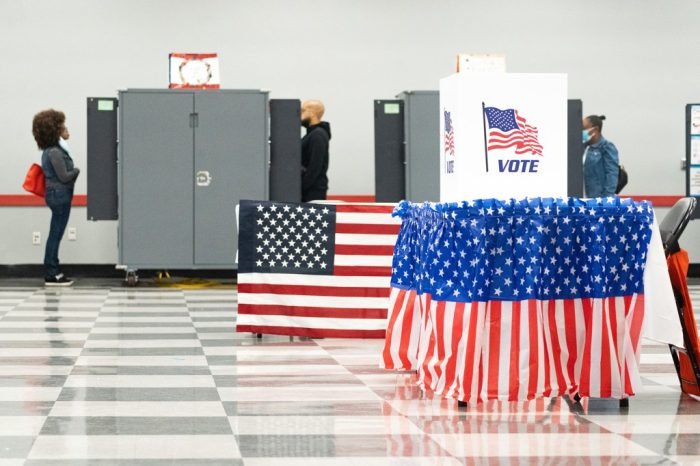
Trump’s Spy Chief Seized Puerto Rico Voting Machines Without Proof
No evidence of hacking — but voting machines were seized anyway. A new report raises alarms about intelligence overreach in US elections.
WASHINGTON — The office of U.S. Director of National Intelligence Tulsi Gabbard conducted an investigation last spring into electronic voting machines used in Puerto Rico, but found no evidence of foreign interference, according to her office and sources familiar with the probe.
The May operation, first reported by Reuters, involved coordination with the Federal Bureau of Investigation and examined claims — circulating among supporters of President Donald Trump — that Venezuela had hacked voting systems. Gabbard’s office denied a Venezuela focus, saying the review centered on cybersecurity vulnerabilities.
Investigators took custody of an unspecified number of voting machines and copied data for forensic analysis, a step the office described as standard. ODNI said it identified “concerning cybersecurity and operational practices,” including vulnerabilities linked to cellular technology and software flaws that could expose election systems.
Democratic leaders criticized the move as overreach. Senate Intelligence Committee Vice Chair Mark Warner said intelligence agencies have “no lawful role” in domestic election administration absent evidence of foreign interference. Senate Majority Leader Chuck Schumer warned the action risked intimidating local officials.
ODNI defended its authority, citing its mandate to analyze threats to election security. Puerto Rico officials and lawmakers said past election problems on the island stem from administrative failures, not foreign meddling.
-
Interagency Assessment2 months agoTOP SECRET SHIFT: U.S. MILITARY ORDERED INTO SOMALILAND BY LAW
-
Somaliland4 months agoSomaliland Recognition: US, UK, Israel, and Gulf Bloc Poised for Historic Shift
-
Russia-Ukraine War6 months agoFibre-Optic Drones Shift Ukraine’s Drone Warfare
-
ASSESSMENTS7 months agoA Critique of the Hassan Sheikh Mohamud Administration and the Halane Enigma
-
Minnesota1 month agoFraud Allegations Close In on Somalia’s Top Diplomats
-
Top stories6 months agoStarlink Launches in Israel: Pricing, Plans, and What’s Available
-
Middle East2 months agoSaudi Arabia vs. UAE: How The Gulf Rivalry is Heating Up
-
Somaliland10 months agoA New U.S.–Somaliland Mining Partnership