
TECH
U.S. Official Talks Responsible Military AI Use in Nigeria


Mallory Stewart’s Visit Highlights Commitment to Safe AI Integration in Africa
Mallory Stewart, Assistant Secretary of State for the Bureau of Arms Control, Deterrence and Stability, visited Nigeria this week to engage with local and regional authorities on the responsible use of artificial intelligence (AI) in military operations. The visit marks a significant step in the United States’ efforts to enhance security cooperation in Africa, reflecting a broader commitment to international norms and ethical considerations in military technology.
Stewart’s two-day visit included discussions with Nigerian officials and members of the Economic Community of West African States (ECOWAS). The meetings focused on the integration of AI in military contexts, emphasizing adherence to international laws and addressing inherent human biases in AI systems.
“We’ve learned the hard way that AI systems can reflect human biases, which may lead to misinformation being provided to decision-makers,” Stewart said. “Our goal is to collaborate with as many countries as possible that are integrating AI into their military operations, to minimize associated risks.”
The U.S. government’s initiative includes working with 55 nations, including those in Africa, to establish frameworks for the responsible use of military AI. This is part of a broader effort to enhance global security and ethical standards in technological advancements.
Nigeria, along with other African nations, is actively exploring the use of AI in its military operations. The country has faced significant security challenges, with sub-Saharan Africa identified as a terrorism hotspot in the Global Terrorism Index report, accounting for nearly 60% of terror-related deaths. While it remains unclear if terror groups are using AI, Nigeria is pushing for AI integration to improve its security capabilities.
Security analyst Kabiru Adamu from Beacon Consulting noted the potential benefits of AI in military operations. “Given the U.S.’s advanced technological capacity, their support could be invaluable for Nigeria, especially if they can tailor their assistance to the unique aspects of Nigeria’s security landscape,” Adamu said. He highlighted the need for adequate supporting infrastructure, such as reliable power sources, to effectively implement AI technologies.
Senator Iroegbu, founder of Global Sentinel online magazine, also emphasized the need for cautious and strategic implementation of AI. “While AI can reduce the number of troops needed and improve intelligence gathering, it’s crucial for Nigeria to develop its own policies and strategies for AI. Increased awareness and policy development are essential,” Iroegbu said.
In June, African ministers endorsed a landmark continental AI strategy aimed at advancing Africa’s digital future. Last week, the African Union approved the adoption of AI across public and private sectors in member states, including Nigeria. This marks a significant step in integrating AI into broader development and security strategies across the continent.
Stewart’s visit underscores the importance of international collaboration and responsible AI practices as African nations navigate the complex landscape of military technology and regional security challenges.



















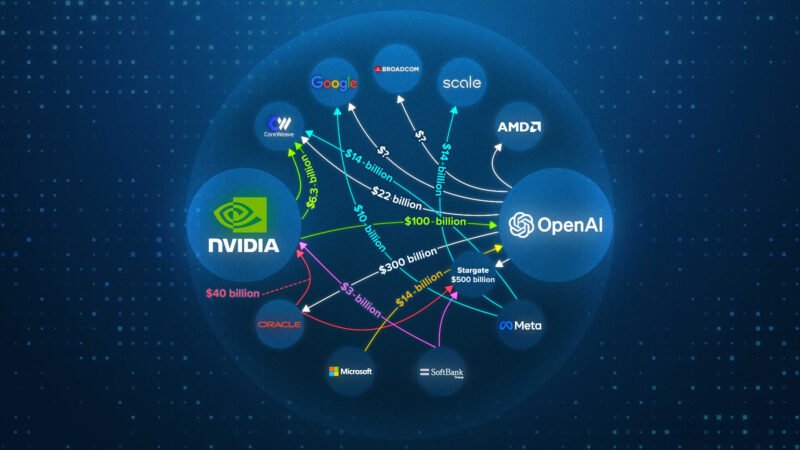
The world’s most powerful tech giants just lost nearly a trillion dollars—what changed overnight?
The world’s most dominant technology firms—Apple, Microsoft, Nvidia, Amazon, Tesla, Meta, and Alphabet—have shed more than $850 billion in market value in just five trading days, marking one of the sharpest reversals in recent market history.
The sell-off reflects more than a routine correction. It signals a broader reassessment of the artificial intelligence boom that has powered global equities for the past three years.
At the center of the downturn is a shift in investor expectations. Rising oil prices—driven in part by geopolitical tensions in the Middle East—have reignited fears that inflation will remain stubbornly high. That, in turn, has pushed bond yields upward, making future earnings from high-growth technology firms less attractive.
For companies built on long-term AI bets, that shift is critical. Their valuations depend heavily on projected future profits, which are now being discounted more aggressively in a higher-rate environment.
The technology-heavy Nasdaq 100 has slipped deeper into correction territory, reflecting the scale of investor retreat from growth sectors.
Legal and regulatory risks have compounded the pressure. Shares of Meta and Alphabet fell sharply after a U.S. jury found the companies negligent in protecting young users on their platforms—an outcome that has intensified scrutiny of Big Tech’s business models just as confidence was already weakening.
Meanwhile, the artificial intelligence supply chain—once the market’s strongest pillar—has begun to show cracks. New research from Alphabet suggesting more efficient AI memory usage unsettled semiconductor stocks, raising concerns that future demand for high-end chips may not grow as rapidly as expected.
Even industry leaders like Nvidia and Amazon were not spared, posting losses as investors questioned the scale and timing of returns on massive AI investments.
That concern is becoming harder to ignore. Collectively, major tech firms are expected to spend close to $700 billion this year on AI infrastructure. The question now dominating markets is simple: when will those investments start paying off?
For now, the answer remains uncertain.
Apple was the lone outlier, posting modest gains after reports it may expand its Siri ecosystem to third-party AI platforms. But one bright spot has done little to change the broader narrative.
The era of unchecked optimism around artificial intelligence appears to be entering a more cautious phase.
Markets are not abandoning AI—but they are demanding proof.
And after years of relentless gains, Big Tech is being forced to justify not just its vision of the future, but the price investors have already paid for it.

China isn’t just building more ships and missiles. It’s building an algorithmic army.
Beijing’s Two Sessions Signal a Shift Toward Intelligentized Warfare and Tighter Party Control of the PLA.
At this year’s Two Sessions — the annual meetings of China’s top legislative and advisory bodies — Beijing delivered a blunt message: security now sits at the center of national strategy. And the future of that security, Chinese planners believe, will be powered by artificial intelligence.
For the People’s Liberation Army, the next phase of modernization is what strategists call “intelligentization.” After decades focused first on mechanization and then informatization, the PLA is moving toward integrating AI, autonomous systems and advanced data networks into every layer of military operations.
The objective is not simply superior firepower. It is decision-making dominance — processing battlefield information faster than adversaries and acting with precision across physical, cyber and cognitive domains.
Chinese analysts increasingly describe future conflicts as “meta-wars,” blending cyberattacks, psychological operations, drone swarms and conventional strikes into one continuous battlespace.
Artificial intelligence sits at the core of this transformation, alongside quantum computing, hypersonic weapons and advanced surveillance.
Much of the effort is driven by Beijing’s longstanding policy of military-civil fusion, which seeks to align universities, private technology firms and state industries with defense priorities.
President Xi Jinping used the meetings to underscore that modernization must be matched by discipline. In recent years, dozens of senior officers have been removed in sweeping anti-corruption investigations. Official data show at least 36 high-ranking figures have lost delegate status in the National People’s Congress since 2022.
The campaign reflects more than graft concerns; it reinforces party loyalty within a force that answers not to the state, but to the Communist Party.
China’s 2026 defense budget — about 1.9 trillion yuan, or roughly $278 billion — represents a 7% increase, continuing a steady upward trend. While still far below the United States’ $1 trillion-plus military spending, China now accounts for nearly 44% of Asia’s defense expenditures.
Yet Beijing allocates just over 1% of GDP to defense, signaling a strategy of calibrated growth rather than runaway expansion.
The broader context is a shifting global order. Chinese officials argue that unipolar dominance is fading and technological rivalry is intensifying. Securing supply chains, industrial capacity and strategic technologies is now framed as national security.
Taiwan remains a central concern, even as Beijing reiterates its preference for peaceful reunification. Meanwhile, protecting overseas trade routes and infrastructure investments has become increasingly vital for the world’s largest trading nation.
Security and development are no longer separate tracks. In China’s emerging doctrine, they are fused. And in that fusion, algorithms may matter as much as armies.

Under 16? In Portugal, social media now comes with conditions — and parental approval.
Portugal’s parliament has approved new legislation restricting social media access for children under 16, joining a growing list of countries tightening digital rules for minors.
Under the new law, the minimum age for autonomous access to social networking platforms, video-sharing services and open communication services will rise from 13 to 16. Children aged 13 to 16 will only be allowed to create and use accounts with express and verified parental consent. Those under 13 will be barred entirely from accessing platforms, services, games and applications covered by the legislation.
The restrictions apply to major platforms such as Instagram, Facebook and TikTok. Messaging services such as WhatsApp, widely used by families for communication, are not included.
The bill requires companies to implement age-verification mechanisms. For users between 13 and 16, account creation must be linked to Portugal’s Digital Mobile Key or a similar identification system that confirms age without publicly exposing additional personal data.
Lawmakers from the Socialist Party said platforms must also introduce features to reduce minors’ exposure to violence, explicit content, addictive gaming elements and manipulated media.
Oversight of the law will fall to Portugal’s National Communications Authority and the National Data Protection Commission. During parliamentary debate, opposition lawmakers raised concerns about enforcement, privacy protections and the possibility that young users could bypass restrictions using VPNs. Some critics also warned that the measure could infringe on personal freedoms.
Portugal follows similar moves elsewhere. Australia has enacted strict age-verification requirements for under-16s, while France recently approved limits for users under 15. Legislative efforts are also underway in Denmark, Italy and Spain, reflecting broader European concern over the impact of social media on children’s mental health and development.

European countries are accelerating efforts to restrict children’s access to social media, citing growing evidence that excessive online exposure harms mental health and cognitive development. The push has gained momentum after France advanced legislation to ban social media use for children under 15, and Spain signaled it would follow with a ban for those under 16.
Spain’s Prime Minister Pedro Sánchez said children must be protected from what he described as the “digital Wild West,” warning that platforms expose minors to addiction, abuse, and manipulation. France’s proposal now heads to the upper house of parliament, while similar measures are being discussed or drafted in Italy, Greece, Portugal, Austria, Denmark and the United Kingdom.
At the EU level, Ursula von der Leyen has expressed support for a bloc-wide minimum digital age, potentially aligned with Australia’s under-16 restriction. In November, the European Parliament recommended an EU-wide ban for children under 16, with limited access for 13- to 16-year-olds under parental consent.
Experts broadly agree that minors face heightened risks online but question how such bans would work in practice. One proposal under discussion is an EU-wide digital ID system that could verify age without revealing personal data. Critics, however, warn that age-verification tools raise privacy concerns and could be easily circumvented.
Some digital rights advocates argue that age bans are largely symbolic and fail to address deeper structural problems, such as addictive design features like autoplay and infinite scrolling. They also note that online addiction does not suddenly disappear at age 15 or 16.
The debate has highlighted frustration with the EU’s flagship Digital Services Act, which requires large platforms to mitigate risks to minors and adjust algorithms. Critics say enforcement has been slow and ineffective, prompting national governments to act on their own.
The issue has also sparked political backlash. Tech billionaire Elon Musk recently attacked Sánchez over Spain’s plans, accusing European leaders reminding that the debate over children’s safety online is now colliding with broader arguments about regulation, free speech, and Big Tech’s power in Europe.
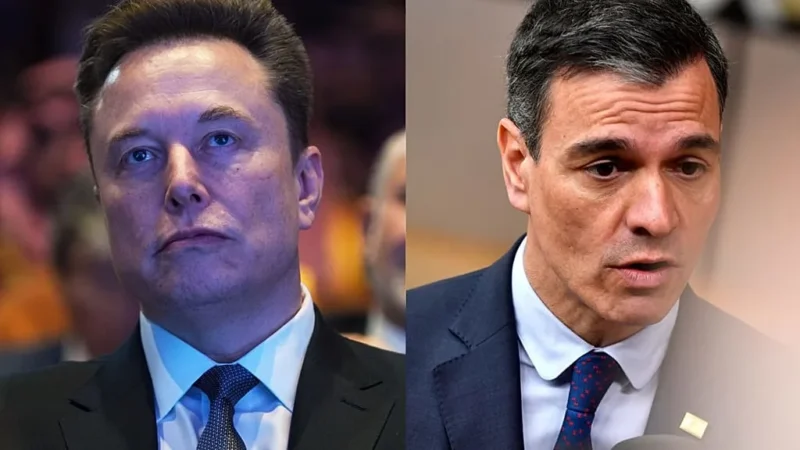
Europe tightens the net on Big Tech — and Musk is furious. Is Spain protecting children… or crossing into digital authoritarianism?
Tech billionaire Elon Musk on Tuesday launched a blistering attack on Spanish Prime Minister Pedro Sánchez, accusing him of authoritarianism after Madrid unveiled plans to sharply tighten regulation of social media platforms—particularly to shield minors from online harm.
The clash was triggered by Sánchez’s announcement of a forthcoming legislative package that would bar children under 16 from accessing social networks and impose meaningful age-verification requirements on platforms operating in Spain. Under the proposal, executives could face legal liability if their companies fail to remove illegal or hateful content, a move the government says is necessary to end what it describes as the digital “Wild West.”
Musk, who owns the social media platform X, responded with characteristic bluntness, labeling Sánchez a “tyrant” and using a derogatory nickname for the Spanish leader. The remarks underline a widening rift between U.S. tech leaders who champion minimal moderation in the name of free speech and European governments pushing for stricter oversight.
Spanish officials argue the measures are long overdue. Sánchez said platforms would no longer be allowed to rely on “easily bypassed checkboxes” to verify users’ ages and warned that failure to comply could have legal consequences for those at the top. The aim, he said, is to curb the spread of hate speech and protect young users from harmful content.
The dispute unfolds as the European Union intensifies scrutiny of major tech firms. Brussels has already fined X for breaching transparency rules, and regulators across the bloc are exploring ways to enforce digital standards more aggressively. On Tuesday, French authorities searched X’s Paris offices as part of an investigation into alleged algorithm manipulation and possible foreign interference—an inquiry that has summoned Musk to testify. X said it was “disappointed but not surprised,” rejecting the allegations and warning that the probe threatens free expression.
For Sánchez, the confrontation with Musk plays into a broader European push to reassert control over online spaces, particularly where children are concerned. For Musk, it reinforces his self-styled role as a global critic of regulation he views as censorship. As Europe presses ahead with tougher digital rules, the standoff highlights a deeper question: who sets the boundaries of speech and responsibility in an increasingly regulated online world?
TikTok has finalized a long-awaited deal to spin off its U.S. operations, securing the future of the popular video app for millions of American users after years of political and legal uncertainty.
In a statement released Thursday, TikTok confirmed the creation of a new U.S.-based joint venture that will operate under what it described as strict national security safeguards, including protections around user data, algorithms, content moderation, and software systems.
Under the agreement, U.S. tech giant Oracle, UAE-based investment firm MGX, and private equity firm Silver Lake will each hold a 15% stake in the new entity. TikTok’s Chinese parent company, ByteDance, will retain a minority share of 19.9%.
President Donald Trump welcomed the deal, calling it a major victory for U.S. interests. “I am so happy to have helped in saving TikTok,” Trump wrote on social media, adding that the platform will now be owned by “Great American Patriots and Investors.”
For TikTok’s more than 200 million users in the United States, the immediate impact is simple: the app is staying online.
While the user experience is not expected to change overnight, key technical shifts are underway. The new U.S. entity will retrain TikTok’s algorithm using American user data, with Oracle overseeing the storage and security of that data — a move aimed at addressing long-standing concerns over Chinese access to sensitive information.
TikTok U.S. CEO Shou Chew will serve on a seven-member board dominated by American executives, including senior leaders from Oracle, Silver Lake, and Abu Dhabi-based MGX.
However, several questions remain unresolved. The deal’s valuation has not been disclosed, and Chinese authorities have yet to publicly comment on the final structure. Some legal experts also argue the arrangement may still fall short of fully separating ByteDance from TikTok’s U.S. operations, as required under U.S. law upheld by the Supreme Court.
The agreement also covers other ByteDance-owned apps, including CapCut and Lemon8, bringing them under the same U.S. security framework.
After briefly going offline earlier this year amid legal uncertainty, TikTok’s future in the U.S. now appears secured — at least for the foreseeable future.
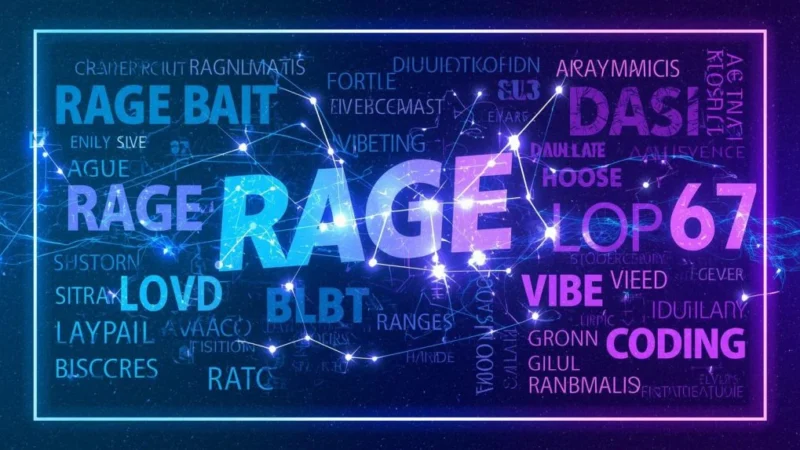
From AI Slop to Rage Bait, 2025’s Words Expose the Age of Outrage, Algorithms, and Parasocial Life.
If you want to understand 2025, skip the speeches and read the vocabulary. This was a year when language didn’t just describe reality—it documented a world rewired by platforms, generative AI, and the emotional economics of outrage. The “Words of the Year” chosen by dictionaries and news outlets weren’t uplifting slogans. They were caution signs.
Cambridge Dictionary pointed to “parasocial,” a term once reserved for celebrity fandom that now includes relationships people form with artificial intelligence. In a year shaped by personalized chatbots, public debate widened from influencers and pop stars to the psychological gravity of AI companions—especially for younger users, who can slide from curiosity into dependency without even noticing the slope.
Oxford University Press went with “rage bait,” content engineered to provoke anger and inflate engagement. It’s the business model of the modern feed: outrage sparks interaction, algorithms amplify it, and people end up mentally exhausted. Oxford’s framing was blunt: paired with last year’s “brain rot,” the concept captures a cycle in which the platforms don’t merely host bad behavior—they reward it.
Other contenders tracked adjacent obsessions. “Aura farming” described the subtle performance of charisma as a form of currency—polishing an online persona until it looks effortless. “Biohack” captured the drive to optimize the body and mind through routines, devices, and supplements. Collins ultimately chose “vibe coding,” a term for a new style of programming where you describe what you want and let machines translate it into code—less “variables and syntax,” more “intent and vibes.” A derogatory term, “clanker,” also floated through shortlists, reflecting how quickly annoyance at machines can harden into cultural slang.
Then came the truly generational wildcard. Dictionary.com leaned into “67” (“six-seven”), a piece of youth slang that even adults can’t reliably decode. Depending on who you ask, it can mean “so-so,” “maybe,” or simply a way to frustrate parents. The meaning almost doesn’t matter; the function does. It’s a reminder that language is also a gatekeeping tool—especially for Gen Alpha, which treats confusion as a feature, not a bug.
Australia’s Macquarie Dictionary chose the term that may haunt the decade: “AI slop”—low-quality content churned out by generative systems, often error-filled and frequently unwanted. If search made everyone a “search engineer,” the slop era demands people become “prompt engineers” just to filter reality from noise. Merriam-Webster and The Economist echoed the same unease, with The Economist even floating “sloptimism”—the idea that platform overload might finally force serious moderation or drive users away.
But the piece turns sharply toward what happens when toxic content isn’t just annoying—when it becomes dangerous. The author argues that slop, disinformation, cyberbullying, and extremist echo chambers create fertile ground for antisemitism and other hate crimes. In Israel, trauma from October 7, 2023 remains raw, while a “war of words” rages globally—where terms like “genocide,” “apartheid,” and “Holocaust” are deployed as weapons. The essay’s point is not that language is always harmless; it is that language can be a battlefield.
Even Hebrew, the text notes, is still searching for its 2025 word—though last year’s winner, “hatufim” (“hostages”), reflected national reality with painful clarity. Suggestions like “redeemed captive” capture a yearning for closure. The search for a word becomes a search for meaning.
That may be the quiet conclusion of 2025’s vocabulary: we are not just living through technological change, but through a struggle over attention, truth, and identity. The year’s standout words—parasocial, rage bait, AI slop—don’t merely define trends. They reveal what we were fighting, what we were becoming, and what we still don’t know how to control.
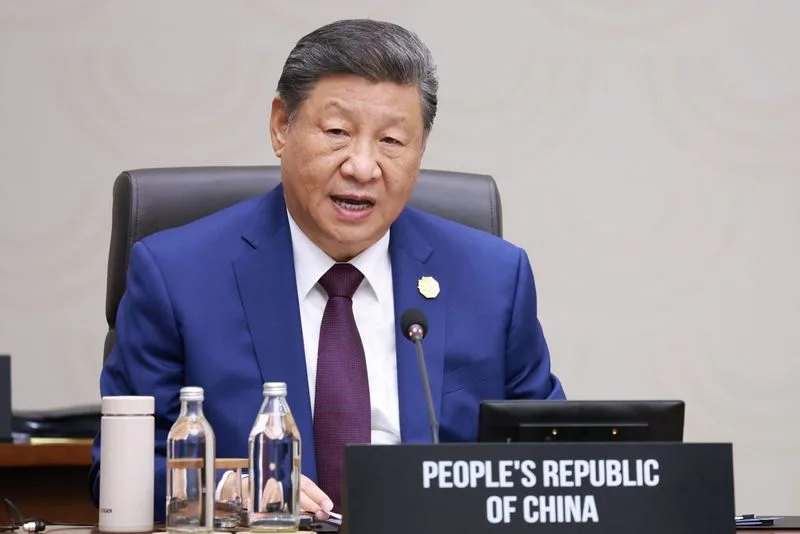
Chinese President Xi Jinping seized the spotlight at the APEC leaders’ summit on Saturday, proposing the creation of a World Artificial Intelligence Cooperation Organization — a global body to regulate and coordinate AI development — in a move widely viewed as Beijing’s bid to challenge U.S. dominance over emerging technology governance.
Xi’s call, delivered at the meeting in Gyeongju, South Korea, marks his first public endorsement of the initiative unveiled earlier this year.
“Artificial intelligence is of great significance for future development and should be made for the benefit of people in all countries and regions,” Xi said, according to China’s state-run Xinhua agency.
He framed AI as a “public good for the international community” and suggested the organization could be headquartered in Shanghai, positioning the city as a new global center for AI diplomacy.
The timing was no accident. U.S. President Donald Trump skipped the leaders’ plenary session, leaving for Washington after a one-on-one meeting with Xi that produced a one-year agreement to ease trade and technology restrictions — a modest détente in a rivalry that has defined global politics for much of the decade.
Xi’s absence of an American counterpart gave him the stage to promote China’s brand of “cooperative multilateralism” as a counterweight to Washington’s go-it-alone approach.
The proposed AI body underscores China’s ambition to shape the rules of the next technological frontier.
While Washington has resisted binding global regulation of AI, Beijing sees governance structures as a lever of influence — allowing it to standardize norms around data, algorithms, and safety protocols according to its own priorities.
Analysts say China hopes to export its model of “algorithmic sovereignty”, where state control over AI aligns with national security and industrial policy goals.
Beijing’s growing AI ecosystem provides tangible backing for that vision. U.S. chipmaker Nvidia remains indispensable to the global AI boom, but Chinese firms such as DeepSeek are rolling out competitive, lower-cost models optimized for locally produced hardware — a strategy that insulates China from U.S. export bans while advancing its technological self-reliance.
Beyond AI, Xi also urged APEC members to support the “free circulation of green technologies,” referencing sectors from batteries to solar panels — areas where Chinese firms already dominate global supply chains.
The summit concluded with the adoption of a joint declaration and agreements on AI governance and aging populations.
China will host the 2026 APEC summit in Shenzhen, a city Xi described as “a symbol of reform and innovation” that rose from fishing village to high-tech powerhouse in four decades.
By pushing for a global AI body and recasting China as a guardian of open cooperation, Xi is staking his claim to define the ethics and economics of artificial intelligence — and signaling that the contest with the United States has entered a new, algorithmic phase.

Defense Secretary Hegseth Forces Out Army Chief

Bridges Fall, Missiles Rise—War Enters a More Destructive Phase

Iran Executes 18-Year-Old Protester


-

 US-Israel war on Iran1 month ago
UK Refuses Iran Strike Access, Trump Fires Back
-

 Russia-Ukraine War1 month ago
Europe’s Spies Challenge Trump’s Ukraine Peace Optimism
-

 Top stories1 month ago
War Expands Across Region as Iranian Militias Join Fight
-

 Top stories1 month ago
India Turns to Brazil in Strategic Minerals Push Against China
-

 US-Israel war on Iran1 month ago
Iran Pledges ‘Never, Ever’ to Hold Bomb-Grade Material
-

 US-Israel war on Iran1 month ago
Syria Under Fire on Two Fronts
-

 Russia-Ukraine War1 month ago
Estonia Warns NATO Would Strike Deep Inside Russia if Baltics Are Invaded
-

 Top stories3 weeks ago
Meloni Breaks Ranks: Italy Warns on Iran War