
Top stories
Botswana Uncovers Historic 2,492-Carat Diamond, Second Largest Ever Discovered


Botswana Reveals Massive Diamond, Shaking Up the World of Gemology
Botswana has just made a dazzling addition to the world of gemology with the discovery of a colossal 2,492-carat diamond, one of the largest ever unearthed. Revealed on Thursday, this remarkable find is only surpassed in size by the legendary Cullinan Diamond, discovered in South Africa in 1905.
Canadian mining company Lucara Diamond Corp. announced the find, calling it an “exceptional” and “high-quality” stone. Found intact through advanced X-ray technology at the Karowe Mine, the diamond is a stunning reminder of nature’s ancient marvels, estimated to be over a billion years old.
Lucara President and CEO William Lamb couldn’t hide his excitement: “We are ecstatic about the recovery of this extraordinary 2,492-carat diamond,” he declared. This giant gem is the largest diamond discovered in over a century, following the Cullinan, which weighed 3,106 carats and was later cut into gems, some of which now adorn the British Crown Jewels.
While a larger black diamond was unearthed in Brazil in the late 1800s, it was thought to have originated from a meteorite, distinguishing it from this gem’s earthly origins. The newly discovered diamond was proudly showcased at Botswana’s Presidential Office, marking a significant moment for the country, which is the world’s second-largest diamond producer.
Botswana has a remarkable track record of large diamond finds, with the Karowe Mine previously yielding four diamonds over 1,000 carats. The recently discovered diamond surpasses the Sewelo diamond, a 1,758-carat gem bought by Louis Vuitton, and the 1,111-carat Lesedi La Rona, which fetched $53 million in 2017.
With diamonds of this magnitude, scientists continue to marvel at the earth’s deep history, as these natural wonders provide a glimpse into our planet’s billion-year-old past. As the gem is set to stir excitement in the gem world, it stands as a testament to both the enduring allure of diamonds and Botswana’s role as a key player in the global diamond industry.

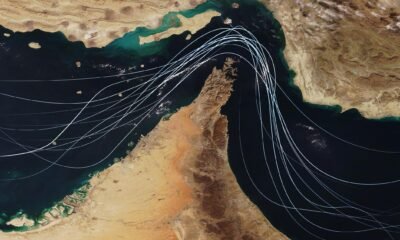













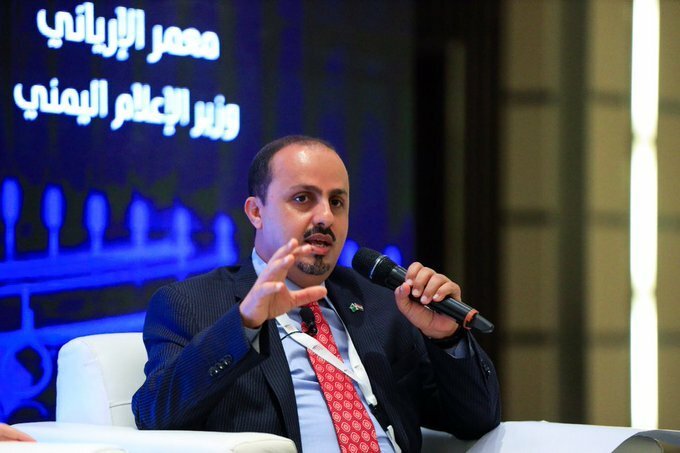
First Hormuz—now Bab al-Mandab? The world’s trade arteries are entering the battlefield.
A new warning from Yemen suggests the war’s most dangerous phase may be approaching—not on land, but across the world’s critical sea lanes.
Yemeni Information Minister Muammar al-Iryani has cautioned that Iranian threats to expand the conflict toward the Bab al-Mandab Strait represent a deliberate strategy to turn global shipping routes into instruments of pressure. His message is direct: what is unfolding is not a series of isolated escalations, but a coordinated effort to widen the battlefield.
The Bab al-Mandab Strait, linking the Red Sea to the Gulf of Aden, is one of the most vital maritime corridors in the world. It sits at the crossroads of Europe, Asia, and Africa, carrying a significant share of global trade, including energy shipments heading toward the Suez Canal.
If disrupted, the consequences would extend far beyond the region.
Al-Iryani argues that recent Iranian signals—particularly threats tied to potential attacks on Kharg Island—amount to an explicit acknowledgment that multiple fronts, including Yemen, are being managed within a broader strategic framework.
In this view, the Islamic Revolutionary Guard Corps is orchestrating a network of pressure points, with the Houthi movement acting as a forward arm along Yemen’s coastline.
That claim reflects a long-standing accusation: that the Houthis are not acting independently, but as part of a wider regional architecture aligned with Tehran.
Whether or not that characterization is universally accepted, the operational reality is clear. Control over coastal territory in Yemen provides proximity to one of the world’s most sensitive maritime chokepoints.
From there, even limited disruption—through missiles, drones, or naval activity—could have outsized effects on global shipping and insurance markets.
The warning from Sana’a is as much about trajectory as it is about intent.
Iran’s strategy in the Strait of Hormuz has already demonstrated how pressure on a single chokepoint can ripple through global energy systems. Extending that approach to Bab al-Mandab would effectively create a dual-front maritime crisis—placing both ends of the Arabian Peninsula’s shipping routes under strain.
Such a scenario would mark a significant escalation.
It would not only increase the risk to commercial vessels but also complicate international responses, drawing in additional actors concerned with securing trade routes. The Red Sea, already under pressure from regional tensions, could become an active theater of confrontation.
For Yemen, the stakes are immediate.
Al-Iryani warned that any leniency toward these threats could normalize a situation in which vital waterways are transformed into tools of “military blackmail.” Once established, such a dynamic would be difficult to reverse, embedding instability into one of the arteries of global commerce.
The broader implication is stark.
What began as a conflict centered on Iran is evolving into a contest over geography itself—where control of chokepoints becomes as decisive as control of territory.
And if Bab al-Mandab joins Hormuz in that equation, the war will no longer be defined only by missiles and strikes.
It will be defined by who controls the flow of the world’s trade—and who can disrupt it.
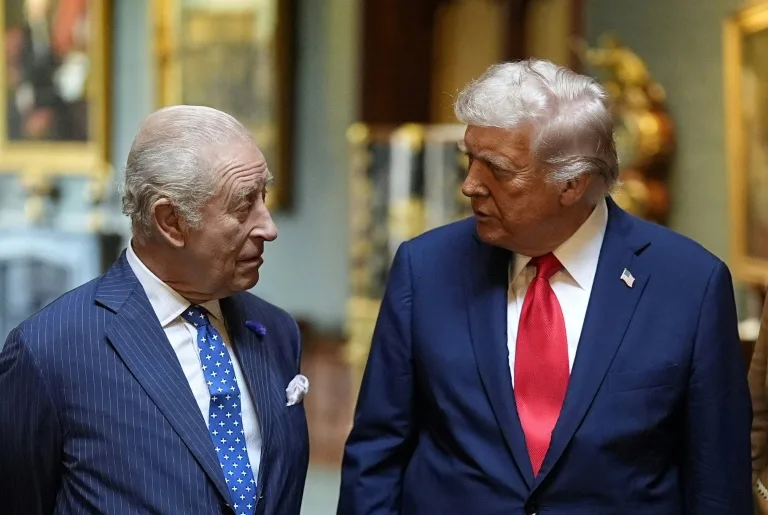
War tensions rising—so why is a royal visit becoming a geopolitical flashpoint?
A planned visit by King Charles III to the United States is quickly becoming more than a ceremonial trip—it is now a test of diplomacy under strain.
Washington’s ambassador to the United Kingdom, Warren Stephens, issued a clear warning: canceling the visit would be a “very big mistake.” His remarks come as political pressure grows in Britain to postpone or abandon the trip amid the escalating war involving the United States, Israel, and Iran.
At stake is not only a royal itinerary, but the tone of the transatlantic relationship.
The visit—expected, though not officially confirmed, for late April—would mark Charles’s first trip to the U.S. as king. It has also been reported that Mike Johnson has invited him to address Congress, a rare honor that would make him the first British monarch to do so in decades.
Yet the timing is politically sensitive.
The war in the Middle East has strained relations between Washington and London, with Donald Trump openly criticizing Keir Starmer over his approach to the conflict. In Britain, critics argue that proceeding with a high-profile royal visit risks signaling endorsement of U.S. policy at a moment of deep international division.
Public opinion reflects that unease.
Recent polling suggests that nearly half of British voters oppose the trip, while only a minority support it going ahead. Some lawmakers have gone further, warning that the visit could place the monarchy in an uncomfortable position—caught between its ceremonial role and the political realities of a controversial war.
Senior figures across the political spectrum have voiced concern. Emily Thornberry suggested it would be “safer to delay,” while Ed Davey questioned the wisdom of proceeding at all, asking why Britain should “reward” Washington under current circumstances.
For the United States, however, the visit carries symbolic weight.
Stephens emphasized that the trip would be “meaningful,” reflecting longstanding ties between the two countries. That argument points to a broader calculation: maintaining visible unity between allies at a time when global tensions are rising.
But symbolism cuts both ways.
If the visit proceeds, it may reinforce the resilience of the so-called “special relationship.” If it is delayed or canceled, it could signal a deeper rift—one shaped not by protocol, but by diverging views on war, strategy, and leadership.
The decision now facing London is delicate.
The British monarchy traditionally operates above politics, yet in moments like this, even ceremonial acts can carry geopolitical consequences. Balancing domestic sentiment, diplomatic priorities, and institutional neutrality will not be straightforward.
What was once a routine state visit has become something else entirely: a barometer of alliance cohesion in a time of conflict.
And whichever way the decision falls, it will be read not just as a scheduling choice—but as a statement.
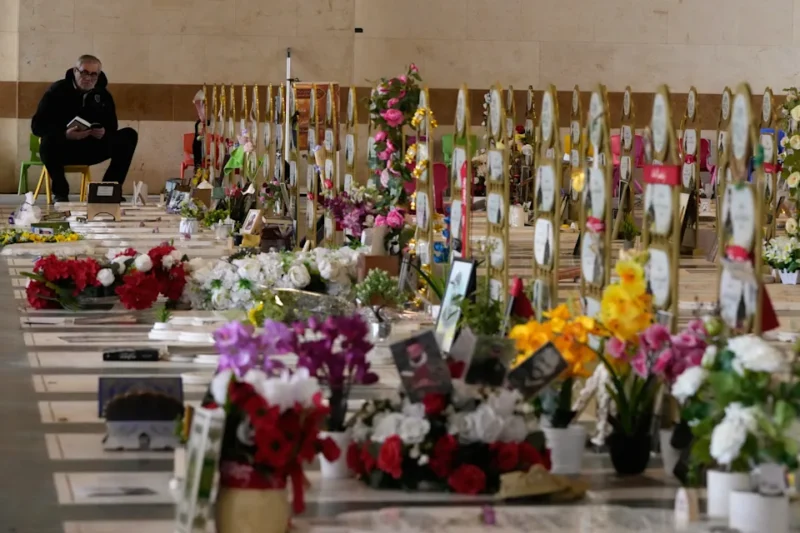
Not just rockets and fighters — now clinics, banks and TV studios.
Strikes on Health Centers, Media Outlets and Financial Arms Signal Broader Effort to Weaken Group’s Political Base
An Israeli airstrike on a health center in southern Lebanon killed 12 medical workers and left others missing under the rubble, marking one of the deadliest single attacks in Lebanon since the latest Israel-Hezbollah war erupted on March 2.
The March 13 strike in the village of Burj Qalaouiyah targeted a facility run by the Islamic Health Society, the medical arm of Hezbollah. The organization says it has lost at least 24 members in recent weeks. Lebanon’s Health Ministry denies Israeli allegations that the facilities are used for military purposes.
The strike underscores a widening Israeli strategy: targeting not only Hezbollah’s military infrastructure but also its civilian institutions — health services, financial networks and media outlets — that underpin its political strength in Lebanon.
Hezbollah operates as both an armed group and a political party. Over decades, its social service networks have helped entrench support among Lebanon’s Shiite population.
In recent weeks, Israeli airstrikes have destroyed branches of Hezbollah’s financial arm, al-Qard al-Hasan, heavily damaged Al-Manar television and Al-Nour radio facilities, and hit affiliated commercial operations including gas stations and subsidized retail shops.
On Wednesday, an Israeli strike in central Beirut killed Mohammed Sherri, head of political programming at Al-Manar TV, along with his wife.
Israeli officials argue that Hezbollah uses civilian institutions to shield military operations and finance its armed wing. Human rights groups dispute that framing. Amnesty International has said that labeling an institution as Hezbollah-affiliated does not automatically render it a lawful military target under international humanitarian law and has called for investigations.
The conflict has intensified internal Lebanese tensions. The Lebanese government has publicly declared Hezbollah’s independent military actions illegal and detained members for carrying weapons without authorization. Critics such as legislator Samy Gemayel accuse Hezbollah of dragging Lebanon into a broader regional war.
Yet Hezbollah’s leadership remains defiant. “This is an existential battle,” said leader Naim Kassem, vowing continued resistance. Senior Iranian officials have linked any ceasefire in Lebanon to a broader halt in U.S.-Israeli strikes across the region.
Israel’s stated objective appears to extend beyond degrading Hezbollah’s arsenal. Analysts say it is seeking to erode the group’s political legitimacy and social support base — a far more ambitious goal than previous wars that ended in stalemate.
Whether this strategy weakens Hezbollah’s grip or hardens its constituency may determine how long the conflict continues — and how deeply it reshapes Lebanon’s fragile political landscape.
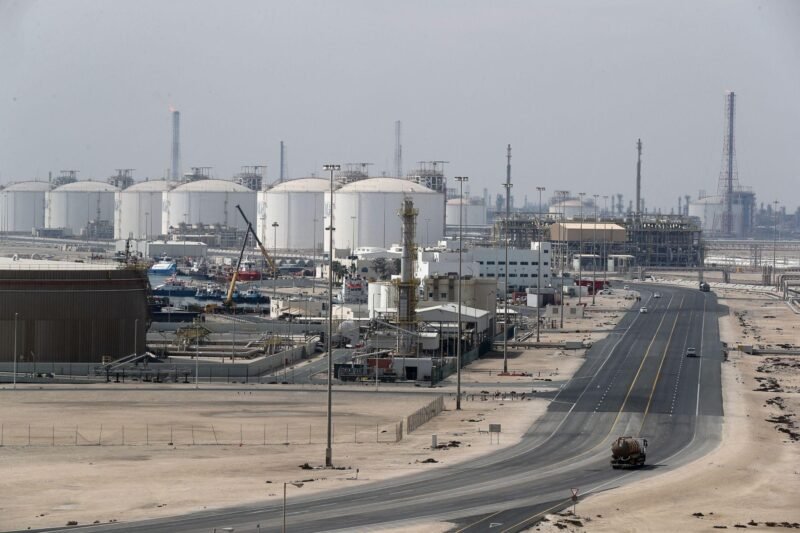
Ras Laffan LNG Facility Suffers “Significant Damage” as Gulf Energy War Escalates.
One missile. One gas hub. Twenty percent of global LNG at stake.
Qatar says Iranian missile attacks have caused “significant damage” at Ras Laffan Industrial City, the world’s largest liquefied natural gas production complex, sharply escalating the energy dimension of the regional war.
In a statement Wednesday, Qatar’s Ministry of Foreign Affairs condemned what it called a “blatant Iranian attack” that sparked fires at the facility. The Ministry of Interior said the blaze had been largely brought under control and no injuries were reported.
QatarEnergy confirmed that all personnel were accounted for, though it later disclosed that additional LNG facilities were also struck, causing “sizeable fires and extensive further damage.”
The attack followed Iran’s public threat to target Gulf oil and gas infrastructure in retaliation for Israeli strikes on the South Pars gasfield, which Iran shares with Qatar. Tehran had specifically warned of potential action against Ras Laffan, Mesaieed Industrial City and other regional energy hubs in Saudi Arabia and the United Arab Emirates.
Ras Laffan, located about 80 kilometers northeast of Doha, produces roughly 20 percent of the world’s LNG supply and plays a critical role in balancing Asian and European energy demand. Qatar had already suspended LNG production earlier this month following a previous strike on the complex.
Qatar’s government responded forcefully, declaring Iranian military and security attaches at the embassy persona non grata and ordering them to leave within 24 hours. The Foreign Ministry described the strike as a “dangerous escalation” and a “direct threat to national security.”
Saudi Arabia and the UAE also reported intercepting dozens of Iranian ballistic missiles and drones targeting energy infrastructure.
Riyadh said four ballistic missiles were intercepted over the capital and eastern provinces. The UAE reported intercepting 13 ballistic missiles and 27 drones, with operations temporarily suspended at its Habshan gas facility after debris fell nearby.
French President Emmanuel Macron called for an immediate moratorium on strikes against civilian infrastructure, urging protection of energy and water facilities. He said he had spoken with Qatar’s emir, Sheikh Tamim bin Hamad Al Thani, and with Donald Trump.
Energy analysts warn that prolonged disruption could sustain high LNG prices, with Europe — already reliant on LNG imports since the loss of Russian pipeline gas — particularly exposed. Smaller developing economies may face the sharpest strain if prices remain elevated.
What began as a military confrontation is now firmly an energy war. With Ras Laffan damaged and Gulf infrastructure under threat, the conflict is no longer confined to battlefields — it is reshaping the global fuel supply chain.

A close Trump ally. A NATO partner. Now a public warning. Has Europe’s unity on Iran begun to crack?
Italian Prime Minister Says U.S.-Israeli Strikes Reflect “Dangerous” Trend Outside International Law.
ROME — Italian Prime Minister Giorgia Meloni delivered her sharpest rebuke yet of the U.S.-Israeli war against Iran on Wednesday, describing the conflict as part of a troubling pattern of unilateral military actions “outside the scope of international law.”
Speaking before the Senate, Meloni framed the Middle East war as another symptom of what she called a broader structural crisis in the international system — one already destabilized by Russia’s 2022 invasion of Ukraine.
“It is in this context,” she said, “that we must also place the American and Israeli intervention against the Iranian regime.”
The remarks mark a notable shift in tone from Rome. Meloni, a conservative leader with close ties to U.S. President Donald Trump, has largely aligned Italy with its transatlantic allies. Her government had faced criticism from opposition lawmakers for appearing reluctant to directly question Washington’s role in the conflict.
Italy now joins Spain as one of the few European countries to publicly voice explicit concern over the legality of the campaign. Most European governments have stopped short of direct criticism, instead urging de-escalation and restraint.
Yet Meloni’s speech balanced caution with firmness toward Tehran. She reiterated that Iran must not be allowed to develop nuclear weapons, warning that such an outcome would undermine the global non-proliferation framework and expose Europe to “dramatic repercussions for global security.”
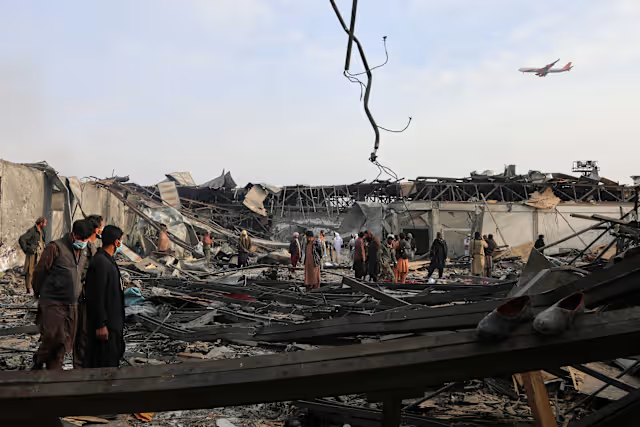
The war, now in its 12th day, has expanded beyond Israel and Iran, disrupting roughly one-fifth of global oil and gas flows and drawing in Gulf states hosting Western forces. Meloni confirmed that Italy is providing air-defense assets to Gulf partners targeted by Iranian strikes.
“This is not only because they are friendly nations and strategic partners,” she said, “but because tens of thousands of Italian citizens are in the region — and around 2,000 Italian soldiers are stationed in the Gulf.”
Her intervention highlights the increasingly delicate position of European leaders: balancing alliance commitments with growing unease over the war’s legal and geopolitical consequences. By linking the Iran conflict to the broader erosion of international norms, Meloni signaled that Rome views the crisis not as an isolated flare-up — but as part of a more dangerous global pattern.
Whether her words foreshadow a broader European reassessment remains to be seen. For now, Italy has made clear it supports deterrence against Iran’s nuclear ambitions — but not without questioning the path chosen to achieve it.
One phone call. Three wars. And oil at the center of it all.
U.S. Weighs Easing Russian Oil Sanctions as Leaders Discuss Iran Conflict and Ukraine Ceasefire.
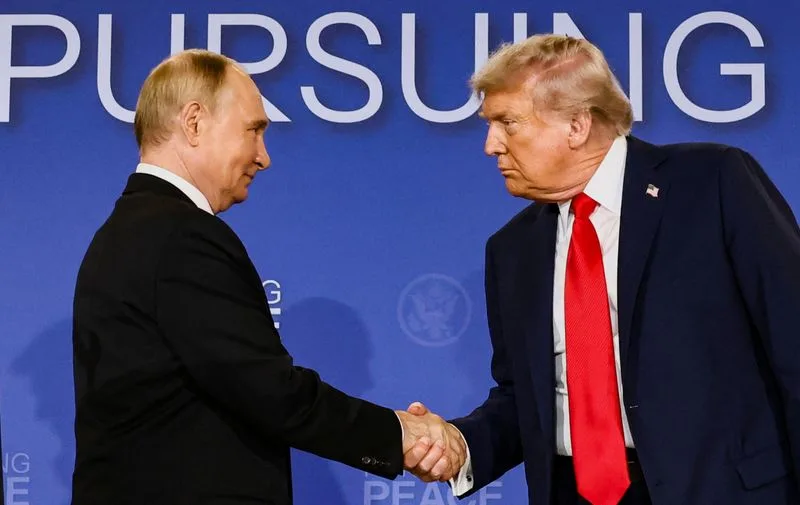
U.S. President Donald Trump and Russian President Vladimir Putin spoke by phone Monday about the war in Iran, prospects for peace in Ukraine and the growing strain on global energy markets, as Washington considers easing sanctions on Russian oil to stabilize prices.
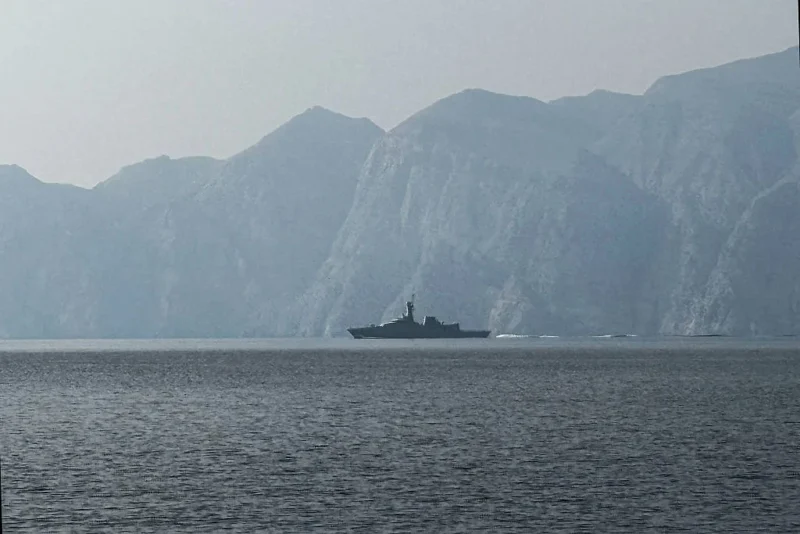
The call — their first publicly confirmed conversation this year — came amid sharp volatility in oil markets triggered by the U.S.-Israeli assault on Iran and Tehran’s threats to disrupt shipping through the Strait of Hormuz, a chokepoint that carries roughly 20 percent of global crude supplies.
Speaking at his golf club in Florida, Trump described the conversation as “very good,” saying Putin expressed interest in helping reduce tensions in the Middle East. “I said you could be more helpful by getting the Ukraine-Russia war over with,” Trump told reporters, signaling that ending the Ukraine conflict remains a U.S. priority.
Earlier Monday, Putin warned that the Iran conflict risked triggering a full-scale global energy crisis. He cautioned that oil production dependent on transit through the Strait of Hormuz could grind to a halt if fighting escalates further. Russia, the world’s second-largest oil exporter, is positioned to benefit from any prolonged disruption.
Against that backdrop, the Trump administration is weighing options to ease certain oil-related sanctions on Russia, according to sources familiar with internal discussions. The aim would be to increase global supply and cool prices that have surged since the outbreak of the Iran war. Any move could include targeted exemptions for countries such as India, which rely heavily on discounted Russian crude.
Trump confirmed that his administration was reviewing “certain oil-related sanctions” to help bring prices down but did not specify which countries would benefit.
The potential shift presents a delicate balancing act. Loosening restrictions could help stabilize markets and lower fuel costs, but it risks undermining efforts to restrict Moscow’s revenue stream as the war in Ukraine drags on.
Putin, meanwhile, reiterated that Russia remains open to long-term energy cooperation with Europe if political conditions allow — a signal that Moscow sees opportunity in the current turmoil.
The call underscores a widening geopolitical realignment driven by energy. As conflict in the Middle East collides with unresolved fighting in Ukraine, oil flows — and the leverage they create — are once again shaping diplomacy at the highest level.
While the Gulf burns and oil surges, is the Kremlin quietly cashing in?
Rising Oil Prices, Strained U.S. Resources and Ukraine’s Vulnerability Put Russia in a Stronger Position.
The first week of the U.S.-Israeli war against Iran has shaken energy markets, destabilized the Gulf and intensified political pressure on President Donald Trump. But amid the turmoil, one capital appears to be gaining leverage: Moscow.
Russia condemned the February 28 strikes that killed Iran’s Supreme Leader Ali Khamenei, calling them an act of aggression. President Vladimir Putin described the killing as a “cynical murder.” Yet beyond rhetorical solidarity with Tehran, the war’s ripple effects have opened economic and strategic space for the Kremlin.
Oil Windfall
Before the conflict, Russia’s energy outlook was constrained by sanctions and discounted pricing. Oil and gas revenues had dropped significantly as Western measures targeted Moscow’s ability to finance its war in Ukraine.
Now, with Gulf supplies disrupted and the Strait of Hormuz under threat, global oil prices have surged. Russian crude, once sold at steep discounts, is reportedly trading at a premium. For a state budget heavily dependent on energy exports, the shift offers immediate relief.
Treasury Secretary Scott Bessent confirmed a temporary waiver allowing India to take delivery of Russian oil already at sea, easing short-term pressure amid rising fuel costs. While framed as a limited measure, the optics reinforce Moscow’s improved position in a tightening market.
Higher prices combined with Gulf uncertainty create favorable conditions for Russia, one of the few producers capable of quickly capitalizing.
Ukraine’s Defense Strain
The Iran war may also indirectly benefit Russia on the battlefield in Ukraine.
Ukraine relies heavily on U.S.-made Patriot air defense systems to intercept Russian missiles and drones. Those same high-cost interceptors are now being used extensively in the Middle East to counter Iranian attacks. European officials, including EU Defense Commissioner Andrius Kubilius, have warned that missile shortages are becoming acute.
Over the weekend, Russia launched one of its largest aerial assaults on Ukraine in months, underscoring Kyiv’s vulnerability as Western stockpiles stretch thinner.
Ukrainian President Volodymyr Zelenskyy has offered Gulf states expertise in countering Iranian drones — systems Russia has used extensively in Ukraine — but the broader imbalance remains.
Intelligence and Strategic Distraction
Reports from U.S. media outlets suggest Russia has shared targeting intelligence with Iran related to American military assets. The White House has not confirmed operational details but has downplayed the impact.
For Moscow, even limited involvement carries upside. Prolonged U.S. engagement in the Middle East risks draining resources, fracturing political focus and diverting attention from Ukraine. As analyst Robert Person notes, any development that “degrades America’s projection of power” shifts the geopolitical balance incrementally in Russia’s favor.
Calculated Gains
Russia may risk losing influence if Iran’s regime collapses. But in the near term, elevated oil prices, stretched U.S. arsenals and global distraction from Ukraine serve Kremlin interests.
Wars create destruction for some — and opportunity for others. In this unfolding conflict, Moscow appears positioned to absorb fewer costs while harvesting strategic dividends.
The longer the war drags on, the more those dividends may compound.

The Real Logic Behind Iran’s Gulf Strikes

Israel Uncertain as Trump Shifts Strategy and Iran Eyes New Front

Secret Iran-US Deal Efforts Clash With Public Denials


-
 Terrorism2 months ago
America Pulls Back From Somalia but Doubles Down Next Door
-

 Analysis2 months ago
How Chinese Speculators Set the Stage for the Gold and Silver Crash
-

 Top stories2 months ago
Rubio Signals Preemptive Military Option as U.S. Tightens Pressure on Iran
-
 Top stories2 months ago
France Blocks EU Push to Let Ukraine Buy British Storm Shadow Missiles
-
 Russia-Ukraine War1 month ago
Russian General Boasted of Torture and Killing of Ukrainian Prisoners
-
 US-Israel war on Iran1 month ago
UK Refuses Iran Strike Access, Trump Fires Back
-
 Russia-Ukraine War1 month ago
Europe’s Spies Challenge Trump’s Ukraine Peace Optimism
-
 Top stories4 weeks ago
War Expands Across Region as Iranian Militias Join Fight